
Have your dock lines become stiff and worn with age? Are they discolored by mold, weakened by UV exposure or showing signs of chafe? If so, it may be time for a replacement. Choosing the right dock line helps protect your boat, dock hardware and cleats from unnecessary stress while making docking easier and safer.
In this guide, we'll explain the differences between dock line materials, constructions, sizing recommendations and key features so you can select the best dock lines for your boat and boating style.
- Permanent versus Transient Dock Lines
- Why Nylon is the Best Dock Line Material
- Pre-Spliced Dock Lines
- Dock Line Features to Consider
- Three-Strand vs. Single-Braid vs. Double-Braid
- How to Choose Dock Line Diameter
- Strength vs. Stretch
- Protecting Dock Lines from Chafe
- Economy Dock Line Options
- Dock Line FAQ
Permanent versus Transient Dock Lines
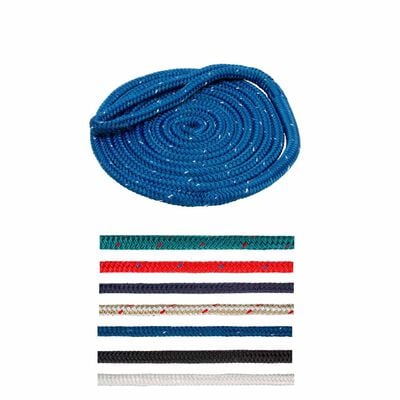
West Marine Premium Double-Braid Dock Lines are available in multiple colors and sizes.
Dock lines generally fall into two categories: permanent dock lines and transient dock lines.
Permanent dock lines are cut and spliced to the exact lengths required for a specific slip or dock. These lines remain attached to the dock and are optimized for your boat's normal position in the slip.
Transient dock lines are longer, portable lines with an eye splice at one end that travel with the boat. These versatile lines can be used at marinas, fuel docks, guest slips and other temporary docking locations.
Many boaters use transient lines at their home dock, but professionally sized permanent dock lines provide a cleaner appearance, improved dock organization and better control of boat movement. Permanent dock lines should include chafe protection wherever they pass through chocks or rub against dock hardware.
If you prefer a custom solution, consider having dock lines cut and spliced to match your boat and slip dimensions.
Why Nylon is the Best Dock Line Material
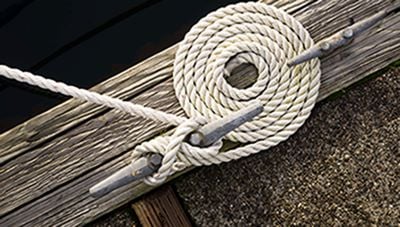
Three-strand nylon dock line secured to a dock cleat.
Nylon remains the preferred material for dock lines because of its excellent strength, durability and ability to stretch under load.
Boats tied to docks are constantly moving due to wind, waves, wakes, tides and current. This movement creates shock loads that transfer stress to cleats, pilings, docks and boat hardware. Nylon absorbs much of this shock because it stretches and gradually releases tension instead of transmitting loads instantly.
This elasticity helps reduce wear on both the boat and dock while improving overall docking safety. Compared to low-stretch materials, nylon provides significantly better shock absorption for docking applications.
Pre-Spliced Dock Lines
For most boat owners, pre-spliced dock lines offer the easiest solution. These ready-to-use dock lines include professionally formed eye splices that eliminate the need for DIY splicing.
Pre-spliced dock lines are available in three-strand, single-braid and double-braid nylon constructions. Most include a professionally finished eye splice and a sealed bitter end for durability.
While pre-spliced dock lines are convenient, adding chafe guards at wear points is strongly recommended. Chafe protection helps extend dock line life and reduces the risk of failure where lines contact chocks, pilings or rough dock surfaces.
Dock Line Features to Consider
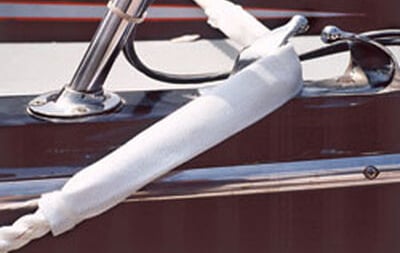
Chafe protection helps extend dock line life and improve reliability.
Several factors influence dock line performance:
- Diameter: Larger diameter lines provide greater strength and abrasion resistance.
- Length: Line length should match your boat size, dock layout and docking requirements.
- Construction: Three-strand, single-braid and double-braid designs each offer different handling and stretch characteristics.
- Color: Colored dock lines can complement your boat and make identification easier.
- Chafe Protection: Essential for long-term durability in high-friction areas.
Three-Strand vs. Single-Braid vs. Double-Braid Dock Lines
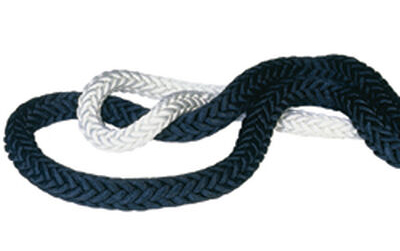
Mega Braid Dock Lines remain supple and easy to handle in larger diameters.
Three-Strand Nylon Dock Lines
Three-strand nylon dock lines offer excellent stretch and shock absorption. They are easy to splice and provide outstanding abrasion resistance. Many boaters choose three-strand nylon because it combines durability, value and traditional appearance.
Single-Braid Nylon Dock Lines
Single-braid nylon lines, often called mega braid dock lines, are extremely flexible and easy to handle. They remain soft even in large diameters, making them a popular choice for larger boats that require heavy dock lines.
Double-Braid Nylon Dock Lines
Double-braid dock lines provide the highest tensile strength and a smooth, premium feel. They are available in multiple colors and are popular among boaters who prioritize appearance and handling. Double-braid lines typically stretch less than three-strand alternatives while maintaining excellent strength.
How to Choose Dock Line Diameter
Boat length, displacement, dock exposure and expected weather conditions all influence dock line sizing. The following recommendations work well for most recreational boats.
| Boat Length | Recommended Diameter |
|---|---|
| Up to 27' | 3/8" |
| 28'–31' | 7/16" |
| 32'–36' | 1/2" |
| 37'–45' | 5/8" |
| 46'–54' | 3/4" |
| 55'–63' | 7/8" |
| 64'–72' | 1" |
Boats kept in exposed marinas or areas subject to heavy wakes, tides or storms may benefit from stepping up one size in dock line diameter.
Strength vs. Stretch
When selecting dock lines, strength is only part of the equation. Stretch characteristics can be equally important.
Lines with greater stretch absorb more energy and reduce shock loads during changing conditions. Lines with less stretch provide more precise boat positioning but transfer greater loads to hardware.
Most recreational boaters benefit from nylon dock lines that strike a balance between strength and elasticity. This combination provides both security and protection for dock hardware.
Protecting Dock Lines from Chafe
Chafe is one of the leading causes of dock line failure. Constant movement against chocks, pilings and dock edges gradually wears away fibers until the line weakens.
To extend dock line life:
- Inspect dock lines regularly for abrasion and wear.
- Use leather, rubber or fabric chafe guards at high-friction points.
- Adjust line positioning to reduce rubbing.
- Replace lines that show significant wear, stiffness or UV damage.
- Inspect eye splices and attachment points at least once each season.
Economy Dock Line Options
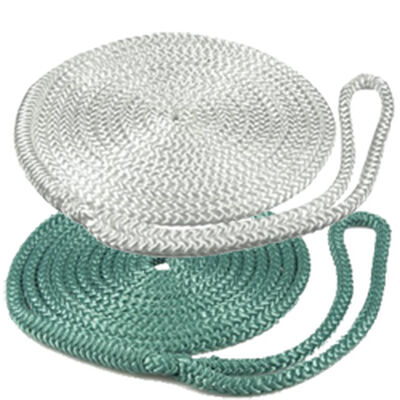
12-Strand Inland Polypropylene Dock Lines offer an economical solution for lighter-duty applications.
Premium nylon dock lines provide the best performance for most docking situations, but economy options may be suitable for smaller boats, trailered boats or occasional use.
Economy three-strand nylon dock lines offer an affordable choice for transient docking and general-purpose use. Polypropylene dock lines provide the added advantage of flotation but sacrifice UV resistance and abrasion resistance compared to nylon.
For long-term dockage, especially in exposed environments, premium nylon dock lines remain the preferred choice.
Dock Line FAQ
What is the best material for dock lines?
Nylon is generally considered the best material for dock lines because it combines excellent strength, durability and stretch to absorb shock loads.
How often should dock lines be replaced?
Dock lines should be replaced when they show signs of significant chafe, UV damage, stiffness, discoloration, flattening or weakening. Inspect them regularly throughout the boating season.
Are braided dock lines better than three-strand dock lines?
Neither is universally better. Double-braid lines provide greater strength and a premium feel, while three-strand nylon offers more stretch and excellent shock absorption.
Should I use chafe protection on dock lines?
Yes. Chafe protection significantly extends dock line life and helps prevent premature failure where lines contact hardware or dock structures.
How long should dock lines be?
A common guideline is to carry dock lines approximately equal to your boat's length for bow and stern lines, with longer spring lines available when needed.
Conclusion
The best dock lines for your boat depend on where you dock, how often you travel and the conditions you encounter. Premium nylon dock lines remain the gold standard thanks to their combination of strength, stretch and durability. Choosing the correct diameter, construction and length—and protecting them from chafe—will help keep your boat secure for years to come.


