Preparing your boat for winter storage is important for protecting equipment from freezing temperatures. Along with preparing marine engines, potable-water and sanitation systems, marine air-conditioning systems may also require winterization. Water trapped in the seawater-cooling circuit can freeze and potentially damage the condenser, pump, hoses or other components. We'll explain the basic winterization process and the products you may need, but because marine A/C systems and plumbing configurations vary, always consult your air conditioner's manufacturer's instructions before beginning.
- The Basics Explained
- Antifreeze vs Compressed Air
- About Antifreeze
- What You Will Need
- Preliminary Tasks
- The Winterization Process
Marine Air Conditioners—The Basics Explained
Unlike a household air conditioner, which rejects heat from an indoor space to the surrounding air, a typical seawater-cooled marine air conditioner transfers heat from the boat's interior to seawater. Seawater is drawn through an intake through-hull, passes through a seacock and strainer, and is circulated by a seawater pump through the air conditioner's condenser. The warmed seawater is then discharged overboard through another through-hull fitting. Depending on the system, the condenser may also be described as a condenser coil or heat exchanger.
Typical components of the seawater circuit include an intake through-hull, seacock, strainer, seawater pump, condenser and overboard discharge. Depending on the boat and A/C system, one seawater pump may serve more than one air-conditioning unit. Many installations use centrifugal pumps that are not self-priming, although pump types and plumbing arrangements vary.
Some of the seawater circuit may drain when the boat is hauled, but water can remain trapped in the condenser, pump, hoses or other low points. In freezing conditions, trapped water can expand and damage components. Your A/C manufacturer's winterization instructions should be the primary guide for determining which components need to be drained or protected.
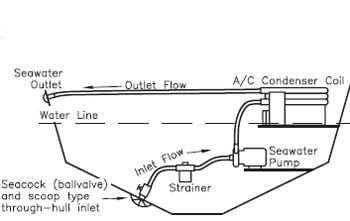
Seawater circulation and air conditioning components.
Antifreeze vs Compressed Air
Marine A/C systems can be winterized using several methods, depending on the system. Some manufacturers provide procedures for using a propylene-glycol antifreeze solution, while others also permit using compressed air to remove water from the seawater circuit. Dometic, for example, describes both antifreeze and compressed-air methods in its marine A/C documentation.
If you use compressed air, follow the A/C manufacturer's instructions and use only the pressure specified for the system. Excessive pressure can damage components or connections. Compressed air can also leave water trapped in portions of the system if the plumbing configuration does not allow it to drain completely.
Propylene-glycol antifreeze can provide freeze protection by displacing water remaining in the seawater circuit. When using antifreeze, choose a product and concentration recommended by the A/C manufacturer. The required concentration and volume can vary by system. For example, current Dometic marine A/C instructions specify a 50/50 antifreeze-and-water solution for certain systems and recommend a method that causes the solution to flow downward and displace trapped water.
About Antifreeze
Two common glycol-based antifreezes are ethylene glycol and propylene glycol. Ethylene glycol is highly toxic and is generally not the preferred choice for boat winterization. Propylene glycol. like our West Marine brand. is less toxic than ethylene glycol and is widely used for marine winterization, but it should still be handled and disposed of responsibly. EPA guidance recommends propylene glycol rather than ethylene glycol for boating because it is less toxic to aquatic organisms.
For winterizing marine A/C systems, use a propylene-glycol antifreeze product intended for the application and follow the A/C manufacturer's instructions for dilution and freeze protection. Do not assume that a lower-temperature rating is always better or that the same concentration is appropriate for every system. For example, current Dometic marine A/C instructions call for a 50/50 antifreeze-and-water solution for certain systems.
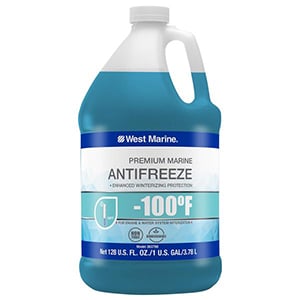
West Marine propylene glycol antifreeze is recommended for winterizing potable water systems, air conditioning systems and all engines.
The amount of antifreeze solution required depends on the volume and configuration of the seawater circuit. Rather than relying on an arbitrary amount, continue the winterization process until the water has been displaced and the endpoint specified by the A/C manufacturer has been reached. For some Dometic systems, the procedure calls for continuing until the discharged solution no longer appears diluted.
Even propylene-glycol antifreeze should not be discharged indiscriminately onto land or into the water. Collect discharged antifreeze and dispose of or recycle it in accordance with applicable federal, state and local requirements. EPA guidance notes that used antifreeze may require recycling or disposal through an appropriate collection facility. For more information about the antifreeze we sell, read Antifreeze 101
What You Will Need
Marine air conditioners can be winterized with the boat in or out of the water. A helper can make the job easier, particularly when you need to monitor the discharge while operating the seawater pump. The tools and supplies you need will depend on your A/C system and the winterization method specified by the manufacturer. They may include a shop vac, screwdriver, funnel, propylene-glycol antifreeze, and a length of hose that fits the system.
Some systems can be winterized using a container and hose to introduce antifreeze into the seawater circuit. Our West Marine Engine Winterizing Kit may also be useful if its hose and fittings are compatible with the A/C system. Before beginning, verify the required antifreeze concentration, amount and connection points in your A/C manufacturer's instructions. It is also a good idea to have some rags on hand to absorb any antifreeze that spills.
Some Preliminary Tasks
Before beginning the actual winterization process, it is a good idea to clean the in-line sea strainer. If the boat is in the water, close the seacock, remove the top, take out the strainer basket, rinse it out, replace it, and screw the top back on. Go over the entire A/C unit with a brush and a shop vac to remove any dust or dirt that may have collected. If possible, use the shop vac to suck any collected dust out of the fins on the evaporator. You should also inspect the ducting and look for evidence of mold. Mold remediation is beyond the scope of this article, but you should be aware of any mold that exists, since it can lead to health problems. Now is the time to remove, clean and reinstall the original slide-in mesh air filter, or better yet, install a Breathe Easy Air Filter. These filters work much better than the factory originals, and improve air quality by attracting and retaining micro particles from diesel smoke, dust, lint, bilge odors and pet dander.
The Winterization Process
The exact winterization procedure varies with the A/C system, seawater pump and plumbing configuration. The following describes a common method for systems that use a seawater pump and a propylene-glycol antifreeze solution. Your A/C manufacturer's instructions should take precedence over these general steps.
Step 1:
If your boat is in the water, close the seacock before disconnecting any hose in the seawater circuit. Before removing a hose from a through-hull fitting, verify that the fitting is above the waterline or use the alternative winterization procedure specified by the A/C manufacturer. A through-hull fitting below the waterline can allow water to enter the boat if its hose is disconnected.
Depending on the A/C system, antifreeze may be introduced at the seawater strainer, pumped into the overboard discharge, or introduced at another point specified by the manufacturer. For example, Dometic's seawater-pump procedure calls for closing the seacock, removing the hose from the strainer discharge, raising the hose above the pump so the pump does not lose its prime, and then introducing the antifreeze solution.
If your system uses a non-self-priming centrifugal pump, maintaining the pump's prime is particularly important. Do not assume that simply placing a container of antifreeze above the highest point in the system is required for every installation. Follow the manufacturer's specified connection point and routing.
Step 2:
Prepare the propylene-glycol antifreeze solution at the concentration specified by the A/C manufacturer. Do not assume that a particular number of gallons will be sufficient. The required amount depends on the volume and configuration of the seawater circuit.
If you are using a winterizing tank, connect its hose to the point specified by the A/C manufacturer and secure the connection with the appropriate hose clamp or fitting. If an adapter or reducer is needed, use a fitting appropriate for the hose and system. Do not force an incompatible fitting onto a hose or connection.
Step 3:
Open the valve on the winterizing tank, if used, to allow the antifreeze solution to enter the seawater circuit. Operate the A/C seawater pump according to the manufacturer's winterization procedure. Make sure the pump remains primed and verify that the solution is moving through the system.
Continue pumping until the water has been displaced and the manufacturer's specified endpoint has been reached. For example, Dometic's instructions for some systems call for pumping the solution through the system until all water has been flushed out and the discharged solution no longer appears diluted.
Collect discharged antifreeze rather than allowing it to enter the water or drain onto the ground. Dispose of or recycle the used solution in accordance with applicable regulations.
Step 4:
Turn off the air conditioner and seawater pump. Disconnect the winterizing hose and reconnect the original hose to the strainer or other connection point, as specified by the manufacturer's procedure. Tighten all hose clamps securely and inspect the connections.
If the manufacturer's winterization procedure calls for draining the strainer or hose between the strainer and seacock, do so. Some marine A/C systems also require removal and storage of the seawater-pump impeller. For example, Dometic specifies removing and storing the magnetically driven impeller on certain systems as part of winterization.
Before leaving the boat for winter storage, verify that all hoses, clamps, fittings and the seacock are in the condition specified by the A/C manufacturer. Make a note of any components that were removed so they can be properly reinstalled during spring commissioning.
When spring arrives, follow the manufacturer's commissioning procedure. This may include opening the seacock, reinstalling a removed impeller, checking for leaks, restoring normal hose connections and flushing residual antifreeze from the seawater circuit. Collect and properly dispose of the flushed antifreeze rather than allowing it to enter the water. Before operating the A/C normally, verify that seawater is flowing properly through the system.