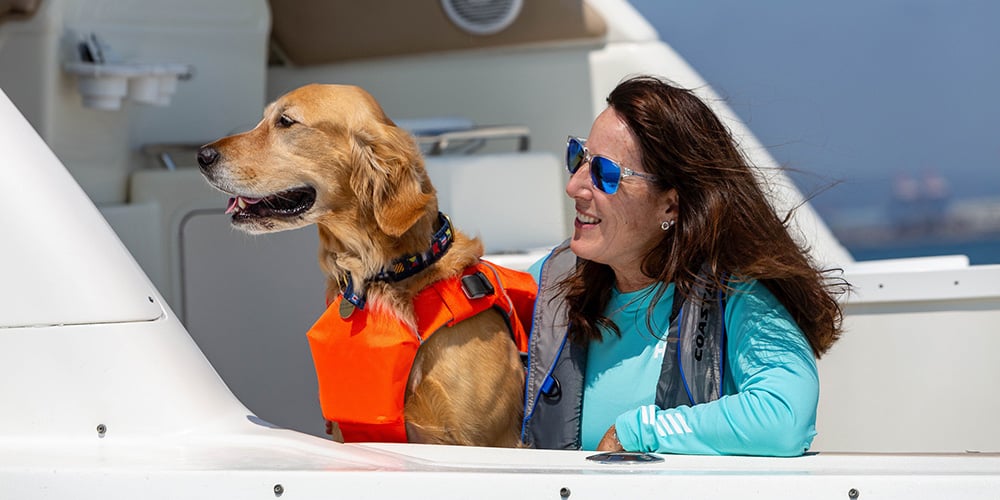
Not all dogs that love water make great boat dogs. A breed that swims brilliantly in a pond may become anxious on a rocking deck, struggle in open-water chop, or simply be too large for the boat you own. This guide covers the breeds best suited specifically to boating — not just water sports in general — along with the physical and temperament traits that separate a natural boat dog from one that will spend every trip under the helm seat.
Before you bring any dog aboard, read our companion West Advisor article Bring Your Dog Aboard for essential safety guidance. And regardless of breed or swimming ability, every dog on a boat needs a properly fitted dog life jacket — even strong swimmers tire in open water and cannot climb back aboard unaided.
- What Makes a Good Boat Dog?
- Top Breeds for Boating
- Other Water-Capable Breeds
- Keeping Your Dog Safe on the Water
- FAQs
What Makes a Good Boat Dog?
Swimming ability is only part of the picture. The best boat dogs also share several behavioral and physical traits that matter specifically on a vessel:
- Calm temperament on a moving platform. A dog that panics on a rocking deck, surges toward the bow at every wake, or is generally high-strung is a safety hazard regardless of how well it swims. The best boat dogs are confident and adaptable.
- Moderate to manageable size. Very large breeds can destabilize a small boat when they move and are extremely difficult to retrieve from the water. Very small breeds are at greater risk from falls and hypothermia. Mid-sized breeds in the 40–80 lb range tend to be the most practical for most recreational vessels.
- Trainability. A boat dog that responds reliably to commands is significantly safer than one that does not. Basic commands — stay, come, down — directly affect whether a dog stays aboard in a crisis.
- Water-resistant coat. A water-resistant double coat helps the dog stay warm and dry off quickly after swimming. Dogs with single, non-water-resistant coats are more susceptible to hypothermia in cool water.
- Webbed feet. Many water breeds have partial webbing between the toes that improves swimming efficiency and reduces fatigue in the water.
Top Breeds for Boating
Labrador Retrievers
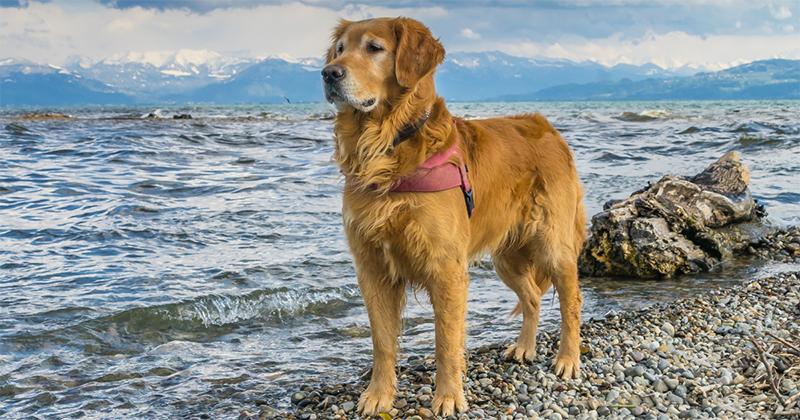
Labrador Retrievers are the most popular breed in the United States and the most commonly seen dog aboard recreational boats, for good reason. Their origins as working dogs alongside fishermen in Newfoundland gave them an authentic working relationship with water and boats — they were literally bred to retrieve lines, haul nets, and work from vessels. Their webbed feet, water-resistant double coat, and powerful build make them strong, efficient swimmers. More importantly for boating, Labs have a calm, adaptable temperament that makes them reliable on a moving platform and easy to train for basic boat safety commands. They tolerate the confined space of a cockpit, handle weather without anxiety, and are large enough to retrieve from the water with a life jacket handle.
Portuguese Water Dogs
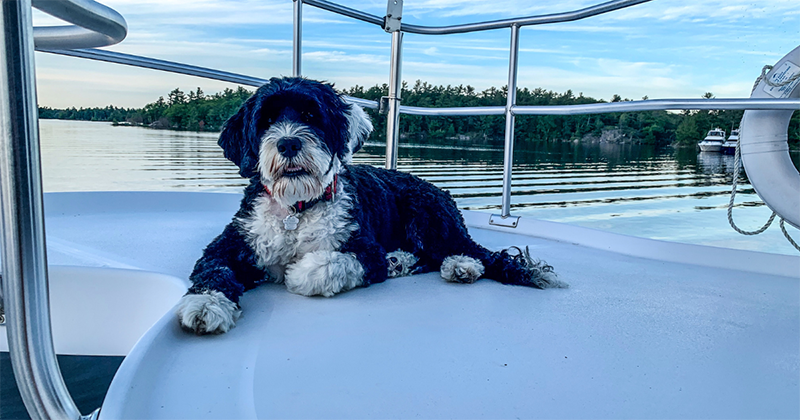
Portuguese Water Dogs were bred specifically to work from fishing boats along the coast of Portugal — herding fish into nets, retrieving broken tackle from the water, and carrying messages between boats. They are one of the few breeds with a genuine working history on vessels rather than just near water. Their webbed feet and waterproof single or wavy double coat make them exceptional swimmers. At 35–60 lbs, they are a practical size for most recreational boats. They are energetic and intelligent, which means they need engagement and exercise, but they respond very well to training and form tight bonds with their families. They also produce less shedding than many retriever breeds, which matters on a boat.
Golden Retrievers
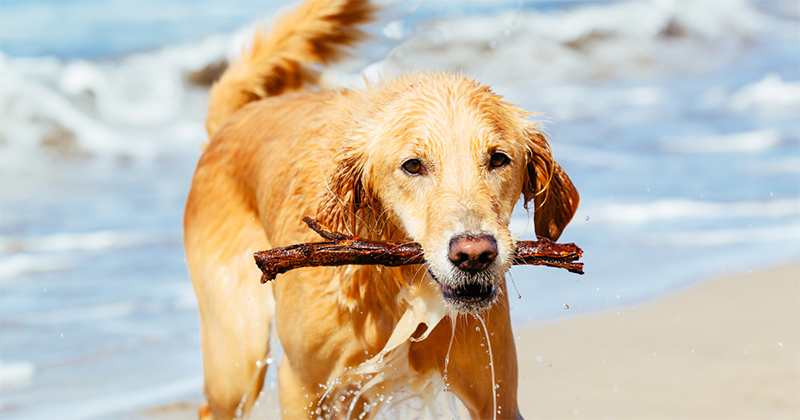
Golden Retrievers share many of the Lab’s boating-friendly traits — webbed feet, water-resistant double coat, strong swimming ability, and excellent trainability. They tend to be slightly calmer than Labs at rest, which can be an advantage on a long day at anchor. Their eagerness to please makes training for boat safety commands straightforward. They are well-suited to families with children and adapt well to the social environment of a marina. One consideration: Golden Retrievers shed heavily, particularly when wet. On a boat that stays wet, this is worth anticipating.
Chesapeake Bay Retrievers
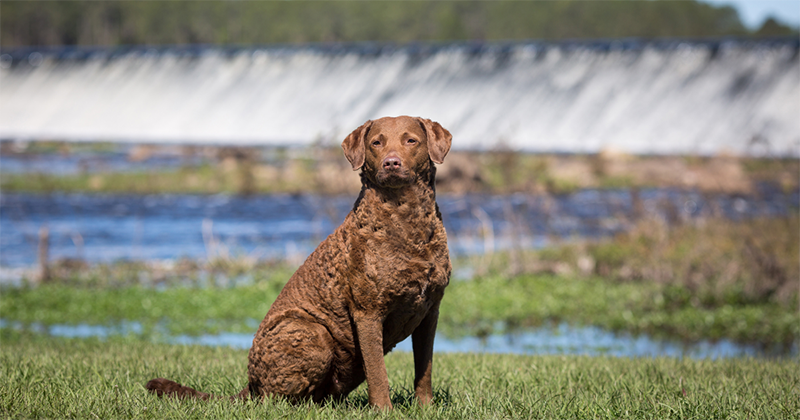
Chesapeake Bay Retrievers — “Chessies” — were developed specifically for the cold, rough conditions of the Chesapeake Bay, where they retrieved waterfowl in icy water that would disable most other breeds. Their dense, oily double coat is the most water-resistant of any retriever, shedding water almost immediately after coming aboard. They are exceptionally strong swimmers with remarkable cold-water endurance. However, Chessies are more independent-minded than Labs or Goldens and require experienced handling — they are not the right choice for a first-time dog owner. They can also be protective and reserved with strangers, which may require management in busy marina environments.
Newfoundlands
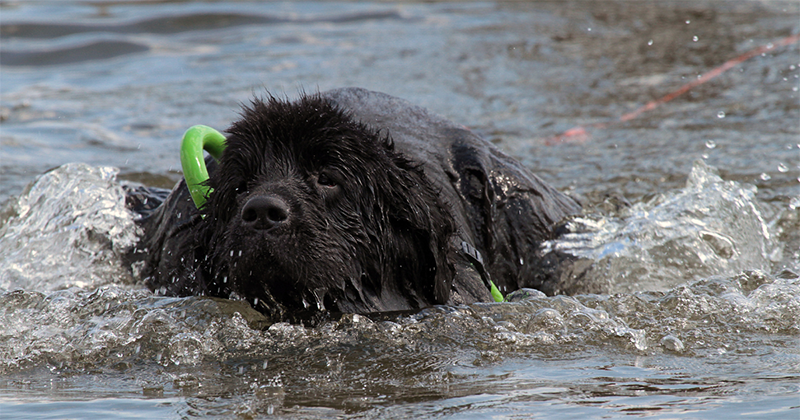
Newfoundlands have the most distinguished water rescue history of any breed. They were originally bred to assist fishermen in Newfoundland and Labrador, and documented historical accounts describe them rescuing people from drowning in rough Atlantic waters. Their size — typically 100–150 lbs — and powerful swimming stroke give them the ability to carry a struggling adult through the water, and their webbed feet and thick waterproof coat enable them to perform in conditions that would defeat smaller breeds. A calm, gentle giant with children, Newfoundlands can be wonderful family boat dogs. The practical considerations are significant, however: they require a larger boat to accommodate safely, are very difficult to retrieve from the water if they go overboard, and drool considerably. A Newfoundland is a working dog and a real commitment for a serious boater.
American Water Spaniels
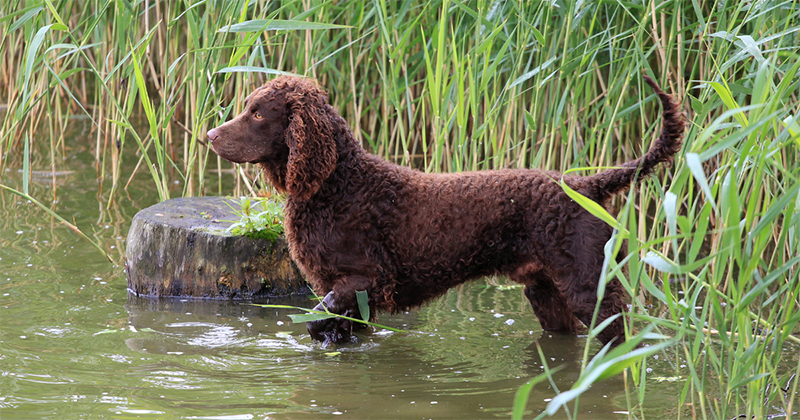
The American Water Spaniel is a genuinely versatile water dog that originated in the Great Lakes region, where it was bred to retrieve from small boats and canoes — making it one of the few breeds developed with small-vessel work explicitly in mind. At 25–45 lbs, it is one of the more practical sizes for a boat of any type. It has a dense, curly, water-resistant coat, is a capable swimmer, and trains well. American Water Spaniels are rarer than the retriever breeds, which means fewer breeders and potentially a longer search, but they are well worth considering for boaters who want a mid-sized, boat-practical dog with genuine water heritage.
Irish Water Spaniels
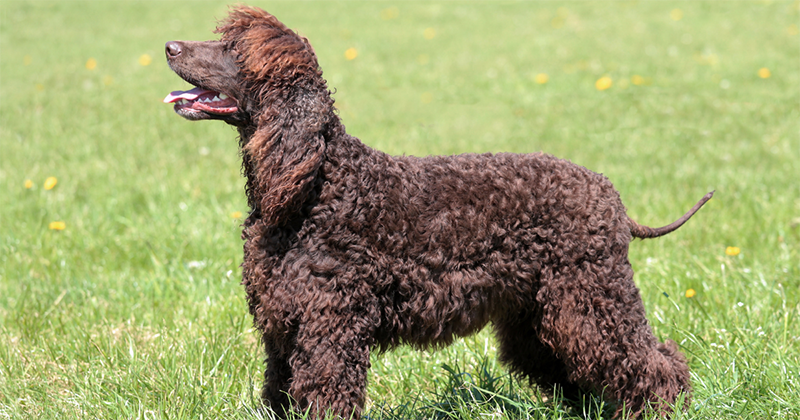
The Irish Water Spaniel is the largest of the spaniel breeds and one of the oldest water-retrieving breeds in existence. Their dense, tightly curled, water-repellent liver-brown coat is one of the most effective water-resistant coats among all breeds, and their powerful build makes them strong, efficient swimmers. They are energetic and playful, with a sense of humor that owners describe as clown-like. Irish Water Spaniels are intelligent and trainable but can be independent and require consistent handling. At 45–65 lbs, they are a practical size for most boats.
Spanish Water Dogs
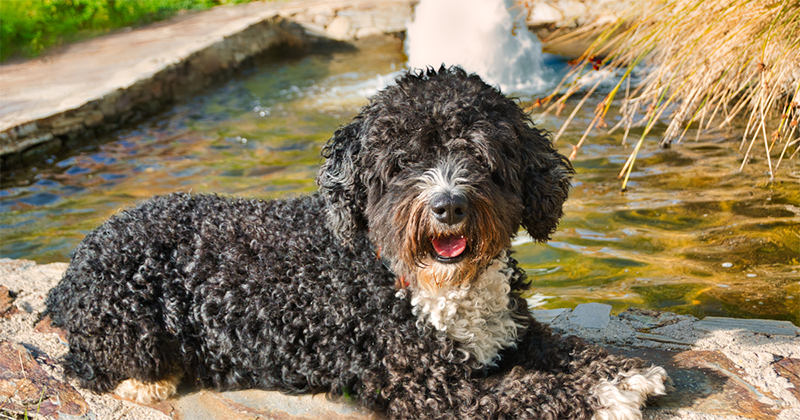
Spanish Water Dogs are an ancient multi-purpose working breed from Spain, historically used by fishermen and shepherds alike. Their compact, muscular build and curly, water-resistant coat equip them well for swimming. At 31–49 lbs, they are a practical size for most boats. They are highly intelligent, alert, and loyal to their families, and form very strong bonds with their people. Spanish Water Dogs can be reserved with strangers, which is worth considering in a busy marina environment, and they require adequate exercise and mental engagement. They are less well-known in the US than the retriever breeds but represent a capable and distinctive choice for boaters looking for something different.
Standard Poodles
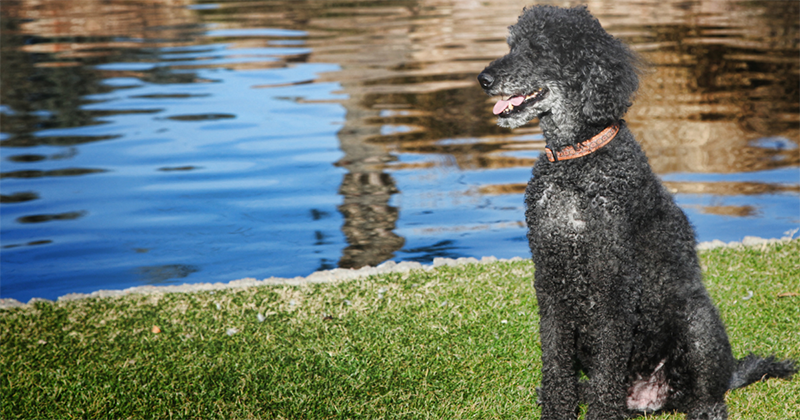
Standard Poodles are frequently underestimated as boat dogs because of their association with show grooming, but their actual history is as duck-retrieving water dogs in Germany — the traditional lion clip was functional, not decorative, designed to protect the joints and chest in cold water while reducing drag in the hindquarters. They are athletic, extremely intelligent, and highly trainable. Their dense, water-resistant curly coat keeps them warm in cool water, and they are strong, efficient swimmers. At 40–70 lbs, they are practical for most vessels. Poodles are also among the lowest-shedding breeds, which is a real advantage on a boat where wet hair accumulates quickly.
Other Water-Capable Breeds
Several less common breeds are well worth considering for boaters who want something beyond the standard retriever options:
- Barbet: An ancient French water dog with a dense, curly, water-resistant coat and gentle, sociable temperament. Well-suited to families. Rare in the US.
- Curly-Coated Retriever: The tallest of the retrievers, with a distinctive tight-curled coat that is highly water-resistant. Independent and athletic, better suited to experienced dog owners.
- Flat-Coated Retriever: Similar in temperament to a Golden but with a glossy flat coat. Enthusiastic swimmers with high energy that persists well into adulthood — plan for exercise both on and off the water.
- Boykin Spaniel: South Carolina’s state dog, originally bred for hunting from small boats in shallow swamps. At 25–40 lbs, it is one of the more practical sizes for smaller vessels, and it has genuine small-boat heritage.
- Nova Scotia Duck Tolling Retriever: The smallest of the retriever breeds at 35–50 lbs, highly athletic, and a strong swimmer. Energetic and demanding of exercise but highly trainable and compact enough for smaller boats.
Keeping Your Dog Safe on the Water
Life jacket, always. No matter how strong a swimmer your dog is, a dog life jacket is required on a boat. Open water is not a pond — your dog can tire from fighting current, chop, or wind without you realizing it, and cannot climb back aboard unaided. Look for a jacket with a sturdy grab handle on the back (essential for retrieving your dog from the water), reflective trim for visibility, and a D-ring for a leash. Brands including Ruffwear, Bay Dog, and West Marine offer properly designed options in sizes for all breeds.
Proper fit matters. Weigh your dog and measure neck circumference, chest girth, and back length before purchasing a life jacket. Sizing varies between manufacturers. A jacket that is too loose will not support the dog correctly and can ride up over the head in the water. A jacket that is too tight restricts breathing and paddling. Test fit at home before the first on-water use.
Introduce the boat gradually. Before taking your dog offshore, let it board and explore while the boat is docked, then in calm conditions at anchor, before progressively introducing motion and open water. Dogs that are introduced gradually have significantly better outcomes than those thrown into a challenging first experience.
Know the signs of fatigue and distress. A dog that is tiring in the water will hold its head lower, swim more slowly, and may begin swimming away from the boat rather than toward it. Excessive panting, trembling, or uncoordinated movements are warning signs of hypothermia. Retrieve any dog showing distress immediately using the life jacket handle.
Fresh water and shade. Dogs cannot sweat to cool themselves and rely entirely on panting. On a hot day on the water, shade and constant access to fresh water are essential. Sun exposure on reflective water is intense — dogs with light-colored coats and pink skin are susceptible to sunburn on their noses and ear tips.
For comprehensive guidance on gear, fitting, boarding procedures, and on-water safety for dogs, see our West Advisor article Bring Your Dog Aboard.
Frequently Asked Questions
What is the best dog breed for boating?
Labrador Retrievers and Portuguese Water Dogs are the most commonly recommended breeds for boating because they combine genuine water-working heritage, strong swimming ability, adaptable temperament on a moving vessel, and excellent trainability. For smaller boats, the American Water Spaniel and Boykin Spaniel are practical mid-sized options with boat-specific working histories. The right breed also depends on your boat size, boating style, and experience level with dogs.
Do all water dogs make good boat dogs?
No. Swimming ability alone does not make a dog suitable for boating. Temperament on a moving platform, trainability, size relative to the vessel, and the ability to remain calm under novel stimuli all matter as much as or more than swimming skill. A breed that excels at dock diving in a calm lake may become anxious and unsafe on a vessel in open water.
Does my dog need a life jacket on a boat even if it can swim?
Yes. Strong swimmers tire in open water, particularly in chop, current, or cold conditions. A dog that goes overboard unexpectedly may be confused and swim away from the boat rather than toward it. Even if the dog can swim indefinitely, a life jacket provides a grab handle for retrieval — without it, pulling a large, wet, panicking dog back aboard is extremely difficult and dangerous. All dogs aboard should wear a properly fitted life jacket whenever underway.
What size dog is best for a boat?
Practical boat size and dog size need to match. For most recreational vessels — center consoles, cruisers, and sailboats under 40 feet — dogs in the 35–65 lb range are the most manageable. They are large enough to be physically stable on a moving deck, small enough to retrieve from the water if necessary, and light enough not to significantly affect stability or seating. Very large breeds (over 100 lbs) require a larger boat and create meaningful challenges for retrieval from the water.
How do I know if my dog is suited to boating?
Start with dockside boarding while the boat is stationary to assess calm behavior. Gradually introduce gentle motion and unfamiliar sounds. Dogs that are curious and adaptable in new environments generally translate that trait to boating. Dogs that are noise-sensitive, motion-sensitive, or prone to anxiety require more careful introduction and may ultimately not be comfortable on a boat regardless of breed. A dog that cannot settle when asked is a safety risk on the water.