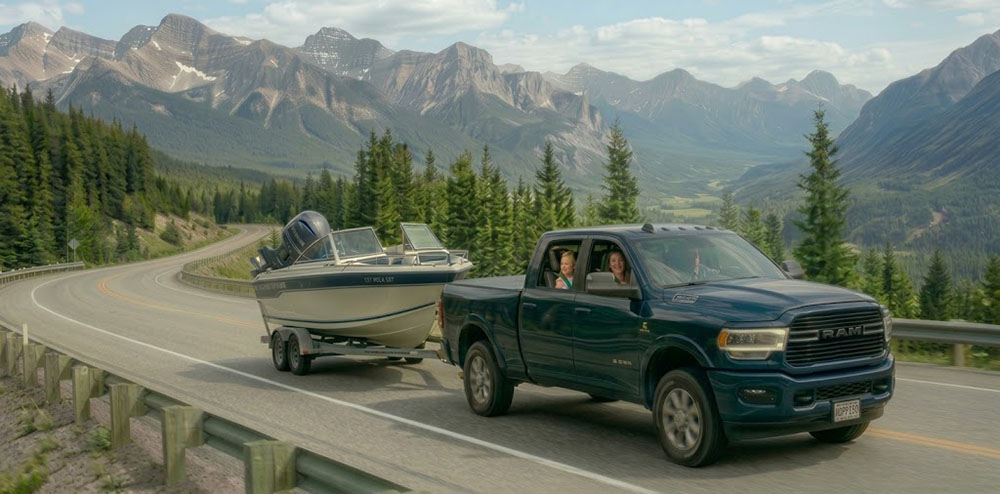
Towing a boat may seem straightforward, but it requires proper preparation and attention to safety. A poorly secured trailer or an overloaded vehicle can lead to dangerous situations on the road or at the boat ramp. Learning the basics of boat towing—such as correct hitching, weight distribution, and equipment checks—helps ensure a safe trip to and from the water.
Table of Contents
- Watch The Video
- 1. The Drain Plug
- 2. Secure Loose Gear
- 3. Collapse and Secure Canvas
- 4. Install Transom Tie-Downs and Secure the Engine
- 5. Check Hitch Connection
- 6. Verify Hitch Pin and Tongue Lock
- 7. Inspect Safety Chains
- 8. Check Breakaway Cable
- 9. Confirm Trailer Light Connection
- 10. Secure the Bow Winch Strap
- 11. Test Trailer Lights
- 12. Inspect Trailer Tires and Bearings
- Key Takeaway
Watch The Video
The video above (kindly supplied to us by BoatUS) explains the fundamentals of safely towing a boat with a vehicle and preparing both the trailer and boat before heading out. It emphasizes that successful towing begins with the right equipment: a vehicle with adequate towing capacity, a compatible trailer, and a properly matched hitch.
Before towing, the boat must be firmly secured to the trailer. The bow winch strap, safety chain, and tie-down straps should all be tightened to prevent movement while driving. The trailer must also be correctly attached to the tow vehicle, including locking the coupler onto the hitch ball, connecting the safety chains, and plugging in the trailer lights.
The video also stresses the importance of checking the load balance and ensuring the boat’s weight is distributed properly over the trailer axle. Poor weight distribution can cause trailer sway, making the vehicle difficult to control. Drivers should leave extra stopping distance and perform quick inspections during travel stops.
Boat Towing Safety Checklist
1. The Drain Plug
Before hitting the road, make sure your boat's transom drain plug is in place. Many boats have sunk at the launch ramp because their owners forgot this simple task. Similarly, after pulling your boat out of the water, pull the boat’s drain plug as soon as possible so any water within your boat drains out. This helps prevent transporting aquatic invasive species and follows “clean, drain, dry” best practices in many areas.
2. Secure Loose Gear
Stow items that could shift or blow away while driving, such as:
- Life jackets
- Fenders
- Dock lines
- Coolers
- Towables or loose equipment
Anything that cannot withstand highway wind forces should be stored securely.
3. Collapse and Secure Canvas
Lower and secure items like:
- Bimini tops
- Boat covers
- Sunshades
At highway speeds, your boat experiences wind forces similar to tropical-storm-level gusts, so canvas must be secured properly.
4. Install Transom Tie-Downs and Secure the Engine
Attach and tighten transom tie-down straps to secure the boat firmly to the trailer. The straps should be snug but not overly tight.
If you have an outboard or stern drive, tilt the engine up so the skeg clears the pavement and install a transom saver or prop tie-down if you use one. This prevents damage and reduces stress on the transom during transport.
5. Check Hitch Connection
Confirm that the trailer coupler is fully seated and locked onto the hitch ball.
6. Verify Hitch Pin and Tongue Lock
Ensure the drawbar pin and trailer tongue latch are properly secured with a clip, cotter pin, or locking device.
7. Inspect Safety Chains
Make sure the trailer’s safety chains or cables are properly attached between the trailer and tow vehicle.
8. Check Breakaway Cable
Confirm the emergency brake (breakaway) cable is connected correctly and hanging freely so it can activate the trailer brakes if needed.
9. Confirm Trailer Light Connection
Check that the electrical plug connecting the trailer lights to the tow vehicle is fully seated and secure. These connections can sometimes loosen during travel.
10. Secure the Bow Winch Strap
Ensure the winch strap is tight and the bow eye is pulled firmly against the bow stop. This prevents the boat from bouncing during travel, which can stress and weaken the trailer tongue over time. Attach the safety chain if your trailer has one.
11. Test Trailer Lights
Turn on the tow vehicle’s hazard flashers to confirm that the trailer lights are functioning properly. This allows one person to verify that turn signals, brake lights, and running lights are working.
12. Inspect Trailer Tires and Bearings
Walk around the trailer and check:
- Tire pressure
- Tire sidewalls for bulges or damage
- Signs of grease around the hubs (which may indicate overheating bearings)
- The condition and pressure of the spare tire
If you trailer frequently, carrying a 12-volt air pump can be helpful for quick tire adjustments before heading out.
Key Takeaway
Safe boat towing depends on preparation. A quick inspection of the hitch, straps, lights, loose gear, and load balance can prevent accidents and make the entire boating trip smoother.