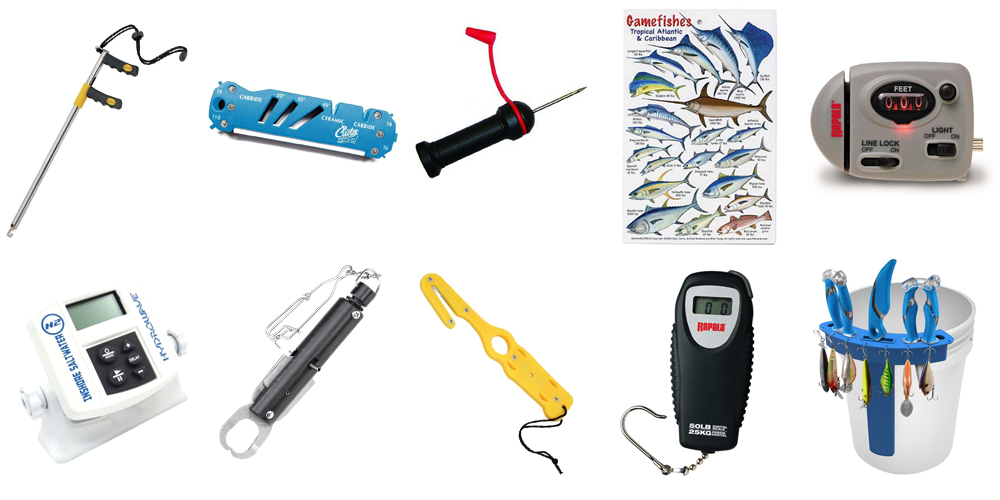
Great fishing stories often come down to the details — the right tool at the right moment can turn a tricky situation into a triumphant catch. Whether you’re battling a deeply embedded hook, weighing a trophy fish, or organizing your tackle, this gear has you covered.
- For difficult-to-remove hooks: CALCUTTA 14½” Dual Handle Hook Remover
- To keep knives, scissors, and hooks sharp: CUDA Knife, Shear, and Hook Sharpener
- To release bottom fish caught at depth: ANGLER’S CHOICE Fish Venting Tool
- To easily identify fish and marine life: MARINE SPORTS Marine Life Identification Cards
- For precise line management: RAPALA Lighted Line Counter
- To attract fish to your boat: T-H MARINE Hydrowave H2 Inshore Marine Audio Fish Attracting Device
- To return bottom fish to depth: SEAQUALIZER Pressure Activated Descending Tool
- To quickly cut fishing line entanglements: CALCUTTA Emergency Release Tool
- To keep boastful anglers honest: RAPALA 50 lb. Mini Digital Fish Scale
- To keep lures and tools ready for use: CUDA Bucket Tackle Center
CALCUTTA 14½” Dual Handle Hook Remover
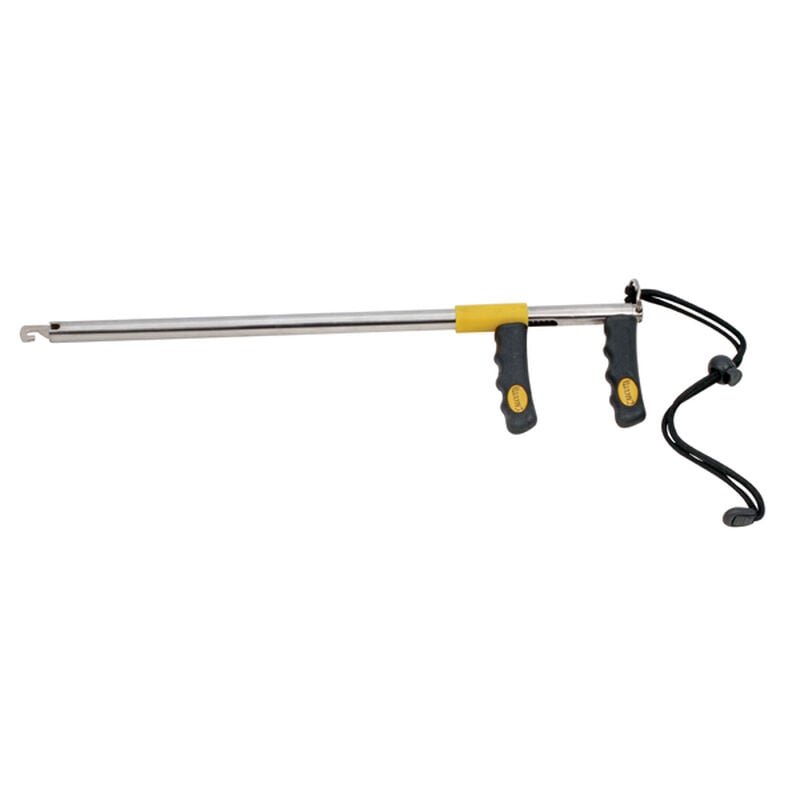
CALCUTTA 14½” Dual Handle Hook Remover — shop now
About this Hook Remover: Wrestle even the most deeply lodged hooks back from the jaws of defeat. This heavy-duty hook remover is built with dual, non-slip, molded handles to provide a secure grip during tricky extractions. Its 14½” stainless steel body is corrosion-resistant, and the spring-loaded plunger makes quick work of removing deep-set hooks. A wrist lanyard prevents loss overboard.
Who can benefit: Any angler who releases fish frequently — particularly those targeting species like flounder, striped bass, or redfish that often swallow smaller baits deeply. The extended reach keeps your hands clear of teeth and spines while removing hooks the fingers can’t reach.
Why we like it: The corrosion-resistant stainless steel holds up in saltwater, and the dual-handle design gives you the leverage to back out even a treble hook that has set firmly in a fish’s jaw. Faster than pliers in most situations.
CUDA Knife, Shear, and Hook Sharpener
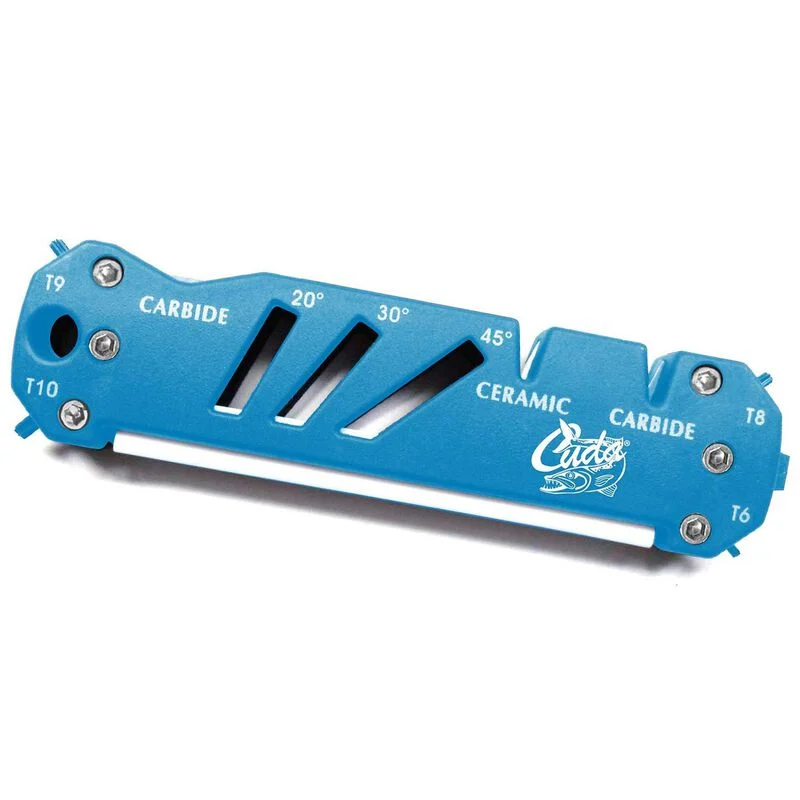
CUDA Knife, Shear, and Hook Sharpener — shop now
About this Sharpener: A dull hook loses fish. This compact multi-tool combines a knife and hook sharpener with Torx and flathead screwdrivers. Carbide sharpening restores a rough edge quickly; ceramic refines and polishes it. The scissor sharpening area accommodates 20°, 30°, and 45° blade angles, making it useful for fillet knives, braid scissors, and hook points alike.
Who can benefit: Any angler who fishes with lures or bait for an extended session. Hook points dull from contact with rocks, structure, and fish mouths — a quick touch-up on the sharpener before changing spots can restore a hook’s ability to stick on a soft strike.
Why we like it: Its multi-purpose design saves space in your tackle bag, and the multiple sharpening options ensure every cutting tool — from your fillet knife to your micro jig hooks — stays ready to perform.
ANGLER’S CHOICE Fish Venting Tool
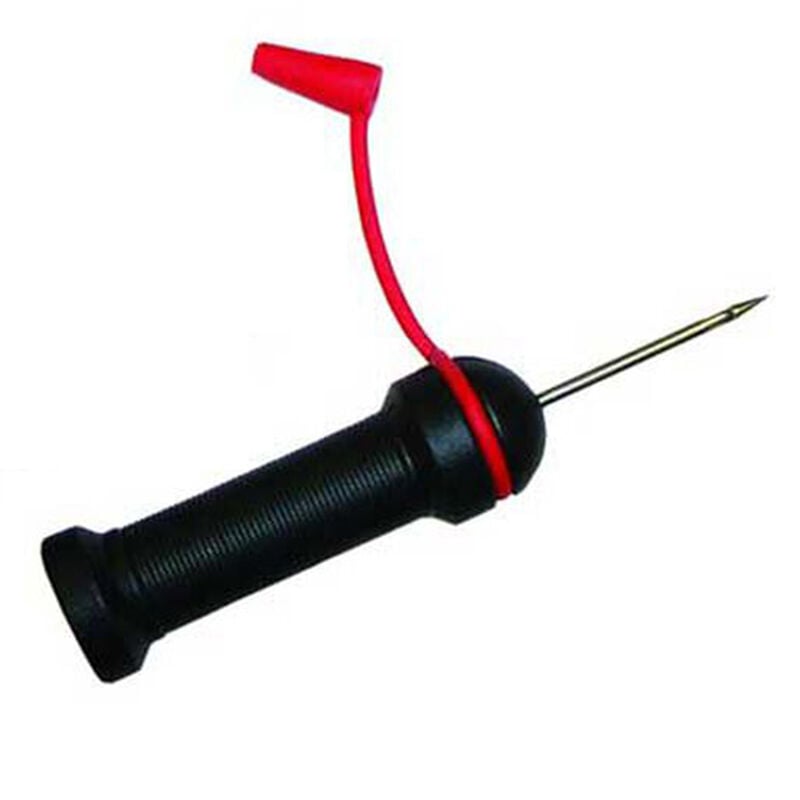
ANGLER’S CHOICE Fish Venting Tool — shop now
About this Venting Tool: Bottom fish — grouper, snapper, black sea bass, and similar species — brought up from depth suffer from barotrauma as expanding gases prevent them from swimming back down. This tool is designed to safely vent the air bladder, releasing the pressure that causes the fish to float belly-up. The no-clog side vent needle and double-hilted, non-slip handle ensure safe and effective venting. An integrated bungee cap protects the needle tip when not in use.
Venting vs. descending — which should you use? Venting punctures the air bladder to release gas directly. It requires accurate needle placement and increases the risk of infection if done incorrectly. Descending (see the Seaqualizer below) returns the fish to depth under pressure so the gas recompresses naturally without puncture. Fisheries managers and most conservation organizations now recommend descending over venting when the gear is available. Venting remains a valid backup when a descending device isn’t on board.
Why we like it: The no-clog needle and ergonomic handle make it effective and easy to use under pressure when a fish needs to go back quickly.
MARINE SPORTS Marine Life Identification Cards
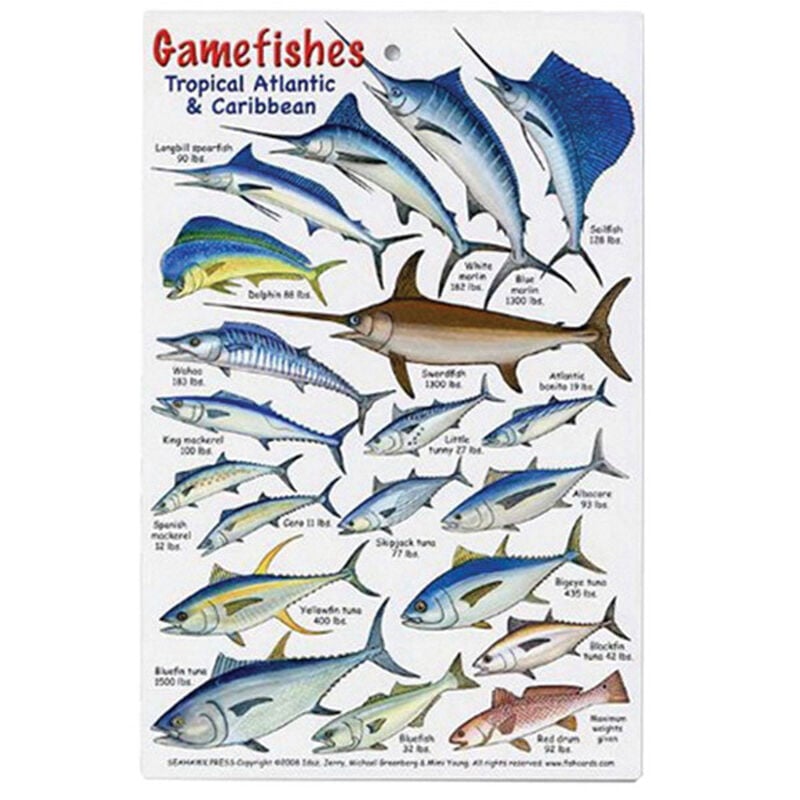
MARINE SPORTS Tropical Atlantic and Caribbean Gamefish Identification Card — select the card that matches your fishery from the list below.
About these ID Cards: Rugged, waterproof 6” x 9” reference cards with clear illustrations for identifying inshore and offshore marine life. Built for real use on a wet deck, not a coffee table.
Available cards:
- Dangerous Creatures Identification Card
- Tropical Atlantic and Caribbean Gamefish Identification Card
- Above and Below Water Mangroves Environment Identification Card
- Beachcomber’s Field Guide, Tropical Atlantic, Caribbean, Gulf of Mexico Shell ID Card
- Reefcomber’s Guide Identification Card
Who can benefit: Anglers who need to identify a catch before deciding whether to keep it — knowing whether that snapper is a lane or a mutton, or whether that grouper is a legal species or a protected one, can save you a citation. Also useful for divers, snorkelers, and beach explorers.
Why we like it: The Dangerous Creatures card in particular is underrated — knowing the difference between a scorpionfish and a rockfish, or which rays are venomous, is genuinely useful safety information for anyone fishing around reefs and structure.
RAPALA Lighted Line Counter
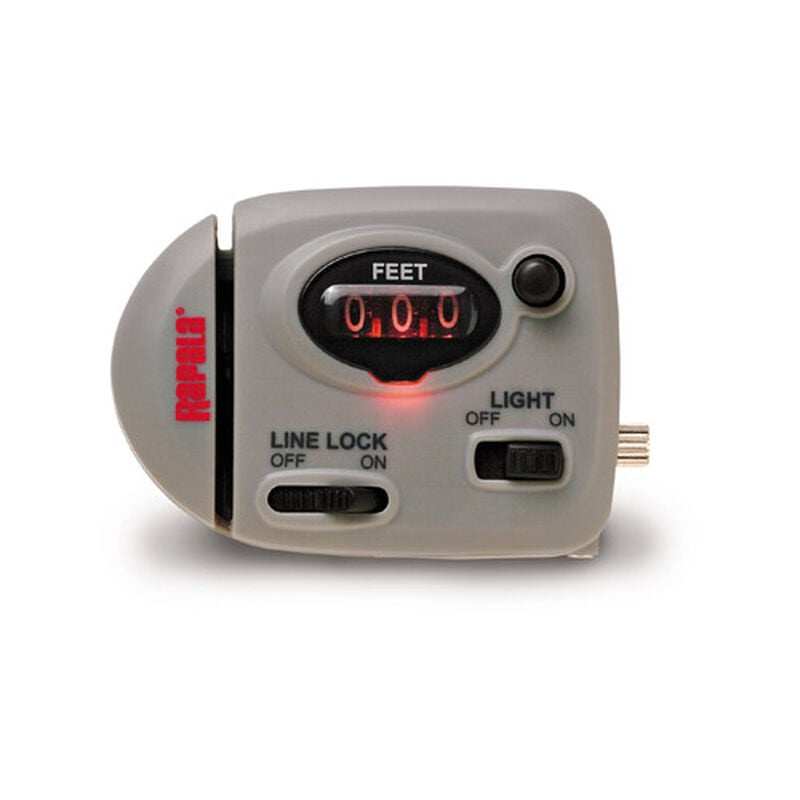
RAPALA Lighted Line Counter — shop now
About this Line Counter: Measures fishing line paid out up to 999 feet. Features a lighted display for low-light use, push-button reset, and automatic line release when a fish strikes. Adjustable padded screw clamp fits most rod blanks.
Who can benefit: Trollers working a specific depth behind the boat, deep-dropping anglers targeting a precise depth window, and any angler who wants to recreate a successful presentation by returning the lure to the exact same depth and distance. When you find fish at a specific line count, being able to repeat that setting reliably puts more fish in the boat.
Why we like it: The lighted display is the practical differentiator — dawn and dusk are often the most productive trolling times, and being able to read the counter in low light without a flashlight makes a real difference.
T-H MARINE Hydrowave H2 Inshore Marine Audio Fish Attracting Device
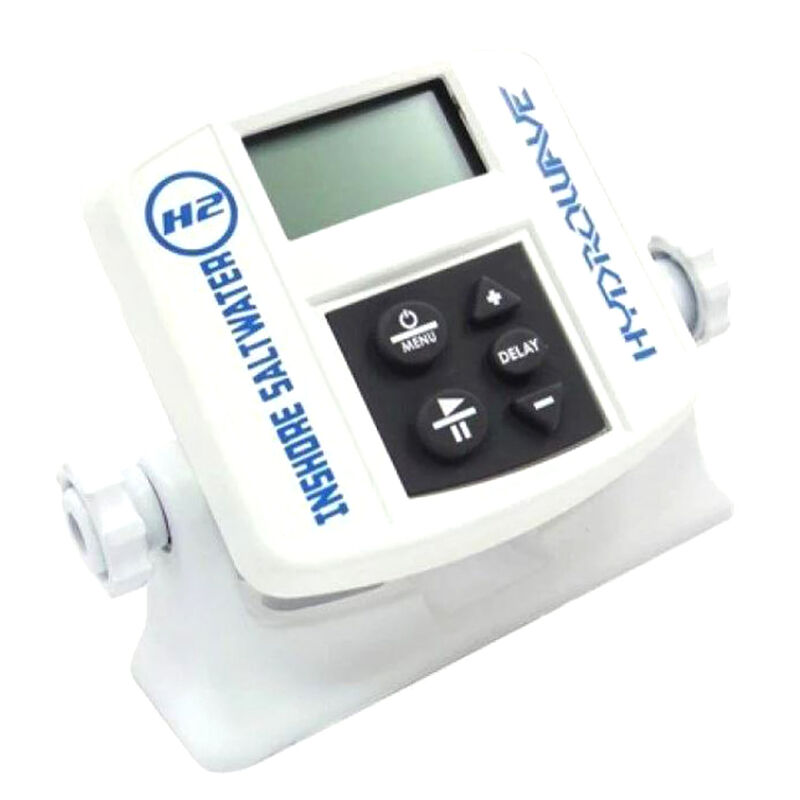
T-H MARINE Hydrowave H2 Inshore Marine Audio Fish Attracting Device — shop now
About this Fish Attracting Device: The Hydrowave H2 emits underwater sounds that mimic the feeding activity of baitfish — shrimp popping, baitfish fleeing, predators feeding — using 16 customizable sound patterns to trigger predatory feeding responses. Lightweight and portable with easy mounting options.
Who can benefit: Inshore anglers targeting redfish, speckled trout, flounder, and similar predatory species that are conditioned to respond to the sounds of feeding activity. The concept is well-established — commercial live-bait tanks have long been known to attract fish to the boat, and the Hydrowave replicates that acoustic effect without live bait.
Why we like it: The 16 sound patterns allow you to match the prevalent baitfish in your area — shrimp patterns for grass flats, mullet patterns for surf edges and passes. Whether or not you believe the science entirely, the device has a significant following among competitive inshore anglers who fish for money and don’t carry gear that doesn’t work.
SEAQUALIZER Pressure Activated Descending Tool
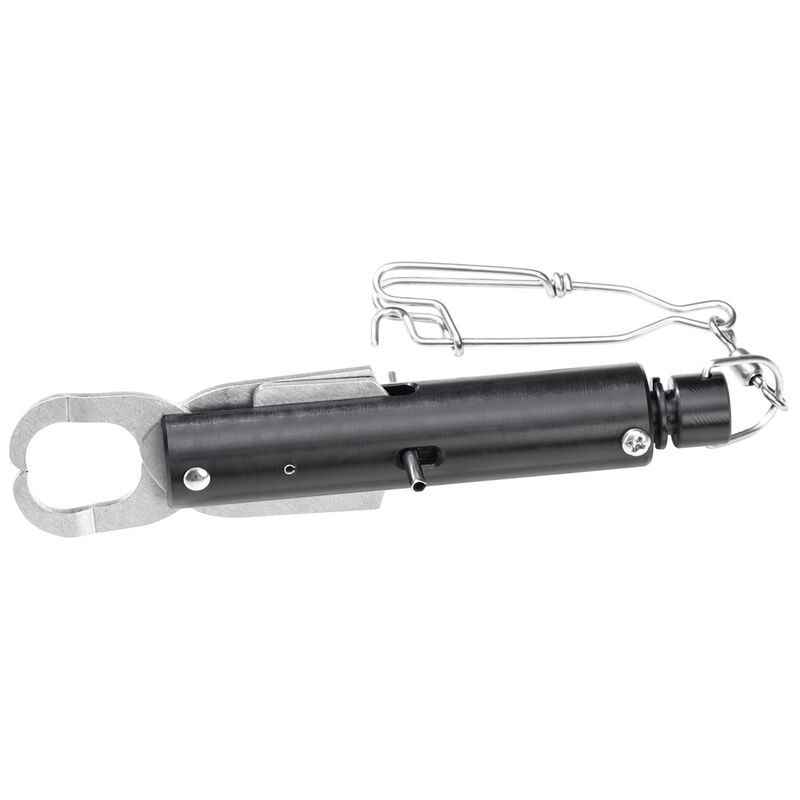
SEAQUALIZER Pressure Activated Descending Tool — shop now
About this Descending Tool: An alternative to venting for releasing bottom fish suffering from barotrauma. The Seaqualizer clamps onto the fish’s lip and lowers it back to depth on a weighted line. At the pre-set pressure depth, the jaws release automatically, allowing the fish to swim away as the gas in its air bladder recompresses under pressure. Available in settings for different target depths.
Why descending is preferred over venting: Puncturing the air bladder with a venting needle introduces infection risk and requires accurate anatomical placement. Returning the fish to depth via a descending device allows natural recompression without tissue damage. NOAA Fisheries and most saltwater conservation organizations now recommend descending devices as the preferred release method for reef fish when anglers are fishing in deep enough water that venting would otherwise be required. Some Gulf of Mexico fisheries now require descending devices on board.
Why we like it: The pressure-activated release is clean and foolproof — you don’t have to guess when to trigger the release; the water pressure does it for you at the preset depth. A straightforward conservation tool that keeps more fish alive and in the water.
CALCUTTA Emergency Release Tool
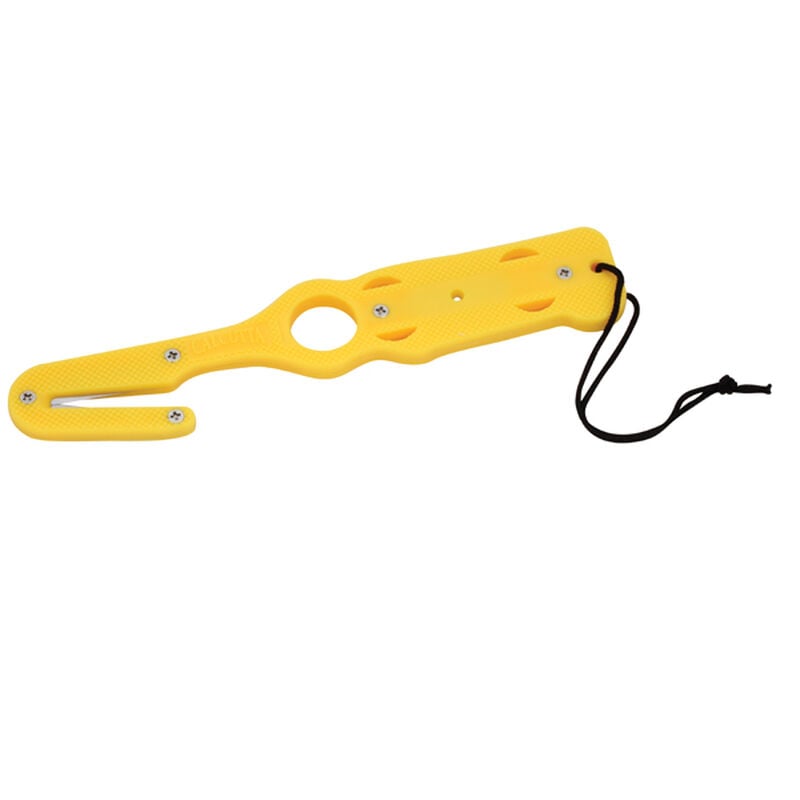
CALCUTTA Emergency Release Tool — shop now
About this Line Cutter: A quick-action line cutter for cutting through entangled fishing line in seconds. The ergonomic handle and concave sides provide excellent grip with wet hands, and the recessed blade design protects fingers during the cut. Includes a wrist lanyard and replacement blade.
Who can benefit: Any angler or crew member who might need to free line quickly — from a wrapped propeller, a tangle around a limb or structure, or an entanglement emergency involving gear or marine life. In a situation where a tangled line needs to come free immediately, fumbling for scissors or a knife costs critical seconds.
Why we like it: The bright yellow color is the most important feature — it’s immediately visible against a cluttered cockpit floor or deck. A tool you can’t find quickly in an emergency is a tool that isn’t there. Keep it clipped to the gunwale or on your person.
RAPALA 50 lb. Mini Digital Fish Scale
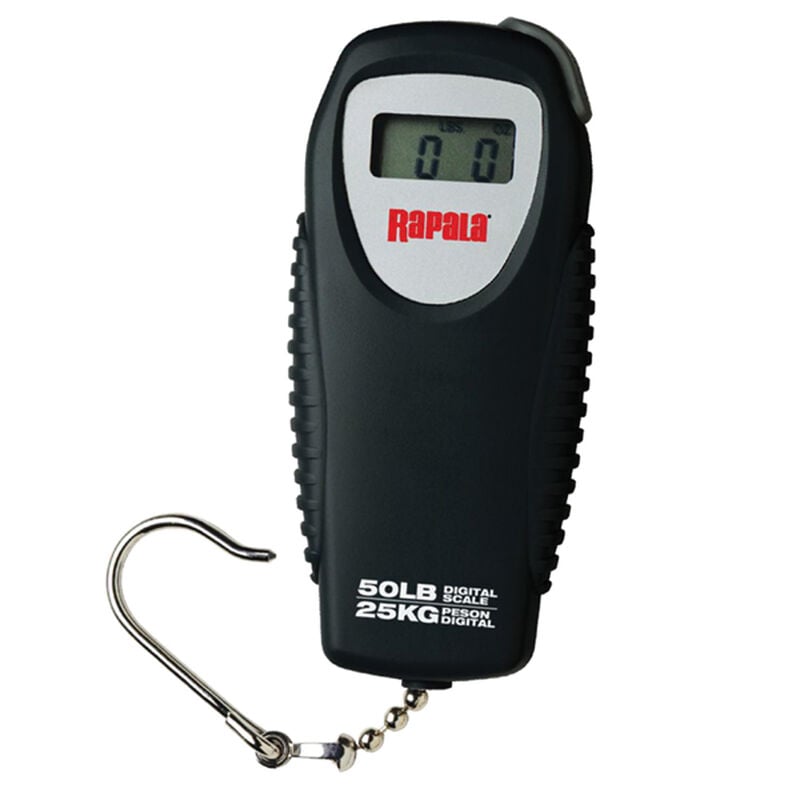
RAPALA 50 lb. Mini Digital Fish Scale — shop now
About this Fish Scale: Compact, water-resistant, and pocket-sized. Accurately measures catches up to 50 lbs with a chrome-plated hook, tare weight function (so you can zero out the weight of a bag or lip grip before weighing the fish), and automatic shutoff for battery life.
Who can benefit: Tournament anglers who need an accurate quick weight for culling decisions, anyone who wants to verify a personal best before release, and anyone who fishes with someone who claims their bass was “at least six pounds.”
Why we like it: The tare function is genuinely useful — hanging a fish from a lip-grip and zeroing the scale before lifting means you get the fish weight, not the fish-plus-grip weight. Small enough to live permanently in a tackle bag without taking up meaningful space.
CUDA Bucket Tackle Center
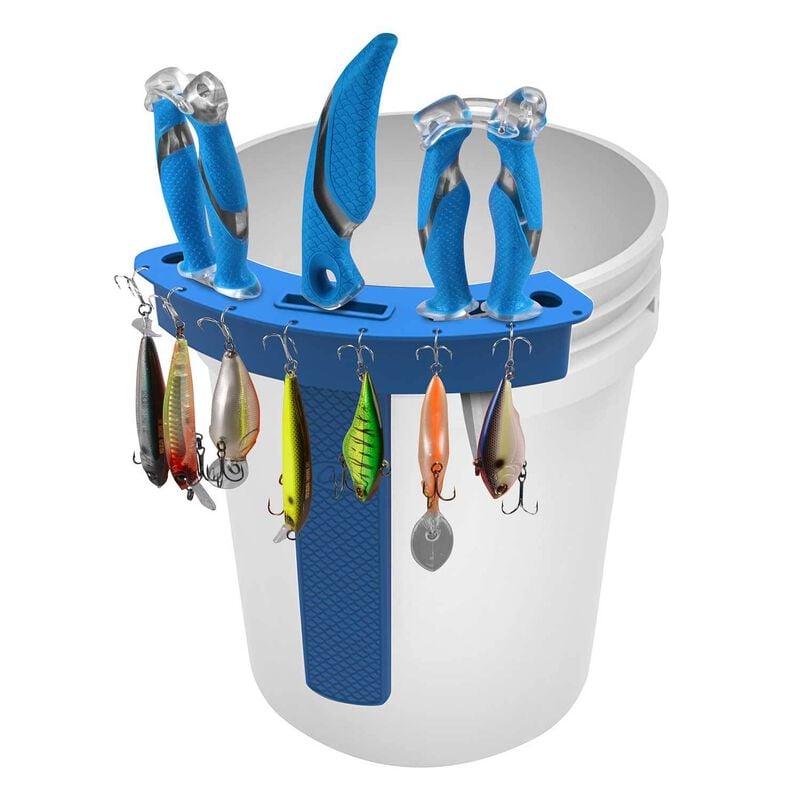
CUDA Bucket Tackle Center — shop now. Bucket, fillet knife, tools, and lures sold separately.
About this Tackle Organizer: Snaps onto any standard 5-gallon bucket and transforms it into a tackle station with built-in knife sheaths, tool slots, and integrated hook holder holes. Keeps your most-used gear off the deck and within reach.
Who can benefit: Kayak anglers, wade fishermen, pier and bank anglers, and anyone who uses a 5-gallon bucket as a bait well or fish keeper. The bucket becomes a complete mobile workstation rather than just a container.
Why we like it: The combination of the bucket tackle center, a good fillet knife (stored in the built-in sheath), the hook remover, and the emergency line cutter described above turns a $5 bucket into a complete boat-side fish processing and tackle management station. Simple, inexpensive, and practical.
Frequently Asked Questions
What is the difference between a venting tool and a descending device?
Both address barotrauma — the condition where gases expand in a fish’s air bladder when it is brought up from depth, preventing it from swimming back down. A venting tool punctures the air bladder with a needle to release the gas directly. A descending device (like the Seaqualizer) clamps onto the fish’s lip and lowers it back to depth on a weighted line, where the pressure causes the gas to recompress naturally. Descending is now the preferred method recommended by NOAA Fisheries because it avoids the infection risk and anatomical accuracy required for effective venting. Carry both if space allows; use the descender first.
Do fish attracting devices like the Hydrowave actually work?
The scientific evidence is mixed, but anecdotal adoption among serious tournament anglers — who stake prize money on their tackle choices — is substantial. The underlying mechanism is established: predatory fish respond to the sounds of feeding activity and distressed baitfish. Whether a device can reliably replicate those sounds at a level that changes fishing outcomes depends on the specific fishery, conditions, and species targeted. Inshore species like redfish and speckled trout in grass flat environments, where feeding activity sounds are a normal part of locating prey, are the most cited use case. Results vary.
How do I sharpen a fish hook properly?
A sharp hook penetrates on light pressure; a dull one requires force that a fish can resist or that tears loose. To test sharpness, drag the point lightly across your thumbnail — a sharp hook catches and drags; a dull one slides. To sharpen: hold the hook securely and stroke the point away from you at a low angle (approximately 20 degrees) using a fine-grit hook file or the ceramic sharpening surface on a tool like the CUDA sharpener. Three to four strokes per flat side plus the point is usually sufficient to restore a working edge. Check sharpness with the thumbnail test after sharpening.
Should I keep a line counter on my trolling setup?
Yes, if you troll consistently. The most common reason anglers can’t repeat a productive troll pattern is that they don’t know how much line they had out when they got the strike. A line counter removes that guesswork entirely. When a fish hits at 180 feet of line, you reset to 180 on every rod and put the next pass in exactly the same position. In competitive trolling for walleye, king salmon, and similar species, line counter reels and clip-on counters like the Rapala model are considered standard equipment rather than optional accessories.
We’re Here to Help
West Marine is the perfect place to get ready for your next fishing trip. We offer free line spooling and locally assorted tackle in most of our stores to gear you up for what’s biting in your area. Find your nearest West Marine store.


