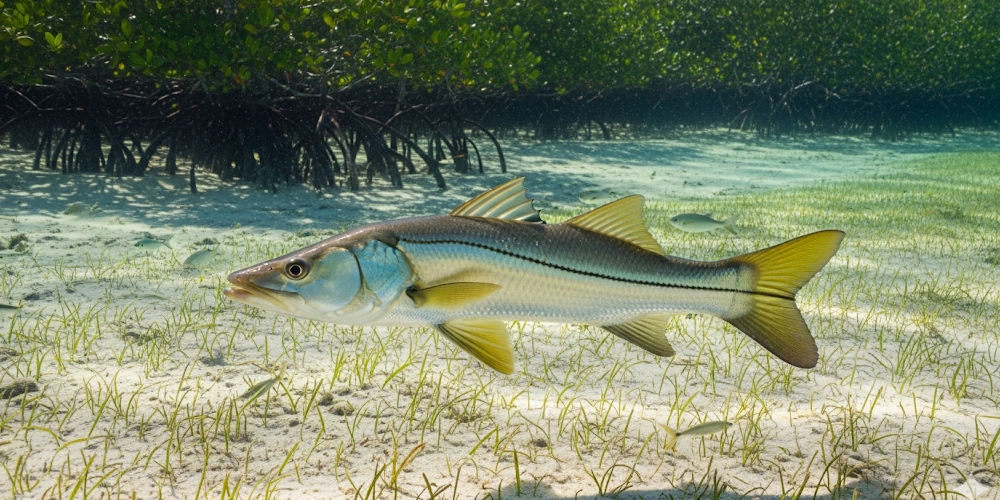
Understanding Snook Behavior Throughout the Year
Snook are highly migratory predators whose location changes with water temperature, bait movement, tides, spawning activity, and forage availability. Understanding these seasonal patterns is often the difference between occasionally catching snook and consistently locating larger fish throughout the year.
Spring Snook Patterns
As water temperatures rise into the 70s, snook begin leaving winter refuges such as canals, rivers, deep creeks, and residential waterways. Fish move toward estuaries, mangrove shorelines, creek mouths, and flats where bait populations increase dramatically. During this transition period, snook feed heavily to recover from winter stress and prepare for spawning season.
Summer Spawning Migration
Summer is peak snook season across much of Florida. Mature fish migrate toward beaches, inlets, passes, and major channels where spawning activity occurs. Large females exceeding 40 inches frequently congregate around tidal passes and nearshore beaches. During this period, baitfish schools often dictate fish movement, making bait activity one of the most important factors to monitor.
Fall Feeding Activity
Following the spawn, snook enter one of their most aggressive feeding periods of the year. Fish move between coastal and estuarine habitats, actively feeding on mullet, pilchards, threadfins, and shrimp. Many experienced anglers consider fall one of the most productive periods for targeting trophy fish due to reduced spawning stress and increased feeding behavior.
Winter Survival Mode
Snook are extremely sensitive to cold temperatures. When water temperatures fall below approximately 60°F, fish seek thermal refuge in canals, rivers, deep basins, power plant outflows, and residential waterways. During cold fronts, presentations must be slower and more deliberate because fish metabolism slows considerably.
Where to Find Snook in Florida
Snook position themselves in areas that provide access to food, protection from predators, and favorable current conditions. Understanding habitat selection dramatically improves success.
Mangrove Shorelines
Mangrove systems are among the most productive snook habitats in Florida. Roots provide shade, ambush cover, current breaks, and abundant forage. Target shoreline points, creek mouths, cuts, and overhanging branches where baitfish become concentrated.
Docks and Residential Canals
Dock systems create ideal feeding environments by providing shade, structure, and current interruption. Large snook often spend daylight hours beneath docks and become more active during dawn, dusk, and nighttime periods.
Bridges and Causeways
Bridge pilings create current seams and feeding lanes that concentrate baitfish. Bridges become especially productive at night when artificial lighting attracts forage species and creates distinct shadow lines.
Passes and Inlets
Major passes function as migration corridors and spawning routes. Strong tidal movement, deep water, and abundant forage combine to create ideal feeding conditions throughout much of the year.
Florida Beaches
Many of Florida's largest snook are caught from beaches during late spring and summer. Fish patrol troughs, cuts, and nearshore structure searching for baitfish schools moving along the coastline.
How Tides Influence Snook Feeding Activity
Tidal movement is one of the most important variables in snook fishing. Moving water positions bait and determines where fish establish feeding stations.
Outgoing Tides
Outgoing tides often produce excellent action around mangrove shorelines, estuary drains, creek mouths, and docks. Baitfish, shrimp, and crabs are flushed from backwater areas into predictable feeding zones.
Incoming Tides
Incoming tides frequently improve water quality and visibility while pushing baitfish into shoreline structure. Clean ocean water often stimulates feeding activity.
Slack Tides
When current slows, feeding activity often decreases. During these periods, focus on deeper structure, bridges, passes, and locations where residual current remains present.
Best Live Baits for Snook
Live bait remains one of the most effective methods for consistently catching snook throughout Florida.
- Pilchards
- Threadfin herring
- Finger mullet
- Live shrimp
- Pinfish
- Mud minnows
- Scaled sardines
- Small blue runners
Match bait size to the forage naturally present in the area. During mullet migrations, larger presentations often outperform smaller offerings.
Best Artificial Lures for Snook
Soft Plastic Jerk Baits
Soft jerk baits imitate injured baitfish and excel around docks, mangroves, seawalls, and shallow structure. Weightless presentations often trigger strikes from pressured fish.
Topwater Lures
Walking baits and prop-style plugs generate explosive strikes during low-light periods. Early mornings, evenings, and overcast days are typically most productive.
Suspending Twitch Baits
These lures remain in the strike zone longer and perform exceptionally well around bridges, docks, seawalls, and deeper channels.
Swimbaits
Paddle-tail swimbaits imitate many of Florida's primary forage species and remain among the most versatile artificial options available.
Choosing the Right Tackle for Snook Fishing
Rod Selection
A 7' to 8' medium-heavy spinning rod provides the versatility required for most snook applications while maintaining enough backbone to control fish around structure.
Reel Selection
Quality spinning reels in the 3000-5000 size range provide sufficient drag capacity and line management for most Florida snook fishing situations.
Line and Leader Selection
- 10-20lb braid for open water
- 20-30lb braid around moderate structure
- 30-50lb braid around heavy docks and bridges
- 20-60lb fluorocarbon leaders depending on water clarity and structure
Trophy Snook Habitat
Large snook often occupy different habitats than smaller fish. Trophy fish prioritize security, current, and access to larger forage.
- Bridge shadow lines
- Deep mangrove shorelines
- Major inlet systems
- Residential dock complexes
- Tidal passes
- Beach troughs during spawning season
- River bends with heavy current
Many trophy fish become increasingly nocturnal with age. Night fishing often provides the best opportunity for targeting fish exceeding 40 inches.
Night Fishing for Snook
Some of Florida's largest snook are caught after sunset. Reduced boat traffic and concentrated bait activity frequently create exceptional feeding conditions.
Dock Lights
Dock lights attract plankton, which attracts baitfish, which in turn attracts snook. Focus presentations along the transition zone between illuminated and dark water.
Bridge Lights
Bridge systems become major feeding stations at night. Target shadow lines, current seams, and areas where bait schools are visibly present.
Safety Considerations
Always carry navigation lights, communication equipment, and maintain awareness of changing tides and vessel traffic when fishing after dark.
Common Mistakes Snook Anglers Make
- Ignoring tide movement.
- Fishing areas without bait activity.
- Using leaders that are too light around structure.
- Retrieving lures too quickly during winter.
- Failing to account for seasonal migrations.
- Using tackle that unnecessarily prolongs fights.
- Improper catch-and-release handling.
- Overlooking nighttime opportunities.
Advanced Catch-and-Release Best Practices
Responsible fish handling helps maintain healthy snook populations and improves post-release survival.
- Minimize air exposure.
- Support fish horizontally.
- Avoid lifting large fish by the jaw alone.
- Use rubber-coated landing nets.
- Reduce fight times.
- Revive fish facing into current before release.
- Avoid dragging fish across decks, docks, or sand.
Florida Snook Regulations
Florida snook regulations are actively managed and can change based on population assessments, weather events, and conservation objectives. Before harvesting any fish, anglers should verify current regulations through the Florida Fish and Wildlife Conservation Commission (FWC).
Regulations may include:
- Regional harvest seasons.
- Slot limits.
- Bag limits.
- License requirements.
- Snook permit requirements.
Because regulations can change, always verify current rules before fishing.
Snook Fishing Glossary
Linesider: Common nickname for snook based on the prominent black lateral line.
Slot Limit: Regulation allowing harvest only within a specific size range.
Incoming Tide: Water moving from the ocean into bays, rivers, and estuaries.
Outgoing Tide: Water moving from inland estuaries toward open water.
Current Seam: Boundary between fast-moving and slower-moving water where predators often feed.
Shadow Line: Transition zone between light and dark water that frequently concentrates feeding fish.
Bridge Piling: Vertical support structure that creates current breaks and ambush opportunities.
Ambush Point: Structure where predators position themselves to intercept prey.
Trough: A deeper depression running parallel to a beach that often holds bait and gamefish.
Staging Area: A temporary holding location used by fish before migration or spawning activity.
Frequently Asked Questions
What is the best month to catch snook in Florida?
Late spring through early fall generally produces the most consistent action, with summer offering peak spawning opportunities and fall producing aggressive feeding activity.
What is the best bait for snook?
Pilchards, threadfin herring, finger mullet, and live shrimp are among the most productive baits throughout Florida.
Do snook feed at night?
Yes. Many of the largest snook become increasingly nocturnal and feed aggressively around bridge lights, dock lights, passes, and tidal structure after sunset.
What pound test should I use for snook?
Most anglers use 10-30lb braid with fluorocarbon leaders ranging from 20-60lb depending on conditions and structure.
Are snook difficult to catch?
Snook can be challenging because they are highly dependent on tides, structure, bait movement, and seasonal migration patterns. Understanding these variables significantly improves success.
Can you catch snook from shore?
Absolutely. Beaches, piers, bridges, docks, seawalls, and mangrove shorelines all provide productive opportunities for shore-based anglers.
Need More Help?
Whether you're targeting snook, redfish, tarpon, trout, or offshore species, West Marine has the fishing tackle, electronics, apparel, and boating equipment needed for productive days on the water. Visit your local West Marine store or use our store finder to locate a store near you.