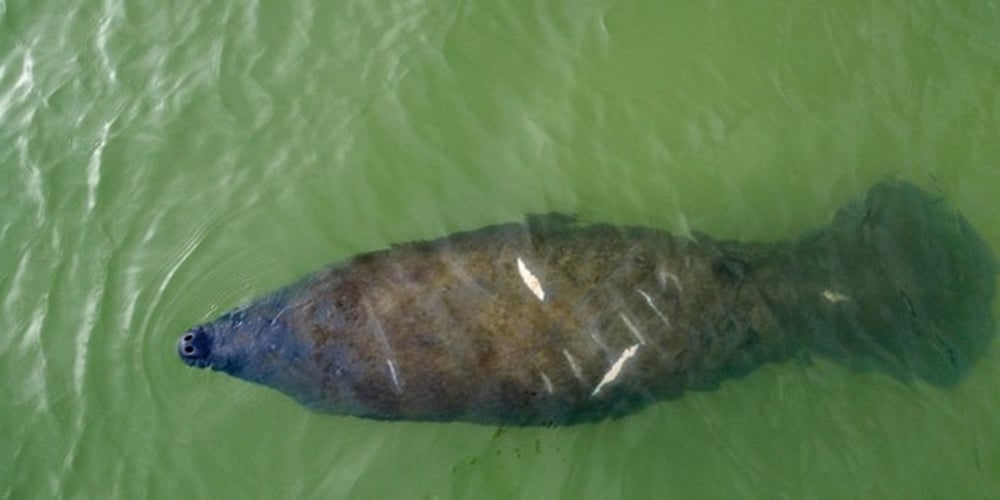
Manatee Safety for Boaters
Manatees are slow-moving marine mammals that inhabit shallow coastal waters frequently used by recreational boats. Manatee Appreciation Day falls on March 25, 2026 this year and with the day fast approaching now is a great time to brush up on how to operate your boat safely in manatee habitats. Obeying speed zones, maintaining a vigilant lookout and avoiding sudden maneuvers all go a long way to prevent collision with animals in the water.
Because many boating areas overlap with manatee habitat—especially in Florida and along the Gulf Coast—boaters play a major role in protecting this threatened species. Responsible navigation reduces the risk of propeller strikes, prevents wildlife disturbance, and helps preserve fragile coastal ecosystems.
Key actions for boaters:
- Follow posted manatee speed zones
- Maintain a continuous lookout in shallow water
- Reduce speed in murky or seagrass areas
- Shift to neutral if a manatee approaches
Many manatee injuries documented by marine wildlife agencies result from boat collisions. Slower speeds and attentive operation dramatically reduce these risks.
Why Manatees Are Especially Vulnerable to Boats
Slow Movement and Limited Evasion Ability
Manatees are among the slowest-moving marine mammals. Typical travel speeds are only 3–5 mph, which means they cannot quickly escape oncoming boats.
Unlike dolphins or fish that rapidly dive away from danger, manatees rely on slow, energy-efficient movement. When a fast-moving boat approaches, they often cannot clear the area in time.
This limited evasive ability is one of the main reasons manatee boat strikes occur.
Frequent Surface Breathing
Manatees must surface regularly to breathe—usually every 3 to 5 minutes when active.
Because they surface slowly and often in shallow water, they may appear unexpectedly near boats. Propellers and hulls pose a serious hazard during these brief surfacing events.
Habitat Overlap With Boating Areas
Manatees spend much of their time in coastal estuaries, rivers, canals, and shallow bays—the same places recreational boaters commonly operate.
These environments are often:
- Narrow waterways
- Residential canals
- Popular fishing spots
- Seagrass flats
When wildlife habitat and boating activity overlap, the risk of collisions increases.
Where Boaters Are Most Likely to Encounter Manatees
Warm-Water Areas and Winter Aggregation Sites
Manatees are sensitive to cold water and migrate toward warm-water refuges during winter months.
Common winter gathering areas include:
- Natural warm springs
- Power plant discharge canals
- Sheltered coastal basins
These locations can hold dozens or even hundreds of animals during cold weather.
Rivers, Canals, and Residential Waterways
Manatees frequently travel through:
- Coastal rivers
- Residential canals
- Marina basins
- Intracoastal waterways
These areas often have heavy recreational traffic, which increases the importance of following posted navigation signs.
Shallow Seagrass Feeding Zones
Manatees are herbivores that graze on seagrass beds, which grow in shallow coastal waters.
These feeding grounds are typically:
- Shallow flats
- Grass beds
- Lagoon environments
Operating slowly in these areas helps prevent both wildlife collisions and damage to seagrass habitat.
Understanding Manatee Speed Zones and Navigation Signs
Many states with manatee populations—especially Florida—use designated boating zones to reduce collision risks.
Idle Speed Zones
An Idle Speed / No Wake zone requires vessels to travel at the slowest speed necessary to maintain steering control.
This greatly reduces propeller speed and minimizes wake.
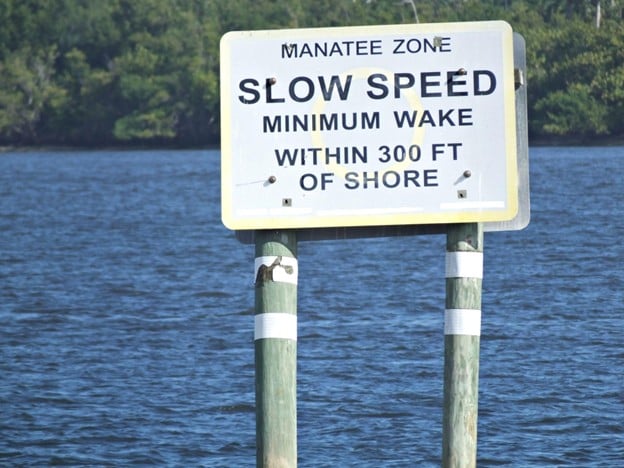
Slow Speed Minimum Wake Zones
In a Slow Speed / Minimum Wake zone, vessels may move slightly faster than idle but must produce minimal wake.
These areas allow controlled navigation while still protecting wildlife.
Enforcement and Common Violations
Wildlife officers and marine patrol units regularly enforce these zones.
Common violations include:
- Running on plane in restricted areas
- Ignoring posted channel markers
- Accelerating too quickly near wildlife
Boaters can receive fines and citations for violating manatee protection zones.
What Causes Most Manatee Injuries and Deaths
Propeller Strikes
The majority of boat-related injuries occur when propellers contact a manatee’s back or tail.
These injuries often leave parallel scars, a common sight on adult manatees.
Severe strikes can cause fatal trauma.
Hull Collisions
Even without propeller contact, the impact from a boat hull can seriously injure a manatee.
Fast-moving vessels pose the greatest risk.
Poor Visibility Conditions
Manatees are particularly difficult to spot when:
- Water is murky
- Sun glare is strong
- The animal is resting just below the surface
These conditions are common in coastal estuaries and shallow bays.
Safe Boating Practices in Manatee Habitats
Proper Speed and Trim
Running at slower speeds gives operators more time to spot wildlife and react safely.
When traveling through shallow areas:
- Reduce speed well before entering
- Trim engines appropriately
- Avoid sudden acceleration
Dedicated Lookout
Assigning a second person as a lookout dramatically improves wildlife detection.
Look for:
- Circular surface disturbances
- Manatee backs breaking the surface
- Mud clouds in shallow flats
Navigation in Murky Water
In low-visibility conditions:
- Slow to idle speed
- Stay in marked channels when possible
- Avoid running across shallow flats
These practices protect both marine life and your boat.
What To Do If a Manatee Appears Near Your Boat
Manatees may occasionally approach or surface near vessels.
Immediate Risk-Reduction Actions
If a manatee is nearby:
- Reduce speed immediately
- Shift to neutral
- Allow the animal to move away on its own
Avoid Sudden Maneuvers
Sharp turns or sudden throttle changes can increase risk.
Once the Manatee is a safe distance away from the boat:
- Maintain control
- Keep movements slow and predictable
Special Care Around Calves
Mother-and-calf pairs are particularly vulnerable.
Never separate them by attempting to pass between them.
Give them extra space and time to move away.
Reporting Injured or Distressed Manatees
Who to Contact
If you encounter an injured, trapped, or distressed manatee, contact local wildlife authorities.
In Florida, the primary contact is the FWC Wildlife Alert Hotline.
Information to Provide
- Exact location
- Condition of the animal
- Nearby landmarks or channel markers
- Photos if safely obtainable
Why Reporting Matters
Early reporting allows trained wildlife rescue teams to respond quickly.
Prompt intervention can mean the difference between successful rehabilitation and mortality for injured animals.