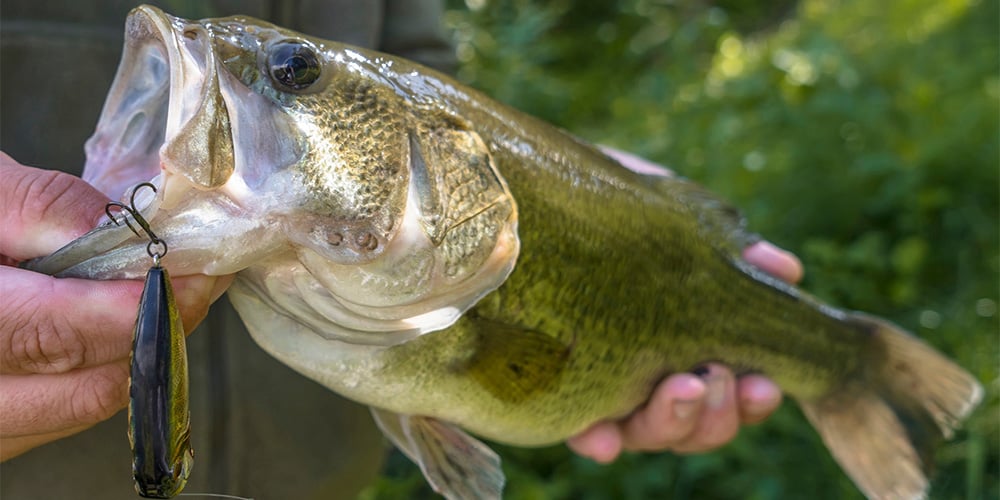
Bass are common in lakes, rivers, ponds and reservoirs across the country. They put up a strong fight, strike a wide range of baits and are accessible enough for beginners while still challenging experienced anglers. That combination makes bass fishing one of the most popular ways to get started in freshwater fishing.
If you’re looking to start reeling them in, the key is learning where bass hold, when they feed and how to match your gear, lure and retrieve to the conditions. West Marine has the fishing gear and advice you need to get started.
- Types of Bass
- Where Can You Catch Bass?
- When Can You Catch Bass?
- What Kind of Gear Do You Need To Catch Bass?
- Best Bait and Lures for Catching Bass
- What Rig Should You Use for Bass?
- How to Get Bass to Bite
- Bass Fishing FAQ
Types of Bass
If you’re after freshwater bass and like a good fight, targeting black bass species like smallmouth, largemouth, Guadalupe and spotted bass is a good bet. Largemouth bass are the most widely targeted and are often found around weeds, wood, docks and shallow cover. Smallmouth bass generally prefer clearer, cooler water with rocks, current and deeper structure. Spotted bass often behave somewhere between largemouth and smallmouth, using points, ledges, docks and deeper structure. Guadalupe bass are native to Texas and are commonly associated with clear rivers and rocky habitat.
Knowing which bass species live in your local water helps you choose better locations and presentations. Largemouth often respond well to slower presentations around cover, while smallmouth may chase faster-moving lures in current or over rock.
Where Can You Catch Bass?
Streams, rivers, ponds, natural lakes and man-made reservoirs are all good spots to find bass. If the body of water has decent clarity, healthy forage and available cover, bass are likely to use it. Once you’ve found your body of water, look for cover that attracts baitfish, crawfish, shad, bluegill and other prey. Cover gives bass a place to ambush food while staying protected.
Fish around standing timber, laydowns, stumps, lily pads, grass beds, rocks, docks, riprap, points, creek mouths, drop-offs and anything else that looks like it might provide cover or a feeding edge. Bass often position where shallow water meets deeper water, where current breaks, or where hard structure meets vegetation.
In rivers, focus on current seams, eddies, bridge pilings, rock piles and slower water near faster current. In ponds, start near shade, grass edges, drains, culverts and any visible cover. In reservoirs, points, ledges, submerged roadbeds, brush piles and docks are good starting spots.
When Can You Catch Bass?
Timing
Generally, the best time to catch bass is at dawn and dusk. Bass often hunt and feed more actively in low-light conditions, especially during warmer months. When the sun is high, bass may move deeper, hold tighter to shade or bury into grass and cover. Overcast days can create excellent bass fishing because low-light conditions last longer and bass may roam farther from cover.
Wind can also help. A light breeze breaks up surface glare, moves bait and can position bass along windblown banks, points and grass lines. Severe weather, lightning or unsafe wind should always take priority over fishing plans.
Seasons
Spring and summer are great times to fish for bass. Bass often become more active as water temperatures rise into the 60–80 degree range. In spring, bass move shallow to feed and spawn. During summer, they may feed early and late, then move to deeper water, shade, vegetation or current during the heat of the day.
Fall can also be productive as baitfish move and bass feed heavily before winter. In colder months, bass usually slow down and may require smaller baits, slower retrieves and more patience.
What Kind of Gear Do You Need To Catch Bass?
For an all-around baitcasting combo that can handle most popular bass fishing techniques, go for a 7-foot medium-heavy baitcasting rod paired with a baitcasting reel with a gear ratio around 7.1:1. This gear ratio is versatile enough for many techniques, giving you a strong starting point before adding reels with faster or slower ratios later.
Most of the line you’ll use when bass fishing will be between 8-15 lbs. 10–12 lb. fishing line is a good match for crankbaits, but you can bump it up to 15 lb. line if you’re fishing shallow-running crankbaits, jerk baits or heavier cover.
Some anglers like to target bass with light spinning combos as well. A medium-light or medium spinning rod paired with 4- to 8-pound line is great for finesse presentations, small swimbaits, wacky rigs, drop shots and pressured fish. Lighter line can help small baits move more naturally, which can lead to more bites when bass are cautious.
If you are just starting out, one medium-heavy baitcasting combo and one medium spinning combo will cover a wide range of bass techniques.
Best Bait and Lures for Catching Bass
Lures
Just a few lures can cover most beginner bass fishing. Start with lures that are easy to cast, easy to retrieve and useful around common bass cover.
- Crankbaits: Crankbaits are good search baits because they cover water quickly and imitate baitfish. Mid-depth crankbaits are great for beginners, while smaller crankbaits work well on lighter gear.
- Buzzbaits: Buzzbaits are easy to use because you can keep the bait on top of the water by reeling at a steady pace. They are visual baits, so there will be no question when a bass strikes.
- Small swimbait on a jighead: Small swimbaits are simple, natural-looking and effective on light or medium gear. They work well around baitfish, points, grass edges and open water.
- Soft plastic worms: Worms are one of the most reliable bass baits because they can be fished slowly around cover, skipped near docks or dragged along the bottom.
- Jigs: Jigs imitate crawfish and other bottom prey. They are effective around rocks, docks, brush, grass edges and deeper structure.
- Spinnerbaits: Spinnerbaits create flash and vibration, making them useful in stained water, around grass or when bass are feeding aggressively.
Live Bait
Live bait is a great way to target bass as well. Shiners, shad or even a simple worm can all work well to get bass biting. Check local regulations before using live bait, because rules vary by state, species and body of water.
What Rig Should You Use for Bass?
A Texas rig works great for bass fishing because it gives you a way to fish soft plastics through thick cover without getting snagged. It is one of the first rigs a bass angler should learn and you don’t need much to set one up. Basically all you need are:
- A bullet-shaped slip sinker
- A swivel
- About a foot of leader
- An offset or straight shank fishing hook
- A soft plastic bait of your choice
Once you have everything you need, tie the swivel to your main line and tie the leader to the other end of the swivel. Slip the weight onto the leader and tie the hook on. Stick the hook through the middle of the soft bait at the nose and then out the side of the bait about 1/8 to 1/4 inch down. Continue pushing the hook through until the whole hook is out through the new exit hole. Spin the hook so that the point is facing the bait, bury the point of the hook in the plastic and you’re done.
Many anglers also rig a Texas rig without a swivel by sliding the bullet weight directly onto the main line and tying the hook to the end of the line. This simpler version is common for worms, creature baits and craws.
How to Get Bass to Bite
One of the best ways to catch a lot of bass is to use the Texas rig and plastic bait anywhere you think bass might be. Cast it near grass, docks, wood or any other cover that could be holding bass and then pick the bait up, let it fall, reel in the slack and repeat. The movement of your bait should help attract any bass lurking nearby.
If bass are not biting, change one variable at a time. Slow down your retrieve, switch colors, downsize your bait, move from shallow to deeper water, or target shade and cover more precisely. In clear water, natural colors often work well. In stained water, darker colors, flash or vibration can help bass find the bait.
Pay attention to every bite. If bass are striking on the fall, let the bait fall on slack line. If they are hitting near cover, make repeated casts to similar targets. If they are chasing moving baits, cover more water with crankbaits, spinnerbaits or swimbaits until the pattern changes.
Need More Help?
West Marine is the perfect place to get ready for your next fishing trip. We offer free line spooling and locally assorted tackle in most of our stores to gear you up for what’s biting in your area. Plus, with plenty of anglers on our crew, we have the know-how you need to get ready. Find your store here.
Frequently Asked Questions
What is the best time to fish for bass?
The best time to catch bass is typically early in the morning or late in the afternoon when light is low and bass are more active. Overcast days can also be productive because bass may feed longer throughout the day. Spring can be especially productive as bass move shallow to feed and spawn.
What are the best lures for catching bass?
Some of the best bass lures include jigs, crankbaits, spinnerbaits, soft plastic worms, creature baits, swimbaits and topwater lures. Beginners can start with crankbaits, Texas-rigged soft plastics and small swimbaits because they are versatile and easy to fish.
How do I locate bass in a lake or river?
Look for bass near structure and cover such as rocks, fallen trees, docks, grass, weeds, drop-offs, points and current breaks. During spring, bass often move shallow. During hot summer days, they may hold deeper, in shade, near vegetation or close to submerged structure.
What is the difference between catching largemouth and smallmouth bass?
Largemouth bass are typically found in warmer, weedy waters and are more likely to hold near shallow cover. Smallmouth bass usually prefer clearer, cooler water with rocky bottoms, current and deeper structure. Smallmouth often respond well to smaller, faster-moving lures.
What techniques should I use to catch bass?
Common bass fishing techniques include Texas rigging, drop shotting, pitching and flipping, crankbait retrieves, jig fishing and topwater fishing. Start with a Texas rig around cover, then use moving baits like crankbaits or spinnerbaits when bass are active and chasing bait.
Related: