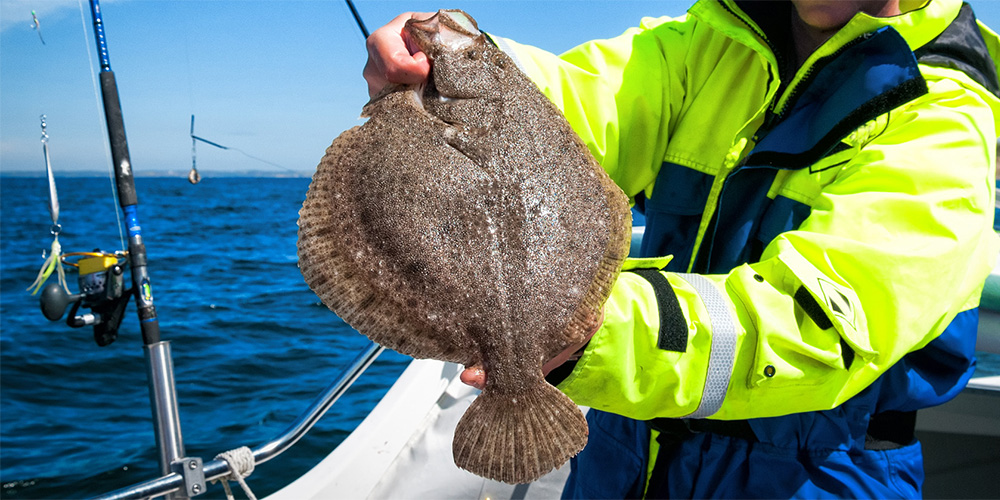
Flounder are one of the most rewarding inshore targets in the country. They’re found from Maine to the Gulf of Mexico, they feed year-round with the right approach, and their flat-body ambush behavior makes them one of the few species where understanding how the fish thinks makes an immediate difference in your catch rate. This guide covers where to find them, when to go, how to rig up, and how to put more flounder in the cooler. Read on for where to find them and the fishing gear you need to reel them in.
- Types of Flounder
- Where to Find Flounder
- When to Catch Flounder
- Tackle for Flounder Fishing
- Best Bait and Lures for Flounder
- Best Rigs for Flounder
- How to Get Flounder to Bite
- FAQs
Types of Flounder
Three species dominate flounder fishing in the US:
Summer flounder (fluke) are the most widely targeted and the most aggressive. Found from Maine south to the Carolinas and into the mid-Atlantic, fluke are the species most anglers mean when they say "flounder" on the East Coast. They run larger than winter flounder on average, fight harder, and are more willing to chase a moving lure. Their eyes are on the left side of their head — remember this for field identification.
Winter flounder overlap significantly with fluke in geographic range but are most abundant from Long Island Sound northward into New England. They are smaller, more sedentary, and feed primarily on bottom-dwelling invertebrates rather than baitfish — which means live bait and lures that work for fluke are less reliable for winter flounder. Sand worms and blood worms on a small hook fished patiently on bottom are the preferred approach. Winter flounder’s eyes are on the right side of their head — the opposite of fluke.
Southern flounder are found along the southern Atlantic coast and throughout the Gulf of Mexico and are the dominant flatfish species from the Carolinas south. They grow large — fish over 10 lbs are caught regularly in the Gulf — and occupy the same structural habitat as their northern relatives. Southern flounder are particularly aggressive during low-light hours and will readily strike both live bait and soft plastics worked slowly along the bottom.
Where to Find Flounder
Flounder are ambush predators. Their flat shape and mottled brown coloration allow them to bury into sandy or muddy bottom with only their eyes exposed, completely invisible until a baitfish passes within striking distance. Understanding this drives every location decision: you’re not looking for active fish, you’re looking for the structures and current edges where ambush predators position themselves to intercept food.
Key Flounder Locations
- Jetties and rock structures: The base of jetties where rock meets sand is classic flounder territory. Baitfish stack near the structure, and flounder bury in the adjacent sand waiting for them. Work both the inside (calm water) and outside (current-exposed) face of jetties.
- Bridge pilings and dock edges: Current accelerates around pilings, delivering baitfish to ambush predators waiting in the slack water immediately downstream. Cast upcurrent and let your bait sweep into the shadow of the piling.
- Current edges and channel margins: Where fast current meets slow water, flounder hold in the slow water and intercept baitfish swept off course. Look for current seams near channel edges, inlet mouths, and the downstream side of any structure.
- Grass flats in spring: Flounder move into shallow grass flats as water warms in spring. They lie on sandy patches within the grass, perfectly camouflaged, waiting for shrimp and small baitfish to pass.
- Drop-offs and holes from shore: When fishing from the beach or a flat, target drop-offs, depressions in the sand, and the deeper water behind sandbars where flounder stage along the edge.
When to Catch Flounder
Time of Day and Tide
Where baitfish go, flounder follow. High tide pushes baitfish over shallow structure and into areas that were too shallow to access at low water, bringing flounder with them. Most anglers see their best action during the two hours on either side of high tide. Moving water (incoming or outgoing) is generally better than slack water because current activates baitfish and positions them predictably in ambush locations.
Low-light periods — dawn, dusk, and overcast days — produce aggressive feeding, particularly for southern flounder, which are notably more active after dark.
Seasonal Timing
Spring: As water temperatures climb above 55°F, flounder move from offshore wintering grounds into inshore waters and shallow flats. They’re hungry after winter and feeding aggressively. Grass flats, jetties, piers, and bays are all productive. Spring is excellent for new anglers because the fish are actively hunting rather than holding on bottom conserving energy.
Summer: The peak of the recreational season. Flounder spread throughout inshore waters, typically to 30 feet of depth. Larger fish are often in deeper water by midsummer as temperatures rise in the shallows. Still-fishing with live bait in structure-heavy areas is productive, as is drifting soft plastics through 8–15 foot inshore areas.
Fall: The fall flounder run is the best fishing of the year for many anglers. As water cools in September and October, flounder begin migrating from inshore waters toward offshore spawning grounds, staging in inlets, passes, and channel edges. Concentrations are high, fish are actively feeding to build energy for the migration, and they will eat virtually any presentation that comes their way. If you only fish flounder once a year, the fall run is the time to do it. The run timing varies by latitude — it begins earlier in the north and progresses southward through October and November.
Winter: Flounder spawn offshore in winter, making inshore fishing slow. Winter flounder (the species) are the exception — they actually move inshore in winter and early spring to feed in New England and mid-Atlantic waters, providing decent fishing when other flatfish are absent.
Tackle for Flounder Fishing
Standard inshore spinning gear covers flounder fishing in most situations. If you already have inshore tackle, it likely works fine as-is.
Rod and reel: A 2,500–4,000 series spinning reel paired with a 7–8’ medium action spinning rod handles most flounder scenarios from shore and from a boat. The longer rod helps with casting distance from shore and provides better sensitivity for detecting the subtle flounder bite. A fast action tip improves bite detection while the medium power backbone handles the flounder’s initial run and the weight of a larger fish.
Line: 10–20 lb braided line is strongly preferred over monofilament for flounder fishing. The reasons are specific to how flounder feed: braid has virtually no stretch, which means you feel the subtle flounder bite immediately rather than having it absorbed by line elasticity. Flounder often hold a bait without moving before swallowing it — with mono you may feel nothing until the fish has already spit it. The thin diameter of braid also cuts through current better, keeping your rig on the bottom where flounder are.
Leader: 10–20 lb fluorocarbon leader of 18–24 inches. Fluorocarbon is virtually invisible in water and resists abrasion from the sand and shell debris flounder inhabit. A longer leader (2–3 feet) provides more natural bait movement when fishing light current; a shorter leader (12–18 inches) keeps the bait closer to the bottom in heavy current.
Keep extra terminal tackle in your bag. Flounder habitat — rocks, shell, jetty base, sunken debris — snags regularly. Bringing extras means a broken-off rig doesn’t end the trip.
Best Bait and Lures for Flounder
Remember that flounder are ambush predators that lie buried in the bottom waiting for prey to pass overhead. Your bait or lure needs to be near the bottom — not just close, but dragging or bouncing along it. A presentation six inches off the bottom is often completely invisible to a flounder. Flounder strikes are also subtler than most inshore fish — pay close attention or you’ll miss bites entirely.
Live Bait
Live bait is the most consistent producer. Match the bait to what’s naturally present in the water you’re fishing. The best live bait options by region and season:
- Mud minnows (marsh killifish): The most widely used live bait for flounder across the Southeast and Gulf. Hardy, easy to keep alive, and flounder eat them readily. Hook through the lips or just forward of the dorsal fin.
- Finger mullet: Excellent for larger flounder. Hook through the lips to keep them swimming naturally. Particularly effective in fall when flounder are feeding aggressively.
- Shrimp: Productive in spring and early summer when shrimp are actively moving through inshore waters. Hook through the tail for a natural, head-down swimming presentation.
- Pinfish: Effective where available, particularly in grass flat environments. Their erratic movement when hooked triggers flounder strikes.
When fishing live bait for flounder, wait 8–10 seconds after the first bite before setting the hook. Flounder often pick up bait and hold it crosswise before turning to swallow it head-first. Setting the hook immediately on the first tap frequently pulls the bait out before the fish has it positioned for swallowing.
Artificial Lures
Soft plastics on jigheads are the dominant artificial approach and can be as effective as live bait when worked correctly. The key is bottom contact — the lure must be bouncing or dragging along the bottom throughout the retrieve, not swimming above it.
- Soft plastic paddle tails and grubs on jigheads: The standard flounder artificial. 3–4 inch paddle tail or curly tail soft plastics in natural colors (white, chartreuse, brown, olive) on a 1/4–3/8 oz jighead. The jighead weight should be enough to keep bottom contact in the current you’re fishing — if you’re losing bottom contact, go heavier.
- Gulp! shrimp and sandworm plastics: Berkley’s scented soft plastics are particularly effective for flounder because the dissolved scent trail mimics live bait. Rig on a jighead and fish the same way as a paddle tail.
- Bucktail jigs: Standard for deeper water and stronger current situations where soft plastics get swept too quickly. 1/2–1 oz bucktails tipped with a strip of squid or a small soft plastic trailer are highly effective.
Flounder frequently mouth artificial lures without committing to a full strike. Set the hook immediately on any resistance rather than waiting as you would for live bait — the opposite of the live bait approach.
Best Rigs for Flounder
Carolina Rig (Live Bait)
The Carolina rig (also called the fish finder rig) is the standard flounder rig for live bait because the sliding sinker allows the bait to move naturally on the bottom while the fish can pick it up without feeling immediate weight. Components:
- An egg sinker (size below)
- A glass bead (protects the knot from the sinker)
- A two-way barrel swivel
- 18–24 inches of fluorocarbon leader
- A size 1/0–2/0 wide-gap hook
- Your live bait
To rig: thread the egg sinker onto the main line, then the glass bead. Tie the main line to one eye of the barrel swivel. Tie the leader to the other eye. Tie the hook to the leader end. The sinker slides freely on the main line above the swivel, allowing a flounder to pick up the bait and move with it without feeling resistance.
Sinker weight selection: Use the lightest sinker that keeps your bait on the bottom in the current you’re fishing. In calm or slow-moving water, 1/4–1/2 oz is usually sufficient. Moderate current typically requires 3/4–1 oz. Strong current or deep water may require 1 1/2–2 oz. Excessive weight kills live bait presentation by pinning the bait too hard to the bottom rather than allowing natural movement.
Jighead Rig (Artificial Lures)
Jigheads are the go-to rig for artificial flounder fishing. Match weight to water depth and current:
- Shallow water (under 8 feet), light current: 1/8–1/4 oz jighead
- Moderate depth (8–15 feet) or moderate current: 3/8 oz jighead
- Deeper water or stronger current: 1/2–3/4 oz jighead
The rule is simple: if the lure isn’t ticking the bottom on every pause, go heavier. If you’re snagging constantly, go lighter or move to a different area.
How to Get Flounder to Bite
Flounder do not chase prey the way a redfish or bass does. They hold position and strike prey that passes directly overhead or very close. Your retrieve technique needs to account for this:
The standard flounder retrieve: Cast upcurrent or to your target structure. Allow the rig to sink to the bottom. Twitch the rod tip twice to hop the bait off the bottom, then pause for 2–3 seconds to let it settle. Reel in the slack line. Repeat. The pause is the critical moment — most flounder strikes happen as the lure or bait sinks back toward the bottom after the hop. If you retrieve without pausing, you lift the bait out of the strike zone.
Slow drift technique: In a boat with light wind or current, drifting while dragging a live bait or soft plastic slowly along the bottom covers ground and keeps the bait in contact with the bottom continuously. This is often the most productive technique in unfamiliar water because it locates fish rather than requiring you to know exactly where they are first.
Detecting bites: Flounder bites range from a sharp tap (active, feeding fish) to a subtle dead weight (a fish that has picked up the bait and is holding it motionless). Keep the rod tip low and maintain light tension throughout the retrieve. Any change in the feel of the bottom contact — added weight, a pull, or the bait stopping unexpectedly — is a potential bite. For live bait, wait 8–10 seconds before setting. For artificial lures, set the hook immediately.
Frequently Asked Questions
What is the difference between fluke and flounder?
Fluke is the common name for summer flounder (Paralichthys dentatus), one of three flounder species commonly fished in US waters. In casual usage, "flounder" often refers to all three species (summer flounder/fluke, winter flounder, and southern flounder), while "fluke" specifically means summer flounder. Field identification tip: fluke’s eyes are on the left side; winter flounder’s eyes are on the right.
What is the best tide for flounder fishing?
High tide and the two hours on either side of it produce the most consistent flounder action. Moving water (incoming or outgoing) is generally better than slack tide because current positions baitfish in predictable ambush locations. That said, flounder feed throughout the tidal cycle — the difference is in how actively they’re positioned relative to current structure. At low water, work drop-offs and channel edges where flounder hold when the flats are too shallow.
Why do I need to wait before setting the hook on live bait?
Flounder pick up bait crosswise in their mouth and then reposition it to swallow it head-first. Setting the hook immediately on the first tap often pulls the bait out before the fish has turned it. Waiting 8–10 seconds gives the flounder time to turn the bait and begin swallowing, dramatically improving hookup rate. With artificial lures, the opposite applies — flounder spit hard plastics and soft plastics quickly, so set the hook immediately on any resistance.
When is the best time of year to catch flounder?
The fall flounder run (September through November, depending on latitude) is widely considered the best flounder fishing of the year. Fish are concentrated in inlets and passes as they stage for their offshore migration, actively feeding to build energy reserves, and will eat virtually any presentation. Spring is excellent for numbers as hungry fish move back into inshore waters after winter. Summer provides consistent action but fish are more spread out.
Do I need a saltwater fishing license to catch flounder?
Yes in almost all US states with flounder populations. License requirements and flounder size and bag limits vary by state and sometimes by species — summer flounder, winter flounder, and southern flounder may have different regulations in the same state. Check your state fish and wildlife agency’s current regulations before fishing. Size limits for fluke in particular have changed frequently in recent years as management adjusts to stock assessments.
Need More Help?
West Marine is the perfect place to get ready for your next fishing trip. We offer free line spooling and locally assorted tackle in most of our stores to gear you up for what’s biting in your area. Find your nearest store.