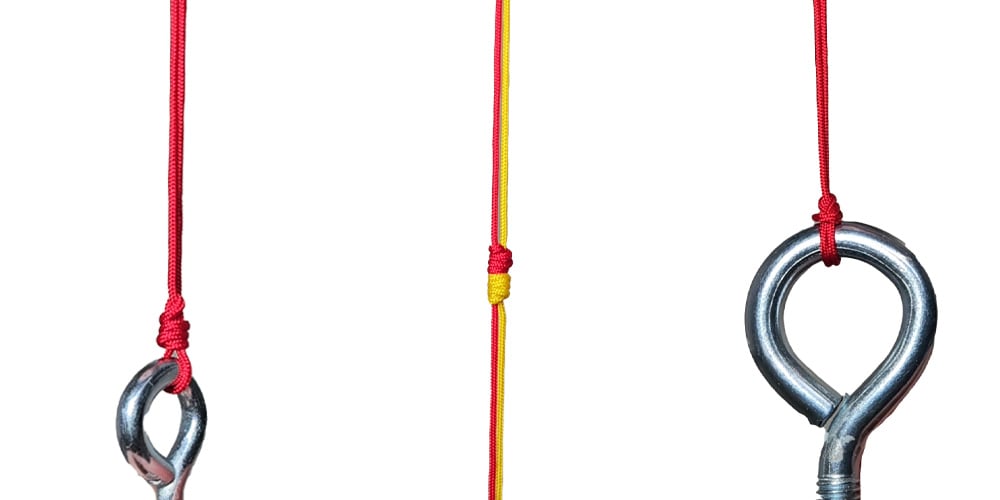
There are many fishing knots to learn, but most anglers can handle the majority of common setups with just a few reliable options. The Palomar knot, Uni knot and Double Uni knot are three easy-to-learn knots that work well for hooks, lures, swivels, leaders and line-to-line connections.
These knots can be used with braided, monofilament and fluorocarbon fishing line, making them useful for freshwater, saltwater, inshore and offshore fishing. Once you know when to use each knot, you can rig faster, fish with more confidence and spend less time retying on the water.
- How to Tie a Palomar Knot
- How to Tie a Uni Knot
- How to Tie a Double Uni Knot
- Fishing Knot Comparison
- Tips for Stronger Fishing Knots
- Fishing Knot FAQ
How to Tie a Palomar Knot
The Palomar knot is one of the strongest and easiest knots for tying fishing line directly to hooks, lures and terminal tackle. Many anglers use it with braided line, monofilament and fluorocarbon because it is simple, compact and dependable when tied correctly.
The Palomar knot is especially useful when you want a strong connection to a hook, jig, swivel or lure. It is also a good choice for braided line because the doubled line helps create a secure hold.
Palomar Knot Steps
- Double about 6" of line and pass the loop through the eye of the hook, lure or swivel.
- Tie a loose overhand knot with the doubled line, leaving the hook or lure hanging below.
- Pass the loop over the hook, lure or swivel.
- Moisten the knot with water or saliva.
- Pull both the standing line and tag end evenly to tighten.
- Trim the tag end close to the knot.
Best Uses for the Palomar Knot
- Tying hooks directly to fishing line
- Attaching jigs and lures
- Connecting swivels
- Using braided line with terminal tackle
How to Tie a Uni Knot
The Uni knot is a versatile fishing knot that works for tying line to hooks, swivels, lures and other terminal tackle. It is also the foundation of the Double Uni knot, which is used to connect two lines together.
Uni knots are useful when tying braid to one side of a swivel so you can transition to a monofilament or fluorocarbon leader on the other side. When tying the Uni knot with braided line, use the higher end of the recommended wrap count to help prevent slipping.
Uni Knot Steps
- Pass the line through the eye of the hook, lure or swivel.
- Bring the tag end back alongside the standing line to form a loop.
- Wrap the tag end around both lines inside the loop 5 to 7 times. Use more wraps for braided line.
- Moisten the knot.
- Pull the tag end to tighten the wraps.
- Slide the knot down to the eye and pull the standing line tight.
- Trim the tag end.
Best Uses for the Uni Knot
- Tying line to hooks or lures
- Connecting line to swivels
- Using monofilament, fluorocarbon or braid
- Building leader systems with a swivel
How to Tie a Double Uni Knot
The Double Uni knot is a line-to-line knot used to connect two pieces of fishing line. It is especially helpful for tying braided main line to a monofilament or fluorocarbon leader.
Many anglers use braid for its strength and sensitivity, then add a mono or fluorocarbon leader for abrasion resistance, stretch or reduced visibility. The Double Uni knot creates a dependable connection that can pass through guides when tied neatly and trimmed closely.
Double Uni Knot Steps
- Overlap the ends of the two lines by several inches.
- Use the tag end of the first line to form a loop around the second line.
- Wrap the tag end through the loop 5 to 7 times, using more wraps for braid.
- Moisten and pull the tag end to tighten the first Uni knot.
- Repeat the process with the second line around the first line.
- Moisten both knots.
- Pull the standing lines in opposite directions until the two Uni knots slide together.
- Trim both tag ends close.
Best Uses for the Double Uni Knot
- Connecting braided line to fluorocarbon leader
- Connecting braided line to monofilament leader
- Joining two lines of similar or different diameters
- Building leader systems without a swivel
Fishing Knot Comparison
| Knot | Best Use | Works With |
|---|---|---|
| Palomar Knot | Hooks, lures, swivels and terminal tackle | Braid, mono and fluorocarbon |
| Uni Knot | Hooks, lures, swivels and leader setups | Braid, mono and fluorocarbon |
| Double Uni Knot | Connecting main line to leader | Braid to mono, braid to fluoro, mono to fluoro |
Tips for Stronger Fishing Knots
Even a strong knot can fail if it is tied poorly. Take your time, keep wraps neat and test each knot before casting or dropping bait.
- Moisten knots before tightening to reduce friction and heat.
- Use extra wraps when tying braided line.
- Pull knots tight slowly and evenly.
- Trim tag ends close, but do not cut into the knot.
- Retie after catching fish, snagging bottom or seeing line damage.
- Check knots often when fishing around rocks, docks, reefs or heavy cover.
Fishing Knot FAQ
What is the easiest fishing knot for beginners?
The Palomar knot is one of the easiest fishing knots for beginners because it has only a few steps and creates a strong connection to hooks, lures and swivels.
What knot should I use to tie braid to a leader?
The Double Uni knot is a practical choice for tying braided main line to a monofilament or fluorocarbon leader. It is easy to learn and works well for many fishing setups.
Can I use a Palomar knot with braided line?
Yes. The Palomar knot works well with braided line and is commonly used to tie braid directly to hooks, jigs, lures and swivels.
How many wraps should I use for a Uni knot?
Most Uni knots use 5 to 7 wraps. When using braided line, use more wraps to help prevent slipping.
Why should I wet a fishing knot before tightening it?
Wetting the knot reduces friction and heat as the knot tightens. This helps protect the line and improves knot strength.
Need More Help?
West Marine is the perfect place to get ready for your next fishing trip. We offer free line spooling and locally assorted tackle in most of our stores to gear you up for what’s biting in your area. Plus, with plenty of anglers on our crew, we have the know-how you need to get ready. Find your store here.
Related: