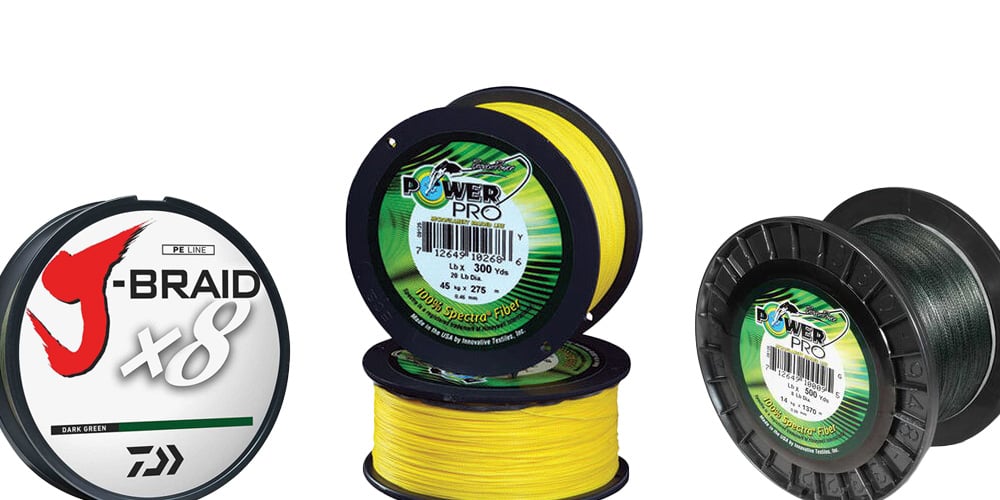
Braided line has become the standard main line for most serious anglers — its zero stretch, thin diameter, and high sensitivity make it the best choice for detecting bites and driving hooks home. But braid’s slick, woven surface means it requires specific knots tied correctly to hold under load. The knots you’ve been tying in monofilament and fluorocarbon will often work in braided line too — but with modifications that matter.
- Braid Knot Fundamentals
- Double Uni Knot
- FG Knot
- Uni Knot
- Palomar Knot
- What Knot Setup for My Fishing Style?
- FAQs
Braid Knot Fundamentals: What You Need to Know Before You Tie
Before you tie any knot in braid, understand why braid fails differently than monofilament — and what to do about it.
Why braid slips. Monofilament is slightly stretchy and has a surface that grips itself when compressed in a knot. Braid is made from tightly woven fibers that are extremely smooth and have essentially zero stretch. When a knot in braid is pulled tight under load, the fibers can slip through each other rather than locking. The fix: always use the maximum number of wraps recommended for any knot tied in braid, and never fewer. For most knots, that means 6–8 wraps rather than the 3–4 that would suffice in monofilament.
Always wet the knot before cinching. Friction generated when a dry knot is pulled tight can cut into the line fibers at the point of contact, weakening the connection significantly before you ever cast. Wet the knot with saliva or water immediately before pulling it tight. This applies to every knot in every line type, but the consequences of skipping it are most severe with fluorocarbon, which is more heat-sensitive than mono or braid.
Test every knot before you fish. After tying and cinching, grip the line a foot above the knot and pull firmly in the direction a fish would pull. A knot that slips or fails during this test costs you nothing. One that fails when you’re hooked to a fish costs you everything. If a knot slips at all during the test, cut it off and retie.
Trim tag ends close but not flush. Leave approximately 1/8” of tag end after trimming rather than cutting flush with the knot. Braid is slippery enough that a completely flush cut can allow the tag end to pull back through the knot under sustained load.
| Knot | Best Use | Difficulty | Profile |
|---|---|---|---|
| Double Uni | Braid to mono or fluorocarbon leader | Easy | Moderate bulk at connection |
| FG Knot | Braid to mono or fluorocarbon leader (long leaders) | Moderate | Very thin — passes through guides smoothly |
| Uni Knot | Braid to swivel; braid to hook | Easy | Compact |
| Palomar | Terminal tackle to braid or leader end | Very easy | Compact |
How to Tie a Double Uni Knot
The double uni is two uni knots tied back to back — one on the braid, one on the leader — then drawn together to form a line-to-line connection. It is the most widely taught braid-to-leader knot and works reliably for leader lengths up to about 3–4 feet.
When to use it: Joining braided main line to a monofilament or fluorocarbon leader for inshore fishing, bass fishing, and offshore applications with shorter leaders. The leader dramatically reduces line visibility at the business end while the braid provides sensitivity and strength on the main line.
Key tips for braid: Use 6–8 wraps on the braid side (the leader side can use 4–5). The braid side needs extra wraps because it’s more prone to slipping. Wet both sides thoroughly before drawing the knots together.
Common mistakes:
- Too few wraps on the braid side — use at least 6, ideally 8
- Pulling the knots together dry — always wet first
- Not seating the knots fully before trimming — pull both tag ends and both main lines firmly to compress the connection before cutting
- Tying the braid side with the same number of wraps as the leader side — braid needs more
The FG Knot: The Best Braid-to-Leader Knot for Serious Anglers
The FG knot (Field & Game knot) has become the preferred braid-to-leader connection for experienced anglers — especially those using longer leaders that must pass through rod guides when landing a fish. Where the double uni creates a small lump at the connection, the FG knot wraps the braid around the leader in a series of tight half-hitches that produce an extremely thin, smooth connection that passes through guides without catching.
When to use it over the double uni:
- Leader length is longer than 4 feet — the longer the leader, the more important it is that the connection passes smoothly through guides
- You are casting long distances and the connection bumping through guides is affecting your distance
- You are using a spinning reel, where the connection passes through a small guide at the reel seat on every cast and retrieve
- You are chasing leader-shy fish and want the thinnest possible connection profile
The trade-off: The FG knot takes significantly longer to tie correctly and requires both hands plus a secure anchor point. Under pressure on the water, many anglers revert to the double uni because it’s faster. Tie FG knots at home with fresh line before your trip; retie with a double uni on the water if needed. Once tied correctly, the FG knot tests at near 100% line strength — it is genuinely stronger than the double uni in most tests.
How to tie it: Secure the leader end, pass the braid over and under the leader in alternating half-hitches (typically 20–30 wraps), finish with several locking half-hitches, and trim. Watch a dedicated FG knot tutorial before attempting — the technique is significantly different from conventional knots and is best learned visually.
How to Tie a Uni Knot
The uni knot is one of the most versatile and reliable fishing knots. As a single knot, it attaches braid or leader material to a hook eye, swivel, or lure. As a double uni (described above), it connects two lines. It is particularly useful for attaching braid to a swivel, which allows quick leader changes without retying the braid connection.
When to use it: Attaching braid directly to a swivel; attaching monofilament or fluorocarbon leader to a hook when a Palomar knot is impractical due to lure size or rigging constraints.
Key tips for braid: Use 6–8 wraps. The uni knot relies on friction between the wraps to hold — braid’s slick surface means fewer wraps will not grip sufficiently under load. Wet before cinching.
Common mistakes:
- Using only 3–4 wraps in braid (adequate for mono, not for braid)
- Pulling the knot tight too quickly before it is fully seated — work the wraps down slowly toward the eye before cinching
- Forgetting to wet — the coils can cut into the braid if tightened dry
How to Tie a Palomar Knot
The Palomar knot is the strongest and most reliable terminal tackle knot for the effort required to tie it. It works by doubling the line before passing it through the hook eye, which means the connection point has two strands of line rather than one. When tied correctly in braid or fluorocarbon, it regularly tests at or above 95% of line strength.
When to use it: Attaching any terminal tackle — hooks, jigs, crankbaits, swivels, snap swivels — to the end of braid or a fluorocarbon leader. This is the terminal knot most experienced anglers use for almost everything.
Key tips for braid: The Palomar is inherently braid-friendly because it uses a doubled line, which grips better than a single strand. Still wet it thoroughly before cinching — the loop tightening over itself generates friction. After the knot seats, pull on both the standing line and the tag end to ensure the overhand knot is fully locked before trimming.
Common mistakes:
- Passing the hook through the loop at the wrong angle, which prevents the knot from seating properly — the hook must pass cleanly through the center of the loop
- Tying with a lure that is too large to pass through the doubled loop — for large lures, use a uni knot instead
- Not pulling both the standing line and tag end after seating to lock the overhand knot
- Cutting the tag end flush — leave 1/8” to prevent slippage
What Knot Setup Do I Use for My Fishing Style?
Here are the four most common braid fishing setups and the knot combinations that work best for each:
Inshore saltwater (redfish, snook, striped bass, flounder): Spool with 20–30 lb. braid. Add a 2–4 foot fluorocarbon leader using a double uni knot (6–8 wraps on braid side). Tie terminal tackle to the fluorocarbon end with a Palomar knot. The fluorocarbon leader reduces visibility in clear water while the braid provides direct bite detection.
Offshore trolling and casting (tuna, mahi-mahi, wahoo): Spool with 40–65 lb. braid. Add a 6–15 foot monofilament or fluorocarbon leader using an FG knot — at this leader length, the FG’s thin profile through the guides matters significantly. Tie to hooks or lures with a Palomar knot. For wind-on leaders (leaders crimped to a loop), tie the braid to the loop with a Palomar through the loop.
Freshwater bass in heavy cover (punching mats, flipping and pitching): Spool with 50–65 lb. braid, no leader. Tie directly to the hook with a Palomar knot. In heavy grass and wood cover, the leader’s visibility is irrelevant — the fish isn’t seeing the line, it’s reacting to the lure. The braid’s no-stretch character lets you drive hooks through heavy cover immediately and muscle fish out before they can tangle.
Finesse fishing (drop shot, Ned rig, light spinning): Spool with 8–15 lb. braid. Add a 12–24 inch fluorocarbon leader using a double uni knot (6 wraps braid side). Tie the drop shot hook with a Palomar knot, passing the tag end through the eye a second time before cinching for a drop shot rig that holds the hook perpendicular to the line. In clear water finesse scenarios, the fluorocarbon leader makes a meaningful difference in bites from pressured fish.
Frequently Asked Questions
Why doesn’t braid hold knots as well as monofilament?
Monofilament compresses and grips itself when a knot is tightened — its slight stretch and textured surface creates friction that locks the wraps in place. Braid is smooth, non-compressible, and has zero stretch, so wraps can slide through each other under load rather than locking. The solution is maximum wraps and thorough wetting before cinching. There is no braid knot that will hold reliably with insufficient wraps.
FG knot vs. double uni: which should I use?
The double uni is easier to tie and adequate for leaders up to 3–4 feet. The FG knot creates a thinner connection that passes through guides smoothly — critical for longer leaders (6+ feet) that must pass through guides when landing fish. If you’re fishing with a short leader on a casting rod, the double uni is fine. If you’re offshore fishing with a long fluorocarbon leader, or casting frequently on a spinning rod where every cast runs the connection through a small guide, learning the FG knot is worth the effort.
Can I use a Palomar knot directly on braid without a leader?
Yes, and it’s the right choice in many situations. Heavy-cover bass fishing with 50+ lb. braid, offshore jigging, and catfishing are all situations where a fluorocarbon leader adds no benefit and tying directly to the braid with a Palomar is correct. In clear water or when targeting line-shy species, add a fluorocarbon leader and use the Palomar on the leader end.
How do I know if my knot is strong enough?
Test it before you fish. After tying and cinching, grip the line a foot above the knot and pull steadily in the direction a fish would pull — firm, sustained pressure, not a jerk. A well-tied knot should not slip at all. If you feel any movement in the knot under this test, cut it off and retie. A knot that passes this test will hold fish. A knot that slips during testing will fail at the worst possible moment.
Should I use a snell knot or loop knot instead of a Palomar for some lures?
A loop knot (like the non-slip mono loop) is worth considering for lures that are meant to swim freely — soft plastics on a jig head, topwater lures, and jerkbaits all have more action when tied with a loop that allows the lure to move independently of the line. The Palomar cinches tightly against the eye and restricts some movement. For jigs and hooks rigged with soft plastics where action comes from the angler’s input rather than free-swinging, the Palomar is the better choice. For lures with inherent swimming action, try a loop knot and compare.
Need More Help?
West Marine is the perfect place to get ready for your next fishing trip. We offer free line spooling and locally assorted tackle in most of our stores to gear you up for what’s biting in your area. Find your nearest store.