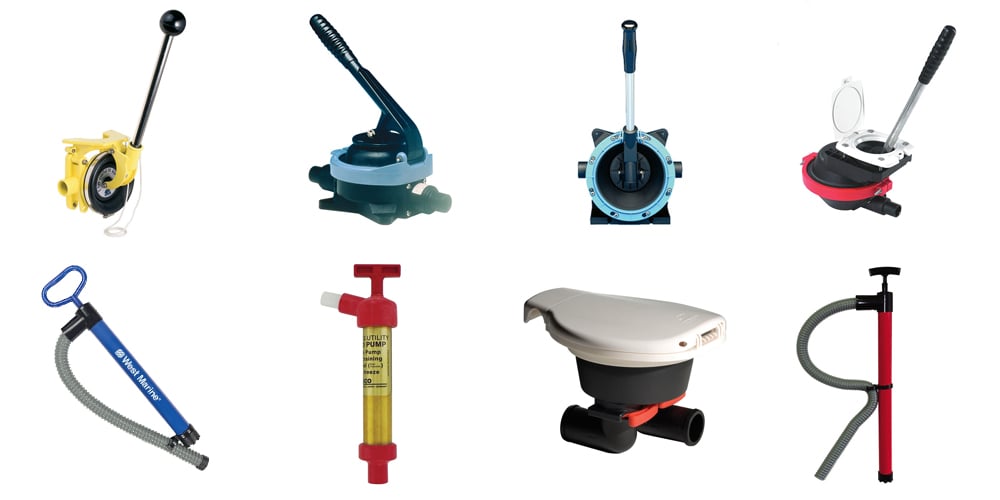
Second only to a scared man with a bucket, when it comes to keeping water out of your boat’s bilge, a manual bilge pump is one of the most reliable tools you can have on board. Whether you're dealing with rain, spray, or an unexpected leak, a manual pump works without electricity, making it an essential backup for any boat. In this guide, we’ll cover how manual bilge pumps work, their advantages, and provide some tips on how to choose and install the right one for your boat.
- How Manual Bilge Pumps Work
- Why Choose a Manual Bilge Pump?
- Choose the Right Manual Bilge Pump for Your Boat
- Diaphragm Pump Mounting Options
- Where to Install Your Pump
- Manual Bilge Pump Accessories
- Installing a Manual Bilge Pump
- Final Thoughts
- Manual Bilge Pump FAQs
- We’re Here to Help!
- Related Articles
How Manual Bilge Pumps Work
Manual bilge pumps remove water that collects inside a boat using muscle power. While some water drains out naturally through self-bailing cockpits, other water—whether from rain, waves, or small leaks—can accumulate in the bilge. A manual pump allows you to physically remove this water and discharge it overboard. There are two main types of manual bilge pumps:
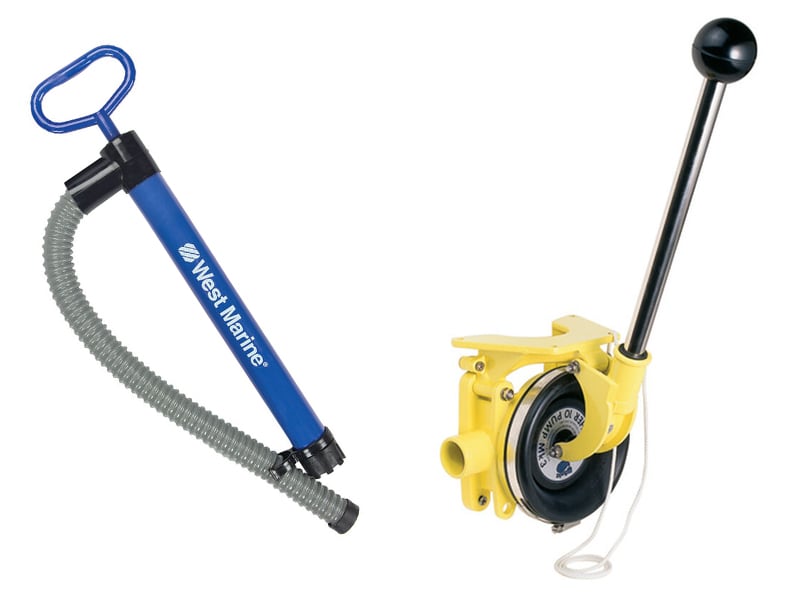 Examples of piston and diaphragm type bilge pumps.
Diaphragm Pumps
- Use a lever handle attached to a rubber bellows.
- The rocking motion of the handle draws water into a chamber and pumps it out.
- Generally less tiring to use over time.
Piston Pumps
- Resemble bicycle pumps, with a long tube and an internal piston.
- Water is pulled in as you lift the handle and pushed out as you press down.
- Simple and effective but can require more effort for extended use.
Why Choose a Manual Bilge Pump?
While electric bilge pumps are convenient, they have one major weakness—if your boat’s electrical system fails due to flooding, your bilge pump stops working. A manual bilge pump, on the other hand, will keep pumping as long as someone is pulling the handle.
Key Advantages of Manual Pumps
- Work in emergencies: Unlike electric pumps, they don’t fail if the power is lost.
- High capacity: A well-designed manual pump can move a surprising amount of water.
- Reliable backup: Even if you have an electric pump, a manual pump is a smart backup.
Choose the Right Manual Bilge Pump for Your Boat
Dinghies and Daysailers
- A small piston pump should be enough to handle rainwater and spray.
- A bucket and sponge are good to have as well.
Sailboats Under 40'
Most have an electric bilge pump for minor water removal, but a cockpit-mounted diaphragm pump is recommended as a more reliable option.
- Some boats may need a second diaphragm pump below deck for additional coverage.
- Racing Sailboats
- Offshore Racing Council (ORC) Special Regulations require one or two manual bilge pumps on all racing sailboats.
Powerboats and Large Sailboats
- A high-capacity diaphragm pump should be installed as a backup to the electric bilge pump.
- Mount it in an easily accessible location for quick use in an emergency.
Diaphragm Pump Mounting Options
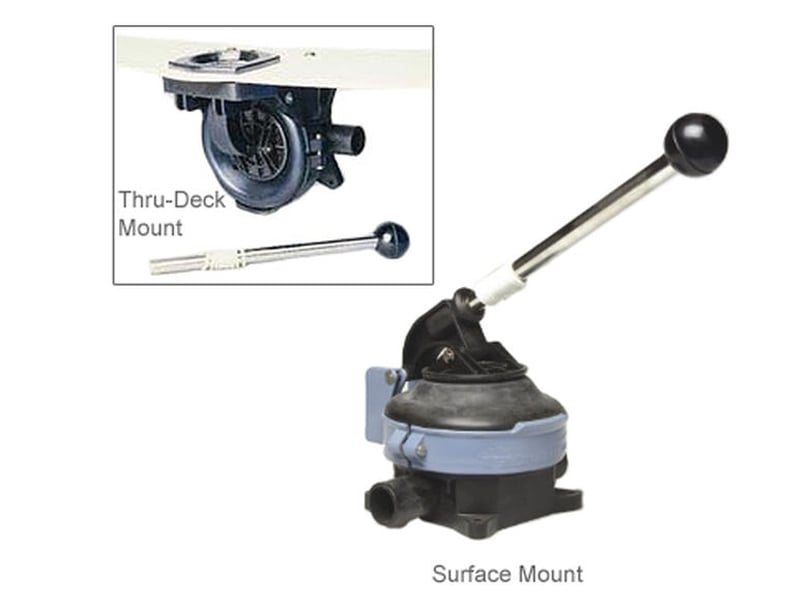 Examples of thru-deck and surface mount pump configurations, the latter of which leaves the entire body of the pump exposed.
1. Surface-Mount Pumps
- Installed on a bulkhead or flat surface, where the pump mechanism is fully visible.
- Typically have a non-removable handle
- Easy to install and maintain.
2. Through-Deck Mount Pumps
- Installed behind a bulkhead or deck, leaving only a small waterproof panel visible.
- The pump mechanism is concealed in an unused space.
- Usually have a removable handle to keep the deck clear when not in use.
Where to Install Your Pump
- Find a location where you can easily operate the pump in an emergency.
- Ensure the hose can run from the bilge to the pump and then out the hull.
- Use a reinforced, non-collapsing hose on the suction side to prevent it from collapsing under vacuum pressure.
- Choose the largest hose diameter suggested by the manufacturer. Larger hose diameters reduces the effort needed to move water.
- The pump should be accessible for maintenance and cleaning.
- If installing above deck, use a through-deck model and attach the handle to a lanyard for quick access.
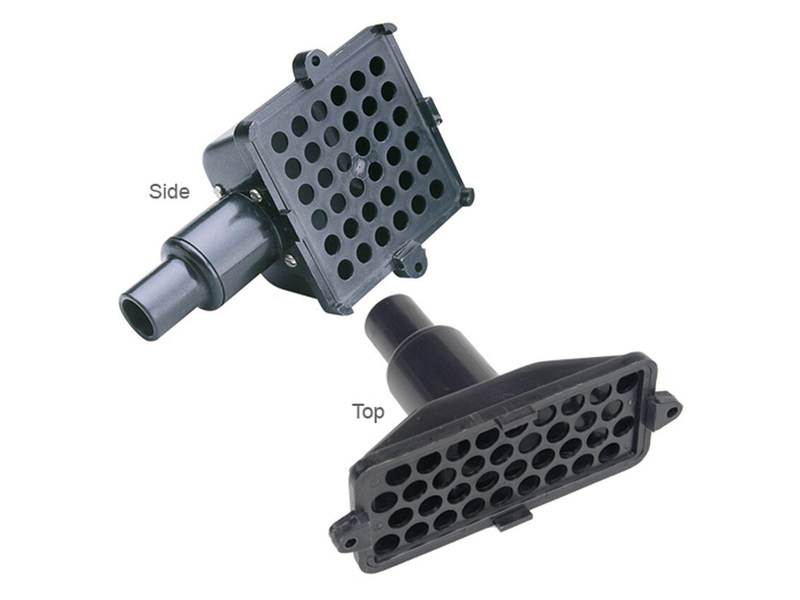 Bilge pump intake strainers are offered with a choice of top or side outlet configurations.
Manual Bilge Pump Accessories
- Repair & Service Kits: Always keep a spare service kit for each type of pump onboard.
- Through-Deck Mounting Kits: Available for some diaphragm pumps if you want to retrofit a surface-mount model.
Installing a Manual Bilge Pump
To install a diaphragm bilge pump, you'll need:
- A bilge strainer
- Thru-hull fitting for the discharge hose
- Stainless steel hose clamps
- Hole saw
- Marine-grade sealant
Basic Installation Steps:
- Mount the bilge strainer at the lowest point in the bilge to collect water efficiently.
- Attach the suction hose to the pump intake using reinforced, non-collapsing hose.
- Route the discharge hose to a thru-hull fitting located above the waterline.
- Secure all hose connections with stainless steel clamps to prevent leaks.
- Apply marine sealant around any deck or bulkhead penetrations to ensure a watertight seal.
Final Thoughts
A well-placed manual bilge pump can make all the difference in keeping your boat dry and safe. Whether you're sailing, racing, or just enjoying a day on the water, having a reliable pump ensures you're prepared for the unexpected. With the right setup, a manual pump can be your first line of defense—or your last resort—when it matters most.
Manual Bilge Pump FAQs
Why do I need a manual bilge pump if I already have an electric one?
Electric bilge pumps are great for routine water removal, but they can fail if your battery dies or your boat’s electrical system is compromised—especially in an emergency. A manual bilge pump works independently of electricity, making it a reliable backup when you need it most.
What’s the difference between a diaphragm pump and a piston pump?
- Diaphragm pumps use a lever handle to rock a rubber bellows back and forth, making them easier to operate for extended periods.
- Piston pumps work like a bicycle tire pump, using an up-and-down motion to pull in and push out water. While simple and effective, they can be more tiring to use over time.
Where should I install my manual bilge pump?
- The pump should be mounted in a location that is:
- Easily accessible in an emergency.
- Positioned so the hose can run from the bilge to the pump and out the hull.
- Free of obstructions, so it can be operated comfortably.
What size hose should I use for my bilge pump?
Choose the largest diameter hose suggested by the pump's manufacturer. A bigger hose moves more water with less effort, making pumping easier and more efficient. Also, ensure the suction hose is reinforced to prevent its collapse.
How often should I check or maintain my manual bilge pump?
Regularly inspect your pump for wear and tear, especially the diaphragm, seals, and hoses. Keeping a repair kit onboard is a good idea in case parts need replacing. Test your pump before every trip to ensure it’s in working order.
What’s the best manual bilge pump for my type of boat?
- Dinghies & Daysailers: A small piston pump is usually enough.
- Sailboats under 40’: A cockpit-mounted diaphragm pump is ideal.
- Racing Sailboats: ORC regulations require one or two manual bilge pumps.
We’re Here to Help!
If you need more guidance in selecting the perfect pump or any other boating gear, our expert crew is here to help. Stop by your local West Marine store, or shop online at westmarine.com. Use our store locator to find the nearest West Marine location, and let us assist you in getting what you need for your next adventure.