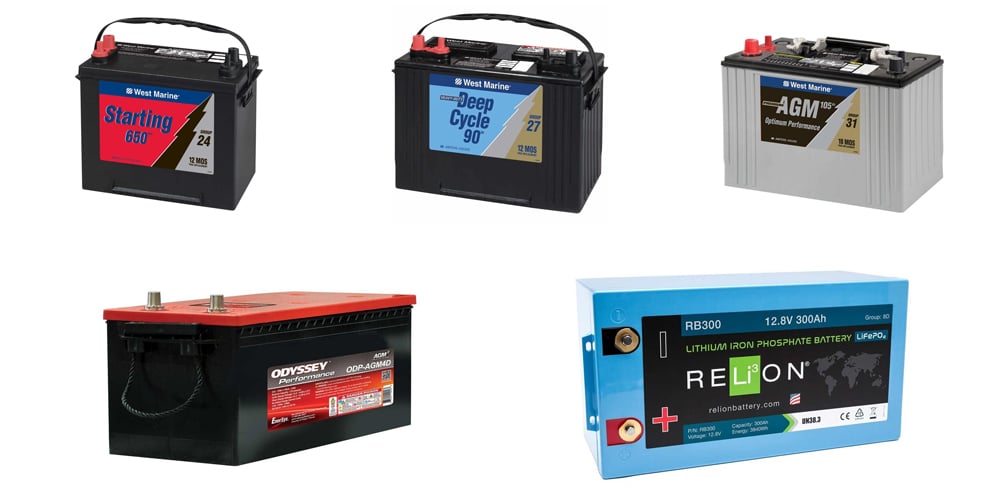
Marine batteries might not be the flashiest part of your boat, but they’re the quiet powerhouse behind smooth trips. Choose the wrong size, and you could end up with a trolling motor that quits during a big catch or an autopilot that conks out in the dead of the night. Let’s ensure that doesn’t happen.
This guide breaks down marine battery group sizes—from what those standardized dimensions really mean to how they translate into powering your boat. Along the way, we’ll share installation tips and maintenance practices to keep your battery working like a champ. By the end, you’ll have a clearer picture of how to select the right size battery to keep your boat ready for every adventure.
- BCI Group Size Standards
- Typical Applications for Battery Group Sizes
- How Much Capacity Do You Need?
- Battery Group Size Comparisons
- Terminal Configurations and Placement
- Installation and Safety Guidelines
- Temperature and Environmental Considerations
- The Future of Marine Batteries
- Marine Battery Group Sizes FAQs
- Conclusion
- We’re Here to Help!
- Related Articles
BCI Group Size Standards
Did you know the Battery Council International (BCI) has been standardizing battery sizes for decades? It’s true! These group sizes don’t just dictate dimensions—they ensure batteries from different manufacturers can fit seamlessly into your setup.
Whether you’re using a Group 27 for moderate power needs or a hefty 8D to fuel your yacht’s fridge and air conditioner, these standards make battery shopping more straightforward. Plus, the universal sizes allow you to compare options across brands without worrying about mismatched dimensions or terminal configurations.
Typical Applications for Battery Group Sizes
Wondering which size fits your boat’s needs? Here’s a quick breakdown of popular group sizes and their sweet spots:
Group 24 and Group 27
- Group 24: These compact batteries (70–85 amp hours) are perfect for smaller boats with modest power needs, like running cabin lights or a fish finder.
- Group 27: With a bit more heft (85–100 amp hours), these batteries can handle trolling motors and extra onboard systems with ease.
Heavyweights: Group 31, 4D, and 8D
- Group 31: When your boat needs serious power, this size (100–120 amp hours) delivers, making it ideal for extended trips.
- 4D and 8D: For larger vessels or energy-intensive setups, these batteries (up to 300 amp hours) keep everything running, from windlasses to refrigerators.
How Much Capacity Do You Need?
Marine batteries do more than start your engine—they fuel every system on your boat. To figure out how much capacity you need, consider this:
- House Loads: Create an energy budget by listing your devices and their power draw. Read our West Advisor article Sizing Your House Battery Bank for detailed steps.
- Starting Batteries: Check your engine manual for required Cold Cranking Amps (CCA) or Marine Cranking Amps (MCA).
Battery Group Size Comparisons
| Group Size | Dimensions (L x W x H) | Amp-Hour (Ah) Rating |
|---|---|---|
| Group 24 | 10.25" x 6.8" x 8.9" | 70–85 Ah |
| Group 27 | 12.06" x 6.8" x 8.9" | 85–100 Ah |
| Group 31 | 13" x 6.8" x 9.4" | 100–130 Ah |
| 4D | 20.75" x 8.75" x 10.0" | 180–220 Ah |
| 8D | 20.75" x 11.13" x 9.88" | 250–300 Ah |
Terminal Types and Placement
Here’s a potential headache you don’t want: mismatched terminals. Battery group sizes do not necessarily denote battery terminal types nor their locations. So, before purchasing batteries, make sure the terminal types and their location match your connection needs.
Common Configurations:
- SAE Posts: Standard for most marine and automotive batteries.
- Stud Posts: Ideal for secure connections with ring terminals.
- Dual Terminals: Stud posts alongside SAE posts accomodate lug and ring terminal connections.
Always double-check terminal placement to ensure compatibility with your wiring setup.
Installation and Safety Guidelines
Installing a marine battery may not be glamorous, but it’s critical to your safety and performance. Here’s a checklist:
- Measure First: Ensure your new battery fits the compartment with room for ventilation.
- Ventilation Matters: Match the ventilation needs of your battery type to prevent overheating or gas buildup.
- Secure It: Invest in sturdy hold-down straps or a quality battery box to keep your battery in place, even in choppy waters.
- Stay Safe: Use marine-grade hardware, terminal boots, and corrosion inhibitors to protect your battery and yourself.
Temperature and Environmental Considerations
Boating in extreme climates? Know this:
- High temperatures can shorten your battery’s lifespan.
- Cold weather reduces capacity, sometimes by up to 50%.
For the best performance, lithium batteries excel at handling temperature swings thanks to their built-in management systems.
The Future of Marine Batteries
The marine battery world is buzzing with innovation. Imagine longer-lasting, safer, and eco-friendlier batteries—like solid-state or sodium-based options—powering your boat. While these technologies are still emerging, they hold exciting potential for the next wave of marine power.
Marine Battery Group Sizes FAQs
What is a marine battery group size, and why does it matter?
A marine battery's group size refers to standardized dimensions set by the Battery Council International (BCI), which include the battery’s length, width, and height. Group size matters because it ensures compatibility with your boat’s battery compartment, mounting system, and electrical connections, while also giving an idea of the battery's capacity.
Can a larger group size provide more power?
Generally, yes. Larger group sizes often have higher amp-hour (Ah) ratings, meaning they can store more energy and power systems for longer periods. However, it’s crucial to match the group size to your boat's energy requirements and compartment space.
What’s the difference between a starting battery and a deep-cycle battery?
- Starting Battery: Designed to provide a burst of power to start your engine. It’s rated in Cold Cranking Amps (CCA) or Marine Cranking Amps (MCA).
- Deep-Cycle Battery: Built for sustained energy delivery over time, ideal for running trolling motors, appliances, and electronics.
Some batteries are dual-purpose, combining features of both types.
How do I calculate the amp-hour capacity I need?
For house loads, create an energy budget by listing all devices, their wattage, and usage hours. Divide the total watt-hours by the battery voltage (typically 12V) to find the amp-hour capacity. For starting batteries, refer to your engine manual for the required CCA or MCA rating.
Are all Group 27 batteries the same?
No. While all Group 27 batteries have the same dimensions, their internal construction, chemistry (e.g., Flooded, AGM, Lithium), and capacity (Ah) can vary significantly. Always check the specifications to ensure compatibility with your needs.
What should I consider when replacing a battery?
- Group size: Ensure it fits your compartment.
- Terminal configuration: Match the new battery’s terminals to your wiring.
- Capacity: Confirm it meets your power needs.
- Battery chemistry: Verify compatibility with your charging system.
Do marine batteries require special maintenance?
- Flooded Lead-Acid: Check and refill water levels regularly.
- AGM and Gel: Maintenance-free but inspect for corrosion.
- Lithium: Virtually maintenance-free; monitor the battery management system (BMS).
For all types, clean terminals and apply corrosion inhibitors periodically.
What are the advantages of lithium marine batteries?
Lithium batteries offer higher energy density, lighter weight, longer lifespan, faster charging, and better performance in extreme temperatures. However, they come with a higher upfront cost compared to lead-acid options.
Conclusion
Choosing the right marine battery size is about more than measurements—it’s about finding the right fit for your adventures. Whether you need a Group 24 for weekend outings or an 8D for long-term cruising, matching your battery’s size, capacity, and configuration to your needs ensures smooth sailing. With the right battery in place, your systems will be ready to perform every time you hit the water.
We’re Here to Help!
Still have questions on how to pick the right size batteries for your boat? No worries! Online and in over 230 West Marine stores, our experienced crew is ready to help. Whether you need advice on battery group sizes, installation tips, or selecting the best option for your boat’s power demands, we’ve got you covered. Stop by your local West Marine store or explore our extensive library of West Advisor articles online to find the answers you need. Use our store locator to find the West Marine store nearest to you.