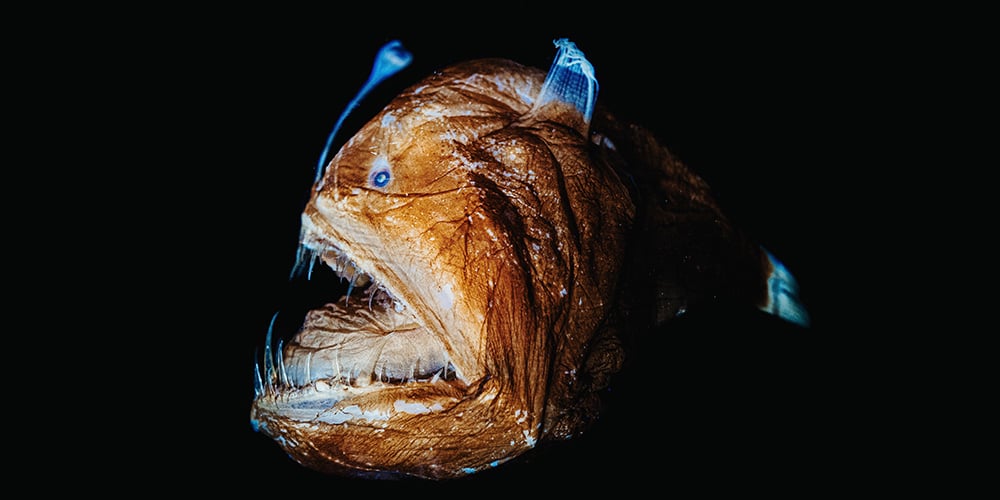
The waters on earth are filled with diverse and remarkable species. From deep ocean creatures adapted to crushing pressure, to fish that blend so perfectly into their surroundings they are effectively invisible, there is always something new to discover. In these diverse ecosystems, some species are so rarely encountered that a confirmed sighting makes local or national news. Here are five fish and marine species that are genuinely rare to see in the wild — give you something to look out for any time you’re on the water.
1. Oarfish
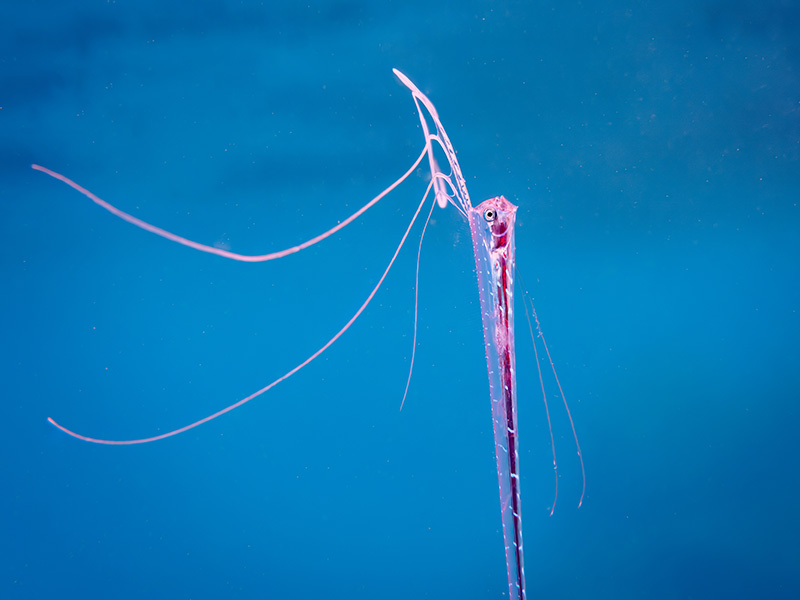
Oarfish are found in temperate and tropical oceans worldwide but live at depths of 200 to 1,000 meters, making live surface sightings extraordinarily rare.
Oarfish hold the record as the world’s longest bony fish, with confirmed specimens reaching over 26 feet and unverified accounts suggesting they may grow to 56 feet or more. Their appearance — a long, silver, ribbon-like body with a striking red dorsal fin that runs the full length of the fish — is unlike anything else in the ocean. Japanese mythology gave them the nickname “doomsday fish,” associating them with impending earthquakes or disasters. This folklore is likely rooted in the fact that oarfish are almost exclusively seen when they wash ashore dead or dying — a deeply unusual sight that would have seemed ominous to coastal communities.
One of the most famous documented sightings is a 23-foot specimen found by a group of Navy SEALs on the shore of San Diego in 1996. More recently, in February 2025, a live oarfish was spotted in shallow water off the Pacific Coast of Mexico in Baja California Sur — a sighting that made national news precisely because live encounters are so unusual. The people who found it were able to guide it back toward open water. You can watch the video here.
Why are they so rarely seen? Oarfish live at depths of approximately 200 to 1,000 meters, well below the reach of recreational divers and far from surface activity. They appear to spend almost all of their lives in the mesopelagic zone, only becoming visible to humans when illness, injury, or strong currents carry them to shallower water or onto shore.
Where oarfish are found: Temperate and tropical ocean zones worldwide, typically at 200–1,000 meters depth.
2. Anglerfish
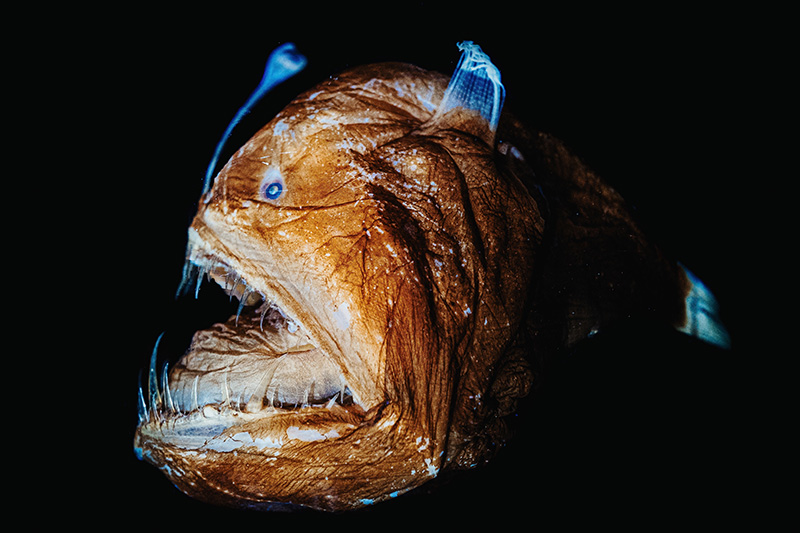
Deep-sea anglerfish live at depths where no sunlight penetrates, using a bioluminescent lure to attract prey in total darkness.
There are over 200 species of anglerfish, but the ones that capture the imagination are the deep-sea varieties — nightmare-fuel fish with disproportionately large mouths, needle-like teeth, and a bioluminescent lure (called an esca) that dangles from a modified fin ray above their head. The lure glows in the absolute darkness of the deep ocean, attracting prey close enough for the anglerfish to strike. The jaws are hinged so flexibly that a deep-sea anglerfish can swallow prey larger than itself.
Most deep-sea anglerfish live below 200 meters, in the mesopelagic and bathypelagic zones where no sunlight penetrates. This is the primary reason they are almost never seen alive — they are simply unreachable under normal circumstances. When they do appear in shallower water, it is almost always because the fish is in distress.
A video of a daytime anglerfish sighting near Tenerife, the largest of the Canary Islands, went viral in recent years. Tragically, the fish died shortly after being filmed — a reminder that surface encounters with deep-sea species are almost always the result of something going wrong for the animal.
One remarkable fact about deep-sea anglerfish reproduction: the male, which is dramatically smaller than the female, bites into the female’s skin and fuses to her permanently, sharing her circulatory system and providing sperm in exchange for nutrients. He is, functionally, a parasitic reproductive organ. It is one of the stranger adaptations in the animal kingdom.
Where anglerfish are found: Worldwide, primarily below 200 meters depth. Wild surface sightings are almost always of distressed animals.
3. Axolotl
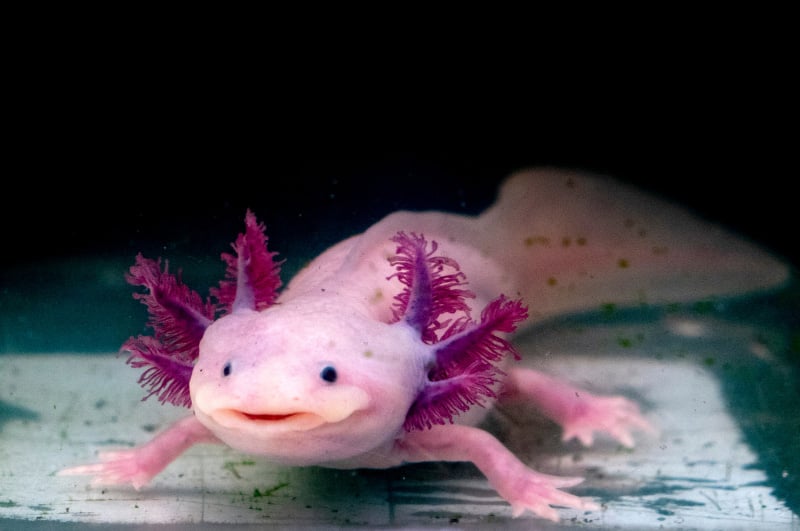
Axolotls are critically endangered in the wild, with their only remaining native habitat being the canals of Lake Xochimilco in Mexico City.
The axolotl is not technically a fish — it’s an amphibian — but it is one of the most biologically extraordinary aquatic creatures on earth. Most amphibians undergo metamorphosis, losing their larval features as they develop into adults. Axolotls practice neoteny: they retain juvenile characteristics, including their distinctive feathery external gills, throughout their entire lives. A fully grown adult axolotl looks like an oversized tadpole, complete with the gills that most amphibians shed during development.
What makes axolotls genuinely remarkable to scientists is their regenerative capacity. They can regrow entire limbs, restore sections of their hearts, and even regenerate portions of their brains — a capability unlike that of almost any other vertebrate. Research into axolotl regeneration is ongoing, with potential implications for understanding human tissue repair.
Despite being ubiquitous in home aquariums and wildly popular on the internet, the wild axolotl is critically endangered. They are native to the lake system in the Valley of Mexico, but urbanization and pollution have destroyed most of that habitat. Their only remaining native wild habitat is the canal network of Lake Xochimilco in Mexico City, and sightings there are increasingly rare. The population is estimated in the hundreds. Captive breeding programs exist, but wild recovery efforts are complicated by the continued degradation of the Xochimilco canals.
Where axolotls are found: In the wild, only the canals of Lake Xochimilco in Mexico City. Widely available in captivity but critically endangered in nature.
4. Leafy Seadragon
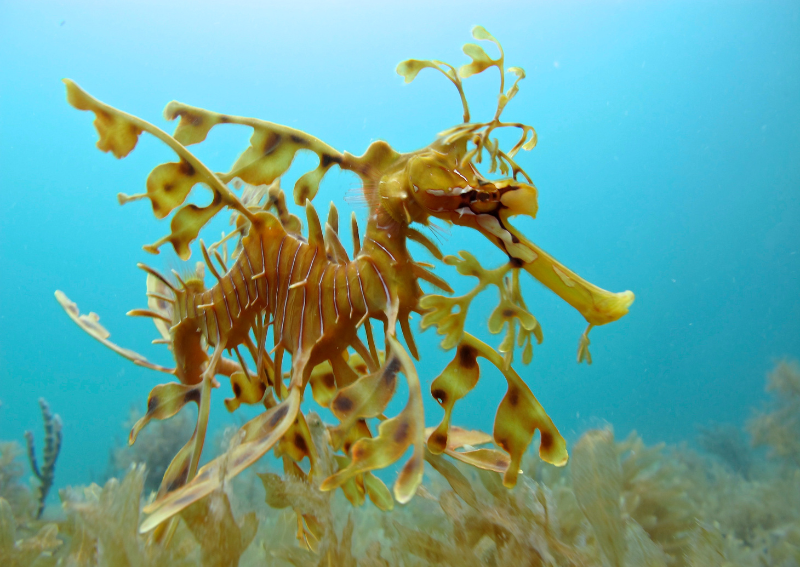
Leafy seadragons are found exclusively along the southern and western coasts of Australia, where they are a protected species.
The leafy seadragon may be the most visually striking fish in the ocean. Closely related to seahorses and pipefish, it is covered in elaborate, leaf-shaped appendages that provide near-perfect camouflage among kelp and seagrass. The appendages are purely structural — they play no role in propulsion. The seadragon swims using small, nearly transparent fins along its body, moving so subtly that it can appear to be a piece of drifting kelp. In its natural habitat, it is essentially invisible.
Unlike seahorses, in which the male carries eggs in a pouch, male leafy seadragons carry eggs attached directly to a patch of spongy tissue on the underside of the tail. The male tends the eggs for approximately eight weeks until they hatch. Young seadragons are independent immediately from birth.
Leafy seadragons are endemic to Australia, found only along the southern and western coastlines in rocky reefs, kelp beds, and seagrass meadows. They are a protected species in Australia — it is illegal to collect or disturb them. While they are not classified as globally endangered, their highly specific habitat requirements and slow reproductive rate make local populations sensitive to habitat degradation.
If you want to see a leafy seadragon, the best chance is in the waters around Adelaide, South Australia, and along the southern coast of Western Australia. Snorkeling and diving in kelp beds with a very patient eye and slow, non-disruptive movement is the approach. They are notoriously difficult to spot even when present.
Where leafy seadragons are found: Rocky reefs and kelp beds along the western and southern coasts of Australia. Endemic to Australia and found nowhere else on earth.
5. Giant Sea Bass
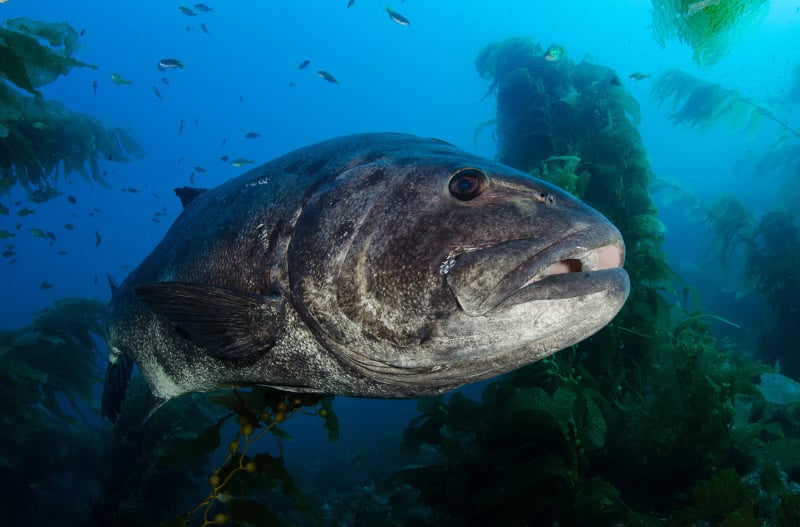
Giant sea bass are critically endangered and fully protected in California waters. If you catch one, release it immediately.
The giant sea bass (Stereolepis gigas) is a remarkable fish by almost any measure. They can reach over 7 feet in length and exceed 700 pounds, making them one of the largest bony fish in the Pacific. They are slow-growing and extraordinarily long-lived — individuals can survive for 75 years or more. This combination of traits makes them particularly vulnerable to fishing pressure: they take years to reach reproductive maturity, and a single generation lost to overfishing cannot be quickly replaced.
Giant sea bass were commercially important along the California coast for much of the 20th century and were fished nearly to extinction by the 1970s. California banned commercial and recreational take in 1982, and the population has been slowly recovering since. Recent years have brought encouraging signs — divers in Southern California kelp beds occasionally encounter them, and their presence in certain locations has become relatively predictable during summer months. But the species remains critically endangered and far below historic population levels.
They typically inhabit nearshore rocky reefs and are strongly associated with kelp forests from northern California south into Baja California. The kelp provides structure, prey, and cover. Giant sea bass are often found in 20–120 feet of water, within recreational diving range, which is one reason the occasional encounters by divers generate significant excitement.
If you are fishing in California and happen to hook a giant sea bass — possible given their range overlaps with popular nearshore fishing grounds — it is illegal to retain one. Release it immediately with as little handling as possible.
Where giant sea bass are found: Pacific Ocean from northern California to the Baja California Peninsula, primarily in kelp forests and rocky nearshore reefs.
Get Out There and Find Some
The people who make these rare sightings are almost always people who spend a lot of time on the water. The more time you spend out there, the greater the chance you’ll see something not many others have. Visit West Marine to gear up, and we’ll see you on the water.
Frequently Asked Questions
What should I do if I see a rare marine species from my boat?
Observe from a distance without approaching or attempting to touch. For large marine mammals, federal law requires a minimum approach distance (100 yards for most whales, 50 yards for dolphins and seals). For fish that appear distressed near the surface — oarfish, anglerfish, or other deep-water species in shallow water — the animal is almost certainly unwell; contact your local marine resource agency rather than attempting to return it to sea yourself. Document with photos or video if you can do so without distressing the animal further, and report the sighting to your state or federal wildlife agency — these records contribute to scientific understanding of species distribution.
Is the giant sea bass recovering?
Slowly, yes. Since California’s 1982 ban on taking giant sea bass, the population has been rebuilding from near-extinction levels. Divers in Southern California kelp beds are encountering them more frequently than they were two or three decades ago, and some aggregation sites have become relatively well-known in the diving community. The species remains critically endangered and far below historic abundance, but the trajectory is cautiously positive. The recovery is a frequently cited example of effective fisheries protection.
Why are axolotls so endangered if they’re popular in captivity?
Captive populations and wild populations are effectively disconnected. The millions of axolotls in home aquariums worldwide are descended from a small number of individuals collected decades ago and have been selectively bred in captivity for generations. They are not genetically identical to wild axolotls and cannot simply be released into the wild to supplement the population. Wild axolotl recovery depends on restoring and protecting the Lake Xochimilco canal habitat in Mexico City — a complex urban conservation challenge involving water quality, invasive species management, and political will in a densely populated city.
Can oarfish actually predict earthquakes?
No — but the claim has been studied. Japanese researchers examined historical records of oarfish strandings and found no statistically significant correlation with earthquake activity. The mythology likely developed because oarfish wash ashore so infrequently that any subsequent earthquake in a seismically active region appears connected. Japan and the Pacific Coast of the Americas are both highly seismically active, so earthquakes happen regularly regardless of oarfish sightings. The association is coincidence, not causation.