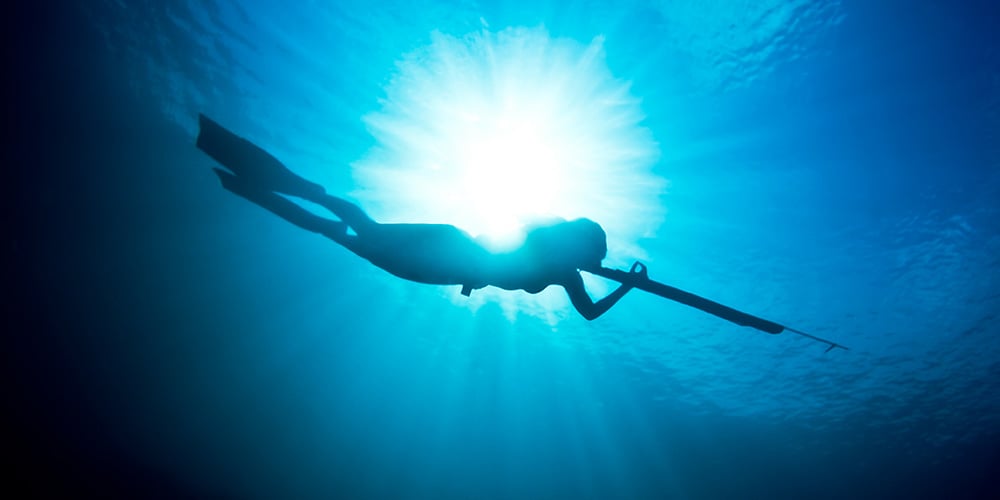
With a history dating back thousands of years to when the first person impaled a fish on a sharpened stick, people have spear fished. In modern times, spearfishing as a sport first made its appearance in the 1920s in Southern France and Italy. At that time, equipment consisted of little more than watertight goggles and pole spears. However, with the passage of time, spearfishing gear has evolved into the modern spearguns and diving equipment we see today.
If you are an angler who is equally at home IN the water as you are on the water, we suggest you consider spearfishing for the excitement and satisfaction it has to offer.
- Spearfishing Techniques
- Snorkeling and Freediving vs. SCUBA
- Pros and Cons of Spearfishing with SCUBA
- Pros and Cons of Spearfishing with Snorkeling and Freediving
- Reduce Risks with Proper Training
- Spearfishing Equipment
- Spearguns, Slings and Pole Spears
- Band-Powered Spearguns aka Band Guns
- Pneumatic Spear Guns
- Pole Spears
- Speargun and Pole Spear Tips
- Mask
- Snorkel
Spearfishing Techniques
Since fish love structure, most spearfishing is done around reefs, rock formations, wrecks and other locations where fish congregate. In the warm southern waters of the United States, gamefish typically found around structure include snapper, grouper, amberjack, cobia, and barracuda, the latter of which are commonly found patrolling the edges of reefs and structure, ready to ambush prey. On the West Coast, spearfishermen target cold water bottom fish like rock cod, and ling cod; halibut in the shallow water of sandy beaches; and at the edge of kelp forests, white sea bass.
Whether you will be spearfishing when snorkeling, freediving or with SCUBA, a productive technique when hunting around structure is to let the fish come to you. Using this technique when freediving, you can extend your bottom time and increase your chances at a fish by diving down to a likely location where you can just relax and hold motionless while you wait for your quarry to make its appearance. Chasing fish is usually useless as once they are on to you, they have the uncanny ability to stay just out of range! Here are a few spearfishing tips:
- Prioritize safety at all times by always diving with a buddy.
- When hunting around structure, explore the terrain, looking for locations where fish are likely to hide, such as undercuts and caves. The presence of small bait fish is often a good indicator that larger fish are nearby.
- When hunting at close quarters within reefs or in otherwise congested terrain, we suggest use of a pole spear or a short pneumatic or band-style speargun, as long guns can be unwieldy at close range.
- Be careful about shooting into caves at close range, as a miss may very well result in a bent spear shaft or a blunted tip.
- Approach your prey quietly and patiently, minimizing sudden movements that could startle fish.
- Practice accuracy and precision in your shots to ensure a humane and effective kill. Aim for vital areas of the fish to minimize suffering and maximize success.
Snorkeling and Freediving vs. SCUBA
Spearfishing can be done in shallow water when snorkeling, freediving at depth or with the aid of SCUBA, which is the acronym for a Self-Contained Underwater Breathing Apparatus. While all types of spearfishing require you to be a competent swimmer and in good physical condition, freediving (aka breath-hold diving) requires much more skill than spearfishing with SCUBA.
Pros & Cons of Spearfishing with SCUBA
Pros:
- Gives you more time under water to find the fish
- Allows you to go deeper than freediving or snorkeling
Cons:
- Requires more equipment than freediving. You'll need an air tank, a regulator, a buyonacy compensator and a dive computer.
- You need to be a certified diver which requires additional training.
- Produces a lot of noise and bubbles that can spook fish.
- While legal in most of the U.S., many countries have banned or severly restricted spearfishing with SCUBA. Make sure to check local laws before you dive.
Pros & Cons of Spearfishing while Snorkeling or Freediving
Pros:
- Increased stealth and mobility over SCUBA to help you sneak up on fish.
- Less gear which translates to a feeling of freedom for many freedivers.
Cons:
- Less time underwater to find the fish. Most freedivers must dive down, locate the fish, shoot it and return to the suface with their catch in a short period of time — usually less than 90 seconds.
- Requires practice and stamina that cannot be mastered in a day
Reduce Risks with Proper Training
Whether you plan to spearfish as a snorkeler, freediver or with SCUBA, there are a number of risks. For scuba divers, nitrogen narcosis (rapture of the deep) and decompression sickness (the bends) are two risks which can be avoided with the type of training that certified divers receive.
For freedivers, prolonged breath holding can cause hypoxia which is oxygen starvation that can lead to a loss of consciousness, either at depth or near the surface at the end of the dive. To avoid these risks, and to give you the right start as a freediver, we suggest you take a freediving course, one or more of which are available in areas where spearfishing and freediving are common. A good freediving course will cover subjects like the importance of the buddy system, safety precautions, proper breath holding technique, the physiology of diving and other subjects.
Spearfishing Equipment
Typical spearfishing gear includes a speargun or pole spear, a mask, snorkel, fins, dive knife and, unless you will be spearfishing in very warm shallow water, a wetsuit and a weight belt. If you happen to be a scuba diver, most of the gear you already have will suffice. Freedivers will benefit from a set of extra long fins that maximize thrust with minimum effort, which allows them to conserve energy and dive deeper for longer durations.
Spearguns, Slings and Pole Spears
Spearguns, slings and pole spears are all used to propel a spear toward a fish. Types of spearguns include models that are powered by elastic bands, compressed air and those that are spring loaded. When handling a spear gun, always put safety first. Never point the gun at something you don't want to shoot and never, ever load or shoot a speargun out of the water!
Band-Powered Spearguns aka Band Guns

Band guns vary in length from relatively short models which are a good choice for spearing fish around reefs to powerful, long guns that are used in open water for spearing large pelagic fish. The longer the gun the more bands it can have which translates to greater power and range. The components of band guns typically include the following:
- The body or "barrel" of the gun which can be made of composite material, aluminum or wood.
- The grip which is where the hunter holds the gun.
- The trigger mechanism which may include a "safety" to prevent accidental firing.
- A line release which holds the shooting line in place.
- A shooting line which is a line that is attached to the spear which enables the hunter to retrieve the spear and any speared fish.
- Bands or rubber tubing, also known as slings, usually latex tubing, which are used to power the spear.
- The spear, also called a shaft, to which is attached a tip which can be either permanent or removable.
Pneumatic Spear Guns
Pneumatic spear guns use compressed air to propel a spear. They consist of a barrel which houses a cylinder where air is compressed by a piston which when released propels the spear, a shooting line which is attached to the spear, a pistol-style grip, a trigger and usually a safety, which prevents the gun from accidentally firing.
Pneumatic spear guns are valued for their simplicity, reliability, and quiet operation. While not as powerful as large band guns, they are a good choice for shooting fish at relatively close range around reefs.
Pole Spears
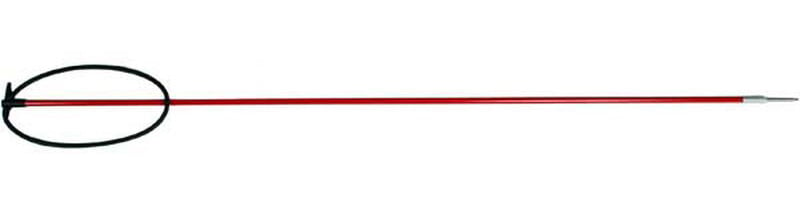
Known by many as a "Hawaiian sling", pole spears are an uncomplicated alternative to conventional pneumatic or banded spear guns. They consist of a pole with either a sharp, removable or permanent tip at one end and an elastic loop at the other. They are a great choice for shooting fish at close range around reefs. In the event the elastic tubing wears out, it can easily be replaced. Some pole spears can be disassembled into several short lengths which makes them easy to pack for travel.
Speargun and Pole Spear Tips
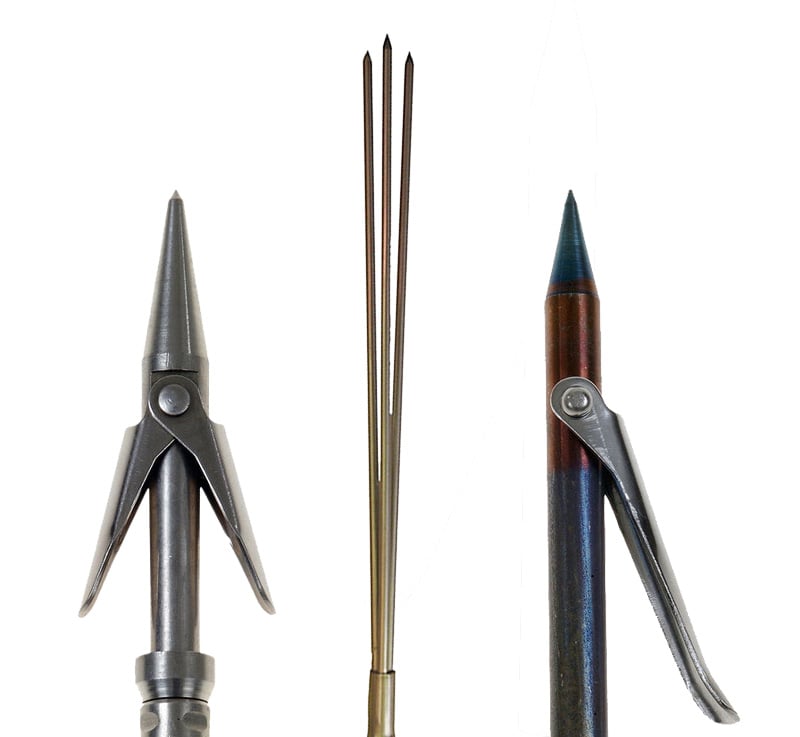
While some spears have permanent tips, other have removable spear tips, which means that they can be easily replaced if they become blunted on a rock. Types of tips include paralyzer, single flopper, double flopper and trident-style tips.
Mask
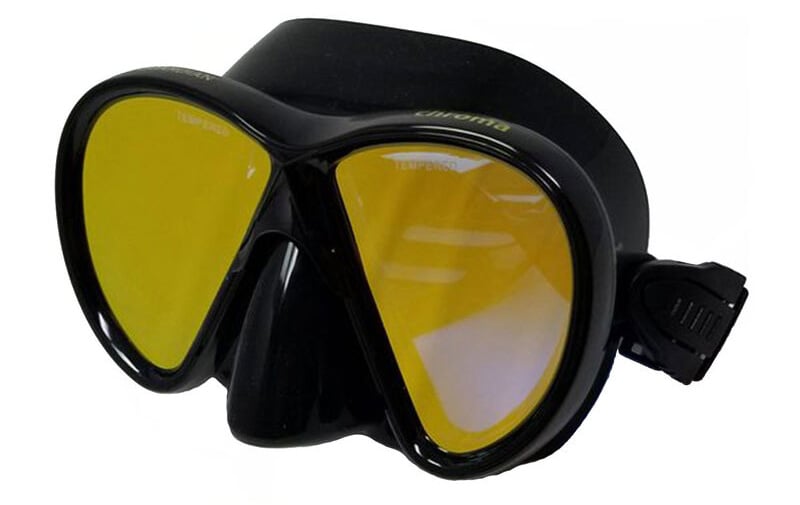
For a snorkeling or diving mask, we suggest one of Guardian SCUBA’s Chroma Adult Masks which feature a dual-color, non-fogging, high-definition nine-layer coated lens. Offered with a choice of a gold or cobalt blue lens, they enhance vision while giving improved color correction within shallow depths. Lenses are specially treated to prevent fogging. Details include a comfortable, supple liquid silicone skirt and strap and Guardian’s EZSQZ buckles.
Snorkel
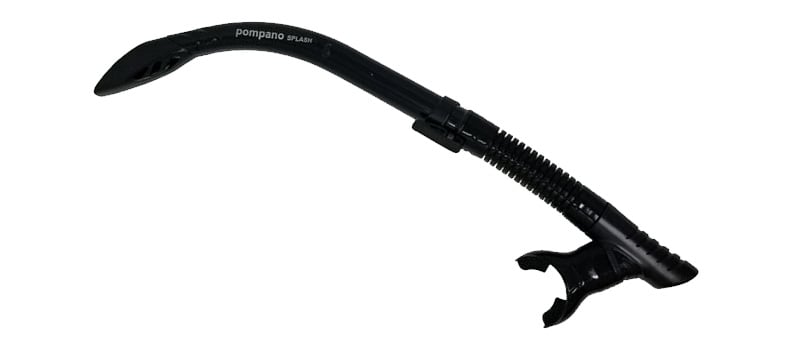
For a snorkel, we suggest the Pompano’s Splash Snorkel which is a professional-grade, semi-dry top snorkel that features a silicone mouthpiece and flex tube for scuba and snorkeling. The semi-dry top keeps most water from splashing into the snorkel while using on the surface. The soft mouthpiece makes for comfortable prolonged use while the silicone flex tube drops out of the way when scuba diving.
Conclusion
As one new to the sport of spearfishing, we hope that the information in this article will prove useful. Remember to always dive with a buddy and to put safety first. As discussed, beginning freedivers can greatly benefit by taking a freediving course.
Related