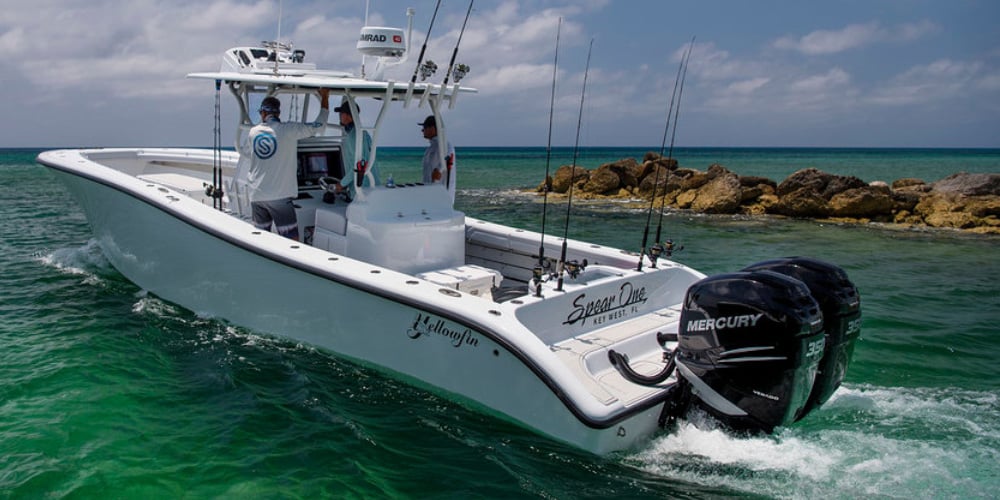
A boat's name is its identity on the water. It appears on every document, gets spoken on VHF channel 16, and travels with the vessel for its entire life. Whether you want something that makes the marina laugh or something that captures the spirit of your time on the water, choosing the right name is worth doing thoughtfully. Here are our favorite funny boat names, plus everything you need to know about the traditions around naming a boat.
- Our Favorite Funny Boat Names
- Funny Fishing Boat Names
- Family Boat Names
- Boat Naming Traditions
- Tips for Choosing a Boat Name
- FAQs
Our Favorite Funny Boat Names
The best boat names work on two levels — they say something true about the boat or the owner, and they make anyone who reads them smile. Here are names we’ve seen at the dock that have stood the test of time:
- Seas the Day — The classic. Has been on boats for decades and still works.
- Nauti Buoy — Gets the point across efficiently.
- Ship Happens — Honest. Every boater knows this feeling.
- Aquaholic — For the person who schedules vacations around boat ownership.
- Pier Pressure — Because sometimes you really did need to buy the bigger boat.
- Vitamin Sea — Gets the pronunciation right on first read, which not all boat puns manage.
- The Codfather — For fishing boats with an owner who has watched Goodfellas one too many times.
- Unsinkable II — Dark, but also very funny if you know the history of the original.
- Knot on Call — Perfect for the doctor or lawyer who bought a boat specifically to be unreachable.
- Social Distancing — A name that found its moment in history and will age interestingly.
- For Sail by Owner — Technically a lie. Functionally very funny in a marina full of boats for sale.
- Gone with the Wind — Works on a sailboat. Less convincing on a trawler.
Funny Fishing Boat Names
Fishing boats have a long tradition of names that walk the line between optimism and self-deprecation. After all, fishing is a sport where you spend a lot of time explaining what almost happened.
- Fish N’ Ships — Works hard for the category.
- Reel Therapy — Because some days you just need to be on the water.
- Master Baiter — A marina classic. Debate its appropriateness amongst yourselves.
- Gone Fishin’ — Simple, honest, and direct. Often painted on a sign on the office door too.
- Catchin’ Some Rays — Doubles as a sun-worshipping declaration when the fish aren’t biting.
- Reel Fun — Clean, friendly, and does exactly what it promises.
- Fishin’ Impossible — For the boat that never catches anything but keeps going back.
- Net Worth — For the financial professional who finds it funny the first time and wistful the second.
Family Boat Names
Many of the best boat names come from involving the whole family. Kids often come up with combinations that an adult would never consider, and some of the most memorable names on the water are the result of a family vote with a seven-year-old casting the deciding ballot.
- The Family Circus — Accurate for most family boats on most days.
- Controlled Chaos — Same sentiment, slightly more nautical.
- Our Happy Place — Earnest and true. No pun required.
- The Money Pit — For the parent who has done the annual maintenance math.
- Keeping Up with the Joneses — Works best when moored next to someone named Jones.
- Aqua-Therapy — What the boat gives you after a week at the office.
Boat Naming Traditions Worth Knowing
If you buy a used boat that already has a name, maritime tradition holds that you must perform a proper “de-naming ceremony” before christening it with a new name — otherwise you’re tempting the sea gods and can expect bad luck. Whether you believe in this or not, the ceremony makes for a memorable afternoon at the dock and gives you a good story.
The traditional de-naming and christening process involves: removing every trace of the old name from the boat (including paperwork, life rings, and any other reference — leaving even one reference invalidates the ceremony), requesting that Poseidon or Neptune remove the vessel from his ledger, and then introducing the new name with a bottle of Champagne broken across the bow. Some traditions specify that the Champagne must flow forward along the boat, not aft.
A few other naming conventions and superstitions that have persisted in the boating community:
- Never rename a boat without performing the proper ceremony. Sailors have believed this brings bad luck for centuries.
- Traditional superstition holds that names containing numbers or starting with certain letters are bad luck. These rules are observed inconsistently and mostly ignored by modern boaters, but they exist.
- A boat named after a living person is said to bring bad luck on that person — unless you ask their permission first. Names after deceased people, especially loved ones, carry no such prohibition and are common on working boats and fishing vessels.
- Changing a boat’s name when you’re in financial trouble — to escape an unlucky vessel — doesn’t work according to the tradition. The boat’s history goes with the hull regardless.
Tips for Choosing a Boat Name
A few practical considerations before you commit:
- Say it out loud on a radio. Your boat name will be spoken on VHF in situations ranging from casual marina calls to distress communications. “My vessel is named Pier Pressure, over” works fine. A name that’s difficult to pronounce or sounds like something else on a radio can cause real confusion. The international phonetic alphabet exists for a reason.
- Check for existing boats with that name. In the US, boat names are not unique by law — there can be hundreds of boats named “Blue Horizon.” If you register for documentation or AIS, your name plus hailing port combination is what identifies you. But in a marina, having the same name as three other boats is confusing. A quick internet search and a check of the USCG vessel documentation database will tell you how common your chosen name is.
- Consider longevity. A topical or timely name might be funny now and confusing in a decade. The best boat names have an evergreen quality — they work on the water regardless of what year it is.
- Think about the hailing port combination. In the US, documented vessels display their name and hailing port on the stern. Some combinations create accidental humor (“Gone Again / Wherever”), and some just work beautifully together (“True North / Annapolis”). It’s worth thinking about both together.
- Keep it legible. The name on your transom should be in a non-script font, at least 4 inches tall, and in a color that contrasts with the hull. A beautiful name in an unreadable script font at the wrong size is worse than a plain name you can read from the dock.
For more on the boat christening ceremony, see our West Advisor on Christening a Boat.
Frequently Asked Questions
Do I need to register my boat name?
In the US, boat names are not registered or trademarked — they are not unique and there is no requirement to file a name with any authority simply to name your boat. If your vessel is Coast Guard documented (voluntary for most recreational boats, required for commercial vessels and those used as collateral for a marine mortgage), your vessel name and hailing port are recorded in the USCG National Vessel Documentation Center database. State registration typically only requires hull identification numbers and owner information, not the boat name. You can name your boat whatever you want and change it whenever you want, subject only to the traditions above and common sense.
What is the proper way to rename a boat?
Maritime tradition calls for a de-naming ceremony before introducing a new name. Remove every reference to the old name from the boat — including all markings, paperwork, life rings, and gear. Perform a ceremony acknowledging the removal of the old name from “Poseidon’s ledger,” then christen the boat with its new name and a bottle of Champagne across the bow. The ceremony is a tradition, not a legal requirement, but it makes for a memorable event and gives you a reason to invite people down to the dock.
How long should a boat name be?
Practically, shorter is better for two reasons: legibility on the transom, and clarity on the radio. One to three words is the sweet spot. Longer names can work — “For Sale by Owner” is five words and earns its length in laughs — but they require more careful font sizing and placement to remain readable. Whatever length you choose, test it on a transom mockup before ordering the decal, and test how it sounds when spoken aloud on a VHF radio.
Can I change my boat name after purchasing a used boat?
Yes, and many buyers do. If the boat is Coast Guard documented, you will need to update the documentation with the USCG National Vessel Documentation Center. If it is state registered, update the registration with your state’s authority. For the documentation update, the existing documentation certificate needs to be amended or reissued. Contact the USCG NVDC or a documentation service for the current process and fees. Beyond the paperwork, follow the traditional de-naming ceremony described above before christening with the new name.