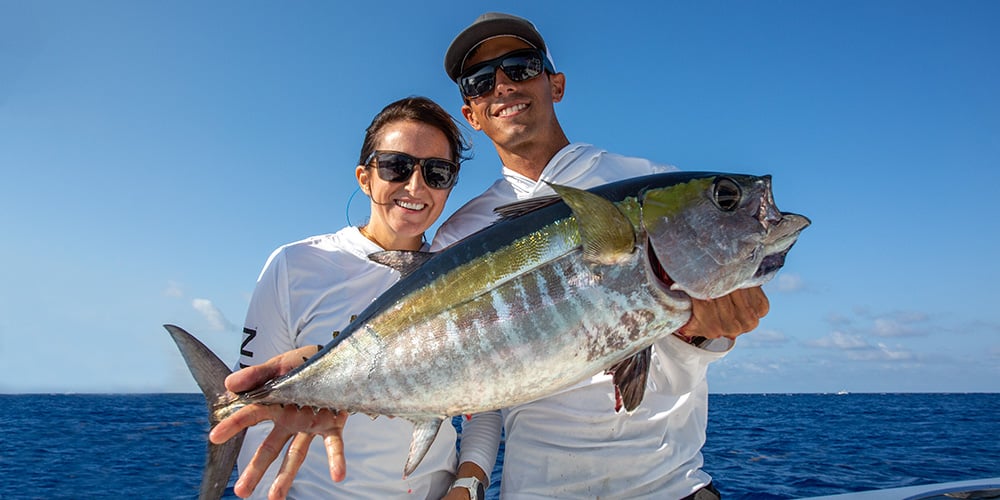
Tuna are among the ocean’s most prized and powerful fish, pursued by sport anglers for their fight and by chefs for their flavor. Tunas (members of the tribe Thunnini in the mackerel family) are built like torpedoes – sleek, muscular, and born to roam the high seas. They are found throughout the Atlantic, Pacific, and Indian Oceans, migrating vast distances in search of prey. Some species, like the yellowfin tuna, can sprint at speeds up to ~75 km/h (~47 mph), making them one of the fastest fish in the sea. From open-water big game fishing to the sashimi counters of Tokyo, tuna hold a special place in both sportfishing and global cuisine.
In sportfishing, few moments compare to the scream of a reel hooked to a rampaging tuna. Tuna are renowned for blistering initial runs and dogged strength – a hooked tuna might dive deep, circle under the boat, or make repeated runs that test an angler’s endurance. Giant bluefin tuna especially have achieved legendary status for their size and power, sometimes requiring hours to land. In cuisine, tuna’s appeal is just as great. The meat ranges from deep red and rich (as in bluefin or bigeye tuna belly) to pale pink and lean (albacore “white” tuna). This versatility allows tuna to shine in a variety of preparations, making it a gourmet delicacy on the plate.
Welcome to The West Advisor’s Ultimate Guide to Tuna, a four-article series that explores every facet of these remarkable fish. In Tuna Species and Traits, we explore the unique characteristics of key tuna species. Discover more in our companion articles: How to Catch Tuna—Gear, Techniques, and Tips for expert fishing methods, Tuna in Culture, History, and Conservation for global significance and sustainability, and Cooking and Enjoying Tuna at Home for recipes and tips. Whether you’re an angler, a home chef, or a tuna enthusiast, this series equips you to fully appreciate and enjoy tuna.
- Species Overview
- Other Tuna Species
- Frequently Asked Questions
- Shop the Gear
- We’re Here to Help!
- Related Articles
Species Overview
Tuna are not a single species, but a group of 15 species of ocean fish in the tribe Thunnini. Here we highlight four of the most important tuna species – Bluefin, Yellowfin, Albacore, and Skipjack – detailing their scientific names, typical size, speed, lifespan, and key traits that distinguish them:
Bluefin Tuna (Thunnus thynnus)
Bluefin are the largest tunas, with Atlantic bluefin reaching up to 4.6 m (15 ft) in length and weighing over 680 kg (1,500 lbs). Most bluefin tuna caught are around 2–3 m long and live for 20 to 40 years, with some documented to live over 20 years (potentially up to 50). Built for endurance, bluefin have a torpedo-shaped, muscular body and even a form of warm-bloodedness (through a specialized circulation) that helps them thrive in cold water and make powerful, long-duration swims. They are apex predators, feeding on fish, squid, and crustaceans, and have dark blue backs with silvery-white undersides. Prized for high-fat belly meat (otoro) in sushi, bluefin tuna have fetched record prices (one 278 kg bluefin sold for $3.1 million at Tokyo’s fish market in 2019). All three species of bluefin (Atlantic, Pacific, and Southern) are highly regulated due to past overfishing, and catching a giant bluefin is considered a lifetime achievement in sportfishing.
Yellowfin Tuna (Thunnus albacares)
Named for its bright yellow dorsal and anal fins and finlets, the yellowfin (also known as ahi in Hawaii) is a sleek, fast-swimming tuna found in tropical and subtropical oceans worldwide. They grow quickly, reaching about 1.8 m (6 ft) in length and around 180 kg (400 lbs) at maximum, though most weigh under 90 kg (200 lbs). Yellowfin have a metallic dark blue back, yellow lateral stripe, and silvery belly; long sickle-shaped second dorsal and anal fins are a hallmark of adults. Their lifespan is relatively short – typically 6–7 years – and they mature fast (by age 2–3). Yellowfin often school near the surface, sometimes mixed with other tunas or dolphins. They are known for explosive surface feeds on baitfish and squid. In commercial fisheries, yellowfin is one of the most harvested tunas (over 1.3 million tonnes per year globally in recent years) commonly canned or sold as fresh “ahi” steaks. The flesh is leaner and lighter than bluefin’s, ideal for grilling, searing, or as sushi. Yellowfin are a favorite target for anglers using trolling lures, live bait, or chunking techniques, and are famed for their speed and acrobatic fights on lighter tackle.
Albacore Tuna (Thunnus alalunga)
Albacore are a medium-sized tuna, best known as the source of premium “white meat” canned tuna. They are recognizable by their exceptionally long pectoral fins (often reaching past the second dorsal fin) and a steel blue back with silvery-white flanks. Albacore typically grow to about 1–1.2 m (3–4 ft) in length and weigh up to ~36 kg (80 lbs). They have a lifespan of around 10–12 years. Albacore are built for speed and stamina: they have been recorded swimming over 50 mph, aided by a high-performance circulatory system that helps them absorb oxygen and regulate muscle temperature. These tunas favor cooler temperate waters and undertake long migrations – for example, North Pacific albacore travel thousands of miles from Japan to the U.S. West Coast and back annually. The meat of albacore is paler and milder than other tunas, with high omega-3 content (making it one of the healthiest seafood choices). It is often marketed as “white tuna” in cans and is also enjoyed grilled or seared. Sport anglers catch albacore by trolling classic lures like cedar plugs or feather jigs, especially along temperature breaks in open ocean. When hooked, albacore are spirited fighters known for steady runs. They often school in large numbers, so multiple hook-ups can happen in a feeding frenzy.
Skipjack Tuna (Katsuwonus pelamis)
Skipjack are the smallest of the “main” tuna species and the most abundant. They usually range from 30–80 cm (1–2.5 ft) in length and weigh around 4–8 kg (10–20 lbs), though they can reach up to 1.1 m (3.6 ft) and about 34 kg (75 lbs) at maximum. They are easily identified by the distinctive dark horizontal stripes on their lower sides and belly. Skipjack are a short-lived species – typically living 6 to 8 years, with some up to ~12 years – and they mature within a year, which allows their populations to replenish quickly. Found in large, often frenetic schools near the surface, skipjack feed opportunistically on baitfish, crustaceans, and squid. They prefer warm tropical waters and are caught in huge numbers around drifting objects or FADs (Fish Aggregating Devices). Skipjack tuna account for the largest share of the global tuna catch – nearly 3 million tonnes annually – and are the primary species used for “light” canned tuna. The flesh of skipjack is darker and more strongly flavored than albacore’s. While skipjack is less common on restaurant menus (except as katsuobushi – dried bonito flakes in Japanese cuisine), it is very important for global food supply. Anglers targeting skipjack use small trolling lures, jigs, or simply cast into boiling surface schools; skipjack, though small, put up a spirited fight on light tackle. They are often used as bait for larger gamefish as well.
Other Tuna Species
Aside from these, other notable tuna species include the bigeye tuna (similar to yellowfin but deeper-dwelling and with fattier flesh prized for sashimi) and smaller relatives like the blackfin tuna (a favorite of Florida anglers) and little tunny. All true tunas share traits of being agile, schooling predators with streamlined bodies built for ocean speed and endurance.
Frequently Asked Questions
What are the main tuna species covered in this article?
The article highlights four key tuna species: bluefin (Thunnus thynnus), yellowfin (Thunnus albacares), albacore (Thunnus alalunga), and skipjack (Katsuwonus pelamis).
How fast can tuna swim?
Yellowfin tuna can sprint up to ~75 km/h (~47 mph), while albacore reach over 50 mph. Bluefin and skipjack are also fast, built for speed with streamlined bodies.
Which tuna species is the largest?
Bluefin tuna are the largest, with Atlantic bluefin reaching up to 4.6 m (15 ft) and over 680 kg (1,500 lbs), far bigger than yellowfin, albacore, or skipjack.
What makes bluefin tuna unique?
Bluefin have a muscular, torpedo-shaped body, partial warm-bloodedness for cold-water endurance, and high-fat belly meat (otoro) prized in sushi, fetching record prices.
Why is yellowfin tuna called “ahi”?
In Hawaii, yellowfin is known as “ahi” due to its bright yellow fins and lean, versatile flesh, ideal for grilling, searing, or sushi, with a metallic blue-yellow appearance.
What is albacore tuna used for?
Albacore, with its pale, mild flesh, is the source of premium “white meat” canned tuna, high in omega-3s, and also enjoyed grilled or seared for its delicate flavor.
How are skipjack tuna different from other species?
Skipjack are smaller (30–80 cm, 4–8 kg), with dark stripes, short-lived (6–8 years), and abundant, making them the primary species for “light” canned tuna globally.
Where do tuna species live?
Tuna roam the Atlantic, Pacific, and Indian Oceans. Yellowfin and skipjack prefer warm tropical waters, albacore favor cooler temperate zones, and bluefin thrive in both.
Why are bluefin tuna regulated?
Due to past overfishing, all bluefin species (Atlantic, Pacific, Southern) are highly regulated to protect populations, as their size and value make them vulnerable.
Are all tuna species part of the same family?
Yes, all true tunas belong to the tribe Thunnini in the mackerel family, sharing traits like agility, schooling behavior, and streamlined bodies for ocean speed.
Shop the Gear
- Shop all Rod & Reel Combos
- Shop all Fishing Rods
- Shop all Fishing Reels
- Shop all Terminal Tackle
- Shop all Fishing Lures and Baits
- Shop all Fishing Line and Leaders
- Shop all Fishing Hooks
- Shop all Fishing Gaffs
- Shop all Outriggers and Rigging Kits
- Shop all Fighting Belts
We’re Here to Help!
At West Marine, we're passionate about supporting you with the knowledge and gear you need for all your water borne adventures. Whether you're going offshore for tuna or are planning a backwoods kayaking adventure, we're here to help. Shop online or at a West Marine store near you. Click on our store locator to find the West Marine store closest to you.
Related Articles
- How to Catch Tuna: Gear, Techniques and Tips
- Tuna Culture, History and Conservation
- Cooking and Enjoying Tuna at Home
- Selecting Outriggers
- Selecting Fishing Line
- Selecting a Fishing Rod
- Selecting a Fishing Reel
- Selecting a Rod and Reel Combo
- Ultimate Guide to Freshwater and Saltwater Fishing Lures and Baits