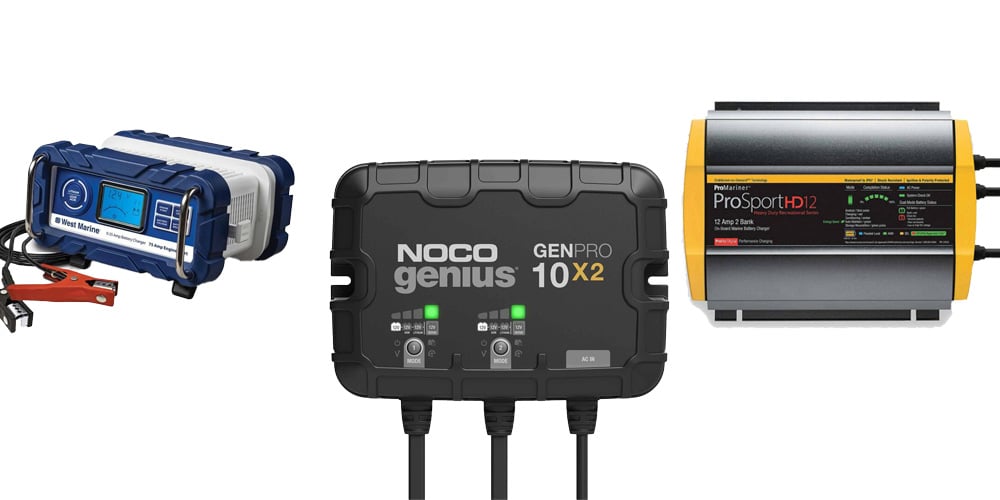
We've all been there. You load your gear in the boat, hop in, turn the key, and you hear the dreaded "click, click, click." Dead battery, day ruined. Having a quality marine battery charger, either portable or permanently installed on your boat, can save you from your day on the water ending before it begins. In this article we'll walk you through some key considerations to get the right one for your boat. Let's jump in.
- Your Boat Battery Type
- Portable vs. Mounted Chargers
- Automatic vs. Manual Chargers
- Match Your Charger to Battery Capacity
- Battery Charger Safety Features
- Waterproofness and Durability
- Ease of Use
Your Boat Battery Type
The first thing to consider is what type of battery, or batteries, you have on your boat. Different battery types like lead-acid, AGM, gel or lithium, have different charging needs and using the wrong charger can permanently damage your battery. Most battery chargers will have compatible battery types listed in the specifications making it easy to find one that will work for your boat.
Portable vs. Mounted Chargers
Do you want to permanently install the charger on your boat to be part of a shore power system or do you want a portable charger that you can hook up when you need it and store it when you don't? If you store your boat in a slip and you have shore power available, then a permanently mounted battery charger is a great option. If you own a small, trailerable boat, then a portable battery charger might be the better option for you so you can easily charge your boat in your driveway, garage or wherever else it's stored.
Automatic vs. Manual Chargers
Automatic battery chargers are far superior to manual chargers since they will monitor the voltage of the battery as it charges and adjust the charging current accordingly to avoid overcharging the battery. Most manual battery chargers have a timer to keep the charger from running continuously, but you will still need to monitor it to make sure you don't overcharge and damage the battery in the process.
Match Your Charger to Battery Capacity
The amperage of your charger should be about 10-20% of your battery's capacity. For a quick example, if you have a 105Ah battery, then you need a charger with an output of 10-20 amps.
Battery Charger Safety Features
Choosing a charger with built in safety features will help protect your batteries and your boat. Here are a few of the most common ones to look for.
Overcharge protection: Monitors the voltage of the battery as it charges and lowers the charging voltage accordingly to avoid overcharging the battery.
Reverse polarity protection: Stops the charger from working if the cables are connected incorrectly.
Waterproofing: Protects your battery from splashes or spray on the boat.
Temperature modulation: Prevents undercharging in cold weather or overheating in hot weather.
Spark-proof connections: Helps avoid sparks and makes for operation safer.
Automatic battery detection: Senses the type and size of battery that is connection and adjusts the charging profile to match
Waterproofness and Durability
Your battery charger will be mounted to your boat which is subject to bumps and jostling as it moves through the water and even if you choose the best possible location, there's still the posibility that your charger will get wet. Choosing a rugged charger built for the boating environment is esential to making sure that your charger will last on board.
Ease of Use
When I was a kid the only battery charger we had was a giant metal roll around type that had a timer dial that I wasn't convinced actually worked and a charging meter that hadn't worked for as long as I could remember. Modern, automatic chargers are packed with features to make it easy to monitor your batter charge level and avoid damaging your batteries. Look for chargers with and LED screen and battery-specific charging profiles for a true set it and forget it type charger.
FAQs
What type of battery does my boat use, and is the charger compatible?
The most important factor is ensuring the charger is compatible with the type of battery your boat uses (e.g., lead-acid, AGM, gel, or lithium-ion). Each battery type has different charging requirements, and using the wrong charger can damage the battery. Check the specifications on your battery to know which types of chargers are suitable and choose a charger that matches your battery type.
Should I choose a manual or automatic charger?
If you want a hassle-free experience and ensure your battery is charged safely and efficiently without worrying about overcharging, opt for an automatic (smart) charger. These chargers adjust the charging rate as the battery nears full charge and often include maintenance modes for keeping the battery at optimal charge without overcharging. Manual chargers are cheaper but require more attention and monitoring to avoid overcharging.
Do I need a single-bank or multi-bank charger?
If your boat has only one battery, a single-bank charger is sufficient. However, if your boat has multiple batteries (for example, a starting battery and a house battery), a multi-bank charger is ideal. Multi-bank chargers allow for independent charging of each battery, which is crucial for boats with complex electrical systems or when running multiple battery banks. This ensures all batteries are charged properly and maintained.
What is the right charging capacity (amperage) for my battery?
The charging amperage should match the size and type of your boat's battery. As a general rule, a charger with a higher amperage (10-30 amps) will charge batteries faster. However, it's important not to exceed the manufacturer’s recommended charging amperage to avoid overcharging or damaging the battery. You can determine the right size by considering the battery’s capacity (amp-hours) and selecting a charger that offers roughly 10-20% of the battery’s amp-hour rating in output.
Is the charger weather-resistant and durable enough for marine conditions?
Boating environments can be rough, with exposure to water, salt, and occasional bumps as you move through the water. Make sure the charger is waterproof and corrosion-resistant, to prevent damage from moisture.
Ready to charge?
With these tips, you should be well equipped to find a charger that will work well for your boat. Whether you're topping of a trailered boat in the driveway before a day of fishing or installing a full shore power setup, we have the marine battery charger you need for the job.
Need More Help?
Our in-store teams have you covered. With plenty of life long boaters on our crew, we have the know-how you need for any project. Find your store here.


