For those who are new to boating and even for experienced “salts”, we’ve compiled ten tips related to enjoying yourself safely on your boat. All of these tips involve taking responsibility for the safety of yourself, your boat and your crew.
Safe boating starts before you leave the dock. The operator should know the boat, carry the right safety gear, brief guests, check the weather, file a float plan and understand basic emergency procedures. A fun day on the water can change quickly if someone falls, the engine quits, weather builds or required equipment is missing.
- Have Well Fitting Life Jackets for Everyone on Board
- Use the Grab Rails or Jack Lines for Balance
- Spot Hazards on Deck and in the Water
- Know Your Boat
- Make Sure Everyone Stays on Board Until You’re Docked
- Have a Designated Driver
- Have All USCG Required Safety Gear on Board
- Know How To Anchor Properly
- Create a Float Plan
- Take a Boating Class
- New Boater Safety FAQ
Equip Yourself and Your Crew with Life Jackets that Fit
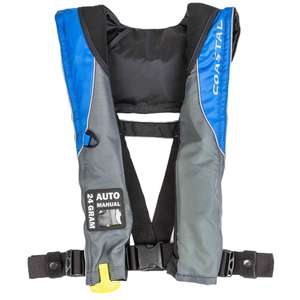
Inflatable life jackets maximize your freedom of movement.
According to the insurers at BoatUS, “More than two-thirds of all boating fatalities are drowning incidents and 90% of drowning victims were not wearing a life jacket”. This is why you and every member of your crew should have a life jacket that fits. West Marine offers a complete selection of life jackets to accommodate most every boating activity, including fishing, water sports, day cruising and inshore and offshore cruising. No matter what your boating activity, West Marine has a life jacket for you. If you want to avoid the bulk of an inherently buoyant PFD we suggest you select an inflatable life vest. Many customers find inflatable life jackets to be so comfortable that they forget they have one on.
A life jacket only helps if it is worn and properly fitted. Make sure each life jacket matches the wearer’s size, weight range and boating activity. Children need properly sized youth or child models, not loose adult jackets. Before leaving the dock, show guests where life jackets are stored and encourage anyone who is not a strong swimmer, is boating at night, is in cold water, or is moving around on deck to wear one.
One Hand for the Job, One Hand for the Boat!
Moving about on an unstable, pitching deck is not the same as walking down a sidewalk. The adage “one hand for the job, one hand for the boat” refers to the need to cautiously move from hand hold to hand hold when moving about on deck. Most boats are equipped with grab rails or other features that you can use to steady yourself when traversing the deck. As a precaution against falling overboard, sailboats are often equipped with jack lines. Jack lines consist of strong lengths of webbing that run fore and aft on both sides of the boat. Crewmembers attach a tether to jack lines that is in turn attached to a harness that they wear. For rough weather or use offshore, jack lines can also be installed on powerboats.
New boaters should also learn to move low and slow. Keep one hand free, avoid carrying too much at once and do not walk on wet, cluttered or sloped areas without a handhold. Good footwear matters too. Non-marking deck shoes or sandals with grip help reduce slips when the deck is wet.
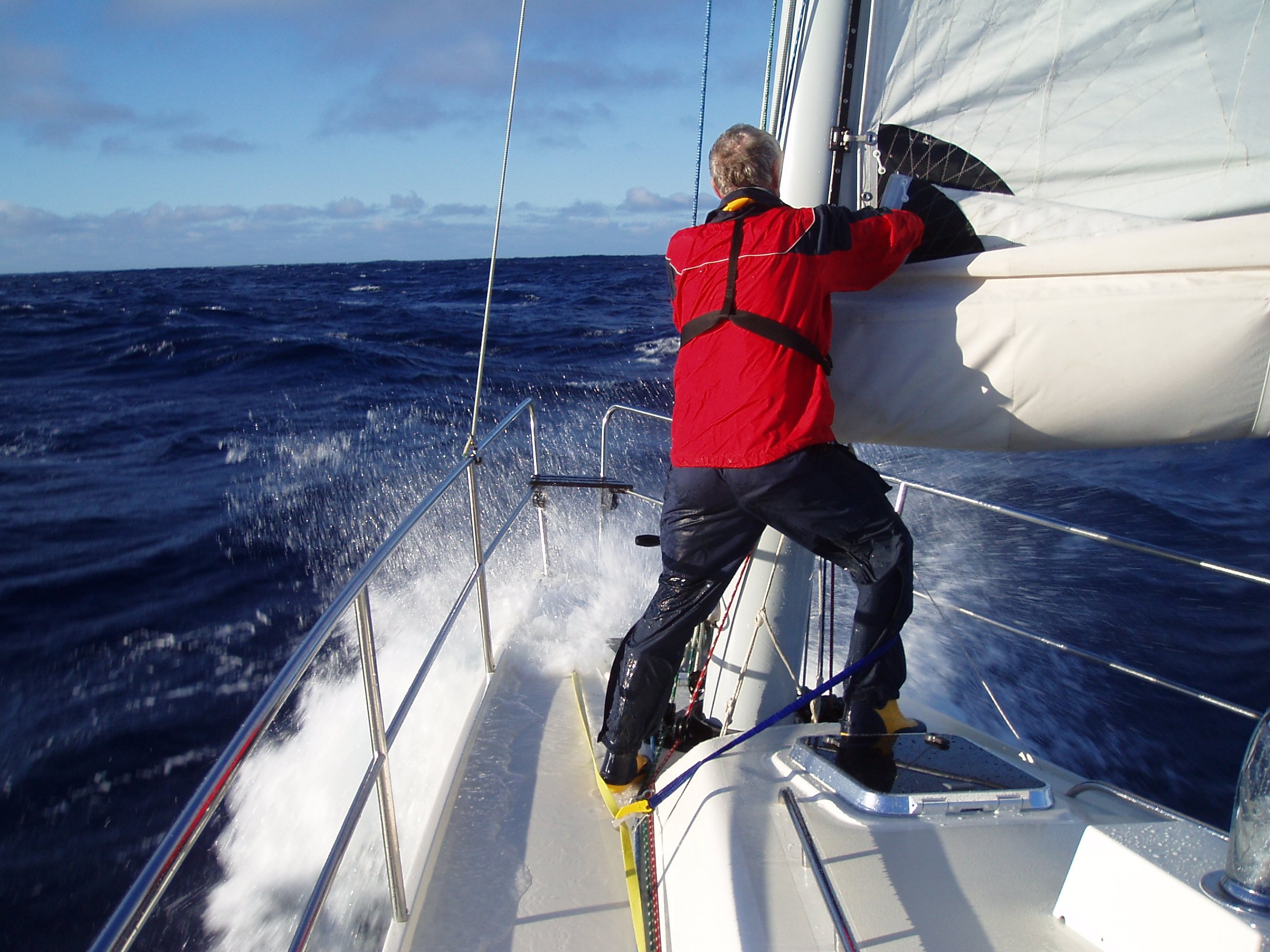
West Marine founder Randy Repass shortening sail on his cat-rigged ketch Convergence. Randy is wearing an inflatable life jacket with a built-in harness. Look carefully and you will see his tether attached to a jackline that runs along the deck.
Be the Master of “Your Ship”
As the owner/operator of your boat, you can be held legally liable for injuries that your guests sustain onboard. So while you are spotting dolphins or sight casting for billfish it is important to keep a close eye on your guests. Try to spot and correct hazardous situations before they become a problem. Examples include a clump of line left on deck, an open hatch, open lifeline gate or an exposed turnbuckle cotter pin that can cut an uncovered hand. To be sure, boats by their nature abound with hazards, with their pitching and yawing and obstructions that can pose a trip hazard to experienced and novice boaters alike. So keep an eye on your guests; and without being a “killjoy” encourage caution on their part.
Before getting underway, do a quick deck check. Coil loose lines, close hatches, secure coolers, stow fishing tackle, check boarding ladders and make sure bags or towels are not blocking walkways. Tell guests where they should sit while the boat is moving and remind them not to stand in unsafe areas during acceleration, wakes or turns.
Know Your Boat
As an owner, it is your responsibility to know your boat—and to be prepared for emergencies. Are you able to handle your boat in rough conditions? Do you know where all your thru hull valves are located? Are you able to make simple repairs to your boat's engine should the need arise? If a crew member were to fall overboard, would you be able to recover him or her? Do you know the location of important items such as your boat's fire extinguisher, VHF radio, medical kit, light switches, hatches, tool kit and other items—and can you find these things in the dark?
Every new boater should learn the boat’s basic systems: fuel shutoff, battery switch, bilge pump, navigation lights, fire extinguishers, anchor, dock lines, first aid kit, throwable flotation and engine controls. Practice docking, slow-speed maneuvering, anchoring and emergency stops in calm conditions before taking guests into crowded or challenging areas.
No Jumpers Please!

Used along with hoisting tackle, Lifesling rescue slings provide a means to recover overboard crew.
This “tip” is really an extension of “Be the Master of Your Ship” above. It pertains to the behavior of guests when approaching a dock. For some reason certain guests may feel compelled to make a flying leap over the water with the intention of landing on the dock so they can assist as you come alongside. When this maneuver is accomplished successfully the guest will look like a hero but if they trip or fall they might wind up in the hospital. For the good of your guests—and to avoid a potential lawsuit—this behavior should be discouraged. We suggest you learn how to handle your boat in close quarters and go slow when approaching a dock. Also, encourage your guests to wait until your boat has come alongside and touched the dock before they step off.
Assign docking jobs before you approach the marina. One person can handle a bow line, another can handle a stern line and everyone else should stay seated until the boat is secure. Never put hands, feet or legs between the boat and dock to stop momentum. Use fenders, lines and controlled speed instead.
Appoint a “Designated Driver”
Almost half of all boating accidents involve the consumption of alcohol. In most states it is illegal to operate a boat with a blood alcohol content of .08% or greater. Penalties for boating under the influence of alcohol can be severe, so if your plans include the consumption of alcohol, make sure there is a qualified non-drinking person at the helm. Drink and act responsibly and remember that you, as the owner of the boat, can be held legally liable for any accidents onboard.
Sun, wind, vibration and motion can make fatigue set in faster on the water than on land. Even when alcohol is not involved, the operator should stay hydrated, alert and focused. If the trip is long, identify another capable adult who knows how to slow, stop, steer and use the radio in case the primary operator becomes tired or injured.
Outfit Your Boat with Required USCG Gear
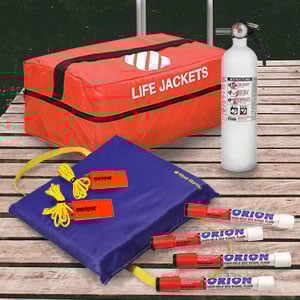
For most boats, Coast Guard required gear includes signalling devices, sound producing devices, throwable flotation, life jackets and fire extinguishers.
Boating is an equipment-intensive activity. USCG-required gear includes life jackets, fire extinguishers, visual distress signals, sound producing devices, pollution placards and other gear. In addition to safety equipment, if you operate your boat at night, it will also need a set of navigation lights. See Navigation Light Rules. Although not required by the USCG, your boat should also have a VHF radio, which along with life jackets is a key piece of safety equipment to have onboard. There are a wide variety of handheld and fixed-mount VHF radios from which to choose. See Making a Mayday Call on Your VHF Radio. For an overview of all USCG-required gear, see U.S. Coast Guard Required Equipment for Recreational Vessels.
Check safety gear before every outing. Confirm that life jackets are accessible, fire extinguishers are charged, visual distress signals are not expired, the horn or whistle works, navigation lights operate and the throwable flotation device is easy to reach. Gear buried under bags or locked in a compartment may not help during an emergency.
Make Sure Your Boat Has an Anchor and Know How to Use It
While “dropping the hook” might not be in your plans on any given boating day, sometimes the unexpected can happen. Things like being stuck without an engine while you get blown toward a lee shore. This can happen due to mechanical or other reasons, like wrapping a wakeboard tow rope on the prop or losing your prop entirely due to hitting a submerged object. So be prepared with an anchor that is the right size and type for your boat and where you use it. We also recommend that you make sure the rode is properly stowed so that it will run freely when you drop anchor. Caution! Make sure the bitter end of the rode is secured to the boat! For more about anchoring, see the West Advisor article How to Anchor Securely.
An anchor is not just for lunch stops. It is emergency equipment. If the engine fails, an anchor can keep the boat out of surf, rocks, docks, bridges or a busy channel while you troubleshoot or call for help. Practice anchoring in calm conditions so you understand how much rode to deploy, how to set the anchor and how to retrieve it safely.
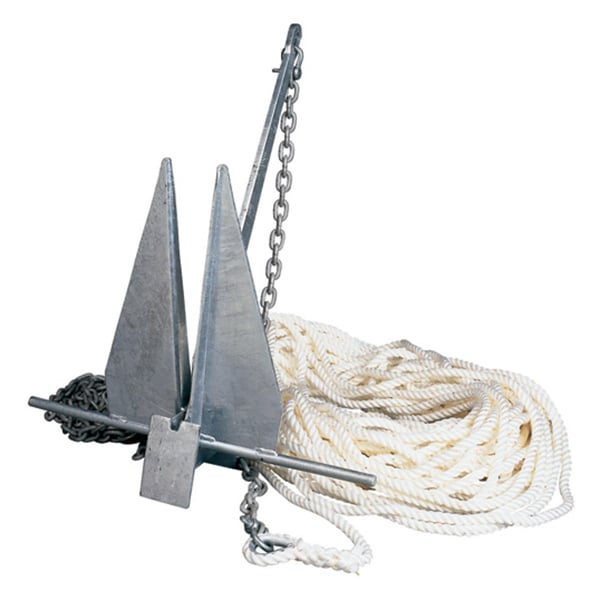
West Marine offers rope/chain/anchor packages in several sizes.
Create a Float Plan and Give it to a Friend
The U.S. Coast Guard Auxiliary recommends that before going boating that you leave a float plan with a reliable person who can be depended upon to notify the Coast Guard, or other rescue agency, should you not return or check-in as planned. Of course this can be done via email or by providing a “hard copy” of your intentions to the reliable person. For a float plan template that shows the type of information you need to include, see the U.S. Coast Guard Auxiliary Float Plan pdf.
A good float plan includes your boat description, registration number, departure point, destination, route, passenger names, emergency contacts, onboard communication equipment and expected return time. Tell your contact what to do if you are overdue. A float plan only works if someone knows when to act.
Take a Boating Class
The USCG Auxiliary and US Power Squadron offer a wide variety of boating classes for first-time and experienced boaters alike. Classes include instruction on radio communications, navigation, boating law, boat safety equipment, safe boating practices, trailering and more. In addition to offering boating classes, these organizations are always open to new members. Members enjoy a variety of social activities and the rewarding experience of working in a civilian support role on behalf of the United States Coast Guard to promote boating safety.
A boating class is one of the fastest ways to build confidence. New boaters should learn rules of the road, navigation markers, right-of-way basics, launching and trailering, docking, weather awareness, emergency communication and required equipment. Even experienced boaters benefit from refresher courses, especially when moving to a larger boat or boating in a new area.
New Boater Safety FAQ
What safety gear should every new boater carry?
Every boat should carry properly fitted life jackets, a throwable flotation device where required, fire extinguishers, sound-producing devices, visual distress signals, navigation lights for night operation, an anchor and rode, a first aid kit and reliable communication such as a VHF radio.
Should guests wear life jackets the whole time?
Guests should wear life jackets whenever conditions warrant it, including rough weather, cold water, night boating, high-speed operation, water sports or when moving around on deck. Children and weak swimmers should wear properly fitted life jackets whenever they are aboard.
What should I tell guests before leaving the dock?
Tell guests where life jackets are stored, where they should sit while underway, how to move safely, what to do during docking, where the fire extinguisher and first aid kit are located and how to call for help if the operator becomes unable to run the boat.
Why is an anchor important for new boaters?
An anchor can keep the boat from drifting into danger if the engine fails, the weather changes or you need time to solve a problem. It should be sized for the boat and bottom conditions, and the rode should be secured and ready to deploy.
Do I need a boating class if I already know how to drive a boat?
Yes. A boating class covers more than driving. It teaches navigation rules, safety equipment, weather, emergency communication, trailering, anchoring and legal requirements that many new boaters do not learn through experience alone.