


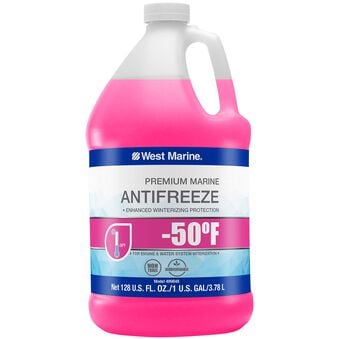


Marine Antifreeze — Engine, Plumbing & System Freeze Protection for Boats
Marine antifreeze is formulated to protect engines, plumbing, water systems, and onboard equipment from freeze damage during cold-weather storage. These products prevent cracking, corrosion, and system failure by lowering the freezing point of water and protecting internal components from expansion when temperatures drop.
Unlike automotive coolant, marine antifreeze is engineered for raw-water cooling systems, potable water lines, sanitation systems, and seasonal lay-up conditions commonly encountered in boating.
Types of Marine Antifreeze
Non-Toxic Propylene Glycol Antifreeze
Widely used for winterizing freshwater and raw-water systems.
-
Safer for potable water systems
-
Lower toxicity for people, pets, and marine life
-
Commonly dyed pink for identification
-
Compatible with plastic, rubber, and metal plumbing
Propylene glycol formulations are often used in boats because they provide freeze protection while remaining safer for the environment.
Engine Coolant (Ethylene Glycol)
Used in closed-cooling systems similar to automotive engines.
-
High heat transfer capability
-
Strong freeze protection
-
Typically toxic and requires careful handling
-
Not suitable for potable water systems
Ethylene glycol offers excellent thermal stability but must be used only where specified due to toxicity.
Extended-Life & Hybrid Coolants
Advanced formulations with corrosion inhibitors.
-
Protect aluminum and mixed metals
-
Longer service intervals
-
Used in modern marine engines
-
May follow IAT, OAT, or HOAT technologies
Marine coolants often include additives to prevent rust, scale, and internal corrosion.
Systems That Require Antifreeze
Boat winterization typically involves multiple onboard systems:
-
Raw-water engine cooling circuits
-
Freshwater plumbing systems
-
Livewells and washdown pumps
-
Air conditioning and generator cooling systems
-
Sanitation systems and holding tanks
Marine antifreeze protects pipes, hoses, tanks, and engines from freezing and bursting during storage.
Freeze Protection Ratings Explained
Antifreeze products are labeled by burst or freeze protection temperature.
Common ratings include:
-
−50°F for moderate climates
-
−75°F for colder regions
-
−100°F for severe winter conditions
Higher protection levels provide additional safety margins against unexpected cold snaps.
Saltwater vs Freshwater Boats
Environmental exposure influences winterization needs.
Saltwater Use
-
Requires thorough flushing before storage
-
Higher corrosion risk
-
Additional inhibitors beneficial
Freshwater Use
-
Lower corrosion risk
-
Still susceptible to freezing damage
-
Organic growth may be present
Flushing systems before adding antifreeze improves effectiveness.
Raw-Water vs Closed Cooling Systems
Raw-Water-Cooled Engines
Use seawater or lake water directly for cooling.
-
Must be winterized to prevent freeze damage
-
Typically use non-toxic antifreeze circulated through the system
-
Often require higher volumes of fluid
Closed-Cooling Engines
Use coolant in a sealed loop.
-
Similar to automotive systems
-
May use ethylene glycol coolant
-
Heat exchanger still exposed to raw water
Selecting the correct antifreeze type ensures compatibility with engine design.
Preventing Corrosion During Storage
Beyond freeze protection, antifreeze also protects internal components.
Key benefits include:
-
Corrosion inhibitors for metal surfaces
-
Protection against scale buildup
-
Lubrication of seals and pumps
-
Reduced oxidation during inactivity
These additives help preserve system integrity between seasons.
How Antifreeze Works
Antifreeze lowers the freezing point of water while raising its boiling point, allowing systems to operate safely across a wide temperature range.
By preventing ice formation, antifreeze protects rigid components from expansion damage that occurs when water freezes.
Environmental & Safety Considerations
Marine environments require careful product selection.
Best practices include:
-
Using non-toxic formulas where discharge is possible
-
Avoiding automotive antifreeze in open systems
-
Following disposal regulations
-
Preventing spills during application
Propylene glycol formulations are often preferred because of their lower environmental impact.
How Much Antifreeze You Need
Required volume depends on several factors:
-
Engine size and configuration
-
Length of plumbing runs
-
Capacity of tanks and systems
-
Number of onboard systems treated
Larger vessels or multi-engine boats may require multiple gallons to fully protect all circuits.
Signs Your Boat Is Properly Winterized
Before storage, confirm that:
-
Antifreeze flows from all outlets
-
Systems are fully drained or protected
-
Cooling circuits contain protective fluid
-
Pumps and valves are safeguarded
-
No untreated water remains trapped
Thorough winterization helps ensure reliable spring commissioning.
Protect Your Boat From Costly Freeze Damage
Marine antifreeze is a critical component of off-season maintenance, safeguarding engines, plumbing, and onboard systems from freezing temperatures and corrosion. Choosing the correct formulation for your boat’s systems and operating environment helps preserve performance, prevent expensive repairs, and ensure readiness when boating season returns.