4-Stroke Outboard Motor Weight Comparison by Horsepower
Choosing the perfect outboard motor for your boat isn’t just about horsepower (HP)—the weight of the motor plays a pivotal role in performance, handling, fuel efficiency, and safety. Whether you’re a novice boater or upgrading your rig, understanding outboard motor weight across HP ranges, brands, and models is key to optimizing your boating experience. This comprehensive guide breaks down outboard motor weights by horsepower, compares top brands like Yamaha, Mercury, Suzuki, Honda, Tohatsu, and ePropulsion, and offers actionable insights to help you select the best motor for your boat.
We’ll explore power-to-weight ratios, the impact of shaft length, RPM, oil systems, and engine features like EFI (electronic fuel injection) and SOHC (single overhead cam). From lightweight 2.5 HP motors to powerful 225 HP beasts, this guide ensures you have the data and tips to make an informed decision.
Shop All Outboard Motors at West Marine
Why Outboard Motor Weight Matters
The weight of an outboard motor affects every aspect of your boating experience:
- Handling and Balance: A motor that’s too heavy can drag the stern down, impacting maneuverability and ride comfort. A motor that’s too light may lack the torque needed for larger boats.
- Fuel Efficiency: Heavier motors often burn more fuel, especially if the boat struggles to plane.
- Speed and Acceleration: A better power-to-weight ratio means faster acceleration and higher top speeds.
- Safety: Improper weight distribution can make a boat harder to control, increasing the risk of accidents.
- Portability: Lighter motors are easier to install, remove, and transport, ideal for small boats or frequent motor swaps.
By understanding outboard motor weights and their impact, you can choose a motor that enhances your boat’s performance while aligning with your practical needs.
Outboard Motor Weight by Horsepower

Outboard motor weights vary based on horsepower, engine type (2-stroke or 4-stroke), and features like EFI, power trim, shaft length, and alternator size. Below, we detail weight ranges (in pounds, dry weight) for each HP category, highlight popular models, and note key performance factors like torque, RPM, and fuel systems. Where applicable, we distinguish between 2-stroke and 4-stroke options.
29–65 lbs 4-Stroke Outboard Motors
- Horsepower: 2.5 HP to 6 HP
- Best For: Inflatables, dinghies, kayaks, and small skiffs
- Key Features: Ultra-lightweight, portable, typically equipped with tiller steering, manual trim, and simple gear shifts. Most feature water-cooled engines, air cooling is an option on select models.
Example Models:
- Suzuki DF2.5 (4-stroke): 29 lbs – One of the lightest outboard motors, perfect for small, portable setups.
- Honda BF5 (4-stroke): 60 lbs – Reliable with a water-cooled engine for consistent performance.
- Mercury 6 HP Four Stroke: 57 lbs – Balances portability with sufficient power for small boats.
These small outboard motors are ideal for casual boating or as auxiliary power for sailboats. Their low dry weight makes them easy to carry and mount, often single-handedly. However, they lack advanced features like electric start or power trim.
80–130 lbs 4-Stroke Outboard Motors
- Horsepower: 8 HP to 20 HP
- Best For: Small aluminum boats, jon boats, tenders, and lightweight fishing boats
- Key Features: Improved power-to-weight ratio, enhanced torque, and optional features like electric start, alternators, and multiple shaft lengths (15” or 20”).
Example Models:
- Yamaha F9.9 (4-stroke): 87 lbs – Compact and lightweight, ideal for portable setups.
- Mercury 15 EFI (4-stroke): 99 lbs – Features EFI for smoother operation and better fuel efficiency.
- Honda BF20 (4-stroke): 104 lbs – Durable and efficient, built for reliability.
These outboard motors offer versatility for small group outings or light fishing trips. The slight weight increase brings enhanced performance, torque, and features, making them suitable for a wider range of boats.
Check out our Boat Engine 101 Guide
130–260 lbs 4-Stroke Outboard Motors
- Horsepower: 25 HP to 40 HP
- Best For: Multi-person fishing boats, small speedboats, and mid-size aluminum boats
- Key Features: EFI, oil injection, power trim, and more efficient RPM ranges. Stronger transom brackets and attention to shaft length are critical.
Example Models:
- Suzuki DF25A (4-stroke): 136 lbs – Lightweight for its class with excellent fuel efficiency.
- Tohatsu 30 HP EFI (4-stroke): 145 lbs – A strong performer with modern EFI technology.
- Yamaha F40 (4-stroke): 214 lbs – Heavier but equipped with power trim and tilt.
In this mid-size outboard motor range, weight becomes a significant factor for transom strength and boat balance. Heavier models may require boat modifications to maintain optimal performance.
210–400 lbs 4-Stroke Outboard Motors
- Horsepower: 50 HP to 90 HP
- Best For: Pontoons, Alumacraft boats, heavy-duty runabouts, and mid-size fishing vessels
- Key Features: Powerful 4-stroke engines, EFI, variable trim, digital throttle control, and larger alternators for onboard electronics.
Example Models:
- Mercury 60 HP EFI (4-stroke): 247 lbs – Lightweight for its class with strong mid-range performance.
- Honda BF75 (4-stroke): 359 lbs – Built for durability and smooth operation.
- Yamaha F90 (4-stroke): 362 lbs – Offers advanced features for larger boats.
These outboard motors are designed for serious boating, from fishing to watersports. Their weight requires careful consideration of transom capacity and hull design to ensure proper balance and performance.
370–530 lbs 4-Stroke Outboard Motors
- Horsepower: 100 HP to 150 HP
- Best For: Larger fishing boats, fast recreational vessels, and small offshore boats
- Key Features: Multi-cylinder engines, advanced EFI, larger gearcases, and stronger flywheels to support electronics like fish finders and GPS.
Example Models:
- Suzuki DF115 (4-stroke): 401 lbs – Balances efficiency and power for mid-size boats.
- Yamaha F150 (4-stroke): 478 lbs – A high-performance option for larger vessels.
- Mercury 115 Pro XS (4-stroke): 377 lbs – Lightweight for its class with a focus on speed.
These high-performance outboard motors are built for speed and reliability. Their weight demands a sturdy transom and careful attention to shaft length and propeller choice to optimize performance.
475–600 lbs 4-Stroke Outboard Motors
- Horsepower: 175 HP to 225 HP
- Best For: Offshore boats, large center consoles, and heavy-duty recreational vessels
- Key Features: High-output engines, advanced digital controls, and robust construction for long-range boating.
Example Models:
- Honda BF200 (4-stroke): 578 lbs – A powerhouse for large boats with excellent reliability.
- Yamaha F225 (4-stroke): 562 lbs – Designed for speed and offshore performance.
- Mercury 200 Four Stroke: 527 lbs – A lighter option with strong power delivery.
These high-power outboard motors are built for demanding conditions, offering exceptional speed and range. However, their weight can overwhelm smaller hulls, so matching the motor to the boat’s design is critical for safety and efficiency.
Shop All Outboard Motors at West Marine
Outboard Motor Brands Compared by Weight
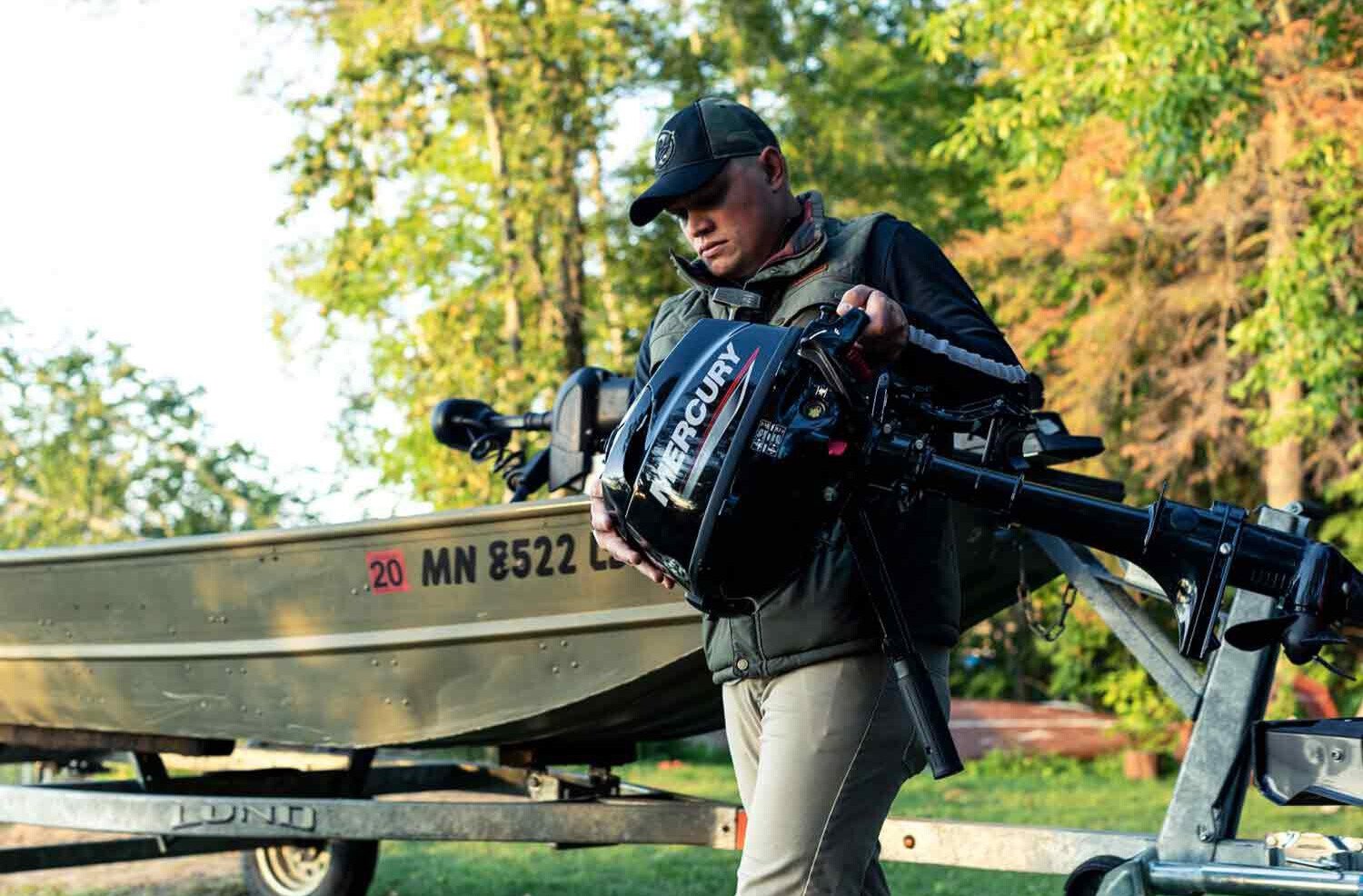
Different brands prioritize unique aspects of outboard motor design, balancing weight, features, and performance. Here’s how top brands compare:
- Yamaha: Known for reliability and compact designs. The F9.9 (87 lbs) is a lightweight standout, while the F150 (478 lbs) offers high performance for larger boats.
- Mercury: Excels in lightweight, high-performance motors. The 60 HP EFI (247 lbs) is ideal for mid-size boats, and the 115 Pro XS (377 lbs) is one of the lightest in its class.
- Honda: Prioritizes durability and smooth operation. The BF200 (578 lbs) is heavy but built for offshore reliability.
- Suzuki: Focuses on efficiency and value. The DF115 (401 lbs) is a great mid-range option, and the DF2.5 (29 lbs) is ultra-lightweight.
- Tohatsu: Offers budget-friendly, lightweight motors. The 30 HP EFI (145 lbs) delivers strong performance for its size.
- ePropulsion: Specializes in electric outboard motors. The Spirit 1.0 Evo (3 HP, 34 lbs without battery) is perfect for eco-conscious boaters, though batteries add 20–40 lbs.
Electric outboard motors like ePropulsion are often lighter than gas-powered models, but battery weight must be considered for a fair comparison.
Check out our Boat Engine 101 Guide
Lightest Outboard Motors by Horsepower
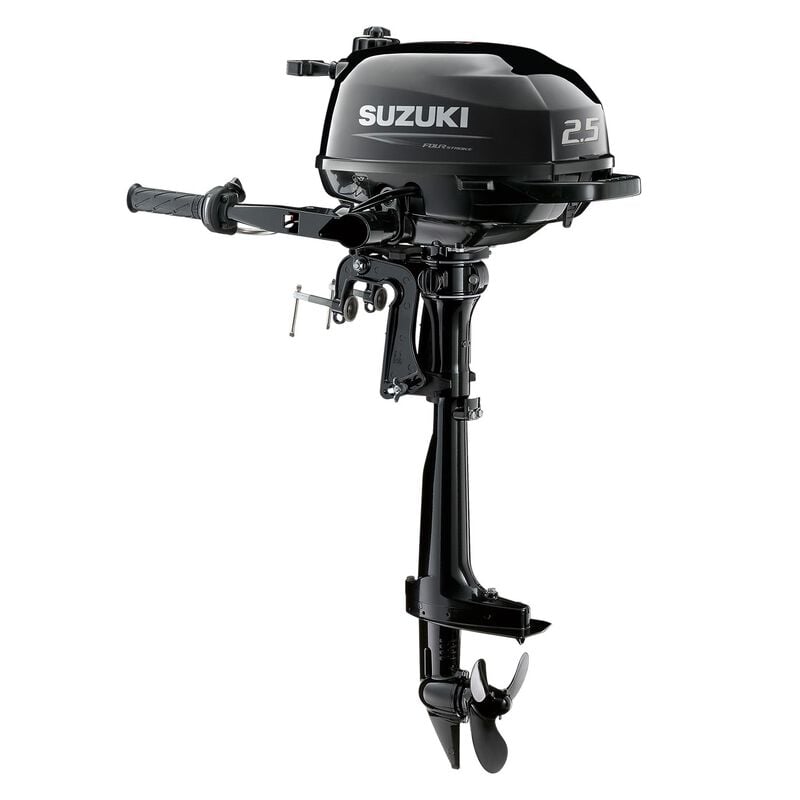
For boaters prioritizing minimal weight, here are the lightest outboard motors in each HP range:
- 2.5 HP: Suzuki DF2.5 (29 lbs)
- 9.9 HP: Tohatsu 9.9 Sport (81 lbs)
- 20 HP: Mercury 20 EFI (99 lbs)
- 40 HP: Yamaha F40 (214 lbs)
- 60 HP: Mercury 60 HP EFI (247 lbs)
- 115 HP: Mercury 115 Pro XS (377 lbs)
- 150 HP: Yamaha F150 (478 lbs)
These models offer the best power-to-weight ratios, making them ideal for boats where every pound counts.
Choosing the Best Power-to-Weight Ratio
The power-to-weight ratio is a critical metric for selecting an outboard motor. A motor with a high power-to-weight ratio delivers more performance per pound, resulting in better acceleration, speed, and fuel efficiency. Consider these factors:
- A 60 HP motor weighing 240 lbs will outperform a 275-lb model with the same HP on the same boat.
- Heavier motors often include advanced features like EFI, SOHC, or enhanced oil systems, which improve performance but may not be necessary for all boaters.
- Aluminum boats and mid-size hulls benefit from lighter motors to maintain balance.
- When repowering, verify the transom and gearcase limits to avoid overloading.
- Match the motor’s weight, RPM, torque, and features to your boat’s size, weight capacity, and intended use for optimal performance.
Outboard Motor Weight FAQs
How heavy is a 20 HP outboard motor?
Most 20 HP outboard motors weigh 95–115 lbs, depending on shaft length, starter type, and features. The Mercury 20 EFI is 99 lbs.
How much does a 115 HP 4-stroke outboard weigh?
Typically 370–500 lbs, varying by gearcase, EFI, and alternator size. The Mercury 115 Pro XS (377 lbs) is lighter, while the Suzuki DF115 (401 lbs) is mid-range.
Why are 4-stroke outboards heavier than 2-stroke models?
4-stroke outboard motors have more components, including cylinders, valves, camshafts, and oil systems, adding weight. 2-stroke models are simpler and lighter but less fuel-efficient and eco-friendly.
What is the dry weight of a 150 HP outboard motor?
Dry weights range from 450–530 lbs, influenced by flywheel, gear shift, and EFI system. The Yamaha F150 is 478 lbs.
How much does a 9.9 HP outboard weigh?
Typically 80–130 lbs, depending on tiller, trim, and starter type. The Tohatsu 9.9 Sport (81 lbs) is among the lightest.
Ready to Replace or Upgrade Your 4-Stroke Outboard Motor?
Choosing the right outboard motor is about more than horsepower—it’s about finding the perfect balance of weight, power, and features for your boat. A motor that’s too heavy can compromise handling and efficiency, while one that’s too light may lack the torque needed for larger hulls. By considering outboard motor weights, power-to-weight ratios, shaft length, RPM, and transom capacity, you can select a motor that enhances your boating experience.
Learn how to winterize your Outboard Motor
Use the detailed comparisons, brand insights, and FAQs in this guide to match your boat’s needs with the ideal outboard motor. Whether you’re powering a small dinghy with a 2.5 HP Suzuki or a large offshore boat with a 200 HP Honda, the right motor delivers smooth acceleration, balanced performance, and a safe, enjoyable ride on the water.