Life Jacket Sizing Charts for Men, Women, Children, and Infants
By Nicholas Macrino | Reviewed against U.S. Coast Guard PFD requirements
Choosing the correct life jacket size is one of the most important steps in staying safe on the water. A properly fitted life jacket—also known as a personal flotation device (PFD)—helps keep the wearer afloat, positioned safely in the water, and visible during an emergency.
Life jackets that are too large may ride up over the wearer’s chin or head, while jackets that are too small may not provide adequate buoyancy or comfort. Understanding life jacket sizing charts, chest measurements, and weight ranges helps ensure that every passenger on board has the right safety equipment.
This life jacket size guide explains how to measure for a life jacket, how sizing works for adults and children, and how to confirm that a PFD fits correctly.
Boat owners looking for properly sized flotation gear can browse a wide range of life jackets and personal flotation devices at West Marine.
Toddler and Infant Life Jacket Size Chart
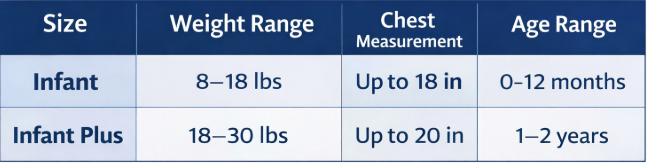
Infant and toddler life jackets are designed with additional flotation and safety features to help keep small children safely positioned face-up in the water.
| Size | Weight Range | Chest Measurement | Age Range |
|---|---|---|---|
| Infant | 8–18 lbs | Up to 18 in | 0–12 months |
| Infant Plus | 18–30 lbs | Up to 20 in | 1–2 years |
Important: Infant and toddler life jackets include specialized safety features to help keep children face-up in the water. Typical features include:
- head flotation collars
- grab handles for rescue
- adjustable leg straps
- bright visibility colors
These features improve safety and make it easier for adults to assist a child in the water.
Shop Infant Life Jackets at West Marine
Child and Youth Life Jacket Size Chart
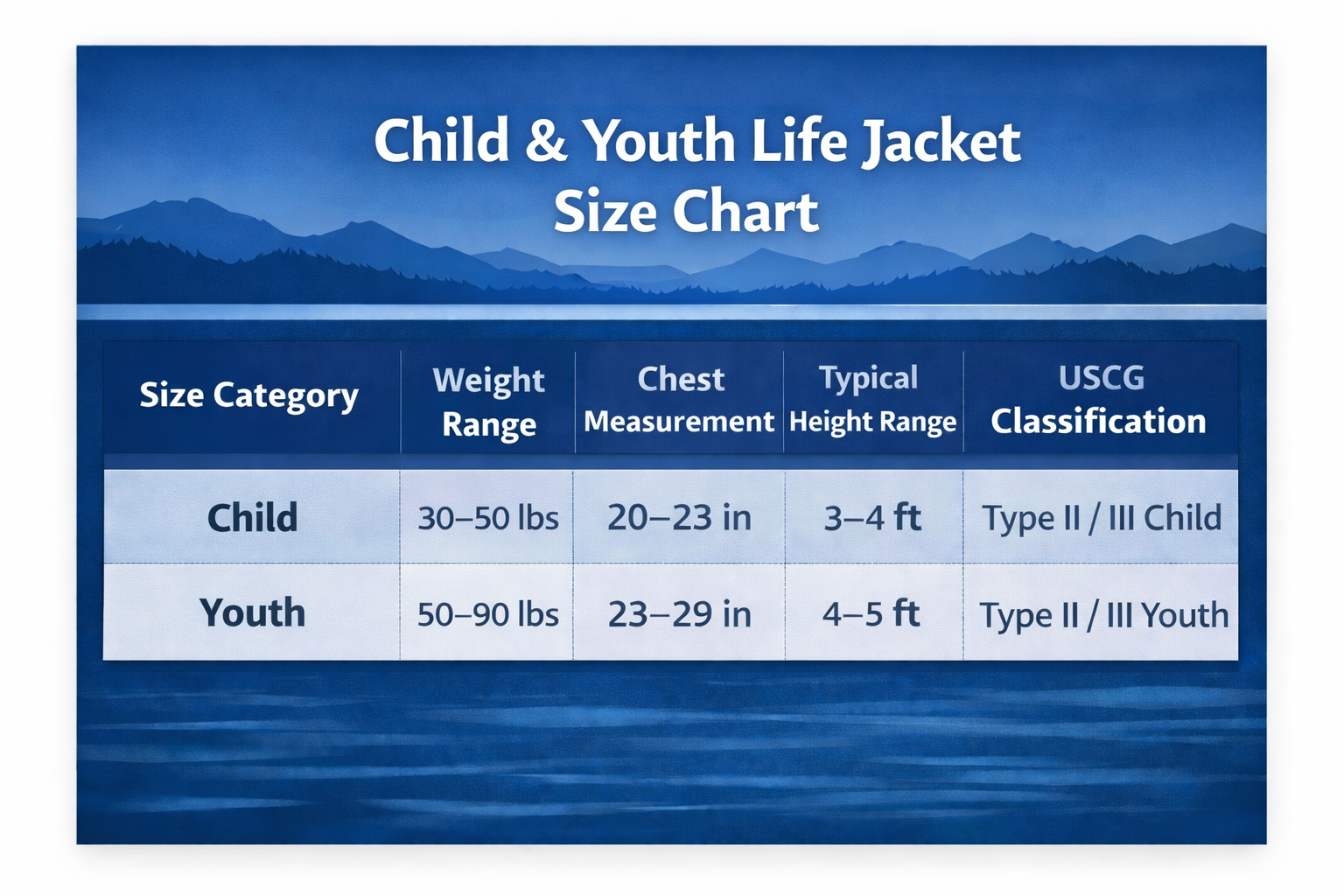
As children grow, their life jackets transition from infant models to youth flotation devices. Youth PFDs rely primarily on body weight and chest size for proper buoyancy.
| Size Category | Weight Range | Chest Measurement | Typical Height Range | USCG Classification |
|---|---|---|---|---|
| Child | 30–50 lbs | 20–23 in | 3–4 ft | Type II / III Child |
| Youth | 50–90 lbs | 23–29 in | 4–5 ft | Type II / III Youth |
Youth life jackets are designed for growing children and typically include:
- secure buckles and straps
- flotation panels around the torso
- lightweight foam construction
- adjustable side straps
Parents should always verify the manufacturer’s sizing guidelines before purchasing a child’s PFD. The U.S. Coast Guard requires children to wear properly sized, USCG-approved life jackets on recreational vessels.
Shop Children’s Life Jackets at West Marine
Women’s Life Jacket Size Chart
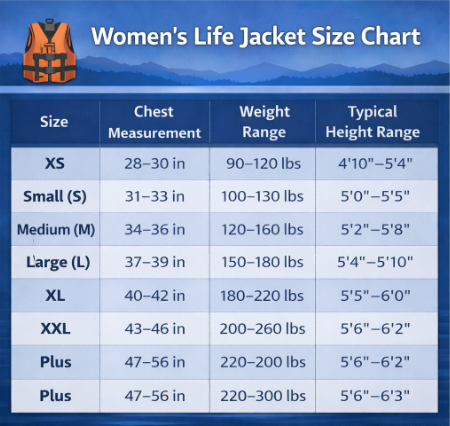
Women’s life jackets are often shaped differently than men’s PFDs to improve comfort and mobility while maintaining proper flotation.
| Size | Chest Measurement | Weight Range | Typical Height Range |
|---|---|---|---|
| XS | 28–30 in | 90–120 lbs | 4'10"–5'4" |
| Small (S) | 31–33 in | 100–130 lbs | 5'0"–5'5" |
| Medium (M) | 34–36 in | 120–160 lbs | 5'2"–5'8" |
| M/L | 34–40 in | 130–180 lbs | 5'3"–5'9" |
| Large (L) | 37–39 in | 150–200 lbs | 5'4"–5'10" |
| XL/XXL | 40–56 in | 180–260 lbs | 5'5"–6'2" |
| Plus | 40–46 in | 180–240 lbs | 5'4"–6'0" |
Women’s PFDs often feature contoured foam panels, shorter torso designs, and improved arm mobility — making them more comfortable for extended boating or paddling.
Shop Women’s Life Jackets at West Marine
Men’s Life Jacket Size Chart
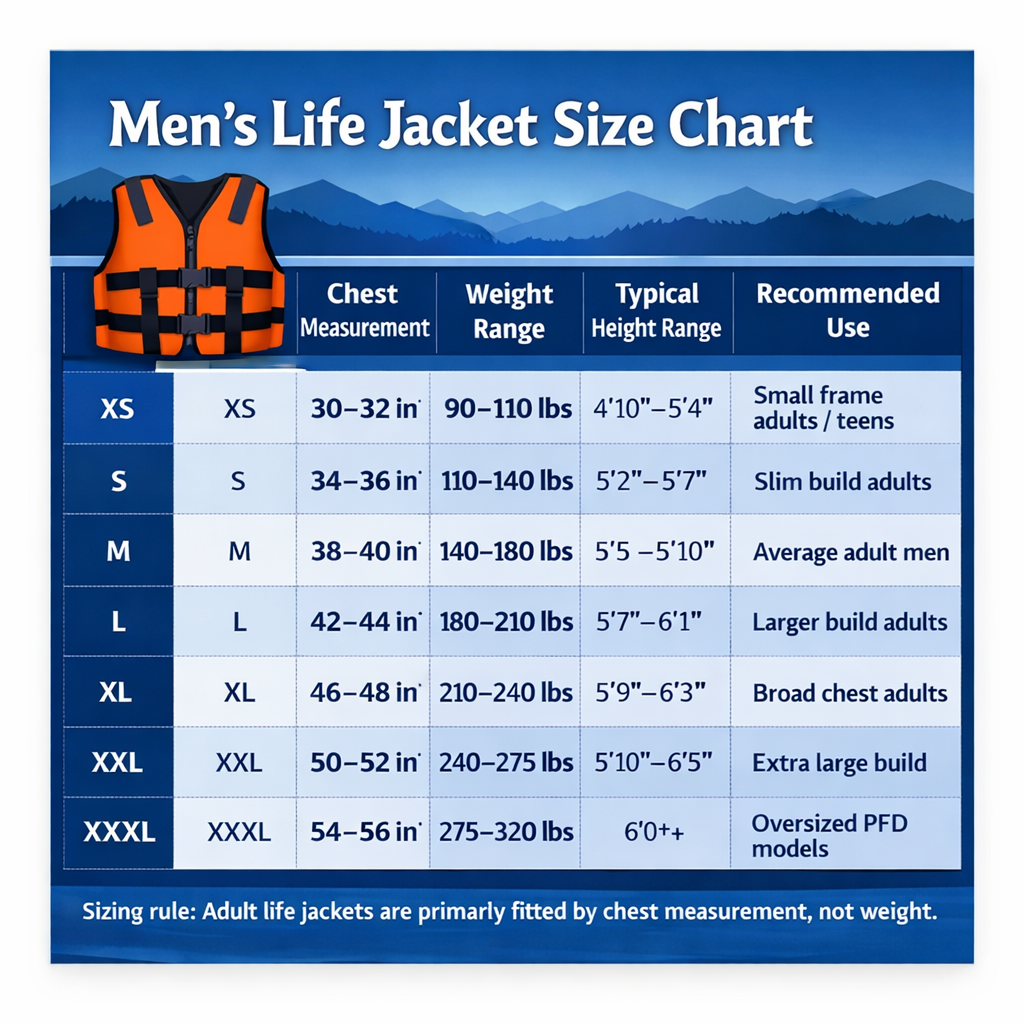
Men’s life jackets are typically sized based on chest measurement, though weight and height ranges can help guide the selection process.
| Size | Chest Measurement | Weight Range | Typical Height Range | Recommended Use |
|---|---|---|---|---|
| XS | 30–32 in | 90–110 lbs | 4'10"–5'4" | Small frame adults / teens |
| S | 34–36 in | 110–140 lbs | 5'2"–5'7" | Slim build adults |
| M | 38–40 in | 140–180 lbs | 5'5"–5'10" | Average adult men |
| L | 42–44 in | 180–210 lbs | 5'7"–6'1" | Larger build adults |
| XL | 46–48 in | 210–240 lbs | 5'9"–6'3" | Broad chest adults |
| XXL | 50–52 in | 240–275 lbs | 5'10"–6'5" | Extra large build |
| XXXL | 54–56 in | 275–320 lbs | 6'0"+ | Oversized PFD models |
Adjustable straps and buckles allow many adult life jackets to accommodate small variations in body shape.
Shop Men’s Life Jackets at West Marine
How to Measure for a Life Jacket
Selecting the correct life jacket size starts with taking an accurate chest measurement. Life jackets for adults are typically sized by chest circumference, while youth and infant PFDs rely primarily on weight ranges.
Step 1: Measure Chest Circumference
Use a flexible measuring tape and wrap it around the widest part of the chest, usually just under the armpits and across the shoulder blades. The tape should be snug but not tight.
Measure while wearing light clothing similar to what you would normally wear boating, such as a T-shirt or base layer.
Step 2: Compare Your Measurement With the Size Chart
Once you know your chest measurement, compare it with the life jacket sizing chart provided by the manufacturer. Most adult life jackets follow standardized chest measurements, but some brands may vary slightly.
If your measurement falls between two sizes, choose the size that allows the jacket to fit securely but comfortably.
Step 3: Consider Clothing Layers
If you plan to wear your life jacket over foul-weather gear, jackets, or cold-weather clothing, make sure the PFD has enough adjustability to accommodate additional layers.
Many modern life jackets include adjustable straps or buckles that allow the fit to be customized.
Step 4: Measure Children by Weight
Children’s life jackets are typically sized by weight range rather than chest measurement. This ensures the flotation device provides enough buoyancy to keep the child’s head above water.
Always verify both the weight range and chest size recommendations when selecting a youth or child life jacket.
How a Life Jacket Should Fit
Even if you choose the correct size based on charts and measurements, it’s important to confirm the life jacket fits properly once it’s worn. A properly fitted life jacket should feel snug but still allow comfortable movement.
Fit Checklist
- all straps and buckles are secured
- the jacket fits snugly around the torso
- arm movement is comfortable and unrestricted
- the jacket stays in place when lifted
The Lift Test
One of the easiest ways to check fit is the lift test.
- Secure all straps and buckles.
- Have someone gently lift the life jacket by the shoulders.
- Observe how much the jacket moves.
If the jacket rides up over the wearer’s chin or ears, it may be too large or improperly adjusted.
Common Life Jacket Fit Problems
| Problem | What It Means | Solution |
|---|---|---|
| Jacket rides up over chin | Jacket too large | Tighten straps or choose smaller size |
| Shoulder straps feel loose | Poor adjustment | Secure straps and buckles |
| Limited arm movement | Jacket too small | Try next size up |
| Jacket shifts while moving | Improper fit | Adjust side straps |
Ensuring a secure fit helps keep the wearer properly positioned in the water during an emergency.
Inflatable Life Jacket Sizing
Inflatable life jackets are sized slightly differently than traditional foam PFDs. Instead of thick foam panels, inflatable life jackets rely on air chambers that inflate when activated, providing buoyancy while maintaining a slim, comfortable profile.
Most inflatable life jackets use chest measurement for sizing, similar to foam life jackets. Many inflatable PFDs are designed as universal adult sizes, typically fitting chest measurements between 30–52 inches. Adjustable straps and harness systems allow the wearer to fine-tune the fit.
Advantages of Inflatable Life Jackets
Inflatable life jackets are popular among experienced boaters because they offer:
- lightweight design
- greater comfort during long wear
- higher buoyancy levels when inflated
- improved mobility compared to foam vests
However, inflatable PFDs require periodic inspection to ensure the CO₂ cartridge and inflation system are functioning properly.
Understanding Life Jacket Buoyancy
Buoyancy refers to the upward force that keeps a person afloat in the water. Typical buoyancy levels vary by life jacket type:
| Life Jacket Type | Typical Buoyancy |
|---|---|
| Foam life jackets | 15–22 lbs |
| Inflatable life jackets | 22–35 lbs |
| Offshore life jackets | 33+ lbs |
Inflatable life jackets often provide higher buoyancy because they rely on air chambers rather than foam panels.
Life Jacket Types (USCG Classifications)
The U.S. Coast Guard (USCG) classifies life jackets into several types based on their buoyancy, design, and intended use. These classifications help boaters choose the appropriate personal flotation device (PFD) for different water conditions and activities.
Type I – Offshore Life Jackets
Type I life jackets provide the highest buoyancy and are designed for open, rough, or remote waters where rescue may take longer. These jackets are engineered to turn most unconscious wearers face-up in the water, helping keep the airway clear.
Because of their high buoyancy and visibility, Type I life jackets are commonly used on commercial vessels, offshore fishing boats, and large ships. Typical buoyancy: 22+ pounds (adult).
Type II – Near-Shore Buoyant Vests
Type II life jackets are designed for calm inland waters where rescue is expected quickly. They provide good flotation but may not reliably turn an unconscious wearer face-up in the water.
These jackets are commonly used on recreational boats and rental vessels because they are inexpensive and meet basic safety requirements. Typical buoyancy: 15.5 pounds (adult minimum).
Type III – Flotation Aids
Type III life jackets, often called flotation aids, are the most common PFDs used for recreational boating and watersports. They are designed to provide comfort and freedom of movement, making them popular for activities such as fishing, kayaking, paddleboarding, sailing, and water skiing.
Unlike Type I devices, Type III PFDs are intended for conscious wearers who can assist with their own rescue and typically will not turn an unconscious person face-up. Typical buoyancy: 15.5 pounds (adult minimum).
Type IV – Throwable Devices
Type IV devices are not wearable life jackets but flotation devices designed to be thrown to someone in the water. Common examples include ring buoys, throwable seat cushions, and horseshoe buoys.
Most boats 16 feet or longer are required to carry at least one Type IV throwable device in addition to wearable life jackets, per USCG regulations.
Type V – Special-Use Life Jackets
Type V life jackets are specialized PFDs designed for specific boating activities or working environments. These may include inflatable life jackets, hybrid foam-inflatable PFDs, sailing harness vests, and work vests.
Some Type V devices must be worn at all times to count toward USCG life jacket requirements, so boaters should always check the label for usage instructions. See the USCG guide to PFD requirements for full details, or browse West Marine’s overview of USCG life jacket requirements.
Why Proper Life Jacket Sizing Matters
Choosing the correct life jacket size is essential for both safety and performance on the water. A life jacket that does not fit properly may fail to keep the wearer positioned correctly in the water during an emergency.
According to boating safety organizations, improper life jacket fit is one of the most common issues affecting flotation performance. A properly sized life jacket helps:
- keep the wearer afloat
- maintain proper head positioning
- prevent the jacket from riding up
- improve comfort during long boating trips
Because of these factors, every boat should carry properly sized life jackets for each passenger on board, as required by U.S. Coast Guard boating safety regulations.
FAQs About Life Jacket Sizing
What size life jacket do I need?
The correct life jacket size depends on chest measurement for adults and weight range for children. Adults should measure the widest part of the chest and compare that measurement with the manufacturer’s sizing chart. Youth and infant life jackets are typically selected using weight ranges to ensure proper flotation. Choosing the correct size helps the PFD stay securely in place and provide the appropriate buoyancy.
Are life jackets sized by weight or chest size?
Adult life jackets are usually sized according to chest measurement, which helps ensure the vest fits snugly around the torso. Youth and infant life jackets are sized primarily by body weight, since buoyancy must support a child’s weight in the water. Many manufacturers also include recommended chest measurements for children to help refine the fit. Always check the product’s size chart before selecting a life jacket.
Can a life jacket be too big?
Yes. A life jacket that is too large may ride up over the wearer’s head or chin when in the water. This can prevent the jacket from keeping the wearer properly positioned and reduce its effectiveness. Loose life jackets can also shift or slide during movement. For safety, the life jacket should fit snugly and remain secure during the lift test.
How tight should a life jacket be?
A life jacket should fit snugly but comfortably against the body. When properly adjusted, the vest should not ride up over the wearer’s chin or ears when lifted by the shoulders. Adjustable straps and buckles should be tightened so the jacket stays secure without restricting arm movement. A snug fit helps the life jacket maintain proper flotation and positioning in the water.
Can adults wear youth life jackets?
Adults should not wear youth life jackets because they are designed for specific weight ranges and buoyancy levels intended for children. Using a youth-sized PFD may not provide enough flotation to keep an adult safely positioned in the water. Adult life jackets are sized by chest measurement to ensure proper fit and performance. Always select a life jacket designed for your body size.
Do inflatable life jackets come in different sizes?
Yes. Inflatable life jackets are typically sized using chest measurements, similar to traditional foam PFDs. Many inflatable models offer universal adult sizing because adjustable belts and harness systems allow the fit to be customized. Even with universal sizing, the life jacket should still fit snugly around the torso. Proper adjustment ensures the inflatable PFD performs correctly when activated.
How long do life jackets last?
Foam life jackets can last many years if they are properly maintained and stored away from sunlight and harsh chemicals. Over time, foam and fabric can degrade due to UV exposure, saltwater, or frequent use. Inflatable life jackets require additional maintenance, including inspection of the CO₂ cartridge and inflation mechanism. Many manufacturers recommend inspecting inflatable PFDs at least once each boating season.
How do you know if a life jacket fits correctly?
A properly fitted life jacket should stay snug against the body while allowing comfortable arm movement. When performing the lift test, the jacket should not ride up over the wearer’s chin or ears. All straps and buckles should be secured so the vest remains stable during movement. If the life jacket shifts significantly or feels loose, it may be the wrong size.
What size life jacket for a 200 lb adult?
Most adults weighing around 200 pounds should choose a life jacket based on chest measurement rather than weight alone. For many people in this weight range, the correct size is often Large or XL, depending on chest circumference. Measuring the widest part of the chest provides the most accurate sizing reference. Always compare that measurement with the manufacturer’s size chart to ensure a secure fit.
Are life jackets one size fits all?
Some inflatable life jackets offer universal adult sizing, which allows them to fit a wide range of chest measurements through adjustable straps and harness systems. However, most foam life jackets are produced in specific sizes such as Small, Medium, Large, and XL. Choosing the correct size improves comfort and ensures proper buoyancy. A properly fitted life jacket should feel snug and secure during movement.
How do I measure my chest for a life jacket?
To measure your chest for a life jacket, wrap a flexible measuring tape around the widest part of your chest, just under the armpits and across the shoulder blades. Keep the tape snug but not tight, and measure while wearing light clothing similar to what you would wear boating. Compare this measurement with the manufacturer’s sizing chart to determine the correct life jacket size.
Are women’s life jackets sized differently?
Yes. Women’s life jackets are often designed with contoured foam panels and shorter torso lengths to improve comfort and fit. While the sizing is still based on chest measurement, women’s PFDs may include additional shaping around the bust and waist. These design differences help improve mobility and reduce pressure points during long periods of wear.
Do children need special life jacket sizes?
Yes. Children require life jackets designed specifically for their weight and body proportions. Infant, child, and youth life jackets include additional flotation and safety features such as head support collars, grab handles, and leg straps. These features help keep children positioned face-up in the water and prevent the jacket from slipping off. Always choose a PFD rated for the child’s weight range.
Find the Right Life Jacket for Your Boat
Choosing the correct life jacket size helps ensure every passenger stays safe and comfortable on the water. Explore a wide selection of life jackets and personal flotation devices at West Marine, including options designed for boating, fishing, sailing, and watersports.
With the right fit and buoyancy, a life jacket becomes one of the most important pieces of safety equipment on board.