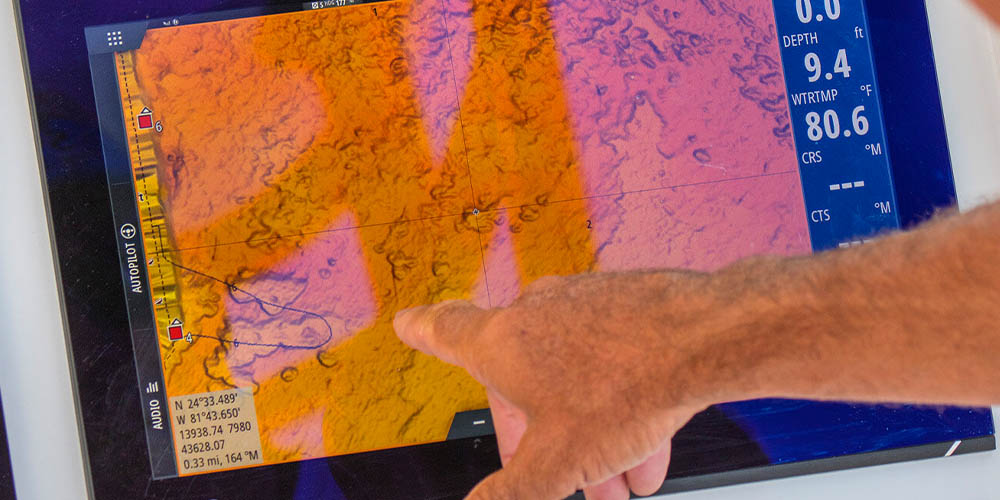
IPS Displays for Marine Electronics
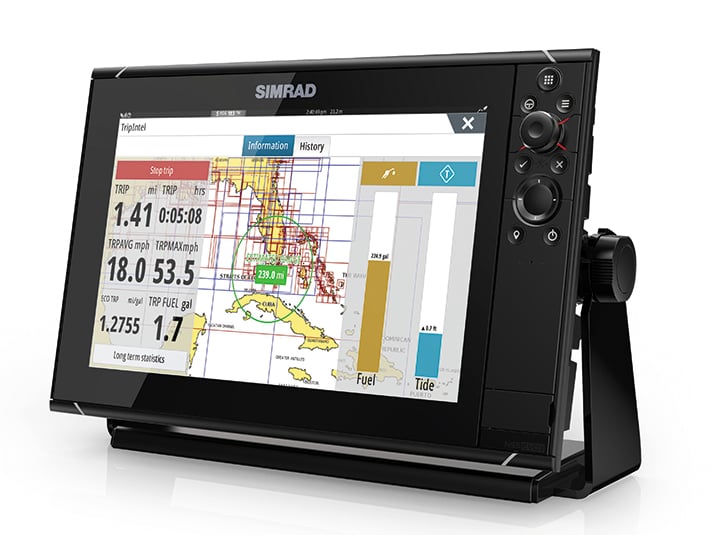
SolarMAX™ HD display on this NSS16 evo3 multifunction display incorporates In-Plane Switching (IPS) technology.
In-plane switching technology, used in smartphones and computer monitors for years, was introduced to Garmin's GPSMAP 8400 and 8600 Series multifunction displays in 2016. Since then, IPS technology has become widely used in marine chartplotters and multifunction displays.
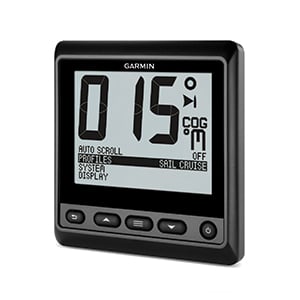
The Garmin GNX 20 offers another display technology. The GNX 20 is the first glass-bonded marine instrument with a combination of directly driven LCD segments and a dot-matrix field to display graphical information.
TN and IPS Active-Matrix TFT Displays
Marine chartplotters and multifunction displays use different LCD technologies, including Twisted Nematic (TN) and In-Plane Switching (IPS) thin-film transistor (TFT) LCD technology. TN and IPS are two types of active-matrix LCD panels used in electronic displays.
Many modern TN displays use LED backlighting, which can provide high brightness with relatively efficient power consumption. TN panels can also offer fast response times, but there are areas where TN displays fall short.
TN displays generally have narrower viewing angles and less consistent color and contrast than IPS displays when viewed from off-axis positions. Depending on the particular panel, colors and contrast can shift significantly when you look at the screen from above, below or from the sides.
There’s also the issue of viewing some LCDs through polarized sunglasses. I experienced this while racing my sailboat to Hawaii. I often needed to take off my high-quality Kaenon sunglasses to look at the Zeus Touch chartplotter in the bright mid-Pacific sunlight. When I was suddenly distracted one day by a needed sail adjustment, I stepped on the Kaenons and broke one of the arms off. As a result of my carelessness I sailed a thousand miles wearing Kaenons held together by black electrical tape.
IPS Displays Address Some TN Limitations
In a TN LCD, the liquid-crystal molecules change orientation in response to an applied electric field. This arrangement can result in greater changes in color and contrast when the screen is viewed from off-axis angles. In an IPS LCD, the liquid-crystal molecules remain largely parallel to the display surface and rotate within the plane of the panel. This arrangement generally provides more consistent color and contrast over wider viewing angles.
Navico's SolarMAX™ HD displays combine IPS panel technology with optical bonding and other display-construction features designed for marine use. Depending on the model, the displays also have specifications for brightness, protective coatings, operating temperature and water resistance. Optical bonding can reduce reflections and improve readability, while the display's construction is designed to help protect the electronics from the marine environment.
Depending on the model, SolarMAX™ HD displays also incorporate touchscreen controls, protective coatings and other features designed for marine use.
IPS Display Advantages
IPS marine displays may combine IPS panel technology with other features designed to improve visibility and durability in marine applications. Depending on the model, these include:
- Wide viewing angles with consistent color and contrast from different positions around the helm
- High-resolution panels for detailed graphics and readable text
- High-brightness LED backlighting, rated at more than 1,200 nits on applicable models, for improved visibility in bright daylight
- A wide specified operating-temperature range for reliable operation across a broad range of marine conditions
- A multi-touch screen with a fingerprint-resistant surface
- Optically bonded to reduce reflections and improve readability in bright conditions
- Protective coatings and construction features designed for marine use
IPS marine displays can complement high-definition chartplotter and sonar systems by providing detailed, readable imagery. High-brightness displays can make chart and sonar imagery easier to see in bright daylight.
Browse All Marine Electronics & Navigation Gear
- Chartplotters, GPS units, radar systems, and integrated navigation displays
- Sonar, CHIRP, downscan, and fish-finding electronics
- Marine stereos, speakers, amplifiers, and audio accessories
- VHF radios, AIS, satellite communication equipment
- Autopilot systems and steering control components
- Wind, depth, speed, and multifunction instruments
- Marine binoculars for navigation and low-light use
- Thermal and night-vision devices for situational awareness
- Onboard monitoring and security systems
- Magnetic and electronic compasses
- Paper and electronic navigation charts
- Regional cruising and harbor guides
- Traditional navigation plotting tools