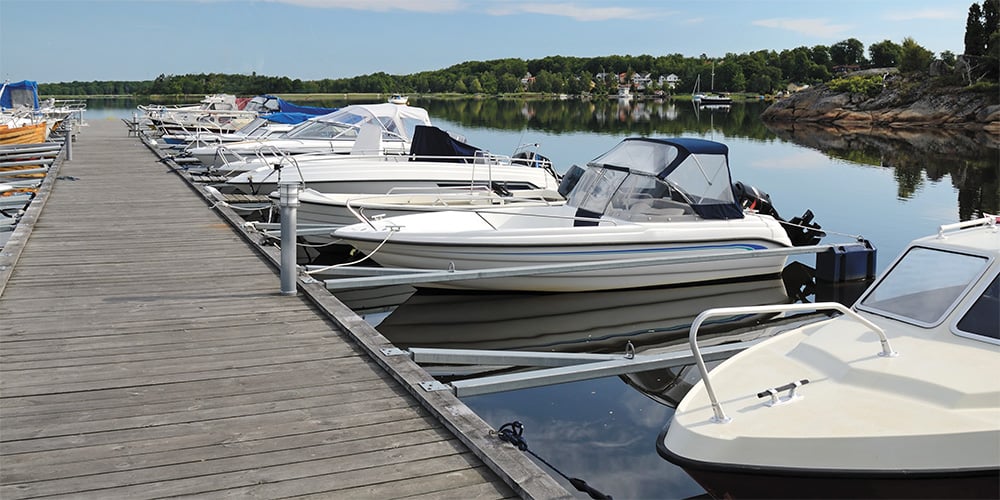
When outfitting a new or previously-owned boat for the dock, put dock lines, boat fenders, and a quality boat hook at the top of your list. Of course, there are plenty of other items to consider, but these three are where to start.
- Dock Lines
- Chafe Protection
- Boat Hooks
- Boat Fenders
- Fender Whips, Height Adjusters, and Covers
- Dock Boxes
- FAQs
Nylon versus Polypropylene Dock Lines
For docking applications, choose nylon lines. Nylon’s elasticity allows dock lines to absorb shock loads from wind, current, and waves — reducing stress on cleats and other deck hardware. The principal advantage of polypropylene is low cost, but polypropylene has only about 60% the strength of nylon, degrades quickly in sunlight, does not hold knots well, and lacks the stretch needed to absorb dock loads. Reserve polypropylene for light-duty, inland applications only.
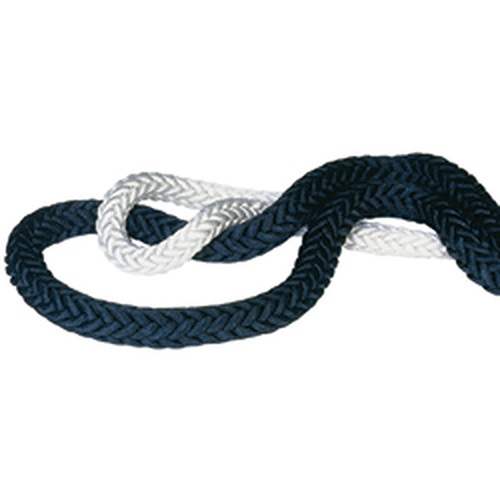
Single braid dock lines, also sold as “Mega Braid”, are the most flexible and easiest to tie.
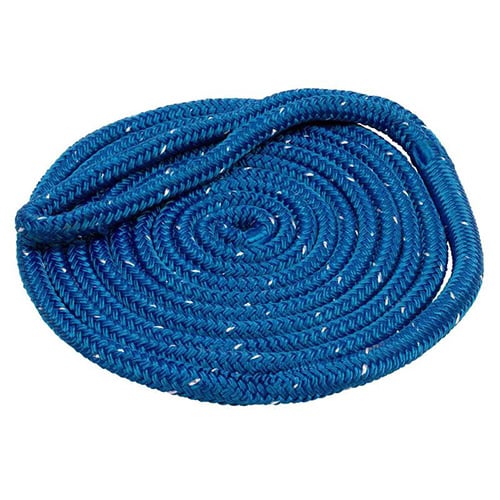
Double braid dock lines are flexible, smooth in the hands, and have the greatest strength.
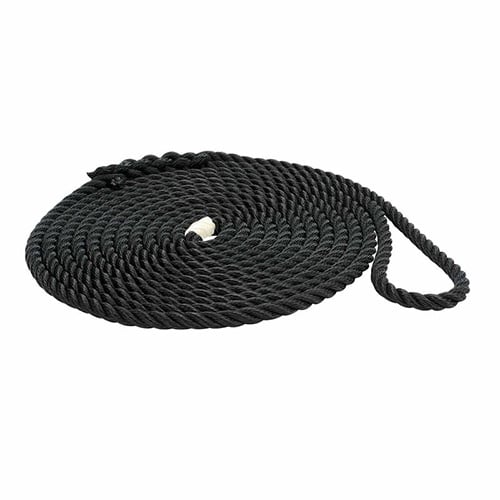
Nylon three-strand dock lines cost the least and have the most stretch.
Pre-Spliced Dock Lines
While you can purchase nylon line by the foot and splice your own dock lines, most boaters prefer pre-spliced lines. West Marine offers pre-spliced nylon three-strand, single-braid, and double-braid dock lines, all with a 12” diameter spliced eye:
- Single-braid dock lines are the most flexible, easiest to tie, and have moderate stretch. Available in larger sizes (5/8”–1½”), they are popular with boats in the 45’–60’ range.
- Double-braid dock lines are flexible, smooth in the hands, and have the greatest strength. They also have the least stretch, which is an advantage when you want to position your boat precisely in the slip.
- Three-strand dock lines cost the least and have the most stretch.
Chafe Protection
Shield your dock lines against chafe wherever they rub against cleats, chocks, or rough surfaces. Chafe guards provide a sacrificial surface that absorbs the damage without reducing the breaking strength of the line. In active marinas, chafe can saw through an unprotected dock line overnight.
Boat Hooks
All but the smallest boats benefit from a boat hook aboard. Boat hooks let you grab lines, retrieve dropped items, and safely push your boat away from barnacle-covered pilings without putting hands or feet between the hull and a hard surface. Choose a boat hook that floats — sooner or later you will drop yours overboard. Telescoping boat hooks with anodized aluminum tubing extend quickly and twist-lock securely. Glass-filled nylon heads curve to aid in line retrieval and soft tips prevent scratches on the hull and dock.
Types of Boat Fenders
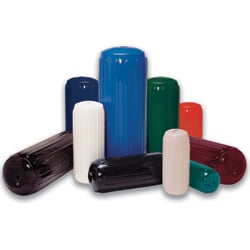
Versatile Big B™ Fenders incorporate an integral center rope tube that allows end-to-end line passage for horizontal or vertical hanging.
Fenders are inflatable vinyl cushions that protect your boat from contact with docks, pilings, sea walls, and other boats. Sausage-shaped cylindrical fenders are the most popular style. Choices also include round fenders and specialty fenders. Most fenders include an inflation valve so you can adjust firmness. Fenders should be firm but not rock-hard — they need some give to absorb the boat’s motion. Inexpensive fenders may not be adjustable.
Cylindrical Fenders
Cylindrical fenders come in one-eye, two-eye, and center-rope tube styles. One-eye fenders hang vertically from a single line through the top eye. Two-eye fenders can be hung vertically with one rope or horizontally with two ropes through both eyes. Center-rope tube fenders pass a single line through the fender’s centerline — hung vertically with a figure-eight knot at the end of the line, or horizontally with figure-eight knots at both ends to prevent the fender from sliding.
Round Fenders
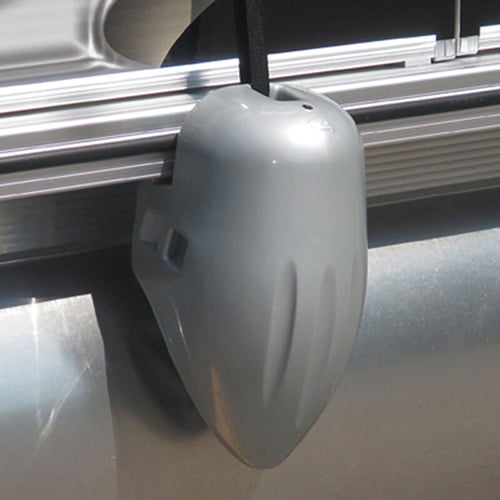
This specialty fender is shaped to fit between the pontoon and the deck for better protection.
Round fenders are popular for larger powerboats with concave bows and commercial vessels such as fishing boats. Orange round fenders also serve as low-tech mooring buoys.
Specialty Fenders
Specialty fenders are designed for specific applications including pontoon boats, low-freeboard boats like bass boats, self-centering V-shaped piling fenders, and fenders sized and shaped for rafting up to other boats.
What Size Fenders Do You Need?
The general rule: approximately 1” of cylindrical fender diameter or 2” of round fender diameter for every 4–5 feet of boat length. Fender size also depends on location and conditions — boats in active marinas with significant wave action, tidal surge, or wind exposure (Lake Michigan, San Francisco Bay, ocean inlets) need larger fenders than boats on a calm inland lake. When in doubt, choose the next size up.
| Boat Length | Cylindrical Fender Diameter | Round Fender Diameter |
|---|---|---|
| Under 10’ | 3” | NR |
| 10’–15’ | 3”–4” | 9” |
| 15’–20’ | 5”–5.5” | 12” |
| 20’–25’ | 6”–6.5” | 15” |
| 25’–35’ | 8”–8.5” | 18” |
| 35’–50’ | 10.5”–12” | 21” |
| 50’–60’ | 12” | 27” |
| 60’–72’ | 15”–24” | 27” |
Fender Whips, Height Adjusters and Fender Covers
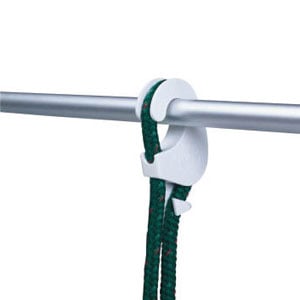
Rail fender height adjusters slip over a lifeline or rail and lock the fender whip at the height you need.
A fender whip is the rope used to hang a fender. Pre-spliced fender whips with a spliced eye at one end make for easy fender attachment without hard-to-untie knots. Fender height adjusters slip over a lifeline or rail and lock the fender whip at the correct height with a jam cleat or similar mechanism. Fender covers keep fenders clean and prevent fender scuff marks on topsides and hull.
Dock Boxes
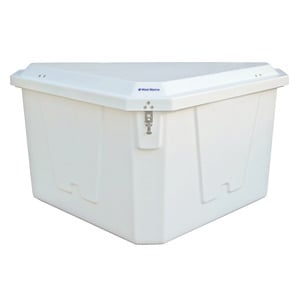
West Marine Triangle Dock Boxes feature lockable latches and corrosion-resistant stainless steel hardware.
Most boaters who wet-store their boat in a slip find a dock box essential. Dock boxes are weatherproof storage lockers that house items needed at the dock but not kept aboard — maintenance supplies, cleaning products, spare dock lines, and fender covers. Triangular dock box designs make efficient use of corner slip space.
Conclusion
As you and your boat settle into life at the marina, there are plenty of other items to consider — docking lights for the boat, solar-powered dock lights for your slip, or even products to build your own private dock. West Marine is ready to help with the products and advice you need.
Frequently Asked Questions
Why should I use nylon dock lines instead of polypropylene?
Nylon’s elasticity is the key advantage — it stretches under load and springs back, absorbing the shock loads from wind, current, and waves rather than transmitting them directly to your cleats and deck hardware. Polypropylene is cheaper but has only about 60% of nylon’s strength, degrades rapidly in sunlight, holds knots poorly, and has almost no stretch. For any boat that stays in the water regularly, nylon is the correct choice. Reserve polypropylene for temporary or very light-duty uses only.
What size fenders do I need for my boat?
The general rule is 1” of cylindrical fender diameter for every 4–5 feet of boat length. A 25-foot boat typically needs 6” cylindrical fenders as a minimum. Adjust up for boats in exposed marinas with significant wave action, tidal surge, or heavy boat traffic. When in doubt, go one size larger — oversized fenders cause no harm, while undersized fenders leave your hull exposed. See the sizing table above for specific recommendations by boat length.
What is the difference between single-braid, double-braid, and three-strand dock lines?
Three-strand lines have the most stretch and the lowest cost — good for boats on exposed docks where maximum shock absorption is needed. Double-braid lines are the strongest, with less stretch and a very smooth feel — best for precise slip positioning. Single-braid (Mega Braid) lines are the most flexible and easiest to handle, popular on larger boats 45 feet and up. For most recreational boats, double-braid is the best all-around choice.
How firm should my boat fenders be?
Firm but not hard. A properly inflated fender should give slightly when pressed firmly with your thumb — similar to a firm bicycle tire rather than a rock-hard one. Fenders that are overinflated don’t compress enough to absorb the boat’s motion and can actually transfer impact forces to the hull rather than cushioning them. Underinflated fenders bottom out under load and provide no protection. Check fender pressure seasonally and after any impact.