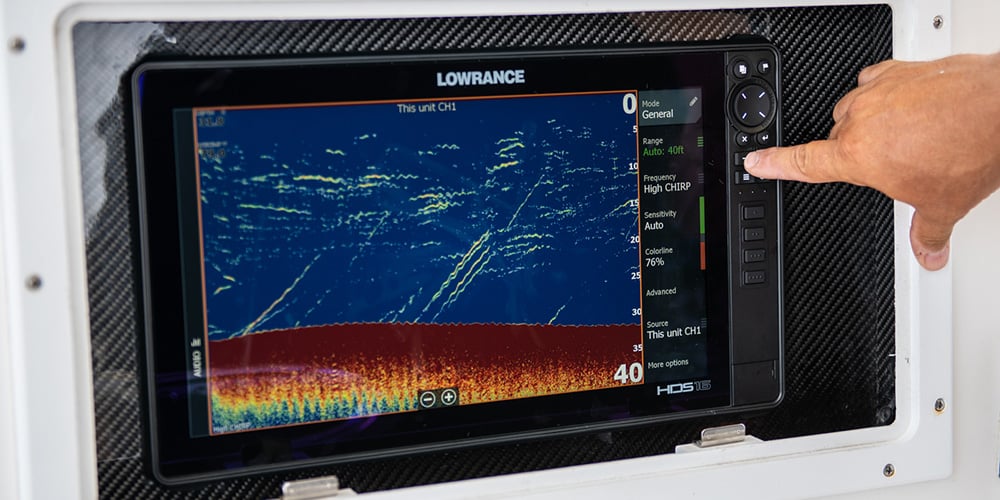
It's hard to imagine fishing without sonar. With sonar, you can focus your fishing on areas where you see fish or fish-holding areas like rocks, drop-offs, ditches, trees, logs, etc. Without sonar, it is much harder to catch fish since you don’t know where they are or where to pinpoint areas they like to hide. Sonar technology had been around for a while when Darrell Lowrance produced the first sonar fishfinder for the consumer market, harnessing transistorized sonar technology to detect fish. In 1957 Lowrance introduced the first recreational fishfinder, the FISH-LO-K-TOR, affectionately known by millions as the Little Green Box. That innovation forever changed how people fish.
How Does Sonar Work?
Sonar is a technique used to detect water depth and the presence/depth of objects in the water by transmitting a signal (ping) underwater and then receiving its echo. The echo is created when the original signal bounces off the bottom and objects in the water column between the transducer and the bottom. For fish-finding applications, sonar will show fish as an arch shape, partial arch or as a straight line, depending on the movement of the fish and the boat.
Types of Sonar Today
Lowrance® and Simrad® offer some of the best sonar on the market from older Broadband and CHIRP sonar technology to cutting edge scanning sonar and high-resolution live sonar.
Broadband Sonar
An older technology, Broadband sonar sends single-frequency sonar signals (pings) at 200kHz, 83kHz or 50kHz frequencies. High frequencies (200kHz) yield the best resolution, while low frequencies (50kHz) can reach greater depths.
CHIRP Sonar
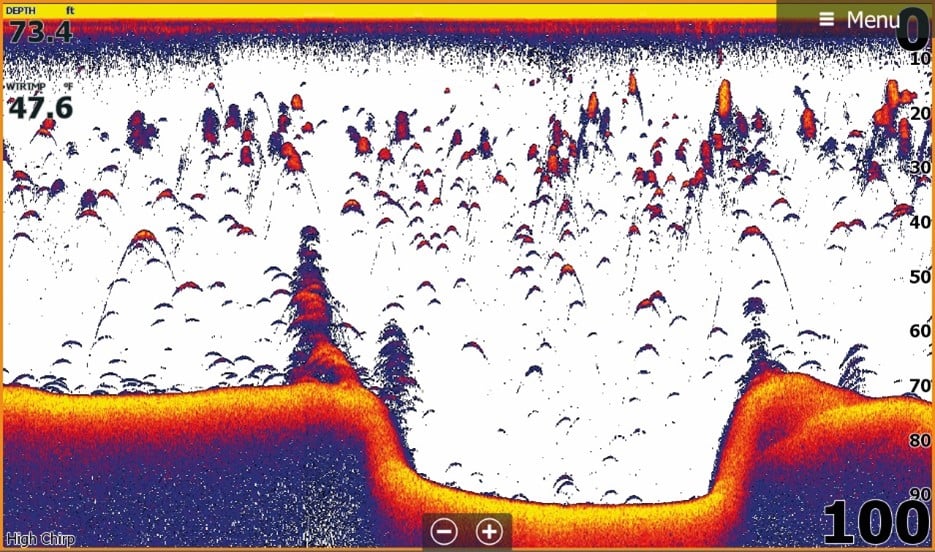
Anglers can see fish, structure and the bottom with greater clarity — right out of the box — with Lowrance and Simrad CHIRP sonar, which delivers the best views of individual fish targets, even when targets are close to the bottom or suspended in tight schools.
CHIRP delivers higher resolution views by continuously sweeping through a range of frequencies – typically 28-51kHz (Low), 85-155kHz (Medium) or 140-250kHz (High) – which creates a more complete picture of the bottom and objects in the water column. High CHIRP provides the highest resolution images, while Low CHIRP offers the best depth penetration. Medium CHIRP reaches the same depth as High CHIRP and has a wider coverage area, but does not offer the same level of clarity.
Scanning Sonar
Transmitting at 455kHz or 800kHz frequencies, scanning sonar provides high-resolution views to the sides (SideScan) and beneath (DownScan Imaging™) the boat. 800kHz provides the sharpest resolution at shallower depths, while 455kHz delivers the best overall image quality and depth penetration.
SideScan
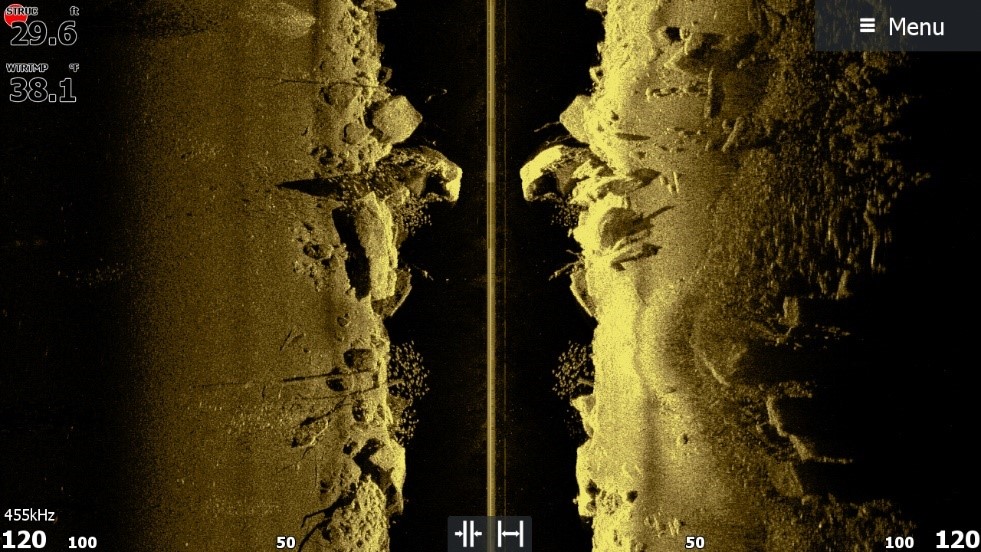
Perfect for searching large areas for fish-holding structure, SideScan provides views up to 600 feet to each side of the boat, allowing anglers to cover more water in less time, and view areas too shallow for a boat – like next to the shore or bank.
DownScan Imaging
DownScan Imaging makes it easier to identify how fish are relating to structure, providing photo-like images of rocks, trees, bottom composition and other underwater structure directly beneath the boat.
FishReveal™
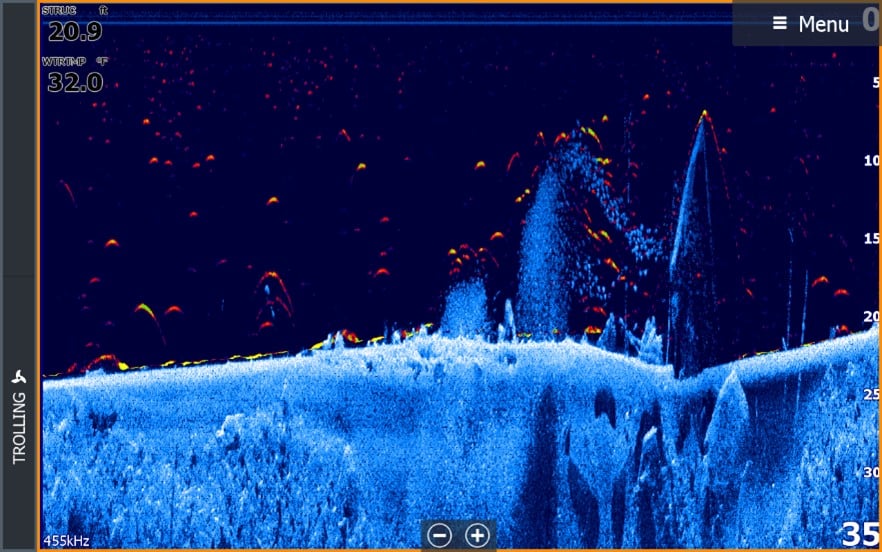
FishReveal™ takes the high-resolution images from DownScan Imaging and combines them with the target separation and traditional sonar fish arches of CHIRP sonar, making it easier to see fish. FishReveal™ includes a DownScan view and a new FishReveal SideScan* view, helping anglers identify fish targets beneath and to the sides of the boat. *Requires compatible display and S3100 module
Live Sonar
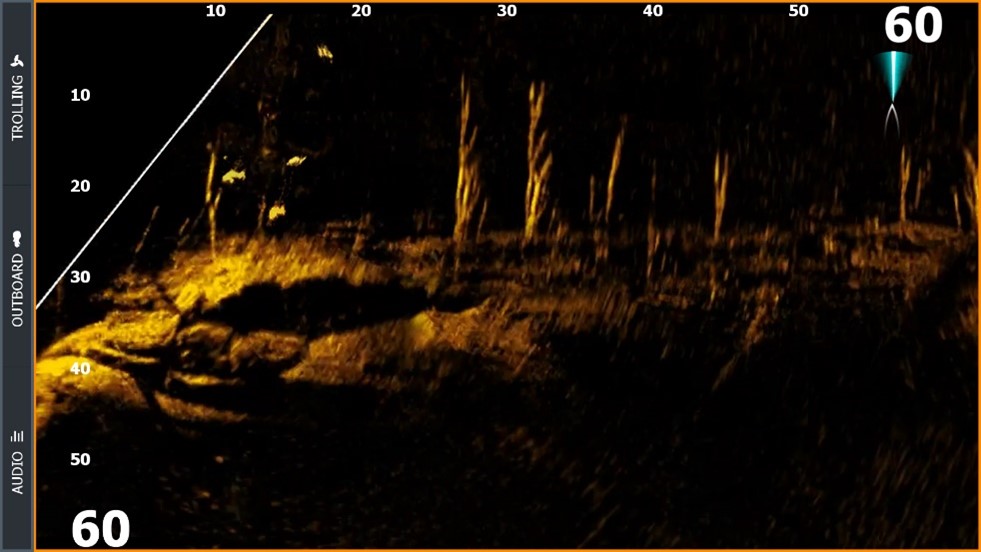
ActiveTarget® 2 Live Sonar provides high-resolution live images of fish swimming around structure and responding to lure presentations – as it happens. These live-action, real-time views of fish activity give anglers the information they need to make quick adjustments to get fish to strike. ActiveTarget® 2 includes Forward, Down and Scout views and supports optional Forward + Scout, 180 View and Scout Wide views with the installation of a second ActiveTarget 2 transducer on HDS Pro units.
Transducers
Lowrance® and Simrad® offer a wide range of transducers featuring a variety of sonar configurations and mounting options well suited for any fishing application in both saltwater and freshwater.
ActiveTarget® 2
ActiveTarget 2 gives anglers the highest resolution and clearest live views of fish and structure. By watching fish respond to their lure in real-time, anglers can make quick adjustments to help them catch more fish.
Active Imaging™ HD
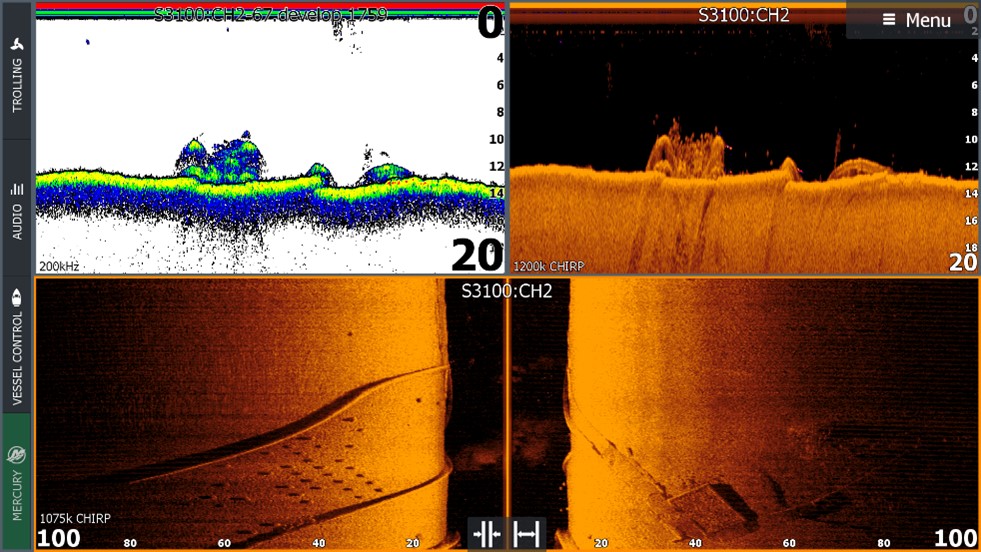
Provides the clearest images of fish and structure with CHIRP sonar, SideScan and DownScan Imaging™, plus a FishReveal™ DownScan view and a new FishReveal SideScan* view, helping anglers identify fish targets beneath and to the sides of the boat. Active Imaging HD achieves this high level of clarity by transmitting at up to 1.2 MHz. *Requires S3100 module.
CHIRP Transducers
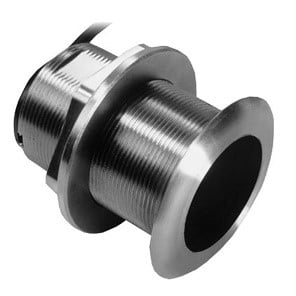
With enhanced sonar settings that make it ready for the water right out of the box, Lowrance® and Simrad® CHIRP sonar delivers unparalleled target separation and screen clarity to give anglers the best view of individual fish targets – even when fish targets are close to the bottom or suspended in tight schools. Lowrance and Simrad offer a wide range of CHIRP transducers to help anglers find fish in both freshwater and saltwater.
S5100 CHIRP Module
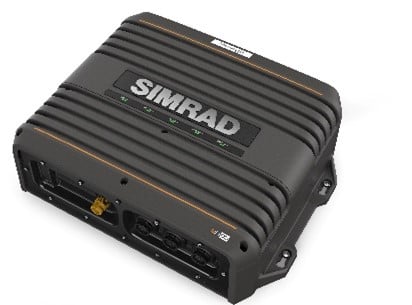
The S5100 features three fully independent channels able to deliver high-resolution CHIRP sonar coverage across multiple depth ranges. Mix and match up to three transducers to provide the perfect coverage for any fishing style. Detect small or tightly grouped fish, identify thermoclines, and target specific depths with ease.
HDI
Hybrid Dual Imaging transducers combine the superb clarity and depth penetration of Lowrance® and Simrad® High and Low CHIRP – or Medium and High CHIRP – with high-resolution images of fish and structure beneath the boat from DownScan Imaging™ with FishReveal™. The HDI High/Low CHIRP transducer is better suited for saltwater applications.
Browse All Marine Electronics & Navigation Gear
- Chartplotters, GPS units, radar systems, and integrated navigation displays
- Sonar, CHIRP, downscan, and fish-finding electronics
- Marine stereos, speakers, amplifiers, and audio accessories
- VHF radios, AIS, satellite communication equipment
- Autopilot systems and steering control components
- Wind, depth, speed, and multifunction instruments
- Marine binoculars for navigation and low-light use
- Thermal and night-vision devices for situational awareness
- Onboard monitoring and security systems
- Magnetic and electronic compasses
- Paper and electronic navigation charts
- Regional cruising and harbor guides
- Traditional navigation plotting tools