
What Anchors Do
Anchors dig into the seabed to hold a boat in position and are one of the most important safety systems onboard. Your anchoring gear helps keep boats away from surf, rocks, shoals, docks and other hazards when engines are off or conditions deteriorate. Anchors also allow boaters to temporarily secure the boat while fishing, swimming, eating lunch, waiting out weather or spending the night at anchor.
A properly sized and correctly set anchor can mean the difference between a secure overnight anchorage and a dangerous drifting situation. Modern anchors are designed to hold boats in a wide range of bottom conditions, but no single anchor design performs best everywhere. Bottom composition, wind strength, current, wave action, boat weight and rode setup all influence how well an anchor performs.
Many anchoring problems are caused not by the anchor itself, but by poor technique, insufficient scope, incorrect anchor sizing or improper bottom selection. Understanding how anchors work and how different anchor types behave in different conditions is critical for safe boating, especially when anchoring overnight or in changing weather.
We'll walk you through how anchors work, how to properly set and reset an anchor, how much scope to use, different anchoring techniques, how bottom conditions affect holding power and practical anchoring tips that improve safety and reliability.
How Anchors Work
When an anchor penetrates the seabed, suction and bottom resistance combine to hold the boat in place. As tension is applied to the anchor rode, the anchor attempts to bury itself deeper into the bottom, increasing resistance and holding power. The effectiveness of this process depends heavily on bottom composition, anchor design, scope and the angle of pull applied to the anchor.
Anchors work best when the pull remains as horizontal as possible along the seabed. This allows the anchor to stay buried instead of being pulled upward and dislodged. That is why proper scope and adequate rode length are so important.
In sand and mud, anchors develop holding power by digging in and creating resistance within the seabed itself. In rocky bottoms, anchors cannot bury effectively and instead rely on hooking or wedging around rocks and structure. Grassy bottoms can be especially difficult because anchors may catch vegetation without penetrating deeply enough into solid material below.
Why Rode Angle Matters
The angle between the rode and the anchor is one of the biggest factors affecting holding power. A low pulling angle helps the anchor stay buried and continue digging deeper under load. A steep pulling angle can break the anchor free and cause dragging.
Chain helps maintain a lower pulling angle because its weight naturally sags toward the bottom. This is one reason all-chain rode systems often perform better in rough conditions or overnight anchorages.
Setting
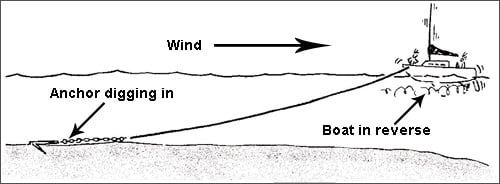
To ensure that an anchor properly sets, apply steady tension to the rode so the anchor penetrates and buries into the bottom. This is usually done by securing the rode and slowly applying reverse power with the engine.
If the boat continues moving backward after tension is applied, the anchor has likely failed to set and should be reset. Many boaters make only a brief or weak attempt to set the anchor, which often results in dragging later once wind or current increases.
To fully test an anchor set, apply a reasonable amount of reverse power for a sustained period. Your boat should noticeably stop and surge slightly against the rode when power is reduced. This indicates the anchor has developed resistance and is holding under load.
Common Mistakes When Setting an Anchor
One of the most common anchoring mistakes is dropping the anchor while the boat still has too much forward momentum. This can drag the anchor across the bottom instead of allowing it to dig in properly.
Another common mistake is failing to allow enough time or distance for the anchor to orient itself correctly before backing down. Anchors often need time to rotate and align properly with the direction of pull before they begin digging into the seabed.
How to Know if Your Anchor is Dragging
Dragging anchors often create subtle warning signs before the situation becomes dangerous. GPS anchor alarms, depth alarms and visual bearings on shoreline landmarks can help detect movement early.
If the boat slowly drifts outside its normal swing radius, if shoreline references begin shifting noticeably or if the rode vibrates heavily under load, the anchor may no longer be holding securely.
Scope
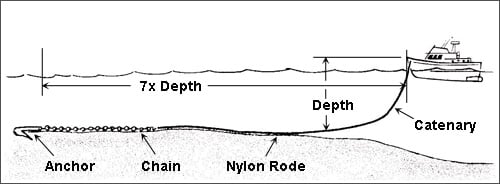
Scope is defined as the ratio between the total length of anchor rode deployed and the vertical distance from the bow roller to the seabed. Most anchoring references and anchor manufacturers agree that a 7:1 scope ratio provides the anchor's designed holding performance under normal conditions.
For example, if the water depth plus bow height equals 10 feet, a 7:1 scope would require approximately 70 feet of rode. In calm conditions, some boaters reduce scope to 5:1 or even 3:1 in crowded anchorages where swinging room is limited.
However, reducing scope also increases the pulling angle on the anchor and can reduce holding reliability if wind or current shifts. Longer scope generally improves holding power, shock absorption and reset capability.
How Wind and Current Affect Scope
As wind and waves increase, greater scope helps absorb shock loads placed on the anchor system. Short scope may hold temporarily in calm conditions but become unreliable once the boat begins surging against the rode during stronger weather.
Boaters anchoring overnight or during frontal passages often deploy additional scope as conditions deteriorate to improve holding power and reduce stress on both the anchor and rode.
Resetting
It’s relatively easy to set an anchor when wind and current remain consistent from one direction, but shifting wind or tide can change the angle of pull enough to dislodge some anchors. Certain anchor designs reset more effectively than others when the boat swings.
Any anchor can become dislodged if the boat rotates far enough around the anchor or if bottom conditions are poor. Four techniques can alert you when your boat swings excessively or begins dragging:
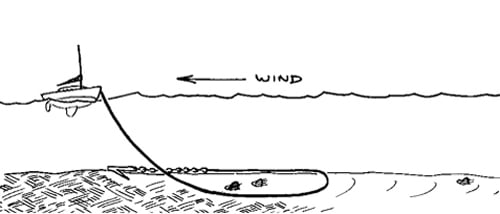
- If you have an anchor alarm on your chartplotter, set it so it alerts you if the boat swings too far from the position where it was when you set the anchor.
- If you have an electronic compass or autopilot, set the course alarm so it alerts you if the boat's heading changes radically.
- If you have alarms on your depth sounder set maximum and minimum alarms to alert you if the water depth changes significantly, indicating that you are drifting either away from or towards the shore.
- Stand an anchor watch. It is a good practice to take bearings on prominent landmarks when you anchor so you can detect any subsequent change in position.
Why Some Anchors Reset Better Than Others
Modern scoop-style anchors and plow anchors often reset more effectively after wind shifts because their geometry allows them to rotate and rebury more quickly. Some older fluke anchors may struggle to reset if the boat reverses direction sharply after the anchor has buried deeply.
Bottom conditions also affect reset performance significantly. Soft mud and sand often allow anchors to rebury more easily than rocky or grassy bottoms.
Anchoring Techniques With Two Anchors
Other Articles on Anchoring
Using two anchors can reduce swinging room, improve holding security and help boats remain properly positioned in crowded or narrow anchorages. Multiple-anchor setups are commonly used during overnight anchoring, tidal current changes or difficult weather conditions.
Anchoring Bow and Stern
In tight anchorages, you may need to limit your boat's tendency to swing at anchor. By dropping an anchor close to the beach and a second anchor in the opposite direction, you can locate the boat precisely in the anchorage.
Bow-and-stern anchoring is also useful in narrow coves, rivers and crowded mooring areas where uncontrolled swinging could place the boat too close to other vessels or shoreline hazards.
Two Anchors Off the Bow
Bob Ogg, co-inventor of the Danforth anchor, recommended setting one anchor into the wind or current and a second anchor 180 degrees away, with both rodes leading to the bow. This allows the boat to swing within a smaller arc while reducing the chance of one anchor resetting during current or wind shifts.
Bahamian Moor Technique
A Bahamian moor uses two anchors deployed in opposite directions from the bow and is especially useful in areas with reversing tidal current. This setup helps prevent the boat from making large circles around a single anchor while keeping the boat aligned more consistently with current flow.
Assessing Bottom Conditions
Anchors develop holding power only if they can engage the seabed effectively. Bottom composition is often more important than anchor design itself because even the best anchor will struggle in poor holding conditions.
Understanding bottom type before anchoring helps determine the most effective anchor style, scope and anchoring technique. Sand, mud, grass, rock and shell all affect penetration and holding power differently.
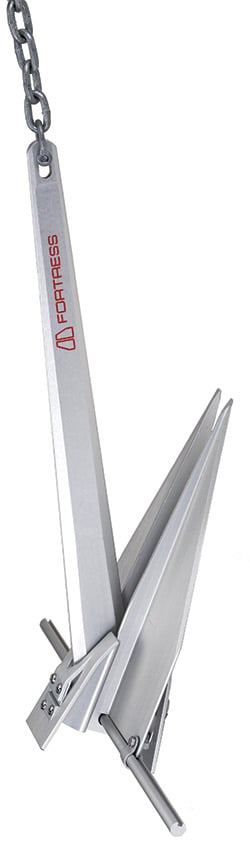
Fortress Premium Fluke Anchors are highly regarded for their holding ability in soft bottoms.
Sand:
Fine-grained sand is relatively easy for anchors to penetrate and offers consistently high holding power. Most anchors hold exceptionally well in hard sand, especially lightweight fluke-style anchors like Fortress and traditional Danforth designs.
Mud:
Mud requires anchors with large fluke surface area and wider fluke angles capable of penetrating deeply into softer material. Fortress anchors perform especially well in mud because their fluke angle can be adjusted for soft-bottom conditions.
Rocky bottoms:
Rocky bottoms are challenging because anchors cannot bury deeply and instead rely on snagging or hooking onto rocks and crevices. Plow-shaped anchors and grapnel-style anchors generally perform best under these conditions.
Shale, clay and grassy bottoms:
These are difficult conditions for most anchors because penetration is limited and false sets are common. Heavy anchors capable of cutting through vegetation or crusted bottom often perform better.
How to Identify Bottom Conditions
Depth sounders, charts, local knowledge and visual water color changes can all help estimate bottom composition before anchoring. Clear tropical water may allow direct visual identification of sand, grass or coral, while chartplotters and cruising guides often identify common anchorage bottom types.
Anchoring Tips
Despite claims to the contrary, no single anchor design is best in all conditions. Boaters traveling to areas with varying bottom conditions should carry multiple anchors capable of handling different situations safely.
- You will have another if one anchor is lost
- Different anchor types work best for different conditions
- Two anchors allow you to anchor bow and stern in tight anchorages
Inspect Your Entire Anchor System
Inspect your anchor system frequently for chafe, bent flukes, loose shackles, corroded swivels and worn chain or rope. The anchor system is only as reliable as its weakest component.
Keep an Anchor Ready for Emergency Deployment
Store at least one anchor so it can be deployed immediately. Even a small anchor deployed quickly may help prevent grounding or reduce drift during an emergency.
Use an Anchor Roller
We recommend adding an anchor roller if your boat is not already equipped with one. Anchor rollers simplify deployment and retrieval while reducing hull damage, rode chafe and handling effort.
Use Snubbers and Bridle Systems
Snubbers and bridles help absorb shock loads and reduce stress on the windlass and bow hardware, especially with all-chain rode systems. They also help quiet chain noise and improve comfort overnight.
Prepare for Overnight Anchoring
Before anchoring overnight, check weather forecasts, verify swinging room, test the anchor set thoroughly and set GPS anchor alarms. Conditions can change dramatically overnight, especially during frontal passages or tidal reversals.
FAQ: How to Anchor Securely
What type of anchor should I use for my boat?
The best anchor depends on your boat size, expected bottom conditions and weather exposure. Fluke anchors perform very well in sand and mud, while plow and scoop anchors are popular for mixed-bottom cruising applications.
How much anchor rode should I let out?
A scope ratio of 7:1 is generally recommended for secure anchoring. Shorter scope may work temporarily in calm conditions, but longer scope improves holding power and shock absorption.
What’s the advantage of an all-chain anchor rode?
All-chain rode provides excellent abrasion resistance, improves rode angle and helps anchors remain buried under changing loads and rough conditions.
How can I ensure my anchor is set properly?
After deploying the anchor, apply sustained reverse power while monitoring movement. The boat should stop moving backward and surge slightly against the rode when the anchor fully sets.
What are the signs of a dragging anchor?
GPS anchor alarms, shifting shoreline references, unexpected depth changes and unusual rode vibration can all indicate anchor dragging.
Do I need a secondary or backup anchor?
Yes. Carrying multiple anchors improves safety and allows different anchoring techniques depending on conditions and available space.
How do I retrieve a stuck anchor?
Approach the anchor slowly from different angles while retrieving rode tension gradually. Trip lines or reversing the direction of pull may help free stuck anchors.
What should I consider when anchoring overnight?
Check weather forecasts, confirm adequate scope, verify anchor set, monitor nearby boats and use anchor alarms whenever possible before leaving the boat unattended or turning in for the night.


