As the boating season draws to a close, boaters turn to the task of laying up their boats for the winter. This article covers how to protect an outboard motor against corrosion and freeze-related damage during winter storage. The process, referred to as “winterization,” consists of some simple tasks that are easily performed by most owners of an outboard-powered boat.
- Drain the Crankcase Oil (4-Stroke Motors)
- Change the Oil Filter (4-Stroke Motors)
- Fill the Crankcase with New Oil (4-Stroke Motors)
- Change the Fuel Filter
- Change the Lower Unit Gear Oil
- Stabilize the Fuel
- Fog the Cylinders and Flush with Antifreeze
- Final Tasks
- FAQs
To accomplish these tasks, you will need the following items:
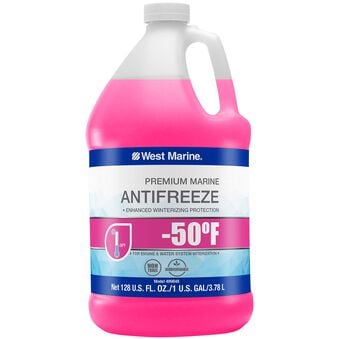
- Gallon of antifreeze (propylene glycol, non-toxic)
- Engine winterizing kit
- Flushing muffs
- Fuel stabilizer
- Gear lube oil
- Gear lube pump
- Outboard motor oil (four-stroke motors)
- Oil filter (four-stroke motors)
- Oil filter wrench (sometimes needed)
- Drain pan
- Absorbent shop rags
- Fogging oil (carbureted or EFI formula as appropriate — see below)
- Grease gun loaded with marine grease
- Corrosion inhibitor

Try the interactive SONAR parts finder for the engine parts you need.
Drain the Crankcase Oil (4-Stroke Motors)
Changing the oil before winter storage matters because contaminants in used oil — acids, moisture, combustion byproducts — can corrode engine parts over the long storage period. Before draining, attach flushing muffs to a garden hose and place them squarely over both sides of the water intake. Turn on the water, start the motor, and allow it to run for a few minutes to warm the oil and suspend the contaminants. Then shut off the motor and remove the flushing muffs.
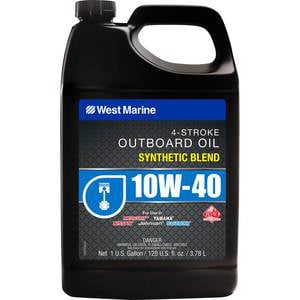
When shopping for outboard motor oil, make sure that the oil you select meets or exceeds the manufacturer’s specifications in your owner’s manual.
Most four-stroke outboards have an oil sump drain plug below the crankcase at the back or side of the motor’s leg. Position a catch pan under the motor before removing the drain plug. While some mechanics extract oil through the dipstick tube, this method does not remove all the oil — follow the manufacturer’s instructions for a complete drain. The drain plug gasket may need replacement; check the manufacturer’s recommendation. Have rags on hand for cleanup.
Change the Oil Filter (4-Stroke Motors)
After draining the oil, remove the oil filter. Most are spin-on type, similar to those used on automotive engines. Filters that have taken a set may require an oil filter wrench for removal. Install an OEM or equivalent replacement filter — before installation, lightly coat the filter’s O-ring with clean motor oil, then screw it on until hand tight.
Fill the Crankcase with New Oil (4-Stroke Motors)
After installing the new oil filter, fill the crankcase with fresh oil. Consult your owner’s manual for the correct viscosity, quantity, and API service level required. Do not exceed the maximum fill level on the dipstick.
Change the Fuel Filter
Replace the OEM fuel filter on the motor per your owner’s manual. Winterization is an ideal time for this replacement since a fresh filter going into storage ensures no restriction or contamination at spring startup.
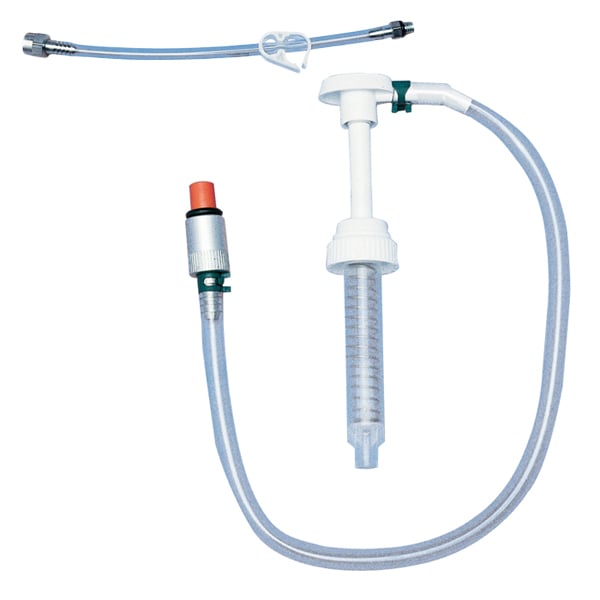
Example of a gear lube pump.
Change the Lower Unit Gear Oil
Check your owner’s manual for the correct viscosity and quantity of gear oil before starting. The gearbox, located directly forward of the propeller, has a stainless steel screw-type drain plug at the bottom and a vent plug above it.
Place a catch pan under the gearbox and remove the bottom drain plug first, being careful to retrieve the gasket with it. Many drain plugs include a magnetic tip that collects metal particles — fine metal particles indicate normal wear, but coarse chips indicate excessive wear that warrants professional evaluation. With the bottom plug removed, a small amount of gear oil will begin to drip out. Remove the vent plug at the top and the remaining gear oil will flow freely from the bottom drain hole. As it drains, observe the color: gear oil in good condition is translucent with a greenish cast. A milky appearance indicates water intrusion into the gearbox — seek professional service if this is the case before proceeding.
Always fill gear oil from the bottom up, pumping new oil upward through the drain hole until it overflows from the top vent hole. Filling from the bottom eliminates trapped air and ensures the entire gearbox casing fills completely. For very small outboards, press the nozzle of a gear oil tube into the bottom hole and squeeze slowly until oil overflows at the top. For larger outboards, use a gear lube pump. When oil overflows from the top hole, replace the top vent plug first, then remove the pump nozzle and quickly replace the bottom plug. Do not forget the gaskets on both plugs.
Stabilize the Fuel
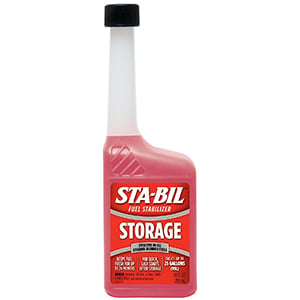
Gasoline fuel stabilizers help to prevent the formation of gum and varnish buildup during winter layup.
Fuel stabilizer prevents the formation of gum and varnish in the fuel system during storage. Products such as Star brite’s STA-BIL or Biobor’s EB Ethanol Treatment for Gasoline are effective options. Follow the manufacturer’s instructions for the correct ratio, add it to the fuel tank, then circulate it through the entire fuel system by reattaching the flushing muffs, turning on the water, restarting the motor, and running it for five to ten minutes before shutting it off.
Fog the Cylinders and Flush the Motor with Antifreeze
Simply draining the cooling water out of the motor is common practice, but we recommend flushing with antifreeze to eliminate any residual water that could freeze and cause damage during a hard freeze. Fogging the cylinders with fogging oil at the same time prevents rust formation inside the cylinders during storage.
These two procedures can be combined in a single operation. The procedure differs between carbureted and electronic fuel injection (EFI) motors — use the correct method for your engine.
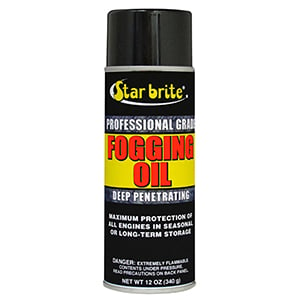
Engine fogging oils are typically offered as an easy-to-use spray.
Carbureted Motors (2- and 4-Stroke)
After running the motor for five to ten minutes with stabilized fuel, shut it off, disconnect the garden hose, and hook up the winterizing kit to the flushing muffs. Fill the winterizing kit’s tank with non-toxic propylene glycol antifreeze. (For more about antifreeze types, see Antifreeze 101  .) Remove the cowling to access the air intakes on the front of the engine.
Open the valve on the winterizing kit, restart the motor, and watch the antifreeze level drop in the tank. You should see antifreeze exiting from the motor’s telltale water discharge. While the engine is running, spray fogging oil into the carburetor(s). This will typically cause lower-horsepower engines to stall while higher-horsepower engines may cough and sputter but continue running and emit white smoke. Spray a substantial amount of fogging oil through the intake, then disconnect the fuel line from the engine and continue spraying fogging oil until the engine dies. Running the motor until it burns off all remaining fuel from the carburetors prevents varnish deposits from gasoline left in the carburetor bowl over winter.
Electronic Fuel Injection (EFI) Motors
The fogging procedure for EFI motors is different — and easier — than for carbureted motors. Instead of spraying fogging oil into the carburetor, run the fogging oil directly through the fuel system by supplying the motor with a small container of stabilized gasoline into which fogging oil formulated specifically for EFI motors has been mixed. Consult your owner’s manual for the correct fogging oil and mixing ratio.
Important: Do not use fogging oil formulated for carbureted motors in an EFI motor. Carbureted fogging oil contains a wax-like substance that can clog fuel injectors. Unlike the carbureted procedure, do not cut off the fuel supply and wait for the motor to stop. Instead, run the motor until you see white smoke exiting the exhaust and then, before the winterizing kit runs dry, shut the motor off. Running an EFI motor until it stops from fuel starvation can damage fuel system components.
Note: Some late-model outboards have a maintenance valve to which products such as CRC Engine Stor® Fogging Oil connect via an adapter. Check your owner’s manual for this option.
Final Tasks
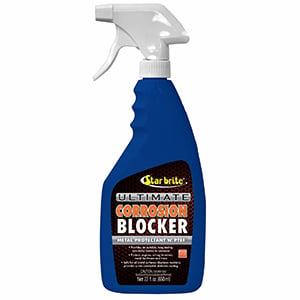
Applying a corrosion inhibitor will help prevent the formation of rust during winter layup.
For oil-injected two-stroke motors, completely fill the two-stroke oil tank so that water won’t condense inside the tank and contaminate the oil supply over winter.
Locate the zerk fittings for the pivot tube and tilt tube and inject fresh marine grease with a grease gun. Spray a corrosion inhibitor on the powerhead and all exposed metal surfaces, then replace the cowl.
Remove the propeller and inspect it for damage — nicks, dings, and bent blades reduce performance and should be repaired before spring. Check the prop shaft for monofilament fishing line wrapped around it, which can damage the shaft seal and cause gear oil contamination. Lubricate the shaft with marine grease before reinstalling the propeller, or leave it off to discourage theft while in storage.
Finally, store the engine in an upright position so any remaining water will drain out. Your outboard is now ready for winter storage.
FAQs
Why is it important to winterize an outboard motor?
Water left in the cooling system, lower unit, and engine can freeze and expand, cracking engine components and destroying seals. Used motor oil contains acids and combustion byproducts that corrode engine internals during long storage. Untreated fuel forms gum and varnish deposits that clog carburetors and fuel injectors. Winterization addresses all of these failure modes in a single session, protecting the motor for the full off-season and avoiding expensive spring repairs.
Do I need to use antifreeze, or is draining the water enough?
Draining is common practice, but flushing with antifreeze provides a margin of protection against residual water that does not drain completely. Small amounts of water can remain in passages and fittings and freeze during a hard freeze. Non-toxic propylene glycol antifreeze is inexpensive and the extra protection it provides is worth the small additional effort. Use an engine winterizing kit to run the antifreeze through the cooling system easily.
Can I use the same fogging oil for carbureted and EFI motors?
No. Fogging oil for carbureted motors contains a wax-like substance that coats cylinder walls but can clog fuel injectors if used in an EFI motor. Always use fogging oil specifically formulated for EFI engines in a fuel-injected outboard. The label will specify compatibility — check your owner’s manual for the manufacturer’s recommendation.
What does milky gear oil in the lower unit mean?
A milky or creamy appearance in the gear oil indicates that water has entered the gearbox, typically through a failed prop shaft seal. This is a serious condition that can cause rapid corrosion of the gears and bearings during storage. Do not simply replace the oil and proceed — have a marine technician inspect and reseal the lower unit before storing the motor for winter.
Should I remove the propeller for winter storage?
Removing the propeller is recommended for two reasons: it allows you to inspect the shaft for monofilament line (which can damage the seal and cause gear oil contamination) and to lubricate the shaft with fresh grease. Leaving the prop off during storage also discourages opportunistic theft. If you reinstall it, apply marine grease to the shaft splines before reinstallation.