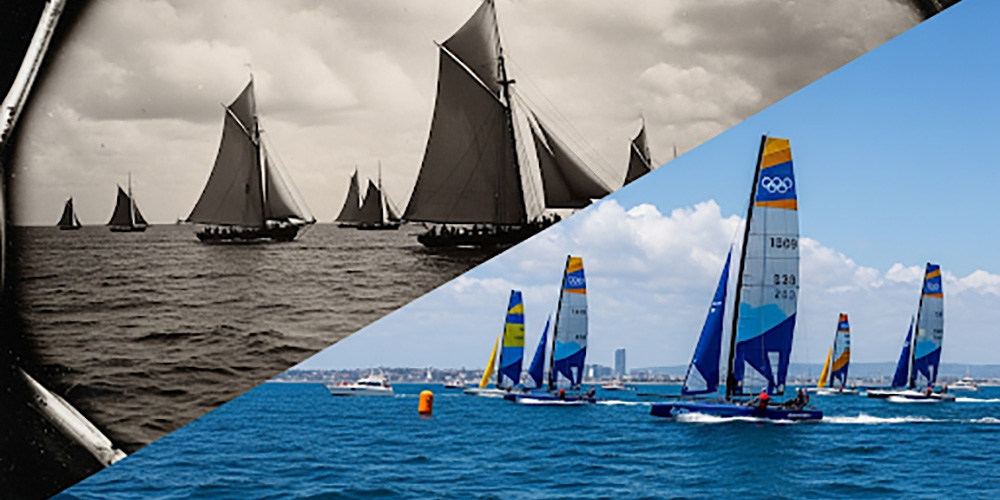
Sailing has long held a unique place among Olympic sports, merging the unpredictability of nature with human ingenuity, tactical intelligence, and physical prowess. Far from an arcane pastime, Olympic sailing stands at the pinnacle of competitive yachting, offering athletes the chance to pit their skills against wind, waves, and an ever-evolving field of international rivals. As questions sometimes arise—“Is sailing still an Olympic sport?”—one need look no further than the global excitement, storied athletes, and continual evolution that keep this discipline firmly anchored in the Olympic movement. As the world looks ahead to Los Angeles 2028, the legacy of Olympic sailing has never been more captivating for aspiring sailors, dedicated fans, and nations across every continent.
- Olympic Sailing's Diverse Audience
- A Storied Past: The Evolution of Olympic Sailing
- Paris 2024: Setting the Stage for Los Angeles
- Sailor Rankings: The World’s Elite on Display
- Olympic Sailing Nations: From Powerhouses to Rising Stars
- Looking Ahead: The Promise of Los Angeles 2028
- The Demands and Appeal of Olympic Sailing
- Pathway to the Olympics: Qualification and Selection
- Champion Legacies and the Road Ahead
- Inclusivity and the Olympic Spirit
- Los Angeles 2028: Legacy and Opportunity
Olympic Sailing's Diverse Audience
Olympic sailing attracts a widely diverse audience that spans from dedicated sports fans to experienced sailing professionals and researchers seeking comprehensive insights into the sport. These individuals are not only captivated by the competition itself but also value detailed historical context, evolving event formats, and up-to-the-minute information on athlete performances, global rankings, and national team strategies. For many, following Olympic sailing is a way to remain connected to a global community, tracking trends in athletic development, technological innovation in boats, and shifts in international competition. Consequently, readers of Olympic sailing coverage frequently look for analyses that highlight both established champions and rising stars, as well as updates that contextualize the significance of upcoming regattas. By engaging with thorough, well-researched content, this audience gains a deeper appreciation of the athletes' dedication, the intricate tactical elements involved in competitive sailing, and the broader impact of the Olympic Games on sailing's international growth.
A Storied Past: The Evolution of Olympic Sailing
Early Beginnings
Olympic sailing traces its roots to the very dawn of the modern Olympic Games. Although scheduled for the pioneering 1896 Athens Olympics, weather ultimately cancelled the original regatta, setting the stage for Paris 1900 to host sailing’s official Olympic debut. Apart from the 1904 Games, the sport has featured in every Summer Olympics since its return in 1908, evolving alongside technological innovation, global participation, and shifts in the Olympic ethos.
The early years saw a dramatic diversity in rig types, boat lengths, and handicapping systems as the International Olympic Committee (IOC) and governing bodies like World Sailing (formerly known as the International Yacht Racing Union, or IYRU) honed the criteria for fairness and global accessibility. Regattas in early 20th-century Games featured everything from huge gaff-rigged yachts to nimble dinghies, representing local traditions from Sweden, France, and Great Britain to the United States, Norway, and beyond. Each host nation’s waters played a role in shaping the events, reflecting sailing culture worldwide.
Technological and Inclusive Evolution
Innovation soon became a hallmark. From wooden hulls to fiberglass, and later to carbon fiber and composite materials, the evolution of Olympic sailing boats paralleled advances in marine engineering. Classes such as the Finn, Star, Flying Dutchman, Soling, and 470 rose to prominence, later joined by high-performance skiffs like the 49er and the 49erFX, fast-paced windsurfers including the Mistral and RS:X, and, most recently, cutting-edge foiling classes like the iQFOiL and the dramatic Formula Kite. Milestones such as the introduction of the Laser dinghy (now known as the ILCA 7 and ILCA 6) and racing formats like medal races have shaped both athlete experience and the global fanbase.
Inclusion has also driven the sport’s evolution. Women-only classes first appeared in 1988 with the Women’s 470, and the Yngling keelboat followed in 2000. More recently, innovative mixed-gender classes such as the Nacra 17 multihull have mirrored Olympic efforts toward inclusivity—there is currently no mixed relay format in Olympic sailing. The Olympics have seen legendary campaigns from sailing powerhouses: Great Britain, Australia, New Zealand, Denmark, France, Germany, Sweden, Spain, Italy, Greece, and the United States, each bringing unique strengths to the regatta. Nations like Brazil, Argentina, Israel, and China have added new chapters to sailing’s global narrative, underscoring the sport’s growing reach in South America, Asia, and the Middle East.
Paris 2024: Setting the Stage for Los Angeles
Event Overview
As the Olympic world turned its eyes to Paris 2024, sailing took a prominent stage on the azure waters of Marseille, a harbor city steeped in maritime tradition. The French Mediterranean provided a dynamic arena for the regatta, with swirling winds, variable currents, and Mediterranean sun testing every sailor’s preparation and resilience. The Paris 2024 sailing competition showcased the full breadth of modern Olympic sailing:
- ILCA 7 (Laser Standard) – Men’s One Person Dinghy
- ILCA 6 (Laser Radial) – Women’s One Person Dinghy
- 470 – Mixed Two Person Dinghy (now combined after decades of separate men’s and women’s events)
- 49er – Men’s Skiff
- 49erFX – Women’s Skiff
- Nacra 17 – Mixed Multihull
- iQFOiL – Men’s and Women’s Windsurfing (debuting new foil-based boards)
- Formula Kite – Men’s and Women’s Kiteboarding (Olympic debut for these spectacular foiling kites)
National and Individual Highlights
National teams from sailing stalwarts provided the spectacle fans have come to expect. Great Britain again demonstrated dominance, propelled by a deep bench and tactical excellence. Australia and New Zealand continued to impress, particularly in skiff and dinghy events—a testament to their dynamic sailing programs and ocean-based training. The Netherlands, home to multiple world champions, shone in the ILCA and windsurfing classes. France delighted home audiences with medal-winning performances. Spain, Italy, Denmark, and the United States all featured at the sharp end of the competition, with emergent threats from Greece, Israel, and Japan adding unpredictability to the leaderboard.
Individual stars also rose to the occasion: Matt Wearn of Australia and Anne-Marie Rindom of Denmark continued their streaks of world-class finishes in ILCA events, while Ruggero Tita and Caterina Banti of Italy captivated kitesurfing and Nacra 17 fans. Marit Bouwmeester of the Netherlands further sealed her place in history, while British sailor John Gimson and Eilidh McIntyre (the latter from the Tokyo 2020 cycle) reaffirmed their status among the sport's legends.
Sailor Rankings: The World’s Elite on Display
Ranking System and ILCA Classes
In Olympic sailing, athlete rankings serve as both a barometer of current form and a preview for the battles to come in Los Angeles 2028. World Sailing’s complex ranking system integrates results from a network of international regattas—world championships, World Cup events, European and continental championships, and Olympic qualifiers. Points are allocated based on performance and accumulated over a rolling period, making consistency and peak performance at critical events essential for sailors aspiring to Olympic selection.
The men’s ILCA 7 class (Laser Standard) has seen Matt Wearn (Australia) maintain a top spot, bolstered by his Paris 2024 gold and continuing dominance at World and European Championships. Pavlos Kontides of Cyprus, Jean-Baptiste Bernaz of France, and Philipp Buhl of Germany remain among the world’s elite, pushing the envelope at each major regatta. In ILCA 6 (Laser Radial), Marit Bouwmeester (Netherlands) and Anne-Marie Rindom (Denmark) have set a formidable standard, their records glimmering with Olympic and World Championship victories. Emma Plasschaert (Belgium), Maud Jayet (Switzerland), and Sarah Douglas (Canada) have increasingly challenged the established order.
Skiff and Multihull Events
Skiff sailing—a high-octane event where boat handling, speed, and risk-reward tactics often decide outcomes—features duos like Diego Botin and Florian Trittel (Spain). In 49erFX, Brazil’s Martine Grael and Kahena Kunze, reigning Olympic gold medalists, have become synonymous with consistency under pressure. The Dutch skiff teams of Odile van Aanholt and Annette Duetz continue the proud sailing tradition.
Mixing technology with tradition, the Nacra 17 multihull has brought out the best in Italian duo Ruggero Tita and Caterina Banti, whose pioneering approaches in foiling catamarans have reshaped expectations. Mixed 470 teams such as Jordi Xammar and Nora Brugman (Spain), Camille Lecointre and Jérémie Mion (France), and Keiju Okada and Miho Yoshioka (Japan) have consistently traded places at the top of world events.
Foiling and Kiteboarding Stars
Foiling boards brought new athletes into sailing’s limelight. In the iQFOiL windsurfing fleet, Nicolò Renna (Italy), Emma Wilson (Great Britain), and Luuc van Opzeeland (Netherlands) headline a thriving group, while France’s Helene Noesmoen and Italy’s Marta Maggetti bring formidable challenge to every regatta. The Formula Kite class has been energized by Toni Vodisek (Slovenia), Maximilian Maeder (Singapore), Daniela Moroz (United States), and Lauriane Nolot (France), whose daredevil kiting displays have made instant fans worldwide—Maeder took bronze in the men’s event, and Nolot took silver in the women’s.
Behind each ranking lies countless hours of training, coaching, boat maintenance, and the support of national federations and clubs—a testament to the collaborative and high-performance environment that Olympic sailing demands.
Olympic Sailing Nations: From Powerhouses to Rising Stars
Leading Nations
Throughout the history of Olympic sailing, certain countries have established themselves as perennial medal contenders, while others have rapidly climbed the ranks to challenge the status quo. Great Britain stands apart as the most successful nation in Olympic sailing, with legends like Ben Ainslie, Sir Iain Percy, Shirley Robertson, and Giles Scott leading an unmatched legacy of innovation, discipline, and teamwork. The Royal Yachting Association (RYA) and its robust talent pipeline have shaped the nation’s dominance, with athletes excelling across both dinghy and keelboat events.
Australia’s pathway to gold runs through a culture forged on the ocean and a network of elite sailing clubs. Not only did Australia produce the likes of Tom Slingsby and Nathan Outteridge, but it has remained at the forefront in skiffs, multihulls, and windsurfing, thanks to the strategic vision of Australian Sailing and a culture of embracing new training methods.
New Zealand, with its storied yachting history and world-renowned sailors like Peter Burling and Blair Tuke, has also been a force, particularly in 49er skiff and men’s Laser events. The Kiwis have become synonymous with versatility—competing at the highest levels in Olympic circuits and blue-water classics like the America’s Cup.
Emerging and Established Contenders
The Netherlands has over recent cycles become synonymous with technical excellence, producing ILCA, windsurfing, and Nacra 17 champions. Marit Bouwmeester’s achievements are inspirational, as are Luuc van Opzeeland’s triumphs in foiling windsurfing.
France, holder of both Olympic and offshore sailing heritage, continues its run of success with stars such as Charline Picon (windsurfing), Jean-Baptiste Bernaz, and the breathtaking performances of French Formula Kite athletes like Lauriane Nolot and Axel Mazella. Spain, Denmark, and Italy all boast deep squads in various classes, with Olympic legends like Theresa Zabell, Jesper Bank, and Alessandra Sensini adding to decades of medal-winning tradition. The United States continues to field talented athletes as the nation rebuilds toward former glory. Israel, Greece, Brazil, Argentina, China, and Japan all punch above their weight, developing world-class programs that consistently bring new talent to world podiums. Each of these countries shapes the narrative in the lead-up to Los Angeles 2028.
Looking Ahead: The Promise of Los Angeles 2028
The anticipation surrounding the Los Angeles 2028 Olympic sailing competitions is palpable. The event’s confirmation has sparked planning and excitement across all corners of the sailing world. Set to unfold off the coast of Southern California—a region steeped in maritime history and blessed with reliable winds—Los Angeles promises a venue that will deliver both fair racing and dramatic spectacle.
The Olympic sailing program for LA 2028 is expected to build on the innovations seen at Paris. The core classes—ILCA 6, ILCA 7, 49er, 49erFX, iQFOiL, Formula Kite, Nacra 17, and mixed 470—will likely remain, maintaining the sport’s unique blend of technical, tactical, and physical challenges. The race formats are anticipated to retain the drama of short, intense Medal Races, which frequently see the overall standings change in a single race, keeping fans on edge until the last finish line.
Los Angeles’ Pacific waters will pose a fresh test, with afternoon sea breezes, ocean swells, and the potential for complex local wind patterns creating conditions that reward adaptability and local knowledge. The city’s proximity to key sailing nations—including the United States, Canada, Mexico, Brazil, Argentina, Australia, and New Zealand—will ensure a robust, enthusiastic crowd and the chance for global sailing communities to come together in celebration.
The Demands and Appeal of Olympic Sailing
Physical and Tactical Challenges
Olympic sailing is widely regarded as one of the most demanding and multi-faceted athletic pursuits at the Games. Physical strength, agility, and cardiovascular fitness are prerequisites; athletes spend countless hours in the gym developing core and upper-body power to hike, trap, and handle their craft at maximum effort across a range of weather. The aerobics and explosive movement of skiffs, the balance and stamina required in windsurfing, and the grueling endurance needed for dinghy and keelboat racing mean that Olympic sailors are among the most complete athletes in the Olympic Village.
But sailing’s challenge goes far beyond physicality. Referred to as “chess on water,” racing at this level demands immense tactical intelligence. Sailors need to read wind shifts, anticipate gusts, manage current, and interpret competitor positions—all while making rapid-fire calculations about risk and reward at each mark and every leg. Race strategy is shaped by years of experience, deep collaboration with coaches, and the ability to remain composed when the unexpected occurs—be it a windward shift, sudden drop in pressure, or a tactical move by a fleet rival.
Mental Resilience
Mental resilience is paramount, especially in the highly-charged environment of Olympic competition. Athletes must navigate long regatta days, weather delays, and the psychological pressure of racing not just for themselves, but for their country and teammates. Olympic sailing features fleet races—where a bad start can force radical tactical decisions—and the climactic Medal Race, where double points and a small field mean one miscalculation can define years of preparation. Moments like Ben Ainslie’s dramatic comebacks, or Marit Bouwmeester’s nerve-wracking closes against world-class rivals, demonstrate that Olympic medals are often decided by the finest margins of judgment and mental fortitude.
Pathway to the Olympics: Qualification and Selection
The journey to representing one’s nation at the Olympic Games is arduous and competitive, adding to the prestige of every place on the starting line. Quotas for each class are allocated by World Sailing in collaboration with the IOC, based on performance at a series of international regattas. The World Sailing Championships serve as the primary qualification regatta, with subsequent opportunities for nations to qualify in continental championships (Europe, Asia, Oceania, Africa, Pan America) and specific Olympic Class Worlds.
Athletes must not only qualify their country’s slot, but also win selection within fiercely contested national programs. Countries like the United States, Britain, and Australia run national trials that often feature multiple Olympic or World Championship medalists fighting head-to-head for a single berth. In some nations, national ranking systems, consistency across the World Cup circuit, and the ability to perform under pressure in trials regattas all factor into the decision-making process. In high-performing countries such as the Netherlands and France, the depth of talent means that a single race may decide who goes to the Games. For developing sailing nations, selection is frequently a celebration of rising stars, with stories of persistence and community support rallying behind every campaign.
Qualification carries special weight as athletes balance peak performance, travel logistics, boat maintenance, and training camps scattered across the world—from Europe’s prestigious Kiel Week and Princess Sofia regattas, to the windy coasts of Australia’s Sydney Harbor and New Zealand’s Auckland, to the technical waters of Miami, Hyères, Enoshima, and Qingdao. The internal competitions are often as intense as the Games themselves, making victory at the qualifiers both a personal and a team triumph.
Champion Legacies and the Road Ahead
Legendary Figures
Olympic sailing’s roll of honor includes some of the most decorated athletes in Olympic history, and their accomplishments continue to inspire new generations. The legendary Ben Ainslie (Great Britain), with four consecutive golds and a silver across five Games (1996-2012), is widely considered the most successful Olympic sailor to date. Robert Scheidt of Brazil has won five medals across multiple classes, while the United States’ Mark Reynolds, Denmark’s Jesper Bank, and New Zealand’s Jo Aleh and Polly Powrie all occupy positions of enduring respect.
On the women’s side, Marit Bouwmeester (Netherlands), Shirley Robertson and Hannah Mills (Great Britain), Eilidh McIntyre (Great Britain), Xu Lijia (China), and Barbara Kendall (New Zealand) have set the highest standards. Martine Grael and Kahena Kunze (Brazil) have become household names with consecutive skiff golds, and prominent stars like Charline Picon (France) and Daniela Moroz (United States) have left lasting impressions through their artistry and grit.
Emerging Talent and Rivalries
But the narrative is just as often defined by breakthrough performances, near-misses, and the rise of fresh talent. Each Olympiad welcomes new names—sometimes from unexpected nations—who seize their moment in the challenging waters of Olympic racing. The stories of Anne-Marie Rindom (Denmark), Tom Slingsby (Australia), Camille Lecointre (France), Giles Scott (Great Britain), and Santiago Lange (Argentina, winning gold at 54 in the Nacra 17) exemplify both the power of perseverance and the universal appeal of the sport.
The global character of Olympic sailing ensures that every cycle brings not only fresh faces, but also evolving rivalries. Fierce duels in the men’s 49er, close battles in the mixed 470, and high-stakes drama in the kite and windsurf fleets create suspense for fans and inspire youth sailors’ paths around the globe. National federations in the USA, Canada, Great Britain, Australia, New Zealand, Denmark, France, Spain, Italy, Greece, Israel, Brazil, Argentina, China, Japan, Germany, Norway, Sweden, Finland, Switzerland, Belgium, Portugal, Singapore, and beyond are investing deeply in youth academies and Olympic development programs—ensuring the pipeline of future champions remains robust.
Inclusivity and the Olympic Spirit
Reflecting the evolving philosophy of the Olympic movement, sailing has continually developed its commitment to equality, access, and sustainability. Recent cycles have seen the introduction of mixed-gender events, universal boat designs, and efforts to reduce costs and open the sport to wider participation. World Sailing’s Emerging Nations Program (ENP) supports countries from Africa, South America, and Asia to qualify athletes and develop coaching infrastructure. The 2028 Los Angeles Games will again emphasize these principles, bringing the excitement of sailing to diverse global audiences—whether through in-person engagement or digital innovation in race tracking and live coverage.
The spirit of fair play, respect for rival competitors, and deep camaraderie is a hallmark of Olympic sailing culture. Regatta villages become melting pots of language and tradition, uniting countries across continents in a shared pursuit of excellence. Lifelong friendships and partnerships are formed between athletes from the United States and Argentina, Denmark and Japan, France and China, Greece and Israel—connecting corners of the globe through the common thread of wind, water, and sportsmanship.
Los Angeles 2028: Legacy and Opportunity
The Los Angeles 2028 Olympics are poised to write a new chapter in the history of Olympic sailing. With its ideal location, world-class facilities, and the backdrop of one of America’s most iconic cities, LA will offer sailors a stage worthy of their aspirations. As federations finalize plans, fans can look forward to a regatta combining old-world tradition and modern spectacle—from dynamic starts in shifting breezes to dramatic Medal Race finales under the California sun.
Looking beyond, the advances tested at LA 2028—whether in boat design, gender parity, or sustainable event management—will help determine Olympic sailing’s path well into the future. The passion, bravery, and innovation of athletes from Great Britain, Australia, New Zealand, Denmark, France, Spain, Italy, Greece, Israel, the United States, Brazil, Argentina, Canada, China, Japan, Germany, Norway, Sweden, Finland, Switzerland, Belgium, Portugal, Singapore, Croatia, South Africa, Turkey, Poland, Russia, the Netherlands, Hungary, Estonia, Lithuania, and every Olympic sailing nation will serve as both foundation and inspiration for the sport’s continued success.
In the final analysis, Olympic sailing stands as a unique testament to the power of tradition in harmony with progress—a sport that rewards courage, resilience, and the joy of chasing the horizon. As Los Angeles 2028 draws nearer, sailors worldwide continue to train, dream, and prepare. The next generation of Olympic champions—male and female, from every region—are already charting bold courses that will steer the future of sailing, ensuring the sport remains vibrant, competitive, and universally inspiring for decades to come.


