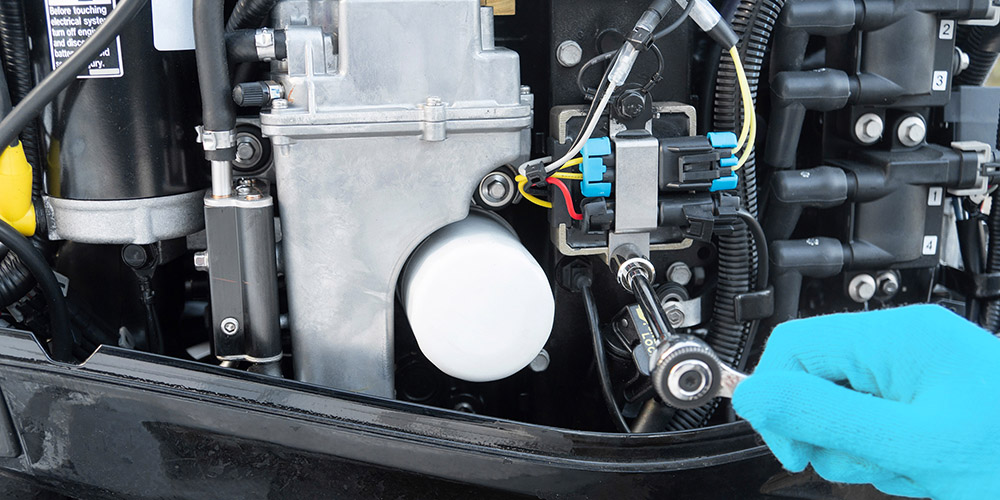
Jim's Outboard Motor Problem
Jim, a dedicated boater, was cruising on his center console boat, powered by a Mercury 125 EFI (Electronic Fuel Injection) outboard motor, when trouble struck. At higher RPMs, the engine sputtered and stalled, leaving him adrift. Frustrated, Jim suspected a failing fuel pump, a common issue for fuel-injected outboard engines like his Mercury 125 EFI when stalling occurs under load. But before ordering an expensive replacement or diving into complex repairs, Jim chose DIY troubleshooting to simplify repair diagnosis. His story is a lesson for all DIY boaters—don’t rush to conclusions. By systematically eliminating what isn’t causing the problem, you can pinpoint the real issue, saving time, money, and frustration.
Outboard motor problems typically arise from one of three systems: air, fuel, or electrical (spark). Outboard engines, like Jim’s Mercury 125 EFI, require a precise mix of air, fuel, and spark to operate smoothly. A disruption in any of these can lead to symptoms like stalling, misfiring, or failure to start. In this article, we’ll walk you through a structured approach for diagnosing outboard motor problems, using Jim’s Mercury 125 EFI as a case study. We’ll focus on ruling out non-issues first to avoid unnecessary repairs.
- Repair Diagnosis: Eliminate Non-Issues First
- Common Outboard Motor EFI Issues and Causes
- Preventive Maintenance for Outboard Motors
- When to Call a Professional
- Conclusion: Master Repair Diagnosis Like a Pro
- FAQ: Troubleshooting Outboard Motor Problems
- We’re Here to Help!
- Related Articles
Repair Diagnosis: Eliminate Non-Issues First
Jim’s hunch about the fuel pump was understandable—stalling at high RPMs often suggests fuel delivery problems in EFI outboard engines. However, the Mercury 125 EFI’s sophisticated system could also stall due to a restricted air intake, a faulty spark plug, or an electrical glitch. Replacing parts without confirming the cause can lead to wasted money and persistent issues. Instead, adopt a process of elimination for effective repair diagnosis:
- Start simple: Inspect the easiest and most accessible components first.
- Eliminate non-issues: Verify what’s working to narrow down the problem.
- Work methodically: Address air, fuel, and electrical systems in a logical sequence.
This DIY troubleshooting approach prevents chasing false leads and ensures you fix the right problem. Let’s follow Jim’s troubleshooting journey with his Mercury 125 EFI and outline steps any boater can use to diagnose outboard issues.
Step 1: Verify the Symptoms and Conditions
Jim’s DIY troubleshooting began by carefully noting the engine’s behavior. The Mercury 125 EFI stalled only at higher RPMs (above 3,500), not at idle or low speeds. The outboard engine started easily and ran smoothly at first, suggesting no major issues like a dead battery or complete fuel starvation. Since error codes weren’t readily accessible without specialized tools, Jim relied on his observations and the engine’s manual to guide his repair diagnosis.
DIY Tip
Document symptoms precisely. Does the problem occur consistently? Only under certain conditions (e.g., high RPMs, after extended running)? Note environmental factors like temperature or water conditions. For EFI outboard engines like the Mercury 125, consult the owner’s manual or a dealer if you suspect electronic issues, as diagnostic codes may require professional tools.
Step 2: Basic Checks for Outboard Motor Repair
Jim started with simple checks to rule out basic issues that could mimic a fuel pump failure. These quick inspections are critical for the Mercury 125 EFI:
- Fuel Tank and Lines: Jim confirmed his tank had fresh, ethanol-free fuel (E10 or less, stabilized, less than 30 days old). He inspected the fuel line for kinks, leaks, or loose connections and squeezed the primer bulb, which was firm, indicating proper fuel flow to the EFI system.
- Battery and Connections: The outboard engine started fine, suggesting a charged battery, but Jim checked terminals for corrosion or looseness, as weak connections can cause issues under load. All were clean and tight.
- Kill Switch and Safety Lanyard: Jim verified the lanyard was secure and the kill switch wasn’t engaged, as a faulty switch could cut power intermittently.
- Propeller and Lower Unit: He inspected the propeller for damage, fishing line, or debris that might strain the engine at high RPMs. The Mercury 125 EFI’s lower unit oil was clean, with no signs of water intrusion.
Outcome
These systems were functioning, ruling out bad fuel, a weak battery, or propeller issues as the cause of the stalling.
DIY Tip
Visual and manual checks are low-effort and can prevent misdiagnosis. For Mercury EFI outboard engines, ensure fuel lines from the tank to the engine are USCG-compliant to meet safety standards.
Step 3: Investigate the Air Delivery System
The Mercury 125 EFI, like all outboard engines, needs ample air for combustion. A restricted air supply can starve the engine, especially at high RPMs when air demand spikes. Jim’s DIY troubleshooting checked the air system to eliminate it as a cause:
- Air Filter: The Mercury 125 EFI has an air intake silencer/filter. Jim removed it and checked for dirt, debris, or clogs. A dirty filter can choke the engine, mimicking fuel issues. His was clean, ruling out air restriction.
- Throttle Body and Intake: He inspected the throttle body for carbon buildup or leaks, using a flashlight to check for obstructions. A spray of throttle body cleaner (safe for EFI engines) ensured no gunk was blocking airflow.
- Breather System: Jim checked the crankcase ventilation system for clogs, as a blocked breather can disrupt air circulation. All was clear.
Outcome
The air system was fully functional, eliminating air restriction as the cause. This step was crucial—Jim’s fuel pump theory assumed fuel delivery was the issue, but poor airflow could cause similar high-RPM stalling.
DIY Tip
Regularly inspect the air filter/silencer on EFI outboard motors. Replace it if dirty (check West Marine for Mercury OEM parts) and test the engine before proceeding.
Step 4: DIY Troubleshooting the Fuel System
With air ruled out, Jim focused on the fuel system, given the Mercury 125 EFI’s high-RPM stalling suggested potential fuel delivery issues. EFI systems are complex, so he methodically checked each accessible component for repair diagnosis:
- Fuel Quality: Jim confirmed his fuel was fresh, ethanol-free (or E10), and stabilized. Old or contaminated fuel can clog injectors, so he ruled this out.
- Fuel Filters: The Mercury 125 EFI has multiple filters (a primary inline filter and a high-pressure filter in the Vapor Separator Tank). Jim inspected both for clogs or water contamination. The inline filter was slightly discolored, so he replaced it with a Mercury OEM filter, but the stalling persisted.
- Fuel Lines and Primer Bulb: He rechecked the fuel line for cracks or leaks and ensured the primer bulb was firm, confirming no air intrusion. The high-pressure fuel rail, internal to the engine, was not accessible for DIY inspection.
- Fuel Pump: Jim’s initial suspicion was the high-pressure fuel pump in the Mercury 125 EFI’s VST (Vapor Separator Tank). Without a fuel pressure gauge to test the pump’s output (typically 35–40 psi), Jim first ruled out other fuel system issues, like clogged filters or bad fuel, which are more common culprits. He listened for the pump’s faint hum during engine start-up, indicating it was operational, and checked for consistent fuel delivery by running the engine at idle and low RPMs, where stalling didn’t occur. Jim still suspected the fuel pump might be the problem, but because his outboard was out of warranty, he decided to hold off on contacting a Mercury dealer in favor of checking other possible causes first.
- Fuel Injectors: Jim listened for the injectors’ clicking sound (indicating operation) by placing a screwdriver against each injector and listening at the handle. Suspecting potential clogs, which are difficult for DIYers to confirm without specialized equipment, he added a marine-grade fuel system cleaner to the tank to clear minor deposits, as EFI systems are sensitive to buildup. For confirmed injector issues, professional service is recommended.
Outcome
After exhausting accessible fuel system checks, Jim couldn’t fully rule out the high-pressure fuel pump without specialized tools but found no clear evidence of fuel delivery failure. To avoid a costly pump replacement without confirmation, he moved on to investigate the electrical system, continuing his DIY troubleshooting.
DIY Tip
Rule out simple issues like clogged filters or bad fuel before suspecting complex components like the fuel pump or injectors. Use a marine-grade fuel system cleaner from West Marine to maintain EFI systems.
Step 5: Electrical System Repair Diagnosis
With air and fuel systems checked, Jim’s DIY troubleshooting turned to the electrical system, which provides the spark for combustion in the Mercury 125 EFI. Electrical issues can cause high-RPM stalling when the ignition system is stressed.
- Spark Plugs: Jim removed the spark plugs and found carbon fouling on two of the four, a common issue causing poor performance at high RPMs. He replaced all four with new plugs, gapped to Mercury’s specs (typically 0.035–0.040 inches for the 125 EFI).
- Ignition Coils: He tested the coils with a multimeter to ensure consistent voltage output. All coils were within spec.
- Wiring and Connections: Jim inspected the wiring harness for fraying, corrosion, or loose connections, especially at the ignition module and Engine Control Unit (ECU). He cleaned contacts with electrical contact cleaner.
- Engine Control Unit (ECU): The Mercury 125 EFI’s ECU manages ignition and fuel delivery. Without access to diagnostic codes, Jim ensured the ECU’s ground connections were secure and checked for visible damage, finding none.
- Stator and Alternator: These components power the ignition and charge the battery. Jim used a multimeter to verify the stator’s voltage output (typically 12–14V at idle for the Mercury 125 EFI), which was normal.
Outcome
DIY troubleshooting revealed the fouled spark plugs were the culprit! After installing new plugs, Jim tested the engine, and it ran smoothly at all RPMs, no longer stalling. This $25 fix took 30 minutes.
DIY Tip
Spark plugs are a frequent failure point in EFI outboard motors. Replace them annually or per the manufacturer’s schedule (check your manual). It's a good idea to keep a set of spares on board.
Shop all Ignition System Parts.
Step 6: Test and Confirm the Fix
With new spark plugs installed, Jim took his boat for a test run, gradually increasing RPMs to 4,500 to replicate the original conditions. The Mercury 125 EFI performed flawlessly, confirming the spark plugs were the issue. He monitored performance over several trips to ensure no other problems emerged.
DIY Tip
Test repairs under real-world conditions. For EFI outboard engines, consult your manual or a dealer for performance benchmarks to catch issues early.
Common Outboard Motor EFI Issues and Causes
Here’s a quick reference for common outboard motor symptoms and causes, organized by system. Always eliminate non-issues before replacing parts:
- Air System Issues:
- Symptom: Poor acceleration, stalling, or rough idle.
- Causes: Clogged air filter/silencer, throttle body buildup, or breather clogs.
- Fix: Clean or replace filter, use throttle body cleaner.
- Fuel System Issues:
- Symptom: Stalling at high RPMs, hard starting, or surging.
- Causes: Bad fuel, clogged filters, air in lines, weak fuel pump, or injector buildup.
- Fix: Use fresh fuel, replace filters, use a marine-grade fuel system cleaner.
- Electrical (Spark) Issues:
- Symptom: Misfiring, stalling, or no start.
- Causes: Fouled spark plugs, faulty coils, bad wiring, or ECU/stator issues.
- Fix: Replace plugs, test coils, clean connections, consult a dealer for ECU problems.
Preventive Maintenance for Outboard Motors
To keep your outboard motor running smoothly, follow these universal maintenance tips for reliable boating:
- Fuel: Use fresh, ethanol-free fuel (or E10) with a marine-grade stabilizer to prevent degradation. Replace fuel filters annually or per the manufacturer’s schedule to ensure clean fuel delivery.
- Air: Inspect air filters or intake silencers regularly for dirt or clogs. Replace as needed to maintain proper airflow.
- Electrical: Replace spark plugs according to the engine’s maintenance schedule (often every 100 hours or annually). Check wiring and connections for corrosion, especially in saltwater environments.
- General: Follow the maintenance schedule in your owner’s manual. Flush the engine after saltwater use to prevent corrosion and winterize the motor in cold climates to protect internal components.
When to Call a Professional
Jim fixed his issue, but some outboard motor problems require professional help. Contact an experienced outboard motor mechanic if you face:
- Persistent electronic issues requiring diagnostic code access.
- Complex fuel injection issues (e.g., faulty injectors or VST problems).
- Mechanical failures like low compression (tested with a compression gauge).
Conclusion: Master Repair Diagnosis Like a Pro
Jim’s experience with his Mercury 125 EFI proves the value of DIY troubleshooting and repair diagnosis. By ruling out air, fuel, and electrical issues, he avoided a costly fuel pump replacement and fixed his stalling problem with a $25 set of spark plugs. For DIY boaters, the key is patience, eliminating non-issues, and addressing the three core systems—air, fuel, and spark—that power your outboard motor.
FAQ: Troubleshooting Outboard Motor Problems
What are the main systems to check when diagnosing an outboard motor issue like stalling?
Outboard motor problems typically stem from three systems: air, fuel, or electrical (spark). A disruption in any of these can cause stalling, misfiring, or failure to start. Start by checking these systems systematically to pinpoint the issue.
Why is it important to eliminate non-issues first when troubleshooting an outboard motor?
Eliminating non-issues prevents wasting time and money on unnecessary repairs. By verifying what’s working (e.g., fuel quality, battery, air intake), you narrow down the problem, ensuring you fix the actual cause, as Jim did with his Mercury 125 EFI.
What simple checks should I perform first for an outboard motor like the Mercury 125 EFI?
Start with basic inspections: check for fresh, ethanol-free fuel and secure fuel lines, ensure the battery and connections are clean and tight, verify the kill switch and lanyard are functional, and inspect the propeller and lower unit for damage or debris.
How can I tell if the air system is causing my outboard motor to stall?
A restricted air supply can cause stalling, especially at high RPMs. Inspect the air filter/silencer for clogs, check the throttle body for buildup, and ensure the breather system is clear. A clean air system rules out airflow issues.
What should I do if I suspect a fuel system problem in an EFI outboard motor?
Confirm fuel quality (fresh, ethanol-free), check and replace clogged fuel filters, ensure fuel lines and primer bulbs are intact, and listen for the fuel pump’s operation. Use a marine-grade fuel system cleaner to address minor injector buildup before suspecting complex issues like a faulty fuel pump.
When should I replace spark plugs in an outboard motor, and why are they important?
Replace spark plugs annually or per the manufacturer’s schedule (e.g., every 100 hours). Fouled plugs, like those in Jim’s Mercury 125 EFI, can cause misfiring or stalling, especially at high RPMs. Keeping spares onboard and checking them regularly is a simple, cost-effective fix.
We’re Here to Help!
West Marine is your one-stop shop for outboard motor parts, tools, and expert advice. Visit us in-store or online for spark plugs, fuel filters, marine fuel system cleaners, and more. With the right approach, you’ll keep your outboard engine running strong and enjoy more time on the water. Use our store locator to find the West Marine location nearest to you.


