
Many U.S. Coast Guard safety gear requirements are shared across all boat lengths and boat types, like carrying one USCG approved for every person on board, but some change based on the length of your boat. These break downs by length give you an easy checklist based on your boat length so you know exactly what gear you need to avoid fines and, more importantly, keep your crew safe.
- Personal Flotation Devices: One USCG-approved wearable PFD (Level 70 or higher or legacy Type I, II, III, or V) per person is required on canoes, kayaks, and sailboats. Type V PFDs must be worn and used per their labeling. A Type IV throwable device is not required for vessels under 16 feet. See Kayak Safety Gear Essentials for paddle-sports specific requirements.
- Visual Distress Signals (VDS): Not required to carry visual distress signals for daytime operation, but when operated between sunset and sunrise must carry at least three night-use or three combination day/night use visual distress signals (e.g., pyrotechnic flares) or, in lieu of flares, one electric SOS distress light. Pyrotechnic signals must have a date of manufacture within the past 42 months. Vessels participating in organized events such as races or regattas are exempt. Check state and local regulations for additional requirements.
- Sound-Producing Devices: Must carry a sound-producing device capable of making an efficient signal, such as a handheld whistle or horn. No minimum audibility is required, but devices audible at a distance (e.g., one-half mile) are recommended.
Personal Flotation Devices
One USCG-approved wearable PFD (Level 70 or higher or legacy Type I, II, III, or V) per person is required on all vessels. Type V PFDs must be worn and used per their labeling. A Type IV throwable device is not required for vessels under 16 feet.
Shop Personal Flotation Devices ≫
Visual Distress Signals
Recreational boats under 16′ are not required to carry VDS for daytime use. However, when operated at night (between sunset and sunrise) they must carry USCG-approved VDS for night use. This requirement may be met with either three night-use or three combination day/night pyrotechnic signals (e.g., flares dated within the past 42 months), or one USCG-approved electric SOS distress light. Open sailboats under 16′ and vessels in organized events such as regattas and marine parades are exempt from carrying VDS at any time. Check state and local regulations for any additional requirements.
Shop Visual Distress Signals (VDS) ≫
Fire Extinguishers
One 5-B required for boats with an inboard engine, enclosed engine compartment, or permanently installed fuel tanks. No extinguisher required if a fixed-mount fire extinguishing system is installed.
Sound-Producing Devices
Must carry a sound-producing device, such as a handheld whistle or horn. No minimum audibility is required, but devices audible at a distance (e.g., one-half mile) are recommended.
Shop Sound-Producing Devices ≫
Marine Sanitation Devices
Vessels with installed toilet facilities must have an operable, USCG-certified Type I, II, or III MSD, subject to local laws (rare for vessels under 16 feet).
Shop Marine Sanitation Devices ≫
Pollution Regulation Placards
Not required for vessels under 16 feet.
Shop Pollution Regulation Placards ≫
Backflame Arrestor
One USCG-approved device on each gasoline-powered engine (except outboards) built after April 25, 1940.
Ventilation
Gasoline-powered vessels with enclosed engine or fuel tank compartments built after August 1, 1980 must have a powered ventilation system meeting USCG specifications to remove gasoline vapors. Vessels built before this date may meet requirements with natural ventilation. This is uncommon for boats in this size range.
Emergency Cutoff Switch (ECOS)
Operators of recreational powerboats under 26 feet with an installed ECOS must wear the ECOS link (lanyard or wireless) when on plane or above displacement speed, except during docking, idling, or in an enclosed cabin.
Personal Flotation Devices
One USCG-approved wearable PFD (Level 70 or higher or legacy Type I, II, III, or V) per person is required on all vessels. Type V PFDs must be worn and used per their labeling. One USCG-approved Type IV throwable device is required, except for canoes and kayaks.
Shop Personal Flotation Devices ≫
Visual Distress Signals
Three day-use and three night-use VDS, or three combination day/night signals (e.g., USCG-approved flares dated within the past 42 months). Non-pyrotechnic alternatives include one orange distress flag for daytime and one electric SOS distress light for nighttime. Open sailboats not equipped with propulsion machinery and less than 26 feet in length and vessels in organized events such as regattas and marine parades are exempt from carrying VDS at any time. Check state and local regulations for any additional requirements.
Shop Visual Distress Signals (VDS) ≫
Fire Extinguishers
One 5-B required for boats with an inboard engine, enclosed engine compartment, or permanent fuel tanks. No extinguisher required if a fixed-mount fire extinguishing system is installed.
Sound-Producing Devices
Must carry a sound-producing device, such as a whistle or horn. No minimum audibility is required; devices audible at a distance are recommended.
Shop Sound-Producing Devices ≫
Marine Sanitation Devices
Vessels with installed toilet facilities must have an operable, Coast Guard-certified Type I, II, or III MSD, subject to local laws.
Shop Marine Sanitation Devices ≫
Pollution Regulation Placards
Not required for vessels under 26 feet.
Shop Pollution Regulation Placards ≫
Backflame Arrestor
One USCG-approved device on each gasoline-powered engine (except outboards) built after April 25, 1940.
Ventilation
Gasoline-powered vessels with enclosed engine or fuel tank compartments built after August 1, 1980 must have a powered ventilation system meeting USCG specifications to remove gasoline vapors. Vessels built before this date may meet requirements with natural ventilation.
Emergency Cutoff Switch (ECOS)
Operators of recreational powerboats under 26 feet with an installed ECOS must wear the ECOS link (lanyard or wireless) when on plane or above displacement speed, except during docking, idling, or in an enclosed cabin.
Personal Flotation Devices
One wearable PFD (Level 70 or higher or legacy Type I, II, III or V) per person. Type V PFDs are only acceptable if they are worn and used according to their labeling. One Type IV throwable is also required.
Shop Personal Flotation Devices ≫
Visual Distress Signals
Three day-use and three night-use VDS, or three combination day/night signals (e.g., USCG-approved flares ≤42 months old). Non-pyrotechnic alternatives include one orange distress flag (day) and one electric SOS distress light (night). Check state and local regulations for any additional requirements.
Shop Visual Distress Signals (VDS) ≫
Fire Extinguishers
Two 5-B or one 20-B. One 5-B if the boat has an approved, fixed-mount fire extinguishing system.
Sound-Producing Devices
Must carry a sound-producing device, such as a whistle or horn.
- Vessels under 12 m (39.4′): No minimum audibility is required; devices audible at a distance are recommended.
- Vessels 12 m (≈39.4′) and longer: Must carry a whistle or horn audible at least 1 mile, and a bell audible at least 1/2 mile.
Shop Sound-Producing Devices ≫
Marine Sanitation Devices
Vessels with installed toilet facilities must have an operable, Coast Guard-certified Type I, II, or III MSD, subject to local laws.
Shop Marine Sanitation Devices ≫
Pollution Regulation Placards
A 5" x 8" Oil Discharge placard (permanently affixed in the engine compartment or near fuel tanks) and a MARPOL Garbage Discharge placard (minimum 4" x 9", permanently affixed in the galley or waste disposal area) are required.
Shop Pollution Regulation Placards ≫
Backflame Arrestor
One USCG-approved device on each gasoline-powered engine (except outboards) built after April 25, 1940.
Ventilation
Gasoline-powered vessels with enclosed engine or fuel tank compartments built after August 1, 1980 must have a powered ventilation system meeting USCG specifications to remove gasoline vapors. Vessels built before this date may meet requirements with natural ventilation.
Navigation Rules
Vessels must carry a copy of the Inland Navigation Rules for U.S. inland waters and the International Regulations for Preventing Collisions at Sea for international waters. For a practical guide to right-of-way rules, see Boating Right of Way Rules: Give-Way & Stand-On Vessels.
Personal Flotation Devices
One wearable PFD (Level 70 or higher or legacy Type I, II, III or V) per person. Type V PFDs are only acceptable if they are worn and used according to their labeling. One Type IV throwable is also required.
Shop Personal Flotation Devices ≫
Visual Distress Signals
Three day-use and three night-use VDS, or three combination day/night signals (e.g., USCG-approved flares ≤42 months old). Non-pyrotechnic alternatives include one orange distress flag (day) and one electric SOS distress light (night). Check state and local regulations for any additional requirements.
Shop Visual Distress Signals (VDS) ≫
Fire Extinguishers
Three 5-B or one 20-B and one 5-B. Two 5-B or one 20-B if the boat has an approved, fixed-mount fire extinguishing system.
Sound-Producing Devices
Must carry a whistle or horn audible at least 1 mile, and a bell audible at least 1/2 mile.
Shop Sound-Producing Devices ≫
Marine Sanitation Devices
Vessels with installed toilet facilities must have an operable, USCG-certified Type I, II, or III MSD, subject to local laws.
Shop Marine Sanitation Devices ≫
Pollution Regulation Placards
A 5" x 8" Oil Discharge placard (permanently affixed in the engine compartment or near fuel tanks) and a MARPOL Garbage Discharge placard (minimum 4" x 9", permanently affixed in the galley or waste disposal area) are required. Vessels 40 feet or longer with a galley or berthing facilities must have a written Waste Management Plan detailing garbage handling and disposal.
Shop Pollution Regulation Placards ≫
Backflame Arrestor
One USCG-approved device on each gasoline-powered engine (except outboards) built after April 25, 1940.
Ventilation
Gasoline-powered vessels with enclosed engine or fuel tank compartments built after August 1, 1980 must have a powered ventilation system meeting USCG specifications to remove gasoline vapors. Vessels built before this date may meet requirements with natural ventilation.
Navigation Rules
Vessels must carry a copy of the Inland Navigation Rules for U.S. inland waters and the International Regulations for Preventing Collisions at Sea for international waters. For a practical guide to right-of-way rules, see Boating Right of Way Rules: Give-Way & Stand-On Vessels.
Personal Flotation Devices
One wearable PFD (Level 70 or higher or legacy Type I, II, III or V) per person. Type V PFDs are only acceptable if they are worn and used according to their labeling. One Type IV throwable is also required.
Shop Personal Flotation Devices ≫
Visual Distress Signals
Three day-use and three night-use VDS, or three combination day/night signals (e.g., USCG-approved flares ≤42 months old). Non-pyrotechnic alternatives include one orange distress flag (day) and one electric SOS distress light (night). Check state and local regulations for any additional requirements.
Shop Visual Distress Signals (VDS) ≫
Fire Extinguishers
Requirements vary with length and gross tonnage of vessel. Check Coast Guard regulations for specific details.
Sound-Producing Devices
Must carry a whistle or horn audible at least 1 mile, and a bell audible at least 1/2 mile.
Shop Sound-Producing Devices ≫
Marine Sanitation Devices
Vessels with installed toilet facilities must have an operable, Coast Guard-certified Type I, II, or III MSD, subject to local laws.
Shop Marine Sanitation Devices ≫
Pollution Regulation Placards
A 5" x 8" Oil Discharge placard and a MARPOL (Garbage Discharge) placard (minimum 4" x 9") are required. Vessels 40 feet or longer with a galley or berthing facilities must have a written Waste Management Plan, detailing how garbage is handled and disposed of in compliance with 33 CFR 151.57, regardless of operating distance from shore.
Shop Pollution Regulation Placards ≫
Backflame Arrestor
One USCG-approved device on each gasoline-powered engine (except outboards) built after April 25, 1940.
Ventilation
Gasoline-powered vessels with enclosed engine or fuel tank compartments built after August 1, 1980 must have a powered ventilation system meeting USCG specifications to remove gasoline vapors. Vessels built before this date may meet requirements with natural ventilation.
Navigation Rules
Vessels must carry a copy of the Inland Navigation Rules for U.S. inland waters and the International Regulations for Preventing Collisions at Sea for international waters.

Old type-designated life jackets still meet USCG carry requirements, but new life jackets increasingly show performance factors as icons rather than type numbers. We’ll walk you through both systems so you understand how your life jacket is meant to perform.
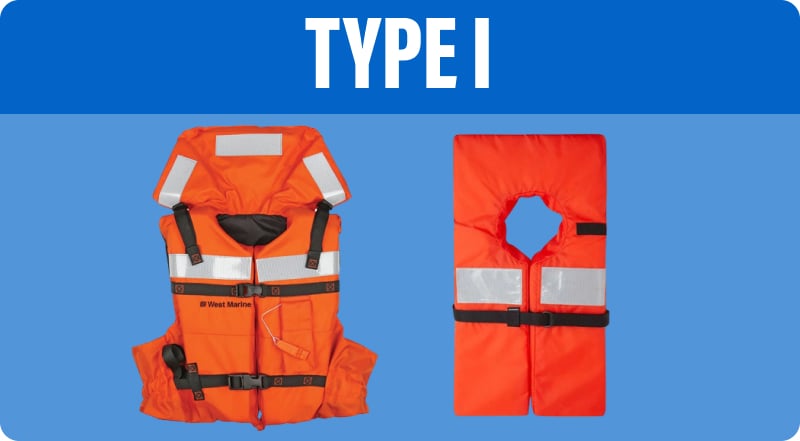
- Required on commercial vessels
- Large, bulky, and uncomfortable for recreational use
- 22 pounds of buoyancy — keeps the wearer high in the water
- Intended to turn most wearers face up, even if unconscious
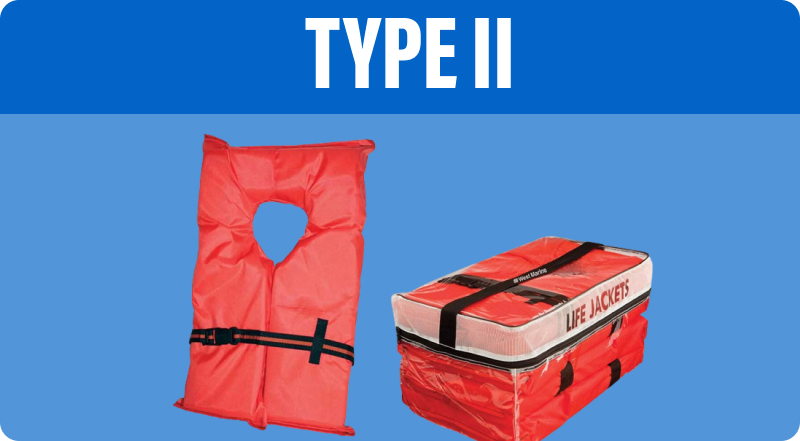
- The standard boxy single-strap orange life jacket
- 15.5 pounds of buoyancy — designed to turn most wearers face up
- Not comfortable for extended personal use, but practical to keep aboard for extra passengers to meet USCG carry requirements
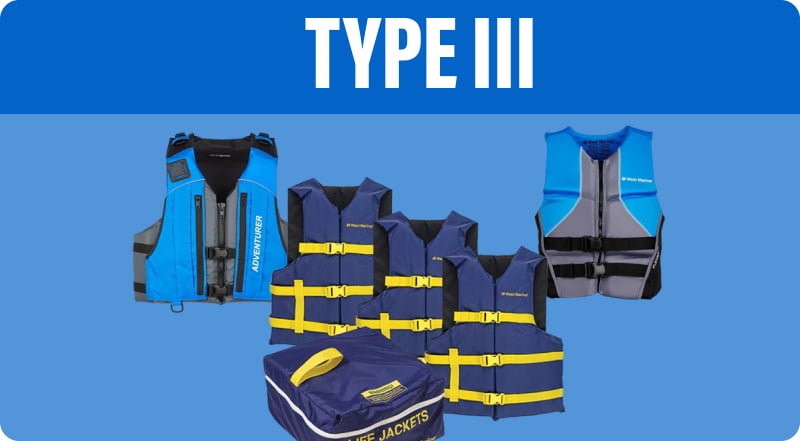
- Up to 15.5 pounds of buoyancy (less for children and youth models)
- Available in a large number of styles for different activities including wakeboarding, kayaking, sailing, and more
- Labeling is gradually being replaced with icon-based labels to make performance and suitability easier to understand
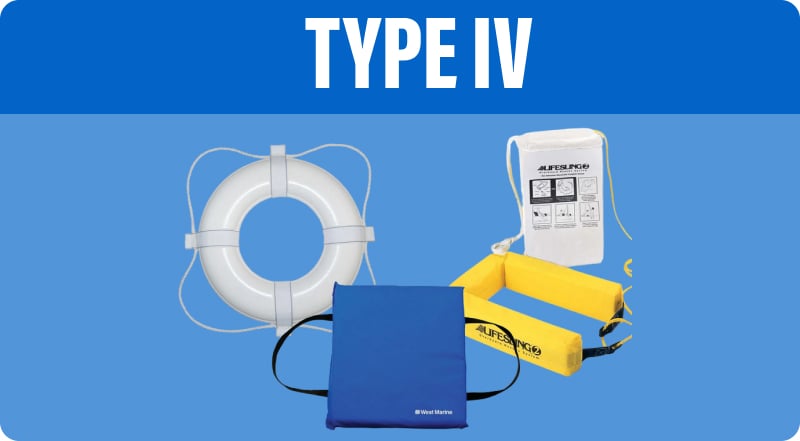
- Throwable flotation devices designed to be thrown to a person overboard
- Can double as a crew overboard retrieval device when attached to a line
- All boats 16 feet and longer (except sailboards, racing shells, rowing sculls, racing canoes, and racing kayaks) must carry one
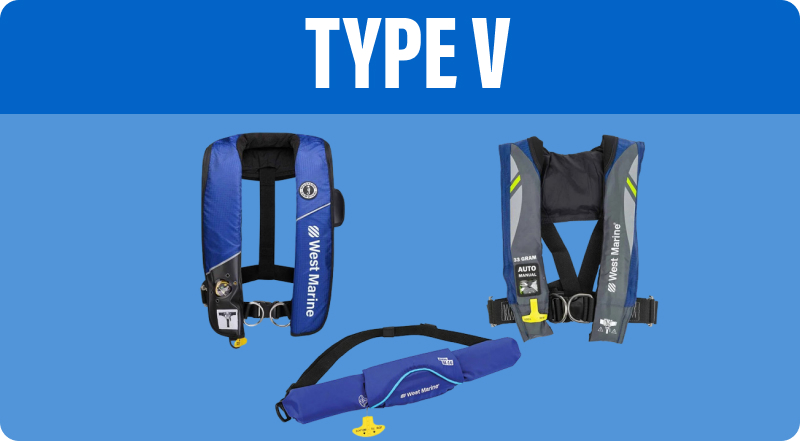
- Designates a special use device or one that requires special care or knowledge of its specific features
- A catch-all for PFDs that don’t fit other categories but are still USCG-approved
- Often listed as Type V with Type I, II, or III performance to show how the PFD performs when inflated
How to Read the New USCG Life Jacket Icons
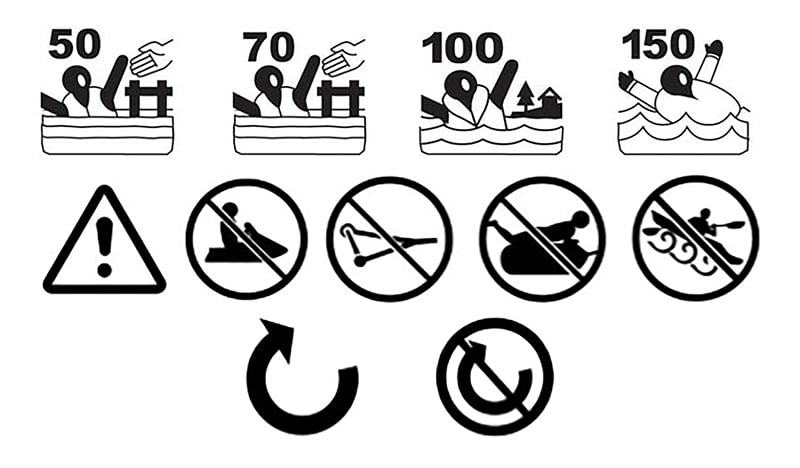
The life jacket icons make it easy to tell at a glance how a life jacket performs. There are three categories of icons to understand when choosing the right life jacket.
1. Buoyancy Level, Distance to Shore, and Water Conditions
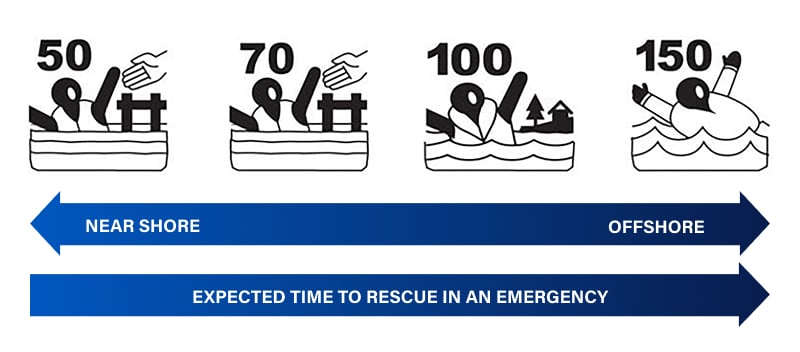
These icons have three important factors:
- The number: Indicates the buoyancy of the life jacket measured in Newtons. The higher the number, the more buoyant the life jacket.
- The hand, shore, or open water symbol: Indicates how close you will be to rescue when using the life jacket.
- A hand and dock icon indicates rescue is almost immediately available, such as at a beach or pool
- A shoreline icon indicates the life jacket is acceptable for inshore boating where you can still see shore, but rescue may take longer
- An open water icon indicates the life jacket is acceptable for offshore boating where rescue could be hours away
- Water conditions: Straight lines indicate the life jacket is intended for calm, flat water. Jagged wave lines indicate it can be used in rough water.
2. Water Activity Ratings
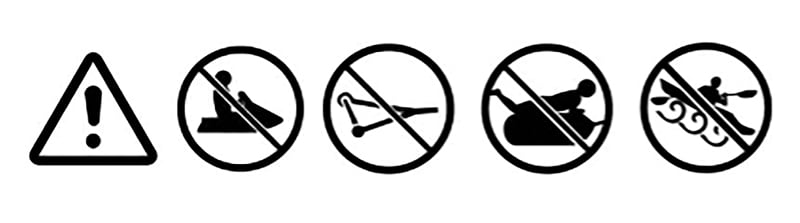
These icons indicate what the life jacket is not suitable for. From left to right:
- A general attention icon drawing your eye to the other restriction icons
- Not suitable for personal watercraft (Sea-Doo, Waverunner, Jet Ski)
- Not suitable for towed water activities like water skiing or wakeboarding
- Not suitable for riding towable tubes
- Not suitable for whitewater conditions
3. Turning the Wearer in the Water

These icons indicate whether the life jacket is designed to turn most wearers face up in the water. The left icon indicates it will turn the wearer; the right icon indicates it will not. Turning ability is especially important for infant and child life jackets, and in any situation where the wearer might be knocked unconscious when entering the water.

Having a life jacket that fits well is just as important as having one that floats well. A life jacket that is too large can ride up or slide off, and a life jacket that's too small may not buckle correctly or be able to support your weight. Follow the tips in this video to get the the right fit for you.

Meeting the minimum safety gear requirements will help you avoid fines, but we recommend that you don't stop there. Adding a few other pieces of safety gear can make it much easier to get overboard crew members back on the boat, contact Search and Rescue services in an emergency or communicate with other boaters on the water.
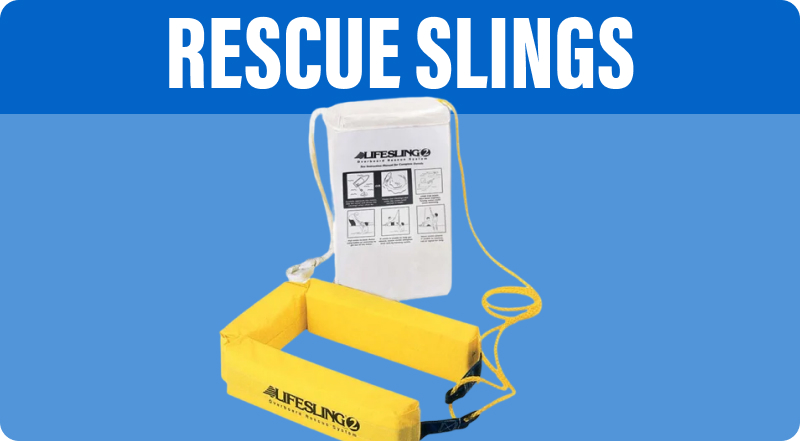
The Coast Guard–approved Lifesling2 enables faster, safer overboard crew recovery compared to traditional ring or horseshoe buoys. Designed to be towed directly to a person overboard—keeping them clear of the hull and propeller—it doubles as a flotation collar and lifting sling to hoist them back onboard.
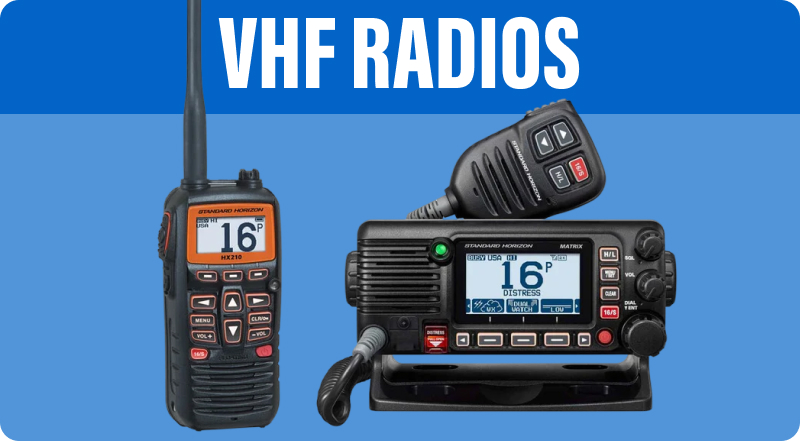
A VHF radio lets you stay in contact with harbor masters, other boaters on the water and, in an emergency, call for help from other boats near you. While they aren't required by the U.S. Coast Guard, most boaters will tell you they don't leave shore without one. We offer a wide selection of handheld and fixed-mount VHF radios to keep you in contact on the water.
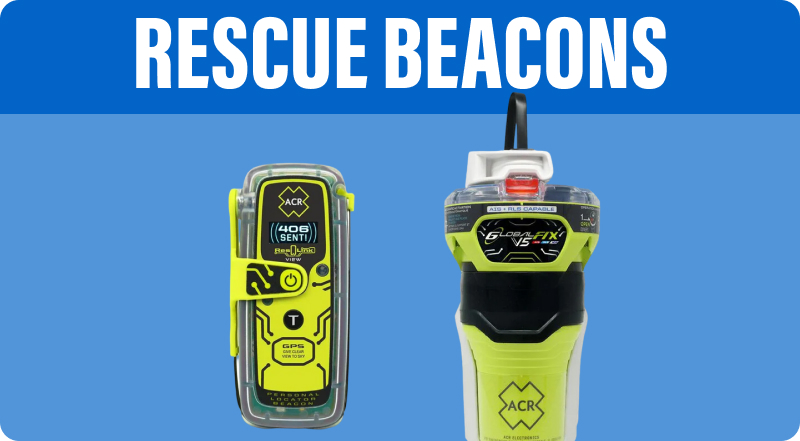
Rescue beacons, like a PLB (Personal Locator Beacon) or EPIRB (Emergency Position Indicating Radio Beacon) can alert rescuers to your position almost anywhere in the world with one button press. Rescue beacons do not have subscriptions fees and the battery will last for years before it needs to be replaced by a service pro. Buy it once, have it onboard in case you need it.
For more info on EPIRBs and PLBs, including registration requirements and which is right for your vessel, see EPIRB vs. PLB: Which Emergency Beacon Do You Need? and our West Advisor article Selecting an Emergency Beacon.
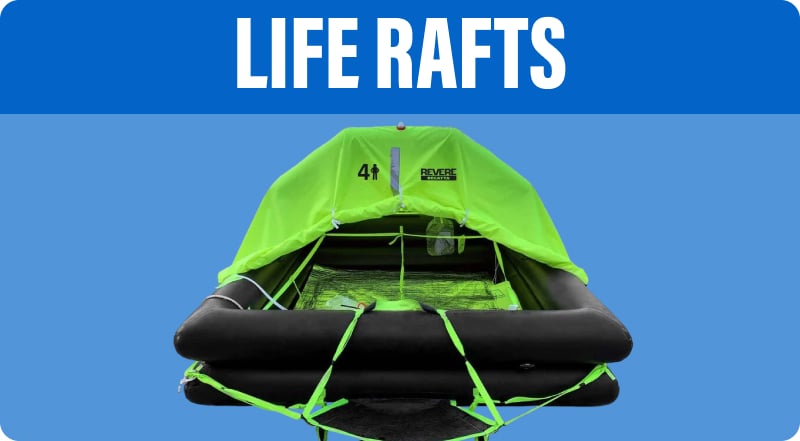
While the USCG does not require liferafts on recreational boats (regardless of size or operating area), if you operate far offshore, in cold waters, or on extended passages, the Coast Guard strongly recommends carrying one suited to your voyage and likely rescue time. Some ocean races, cruising rallies, and certain commercial operations do mandate liferafts under their own rules, but those are separate from USCG recreational boating requirements.


