4-Stroke Outboard Motors: The Complete Buyer's Guide for Recreational Boaters
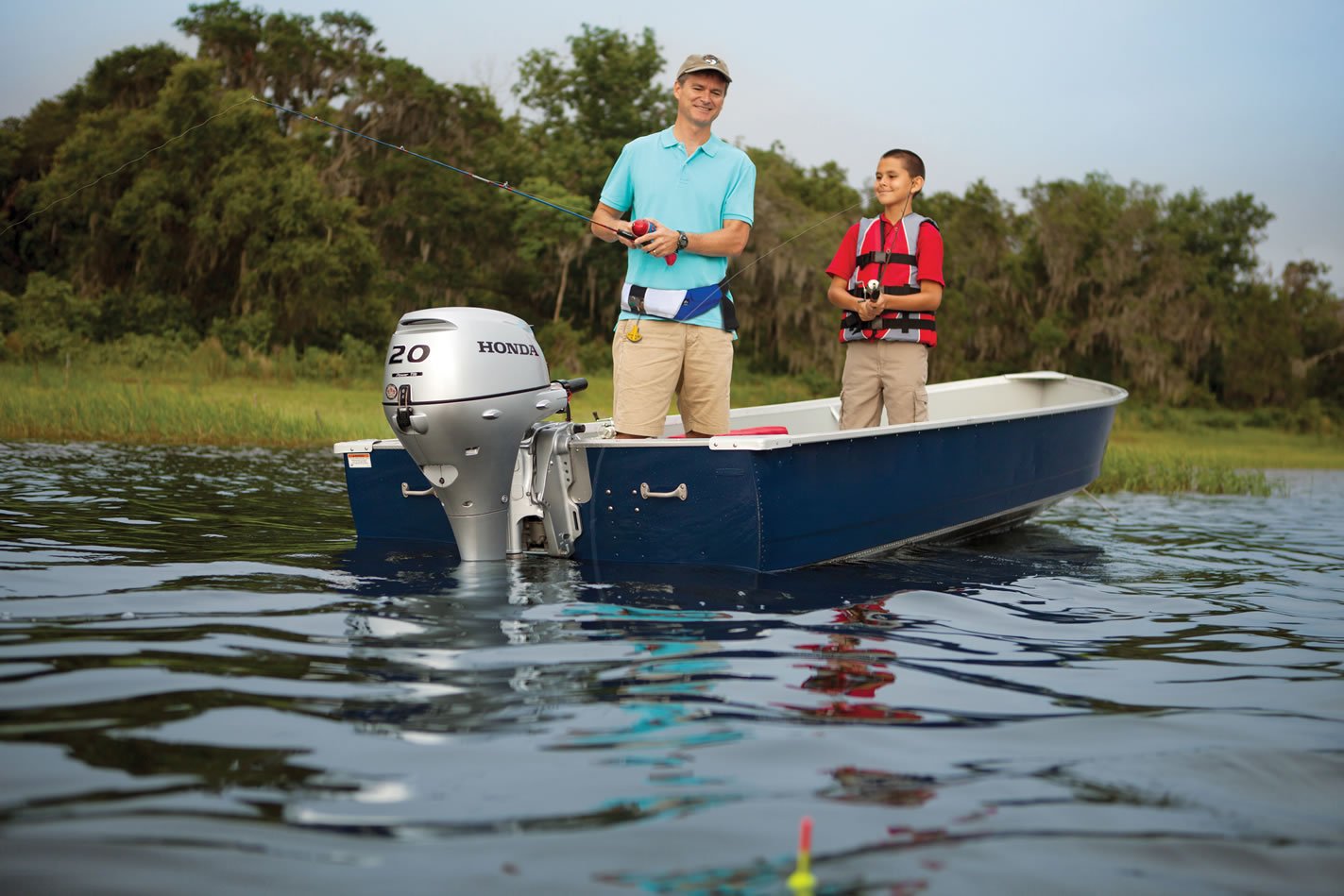
A 4-stroke outboard motor is a type of internal combustion engine that completes its power cycle in four distinct piston strokes: intake, compression, combustion (power), and exhaust. Each stroke serves a specific purpose, and the full cycle requires two crankshaft revolutions. This design contrasts sharply with 2-stroke engines, which complete the same process in just two strokes and one revolution — making 4-stroke motors more fuel-efficient and significantly cleaner-burning.
4-stroke outboards are recognized by boaters for their fuel efficiency, low emissions, quieter operation, and lower long-term ownership costs. Unlike 2-stroke counterparts, they do not require oil to be mixed with fuel thanks to a dedicated lubrication system. This makes them the top choice for recreational boaters on lakes, rivers, bays, and coastal waters across the country.
Explore Every Detail of 4-Stroke Outboard Motors
Whether you're shopping for a new outboard or upgrading your current setup, understanding the core components and features of 4-stroke outboard motors can make or break your on-water experience. From horsepower selection and engine weight to fuel delivery and steering control, every detail impacts performance, reliability, and handling. Use the links below to dive deeper into the topics most relevant to your vessel and boating lifestyle.
-
Outboard Motor Weight by Horsepower – Understand how engine weight affects performance, efficiency, hull balance, and stability across the full horsepower spectrum.
-
Trim and Tilt for 4-Stroke Outboards – Discover how proper trim and tilt adjustment improves fuel economy, ride comfort, and planing efficiency on any boat type.
-
Outboard Steering Systems Explained – Compare tiller, mechanical cable, and hydraulic steering systems to find the right solution for your 4-stroke motor setup.
-
Choosing the Right Shaft Length – Match your motor's shaft length to your boat's transom height for optimal propulsion, cooling, and engine control.
-
Marine Starters for 4-Stroke Engines – Learn the differences between electric, recoil, and hydraulic starters and which is best suited for your engine type and use case.
-
4-Stroke Outboard Motor Horsepower Guide – Explore horsepower ranges, performance benchmarks, and capacity ratings to choose the right motor for your boat and boating style.
-
Fuel Delivery Systems: EFI vs. Carburetor vs. Direct Injection – Compare electronic fuel injection (EFI), carbureted, and direct injection systems for fuel efficiency, maintenance demands, and power output.
-
1, 2, 3, and 4 Cylinder Outboard Motor Comparison – Understand how cylinder count impacts weight, fuel economy, torque delivery, and overall engine balance on the water.
Why 4-Stroke Outboard Engines Are Perfect for Recreational Boaters
Recreational boaters consistently choose 4-stroke outboard motors for a combination of performance, durability, and value. The design advantages of the 4-stroke power cycle translate directly into practical on-water benefits that 2-stroke engines simply cannot match for everyday use.
- Smooth and Quiet Operation: The 4-stroke design significantly reduces engine noise and vibration compared to 2-strokes, making it easier to enjoy your surroundings, fish without spooking wildlife, or hold a conversation onboard.
- Superior Fuel Efficiency: 4-stroke motors burn fuel more completely than 2-strokes — especially at cruising speeds — which means lower fuel bills and more time on the water between fill-ups.
- Cleaner Emissions: Modern 4-strokes meet or exceed EPA and CARB environmental regulations, making them the responsible choice for use in sensitive waterways, protected lakes, and emission-regulated zones.
- Longer Maintenance Intervals: With a separate lubrication system and fewer components subject to rapid wear, 4-stroke outboards have more predictable, less frequent service schedules that save time and money over the long run.
- No Oil-Fuel Mixing: Unlike 2-stroke engines, 4-strokes use a sealed oil reservoir. This eliminates the hassle and risk of incorrect fuel mixing and reduces harmful hydrocarbon emissions from unburned oil.
Shop All 4-Stroke Outboard Motors at West Marine
Key Components of a 4-Stroke Outboard Motor
Understanding how a 4-stroke outboard works begins with its core components. Each system plays an essential role in delivering clean, reliable propulsion:
- Crankshaft: Converts the linear up-and-down motion of the pistons into rotational power to drive the propeller.
- Pistons & Cylinders: Compress the fuel-air mixture and harness combustion energy. Cylinder count affects power output, weight, and smoothness of operation.
- Camshaft & Valves: Open and close at precisely timed intervals to allow intake of the fuel-air mixture and exhaust of burned gases.
- Lubrication System: Circulates oil from a dedicated reservoir to lubricate all moving parts, preventing internal wear and extending engine life.
- Cooling System (Water Pump): Draws water from the lake, river, or ocean through the engine block to maintain safe operating temperatures. The water pump impeller is one of the most critical maintenance items on any outboard motor.
- Throttle & Fuel Injection System: Precisely controls engine speed and fuel delivery. Modern EFI systems optimize combustion efficiency across all RPM ranges, reducing waste and extending range.
- Lower Unit & Gearcase: Transmits power from the powerhead to the propeller through a series of gears. The lower unit also houses the water pump and contains the gear lube that must be changed regularly to prevent corrosion and wear.
These systems work in concert to deliver dependable, efficient propulsion with minimal environmental impact — making the 4-stroke outboard the gold standard for modern recreational boating.
How 4-Stroke Outboard Motors Work: The Power Cycle Explained
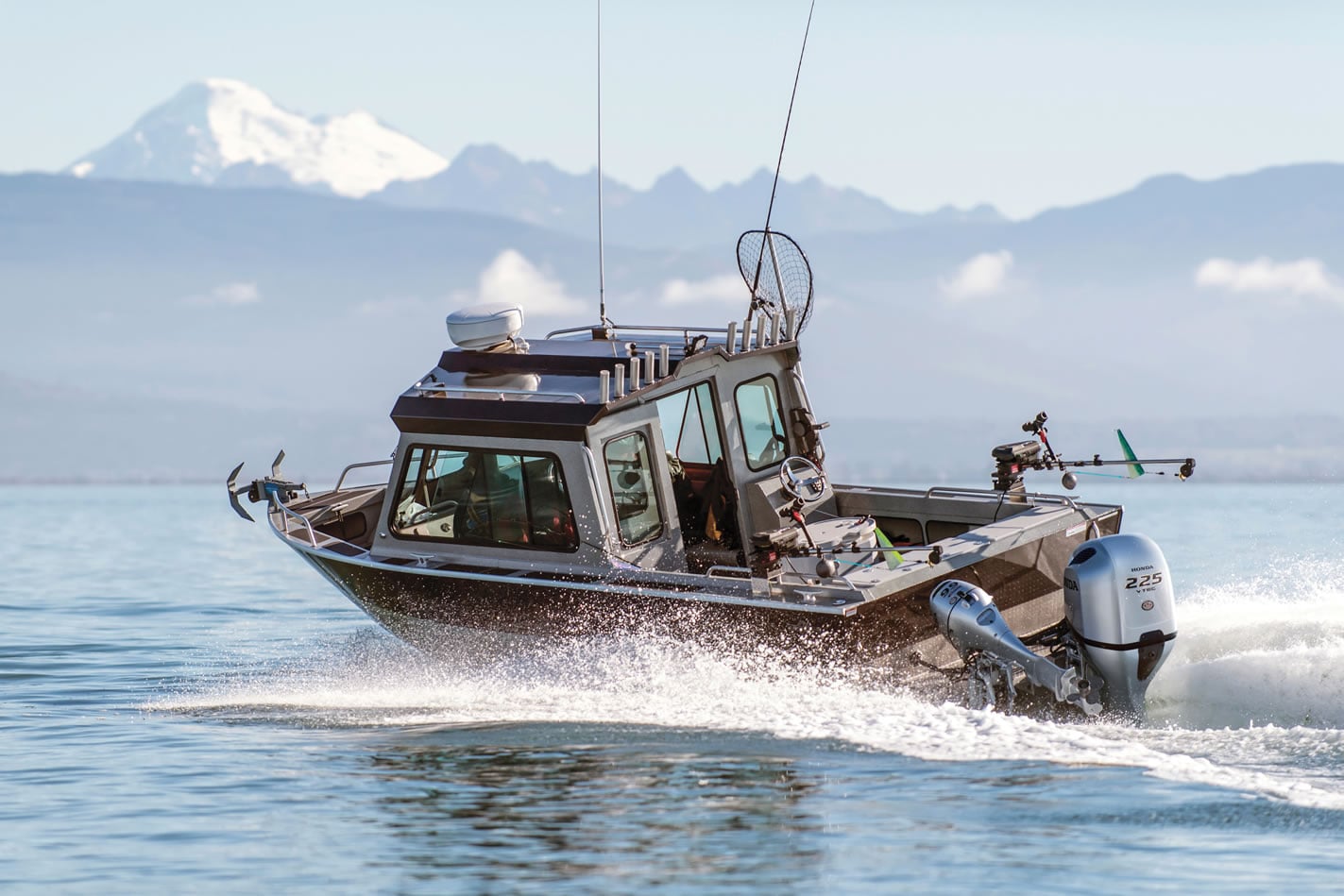
The 4-stroke combustion cycle operates in four sequential steps that repeat thousands of times per minute during normal operation:
- Intake Stroke: The intake valve opens as the piston moves downward, drawing a precisely metered fuel-air mixture into the combustion chamber via the fuel injection or carburetor system.
- Compression Stroke: Both valves close as the piston rises, compressing the fuel-air mixture to create optimal conditions for combustion. Higher compression ratios generally produce more power and efficiency.
- Power Stroke: A spark from the ignition system fires the compressed mixture, driving the piston forcefully downward. This is the only stroke that produces power, rotating the crankshaft and — through the gearcase — turning the propeller.
- Exhaust Stroke: The exhaust valve opens and the piston moves back up, pushing spent combustion gases out of the cylinder and preparing it for the next cycle.
This highly controlled combustion process makes 4-stroke outboard motors ideal for sustained cruising, trolling, docking, and water sports applications where consistent, efficient power delivery is paramount.
How Much Horsepower Does Your Boat Need? A 4-Stroke HP Guide
Selecting the correct horsepower (HP) for your 4-stroke outboard is one of the most important decisions you'll make. Too little power leaves you underpowered in challenging conditions; too much can damage your transom or compromise handling. Always reference your boat's capacity plate for its maximum HP rating. Here's a general guide to help narrow your selection:
Under 20 HP — Portable Power for Small Watercraft
- Best for dinghies, tenders, kayaks, and light inflatable boats
- Ideal for short-distance travel on calm lakes, rivers, and bays
- Lightweight and easy to mount, unmount, and transport
- Browse sub-20 HP 4-stroke outboards at West Marine
20–60 HP — Versatile Performance for Fishing and Family Use
- Excellent fit for aluminum fishing boats, jon boats, small skiffs, and compact pontoons
- Balanced performance for cruising, light loads, and mild water sports
- Can tow a lightweight tube or carry a small family on calm water
- Browse 20–60 HP 4-stroke outboards at West Marine
70–150 HP — Mid-Range Power for Bay Boats and Pontoons
- Designed for larger pontoon boats, center consoles, and bay boats
- Capable of handling choppy water, wind, and multi-passenger loads
- Popular among serious recreational anglers and watersports enthusiasts
- Browse 70–150 HP 4-stroke outboards at West Marine
175+ HP — High-Performance Power for Offshore and Water Sports
- Required for high-speed center consoles, offshore fishing vessels, and serious tow sports
- Delivers aggressive acceleration and superior stability at high speed
- Typically paired with power trim and tilt and advanced fuel injection systems
- Browse 175+ HP 4-stroke outboards at West Marine
Always consult your boat's maximum HP rating on the capacity plate before selecting an engine. Exceeding this rating is illegal, unsafe, and can void your hull warranty. Learn more in our detailed 4-Stroke Outboard Motor Horsepower Guide.
4-Stroke Outboard Motor Fuel Efficiency and Range
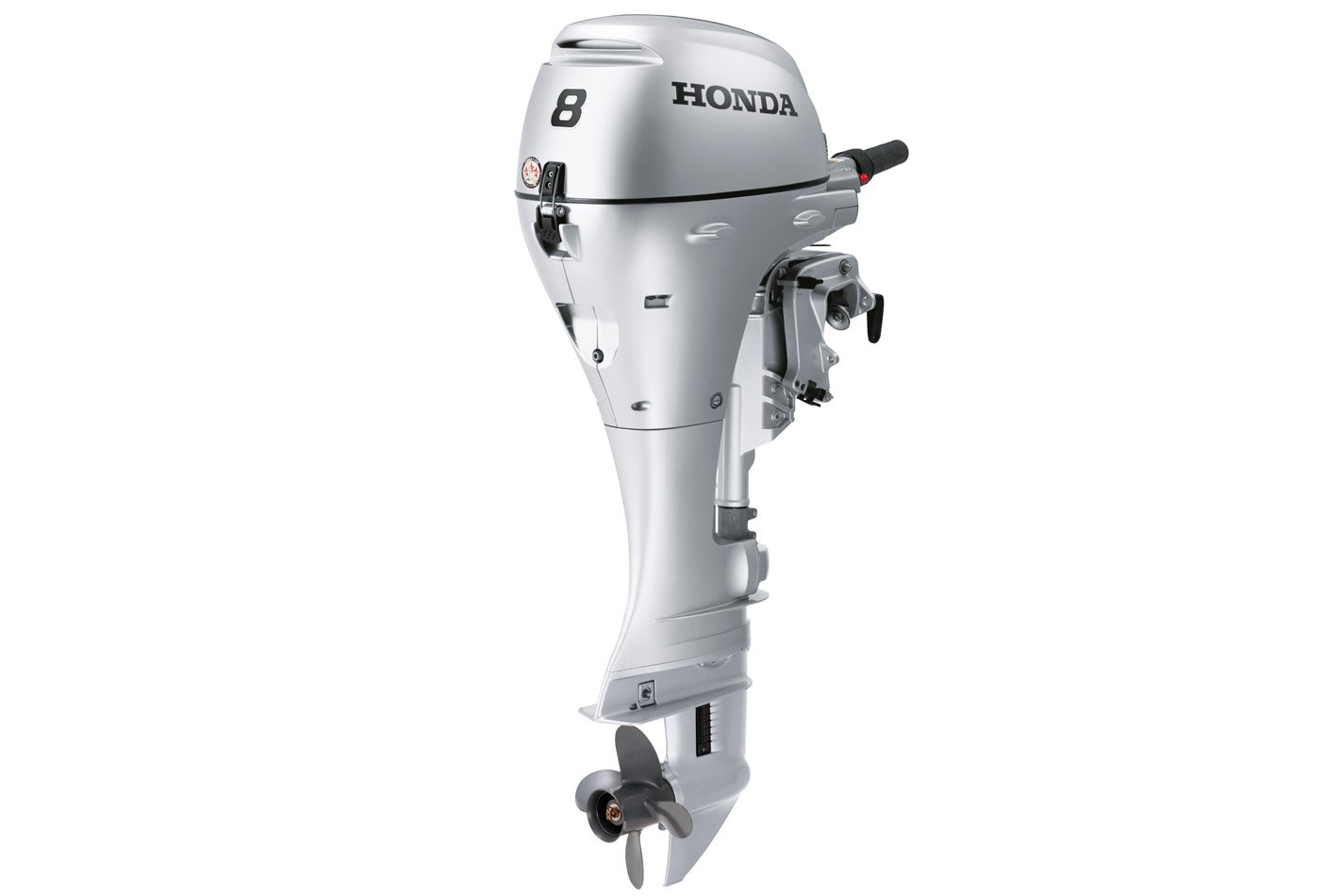
One of the most compelling reasons boaters switch to 4-stroke outboards is the substantial improvement in fuel economy. Over a full boating season, the savings add up to hundreds or even thousands of dollars compared to older 2-stroke technology.
- A 60 HP 4-stroke outboard typically consumes 5–6 gallons per hour at wide open throttle (WOT), but less than half that amount at typical cruising speeds.
- A comparable 2-stroke engine under the same load may burn 15–30% more fuel, increasing both cost and emissions.
- Modern electronic fuel injection (EFI) systems optimize fuel delivery across all RPM ranges, minimizing waste and extending cruising range.
- Using a quality inline fuel filter and keeping your fuel system clean protects injectors and maximizes efficiency.
Practical tips to maximize fuel economy on the water:
- Cruise at 60–70% of maximum RPM — the engine's sweet spot for efficiency.
- Trim your motor to maintain the optimal hull angle and reduce drag at speed.
- Avoid prolonged idling, aggressive throttle changes, and carrying unnecessary weight.
- Keep your propeller clean and free of damage — even minor nicks reduce efficiency measurably.
- Service your fuel filter regularly to protect injectors and maintain fuel flow.
Maintenance and Reliability of 4-Stroke Outboard Motors
4-stroke outboard motors are engineered for long-term reliability with well-defined, predictable maintenance schedules. Following your manufacturer's service intervals is the single most important thing you can do to protect your investment and avoid costly breakdowns on the water.
Routine 4-Stroke Outboard Maintenance Tasks
- Oil and Filter Changes: Every 100 hours of run time or once per season, whichever comes first. Use only marine-grade 4-stroke oil specified by your manufacturer. Shop 4-stroke outboard engine oil at West Marine.
- Gearcase Lube Replacement: Prevents wear on the propeller shaft, gears, and seals in the lower unit. Shop gearcase lube at West Marine.
- Spark Plug Inspection and Replacement: Ensures reliable ignition and clean combustion. Worn plugs reduce power and fuel economy. Shop marine spark plugs at West Marine.
- Water Pump Impeller Replacement: Annually or every 100 hours. Guarantees adequate cooling water flow to prevent overheating. Shop water pump kits at West Marine.
- Fuel Filter Replacement: Protects injectors and carburetors from contaminants and water infiltration. Shop outboard fuel filters at West Marine.
- Zinc Anode Inspection: Sacrificial zincs protect metal components from galvanic corrosion, especially in saltwater. Replace when 50% consumed. Shop outboard motor zincs at West Marine.
- Battery Maintenance: A reliable starting battery is critical for electric-start 4-strokes. Test yours regularly and keep it charged with a marine battery maintainer.
Many modern outboards feature onboard diagnostic systems or smartphone connectivity to monitor maintenance needs in real time. Check out our West Advisor article for DIY Outboard Motor Maintenance and learn to handle many of these tasks yourself.
Read our complete guide to Winterizing Your Outboard Motor.
How to Choose the Right 4-Stroke Outboard Motor for Your Boat
Selecting the ideal 4-stroke outboard involves more than just matching horsepower. Here are the critical factors to evaluate before making your purchase:
- Shaft Length: Must precisely match your boat's transom height. Standard sizes are short (15"), long (20"), extra-long (25"), and ultra-long (30"). Using the wrong length causes ventilation, overheating, or poor performance.
- Motor Weight and Hull Balance: Heavier engines require a hull capable of supporting the additional transom load. Always check your boat's weight capacity ratings.
- Steering System Compatibility: Tiller steering is common on smaller motors; remote cable or hydraulic steering is required for larger HP engines and longer runs.
- Water Environment: Saltwater use demands corrosion-resistant materials, sacrificial zinc anodes, and more frequent flushing after each outing. Browse outboard zincs and flushing accessories at West Marine.
- Intended Use Case: Fishing, towing, cruising, and offshore applications all have different torque and speed profiles. Consider your primary activity when evaluating horsepower and engine type.
- Starting System: Electric start is standard on most mid- to high-HP motors and is strongly recommended for ease of use and reliability.
- Number of Cylinders: More cylinders generally means smoother power delivery and higher RPM potential, while fewer cylinders keep weight and cost down for smaller applications.
When in doubt, consult a West Marine associate, your boat manufacturer, or a certified marine technician before purchasing.
4-Stroke vs. 2-Stroke Outboard Motors: Which Is the Better Choice?

While 2-stroke outboards remain popular in specific use cases — particularly racing and ultralight applications — 4-stroke engines offer decisive advantages for the vast majority of recreational boaters:
- Fuel Efficiency: 4-strokes burn up to 30% less fuel on average — a meaningful savings over a full boating season.
- Quieter and Smoother: Measurably less engine noise, vibration, and throttle surge in normal operation.
- Lower Emissions: Meets stringent EPA and CARB emissions standards; required or strongly preferred in many regulated waterways.
- Lower Long-Term Cost: Reduced fuel and maintenance expenses more than offset the higher initial purchase price over a 5–10 year ownership period.
- No Oil-Fuel Mixing: Simplifies fueling and eliminates the risk of incorrect oil ratios damaging the engine.
2-strokes may still be the preferred choice for racing applications, ultralight setups where every pound matters, or situations where power-to-weight ratio is the primary concern. But for fishing, cruising, pontoons, and family boating, the 4-stroke outboard is the clearly superior option for most boaters today.
Environmental Performance: Emissions Standards and Ecological Impact
Modern 4-stroke outboard motors are engineered to meet the most stringent environmental standards in the industry:
- Fully compliant with current EPA and CARB emissions regulations for marine engines
- Separate oil and fuel systems mean no unburned hydrocarbons released into the water
- Significantly reduced noise pollution in sensitive marine ecosystems
- Accepted or required in many protected waterways, nature preserves, and emission-regulated zones
- Lower carbon footprint over the engine's lifespan compared to equivalent 2-stroke motors
This makes 4-stroke outboard motors the environmentally responsible choice for boaters who frequently visit nature preserves, inland lakes, coastal wetlands, or any waterway with local noise or emissions restrictions.
Essential Safety Practices for 4-Stroke Outboard Operation
Safe outboard operation protects you, your passengers, and others on the water. Follow these best practices every time you go out:
- Always attach the kill switch (engine cut-off) lanyard to your wrist or life jacket before starting. Browse engine kill switches at West Marine.
- Inspect fuel lines and fittings regularly for cracks, brittleness, or leaks before each outing. Browse marine fuel lines at West Marine.
- Always confirm the propeller area is completely clear of people, lines, and debris before shifting into gear.
- Never operate the motor in a tilted position unless specifically designed and approved for it by the manufacturer.
- Store fuel properly in approved portable fuel tanks and dispose of used oil at a marina-approved recycling location.
- Keep a USCG-approved fire extinguisher accessible onboard at all times when operating a gasoline-powered engine.
How to Improve 4-Stroke Outboard Motor Performance
Want to maximize what your 4-stroke outboard can do? These upgrades and adjustments can meaningfully improve performance on the water:
- Propeller Selection and Pitch Optimization: The right propeller size, pitch, and material (aluminum vs. stainless steel) dramatically impacts top speed, hole shot, and fuel efficiency. Browse outboard propellers at West Marine.
- Regular Tune-Ups: Clean fuel injectors, calibrate throttle linkage, inspect spark plugs, and verify timing to keep the engine performing at its peak.
- Trim and Tilt Mastery: Learn to read your boat's bow angle and adjust the trim continuously to minimize drag, improve planing efficiency, and reduce fuel consumption.
- Weight Balance and Distribution: Even weight distribution across the boat reduces the strain on your engine, improves handling, and helps the hull plane more efficiently.
- Hydraulic Steering Upgrade: If you run at higher speeds with a larger outboard, upgrading from cable to hydraulic steering dramatically improves helm response and reduces fatigue on long runs.
Ready to upgrade your setup? Shop all 4-stroke outboard motors at West Marine — and talk to an expert in-store or online.
Storage and Transport Tips for 4-Stroke Outboard Motors
Proper storage and transport procedures protect your investment and ensure the motor is ready when you need it:
- Flush with fresh water after every saltwater or brackish water use to remove salt and corrosive minerals from the cooling system. Use a motor flusher attachment for easy flushing on the trailer.
- Store the motor upright whenever possible. If the manufacturer specifies a tilt-down or lay-flat position for transport, follow those instructions precisely.
- Add marine-grade fuel stabilizer before long-term storage or if the motor will sit unused for more than 30 days.
- Disconnect and store batteries indoors on a trickle charger during the off-season to extend battery life.
- Grease all moving parts (tilt tube, throttle linkage, steering cable connection) and inspect for corrosion if the motor will be stored for more than 60 days.
- Cover the motor with a fitted outboard motor cover to protect it from UV, moisture, and debris during storage.
Budgeting for Your 4-Stroke Outboard Setup: What to Expect
Understanding the total cost of ownership helps you plan your budget accurately and avoid surprises after purchase:
- Motor Purchase Price: New 4-stroke outboards range from approximately $1,500–$2,500 for small portable models to $15,000–$25,000+ for large-displacement offshore engines.
- Professional Rigging and Installation: $300–$1,200 depending on engine size and complexity of the installation.
- Fuel Tank and Lines: $100–$500 depending on tank capacity and configuration. Shop portable fuel tanks and fuel line fittings at West Marine.
- Annual Maintenance Supplies: Approximately $100–$300 per year for oil, filters, spark plugs, and gearcase lube — far less than the equivalent cost for a comparable 2-stroke motor.
- Accessories: Budget additionally for a propeller, engine cover, battery, kill switch lanyard, and any steering upgrades.
Though the upfront investment in a quality 4-stroke outboard is higher than a comparable 2-stroke, the combination of better fuel economy, lower maintenance costs, and longer engine life typically yields a significantly lower total cost of ownership over 5–10 years.
Why 4-Stroke Outboards Are the Go-To Choice for Recreational Boaters
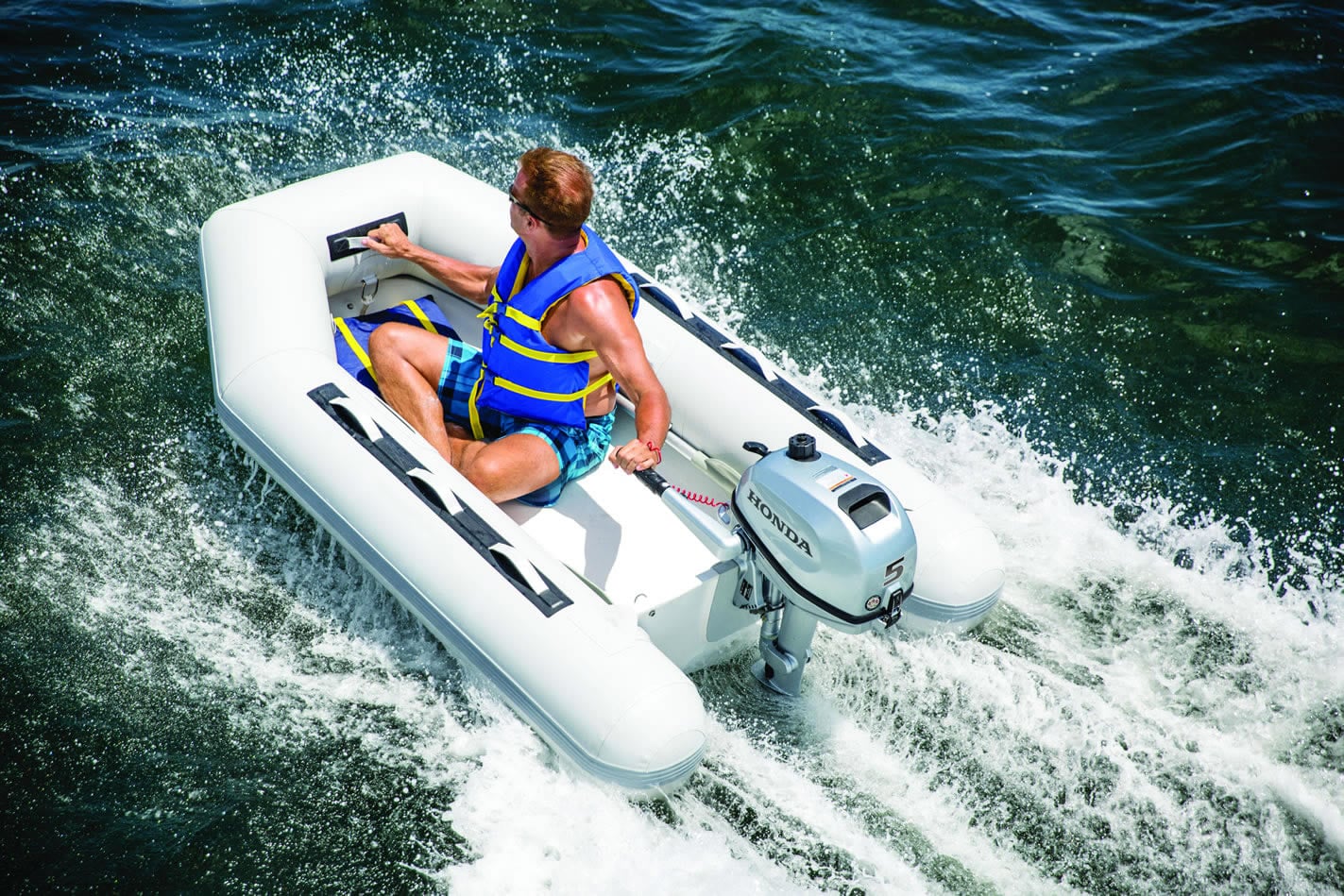
For today's recreational boater, 4-stroke outboard motors deliver an unbeatable combination of benefits that no other propulsion technology can match at a comparable price point:
- Quiet, smooth, vibration-free performance on the water
- Long-range fuel efficiency that puts more time on the water between fill-ups
- Low, predictable maintenance requirements and costs
- Compliance with the strictest environmental regulations
- Versatility across virtually every boat type, size, and use case
- Strong resale value driven by brand reputation and demonstrated reliability
Whether you're casting lines on an inland lake, pulling tubes on a pontoon, exploring coastal bays, or making offshore runs, a 4-stroke outboard motor is the practical, future-proof choice for modern recreational boating. Shop 4-stroke outboard motors at West Marine and find the right engine for your boat today.
Frequently Asked Questions: 4-Stroke Outboard Motors
Q: How often should I change the oil in a 4-stroke outboard motor?
- Every 100 hours of run time or once per season, whichever comes first.
- Always use marine-grade 4-stroke oil specified by the motor manufacturer. Shop 4-stroke outboard oil at West Marine.
- Always replace the oil filter at every oil change to maintain filtration effectiveness.
Q: What fuel should I use in my 4-stroke outboard?
- Use fresh, unleaded gasoline (87 octane minimum; some high-performance motors require 89–91). Check your owner's manual for specifics.
- Avoid ethanol blends greater than 10% (E10) — higher ethanol content can degrade fuel system components and cause phase separation.
- Add a marine fuel stabilizer if storing the motor or leaving fuel in the tank for more than 30 days.
Q: Can I lay my 4-stroke outboard on its side for transport?
- Only if explicitly permitted by the manufacturer and only on the side they specify (usually indicated on the engine casing or in the owner's manual).
- Laying the motor on the wrong side can allow oil to migrate into the cylinders, fouling spark plugs and potentially causing hydrolocking damage.
- When in doubt, transport the motor upright with the lower unit facing down.
Q: How do I properly winterize a 4-stroke outboard?
- Add fuel stabilizer to the tank, then run the engine briefly to circulate it through the entire fuel system.
- Change the engine oil and replace the gearcase lubricant to eliminate moisture and contaminants before storage.
- Flush the cooling system thoroughly with fresh water and disconnect and store the battery indoors on a trickle charger.
- Fog the cylinders with fogging oil if recommended by your owner's manual to prevent internal corrosion.
- See our full Outboard Motor Winterization Guide for step-by-step instructions.
Q: How long do 4-stroke outboard motors last?
- With proper, consistent maintenance, 4-stroke outboards typically last 1,500 to 3,000+ hours of operation — the equivalent of decades of normal recreational use.
- Actual lifespan depends heavily on maintenance history, usage patterns (freshwater vs. saltwater), storage practices, and operating environment.
Q: What is the difference between EFI and carburetor fuel systems on a 4-stroke outboard?
- Electronic fuel injection (EFI) uses sensors and an ECU to precisely meter fuel delivery based on engine load, throttle position, and temperature — resulting in better fuel economy, easier cold starts, and improved responsiveness.
- Carbureted engines use a mechanical system to mix fuel and air and are found on older or smaller motors. They are simpler to service but less efficient and require manual choke operation in cold weather.
- Learn more in our Fuel Delivery Systems Guide.