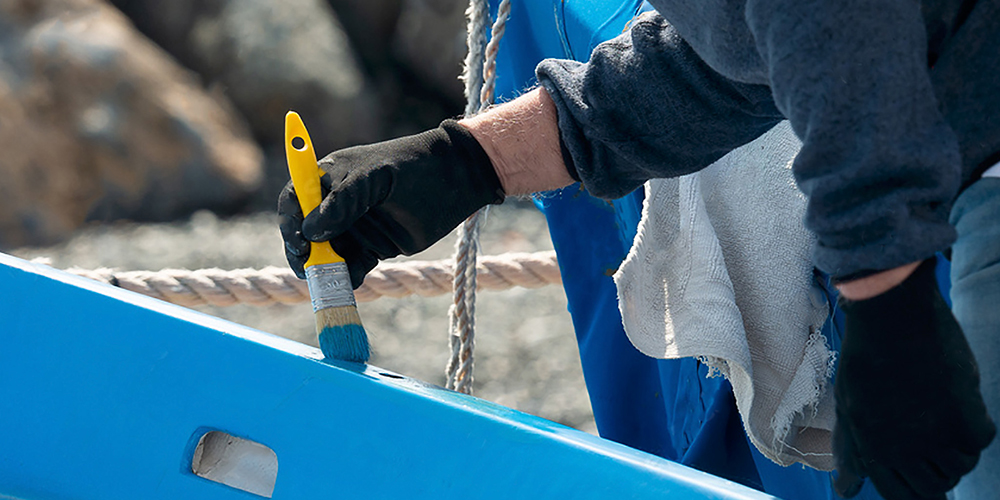
A fresh coat of paint can breathe new life into your boat, improving both its appearance, value, and durability. Whether you’re repainting the hull, topsides, or deck, proper technique and preparation are key to achieving a smooth, professional finish. This guide walks you through the essential steps and provides insider boat painting tips to ensure your DIY boat painting project is a success.
- Preparation is Key
- Choose the Right Paint
- Thinners and Solvents
- Paint Compatibility
- Tools and Materials
- Wait for the Right Conditions
- Application Techniques
- Allow Proper Drying Time
- Final Touches and Maintenance
- Conclusion
- Boat Painting 101 FAQs
- We’re Here to Help!
- Related Articles
Preparation is Key
Before you even think about opening a can of paint, proper boat painting prep is essential. Skipping or rushing through prep work can lead to poor adhesion, an uneven finish, or premature paint failure. Follow these steps:
- Clean the surface thoroughly to remove dirt, grease, and salt residue. Use a high-quality boat soap or cleaner/degreaser and rinse thoroughly.
- When painting the bottom of a boat for the first time, wipe down the surface with a solvent to remove contaminates, and in the case of fiberglass boats, residual mold release agents that can prevent proper adhesion of the paint.
- Sand the surface to remove old, flaking paint and create a surface to which the new paint will adhere. Use the appropriate grit sandpaper based on the type of paint and substrate. In some cases, boat paint removal may require a chemical stripper or heat gun for stubborn areas.
- Mask off areas that are not to be painted. Use high-quality painter’s tape and plastic sheeting or paper to cover fittings, trim, windows, and other areas you want to protect. Be sure to press the tape edges firmly to prevent paint from bleeding underneath. This will give you crisp, clean lines and save you time on cleanup later.
Choose the Right Paint
Base your boat paint selection on the paint's intended use: Topside paints for above the waterline application, antifouling paint for below-the-waterline application, and deck paint for decks. Most boat paints require a primer as well.
- Topside Paint: Designed for areas above the waterline, topside paint provides a durable, glossy finish. When selecting a topside paint, consider factors such as abrasion resistance, chemical resistance, UV protection, ease of application, available colors, and cost. Topside paint formulations include one- and two-part polyurethanes and traditional, one-part oil-based enamels. While two-part polyurethanes are the most durable, they cost the most and require a greater level of skill to apply. For this reason, one-part polyurethanes are the most popular, and with the right application technique can produce very pleasing and durable results. Shop all Topside Paint>
- Antifouling Paint: Used for boat bottom painting, antifouling paint prevents marine growth and contains biocides to keep hulls free from barnacles and algae. Shop all Bottom Paint>
- Deck Paint: Deck paints are durable, abrasion-resistant coatings that usually contain a gritty compound which, once the paint dries, produces a textured, non-skid surface. One-part polyurethanes can easily function as non-skid deck paint with the addition of non-skid compound, available as a separate purchase. Shop all Non-Skid Deck Paint>
- Primers: Applying a marine primer improves adhesion and provides a uniform base for the topcoat. It is especially important when transitioning between different types of coatings or painting bare surfaces. DIYers should stick to the paint manufacturer’s recommendation when selecting a primer to ensure compatibility and optimal performance. Shop all Primers>
Thinners and Solvents
Before beginning your project, determine which thinners or solvents you will need. Follow the manufacturer's recommendatins in this regard. Shop all Paint Thinner and Solvents>
- Paint Thinner: Helps achieve the right paint consistency for smooth application and can be used for cleanup. Always use the thinner recommended by the paint manufacturer.
- Solvent Wash: Essential for prepping bare fiberglass hulls and removing contaminants before painting. Acetone or a specialized dewaxing solvent is commonly used.
- Cleaning Solvents: Used to remove grease, oil, and dirt from surfaces before painting to ensure proper adhesion.
- Lacquer Thinner: Useful for cleaning brushes, rollers, and spray equipment after using certain types of marine paint.
- Safety First: Always use solvents in a well-ventilated area and wear proper protective gear to avoid harmful fumes and skin irritation.
Paint Compatibility
If you are not removing all of the old paint, make sure the new paint is compatible with the existing coating. Some types of paint, such as single-part enamels and two-part polyurethanes, may have an adverse reaction that results in a failure of the new coating. Always check the manufacturer’s guidelines for compatibility before applying new paint over an old coating.
Tools and Materials
Gather all necessary tools and materials before you begin painting. You will need:
- Marine-grade paint
- Paint rollers and brushes
- Plastic mixing buckets and mixing sticks
- Masking tape and drop cloths
- Electric sander and/or sandpaper and sanding blocks
- Cleaning solvents and degreasers
- Paint thinner (if required for your paint type)
- Protective gear (gloves, mask, and goggles)
Having all your boat painting supplies on hand will help ensure a smooth workflow and prevent delays during the painting process. Shop all Boat Painting Supplies>
Wait for the Right Conditions
Choose a dry, well-ventilated area with moderate temperatures (ideally between 50°F and 85°F) and low humidity. Avoid painting in direct sunlight or on windy days, as this can cause uneven drying, dust contamination, or paint bubbling.
Application Techniques
-
Roll and Tip Method: For a professional finish, use a high-density foam roller to apply paint in sections, then follow with a high-quality brush to lightly “tip” out roller marks. This roll and tip painting technique creates an ultra-smooth surface.
-
Spray Application: If you have the equipment and experience, spraying can provide an ultra-smooth finish, but it requires proper ventilation and masking of surrounding areas.
- Thin Coats Are Best: Apply multiple thin coats rather than one thick coat. This reduces drips, ensures even drying, and improves durability.
Allow Proper Drying Time
Follow the manufacturer’s recommended drying time between coats. Rushing this process can result in poor adhesion and an uneven finish. Lightly sand between coats for a smoother, more polished final appearance.
Final Touches and Maintenance
Once the final coat is dry, carefully remove any masking tape. Inspect the surface for imperfections and touch up as needed. Clean your tools properly for future use, and dispose of paint waste according to environmental regulations.
To maintain your boat’s fresh paint job, wash it regularly with mild soap and water, avoid abrasive cleaners, and apply a protective wax or polish where applicable. Proper care will extend the life of your paint and keep your boat looking great for years to come.
Conclusion
Painting your boat is a rewarding DIY boat painting project that enhances both aesthetics and protection. By following these steps—preparing thoroughly, choosing the right materials, applying paint with care, and maintaining your work—you can achieve a professional finish that stands up to the elements. Take your time, follow best practices, and enjoy the satisfaction of a job well done!
Boat Painting 101 FAQs
How do I choose the right type of paint for my boat?
The type of paint depends on where you’re painting. Use topside paint for areas above the waterline, antifouling paint for the boat bottom to prevent marine growth, and deck paint for a non-skid, high-traffic surface. Always check paint compatibility if painting over an existing coating.
What is the best way to prepare my boat’s surface before painting?
Proper prep includes cleaning the surface with a degreaser, sanding to remove old paint and improve adhesion, and masking off areas you don’t want painted. If painting a boat bottom for the first time, use a solvent wash to remove contaminants.
What is the roll and tip method, and why is it recommended?
The roll and tip technique involves rolling on the paint with a high-density foam roller, then using a high-quality brush to lightly smooth out roller marks. This method helps create a smooth, professional-looking finish without spray equipment.
How many coats of paint should I apply?
For best results, apply multiple thin coats instead of one thick coat. This prevents drips, promotes even drying, and improves durability. Follow the manufacturer’s recommended number of coats and allow proper drying time between applications.
Can I paint my boat outdoors, or do I need a controlled environment?
While a controlled environment would be ideal, most DIYers don’t have that luxury. So, choose a dry day with temperatures between 50°F and 85°F and low humidity. Avoid direct sunlight, strong wind, or dusty areas to prevent contamination and uneven drying.
How can I make my boat’s paint job last longer?
Regular maintenance is key! Wash your boat with a mild boat soap and water, avoid abrasive cleaners, and apply protective wax or polish where applicable. Inspect and touch up any damage promptly to prevent deterioration.
We’re Here to Help!
Whether you need marine paint, deck shoes, fishing gear, or anything else for your boat, West Marine has you covered. Shop online or visit one of our 230+ stores. Use our store locator to find the nearest West Marine location!
Related Articles
- Do-It-Yourself: How to Bottom Paint Your Boat
- Top Ten Antifouling Paint Buying Questions
- How to Bottom Paint Your Boat
- Boaters’ Guide to Selection and Application of Bottom Paint
- Applying Pettit Hydrocoat ECO Antifouling Paint
- Do-it-Yourself: Topside Painting
- What is the Best Topside Paint for You?
- How to Paint a Fiberglass Boat
- Get the Right Amount of Paint