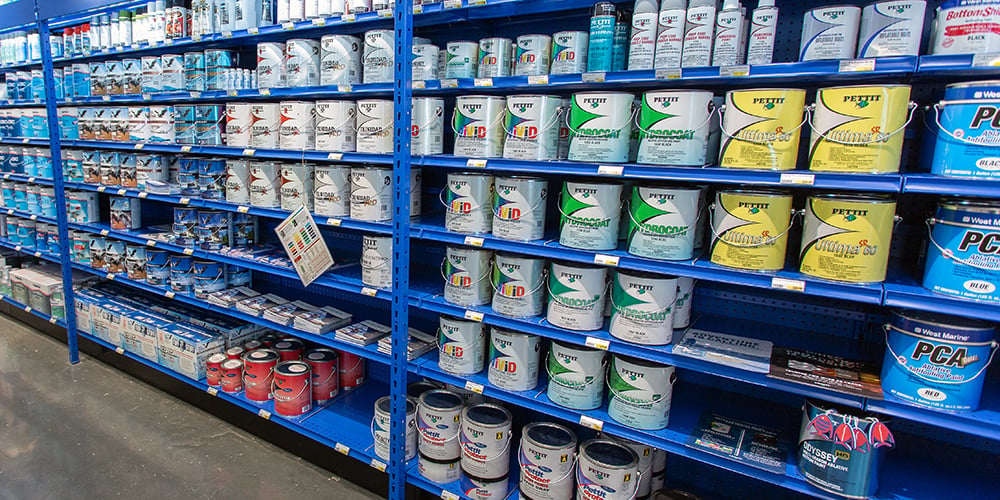
Choosing the right antifouling paint, is key to protecting your boat from marine growth, boosting performance, and keeping it looking great. Antifouling paints—often called bottom paints—help prevent marine organisms like barnacles and algae from attaching to your hull, which can slow you down and cause damage over time. With so many bottom paints available, each offering different advantages, it’s important to understand their differences in order to pick one that is right for you. In this guide, we’ll walk you through what to consider when selecting and applying bottom paint to keep your boat protected and performing at its best.
- What Bottom Paint Does
- How Bottom Paints Work
- What is ECONEA?
- Biocide Percentage versus Antifouling Effectiveness
- Types of Antifouling Paint
- Copolymer Ablative Paints
- Hard Modified Epoxy Paints
- Hard Vinyl Paints
- Water Based Bottom Paints
- Slick Go-Fast Paints
- For Aluminum Boats and Outdrives
- Bottom Paint Additives that Prevent Slime
- Bottom Paint Selection: What are your neighbors using?
- How Long Will Your Bottom Paint Last?
- Take a Systems Approach
- To Complete Your Project
- Bottom Paint Application
- Roll and Brush
- Spray
- Do It Yourself
- Professional Application
- Bottom Paint FAQ
- We're Here to Help!
- Related Articles
What Bottom Paint Does
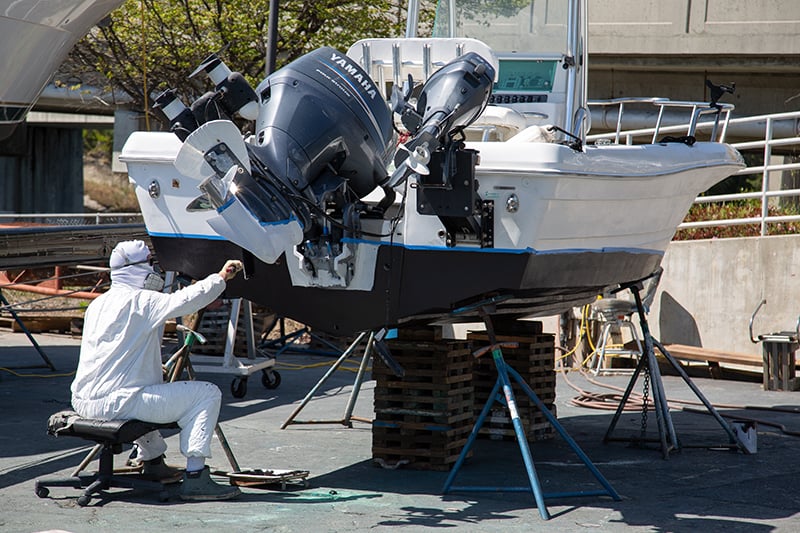
Bottom paint for boats serves one or more of the following functions:
- They deter and limit the growth of fouling organisms on the hull that can impair boat performance and compromise its structural integrity.
- They provide a smooth, slippery surface, which lessens drag and increases the boat's speed potential and fuel efficiency.
- They enhance the boat's appearance.
How Bottom Paints Work
All of the antifouling paints that West Marine offers contain one or more biocides that are toxic to marine flora and fauna. Traditional bottom paints have used various forms of copper as biocides, such as pure copper, cuprous thiocyanate or cuprous oxide. While copper biocides are still found in many bottom paints, alternate biocides such as zinc pyrithione and the non-metallic biocide ECONEA™ are also available.
What is ECONEA?
ECONEA is a synthetic, non-metallic biocide used in antifouling bottom paints to prevent the growth of marine organisms like algae, barnacles, and other fouling organisms on boat hulls. It is safer for the marine environment compared to traditional copper-based biocides commonly found in antifouling paints. Unlike copper, ECONEA is safe for use on aluminum hulls and other sensitive surfaces because it does not cause galvanic corrosion.
ECONEA Key Points
- Copper-Free and Non-Metallic: ECONEA does not contain heavy metals, making it suitable for use in waters where copper-based biocides are restricted due to its potential impact on marine life.
- Highly Effective: ECONEA provides long-lasting antifouling protection at lower concentrations than copper, effectively preventing the growth of hard and soft fouling organisms.
- Environmentally Friendly: ECONEA is biodegradable and breaks down quickly in the marine environment, minimizing its long-term ecological harm compared to copper-based paints.
- Suitable for Aluminum Hulls: Its non-metallic composition makes it ideal for aluminum boats, which can experience corrosion issues when in contact with copper-based paints.
Biocide Percentage versus Antifouling Effectiveness
Regarding paints that use copper as their biocide, you might logically assume that more copper equates to greater antifouling effectiveness, however it is actually the rate at which the copper dissolves into the layer of water adjacent to the hull surface that makes the difference. The faster the biocide is released, the more effective the antifouling action. The flip side of this is that boaters need their bottom paint to remain effective over a reasonable period of time. After all, hauling, sanding and painting the bottom of a boat is a big job, and we don't want to spend any more time and money on than is necessary!
Types of Antifouling Paint
Copolymer Ablative Paints
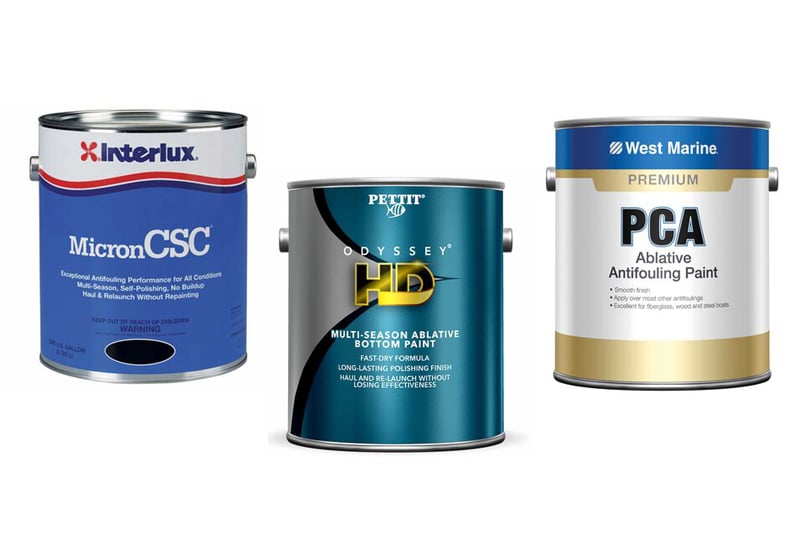
Formulated to release biocide at a constantly controlled rate throughout their lives, these paints wear away or “ablate” much like a bar of soap. Paint wears off faster in higher drag areas on the hull and appendages like the leading edge of keels and rudders. These paints are offered in single-season and multi-season formulations. the latter of which (unlike hard modified epoxy paints, see below) can be hauled and stored out of the water without loss of antifouling effectiveness. Copolymer paints, such as West Marine PCA, Interlux Micron CSC and Pettit Odyssey HD, offer multi-season protection, lasting as long as there is a reasonable coating thickness. Because they expose new biocide until the coating is worn completely away, haulouts are made easier because little sanding is required before fresh paint can be applied.
Best Use: Because these paints rely upon water friction to release their biocide compounds, they are a good choice for frequently used boats.
Hard Modified Epoxy Paints
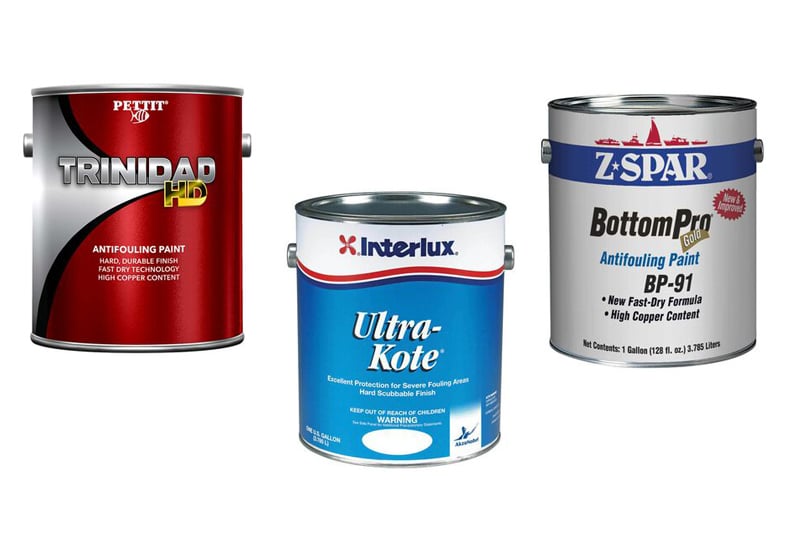
If you keep your boat in the water year round, you are a good candidate for a modified epoxy paint that prevents growth by leaching biocides out upon contact with water. Contact leaching paints releases their biocide at a steadily decreasing rate, leaving the hard coating of the original thickness at season’s end. Higher copper content rather than the paint binder (as with ablative paints) generally means greater antifouling performance in this type of paint. Modified epoxy bottom paint adheres tenaciously to most surfaces and can be applied over most types of paints. On the down side, they oxidize and lose effectiveness when the boat is stored out of the water. Another drawback is that once these paints have leached out all their biocide, an inert, hard, egg-shell-like coating remains. While this coating can be sanded and painted over when the boat is hauled, after doing this several times, the coating will need to be entirely removed, which is a labor intensive process. Examples of modified epoxy paints include Pettit Trinidad HD and Interlux Ultra-Kote and Z-Spar BottomPro Gold.
Best Use: A good choice for high-fouling waters. Excellent for racing sailboats and fast powerboats, due to its ability to resist abrasion and be burnished to a smooth surface.
Hard Vinyl Paints
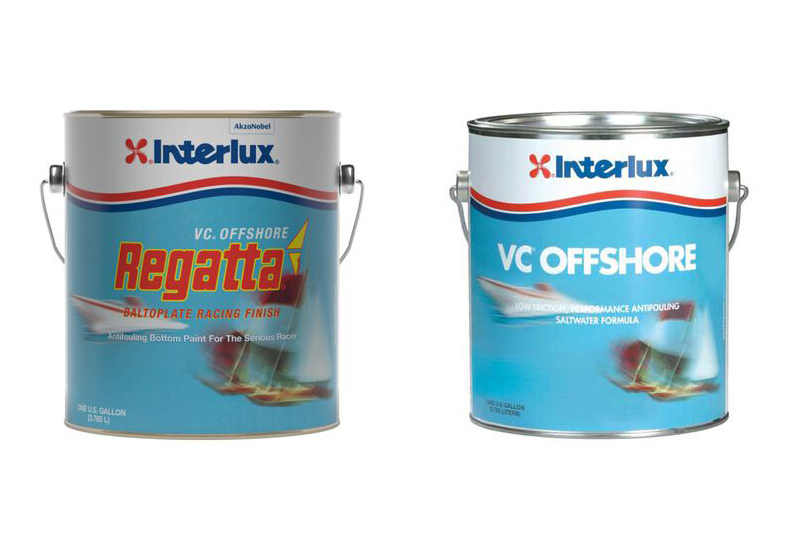
Vinyl bottom paints are another type of contact leaching bottom paint. Like modified epoxy paints, vinyl-based paints release their biocides at a relatively steady rate while the boat is in the water. As the biocides leach out, the paint's effectiveness diminishes, leaving behind a hard, porous, inert layer of paint. Just like modified epoxy paints, vinyl bottom paints lose antifouling effectiveness when the boat is hauled out of the water. Examples of vinyl paints include Interlux VC Offshore and VC Offshore Regatta bottom paints.
Best Use: Best suited for boats that stay in the water most of the time, especially for high-performance racing vessels or speed boats that benefit from their smooth, hard surface.
Water Based Bottom Paints
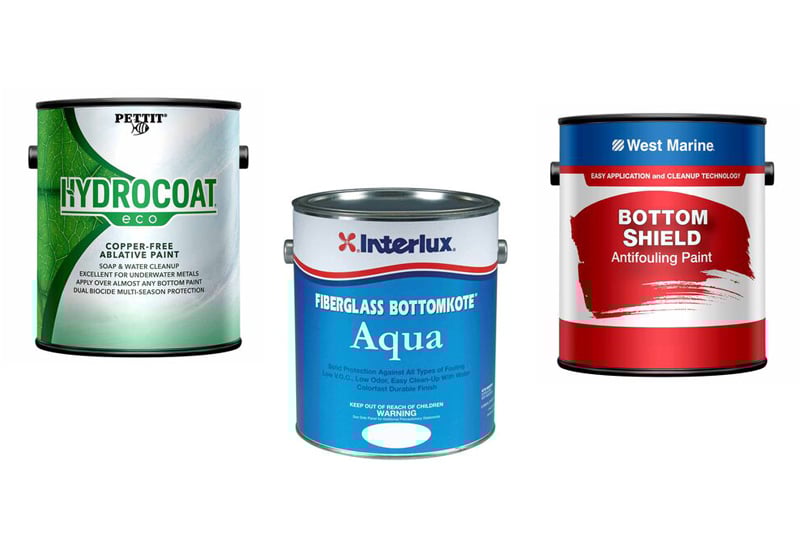
Water-based anti fouling coatings are eco-friendly, emitting fewer harmful volatile organic compounds (VOCs) than solvent-based alternatives, which improves air quality during application. They are simple to apply, clean up with water, and dry quickly. These paints offer reliable protection against marine growth while minimizing environmental impact, making them ideal for eco-conscious boaters. Examples include copolymer formulations like Pettit Hydrcoat ECO and Interlux Fiberglass Bottomkote Aqua, as well as hard bottom paints like West Marine BottomShield antifouling paint, which balance ease of use with dependable performance.
Best Use: Boaters looking for a paint with easy clean up, little or no solvent smell and dependable antifouling performance.
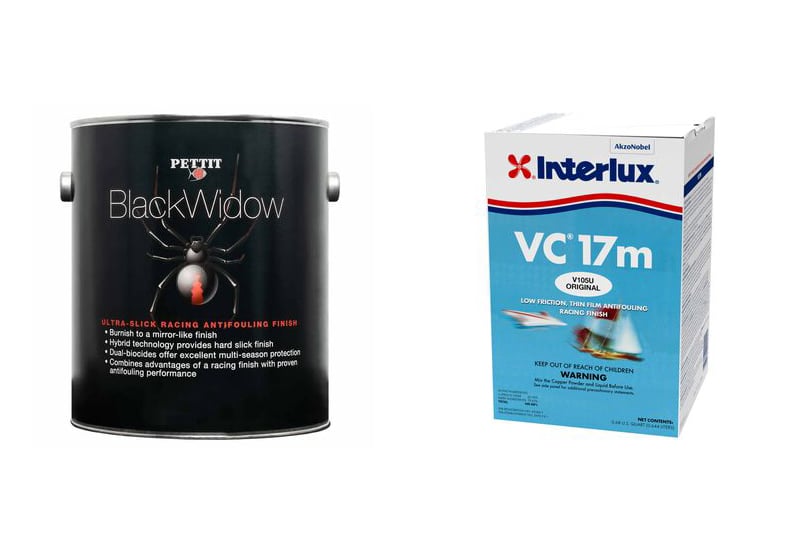 Pettit BlackWidow and Interlux VC 17m antifouling paints.
Slick Go-Fast Antifouling Paints
If speed is your number one priority, there are a variety of bottom paints to help your boat go fast. Examples include Interlux VC 17m which is a thin film vinyl paint that includes PTFE (Trademarked as Teflon®), Pettit's BlackWidow, which is a hard modified epoxy paint that can be burnished to a smooth finish and that contains FOUR slicking agents: Molybdenum Disulfide, PTFE, Graphite, and Silicon. Either of these paints (and others like them) are a good choice for any boat where speed is the number one priority, including racing sailboats, and high-performance powerboats.
Best Use for VC 17m: Performance sailboats and powerboats used in fresh water or low-fouling salt water.
Best Use for BlackWidow: Any boat where speed is the number one priority, including racing sailboats, and high-performance offshore powerboats. Protects against all types of marine fouling.
For Aluminum Boats and Outdrives
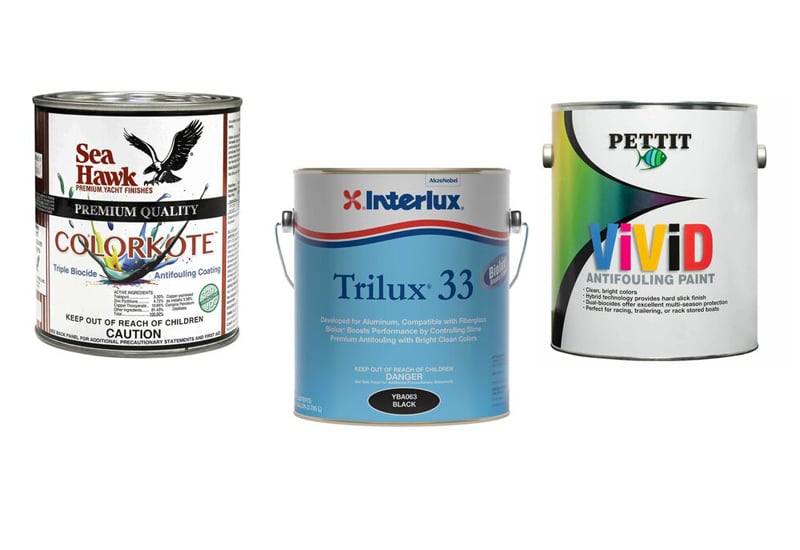
While most of the bottom paints we offer are safe for application on properly primed fiberglass, steel or wood hulls, if you want to antifoul an aluminum boat or you want to apply antifouling paint to an aluminum outdrive, never, ever, apply an antifouling paint that uses cuprous oxide as a biocide. Why? Because doing so will result in galvanic corrosion that will quickly cause serious (and expensive!) damage to your boat’s hull or outdrive. Instead, apply a paint that either uses cuprous thiocyanate (white copper) or that uses non-metallic ECONEA as the biocide. Examples of aluminum-safe bottom paints include Pettit Seahawk Colorkote, Interlux Trilux 33 and Pettit ViViD antifouling paints.
Bottom Paint Additives that Prevent Slime
Manufacturers like Pettit, Interlux and others offer bottom paint coatings with additives like zinc pyrithione and/or Econea to prevent the growth of slime and grass, which often appears as a "skirt" of green growth along a boat's waterline. Interlux markets its proprietary "Biolux" technology, a blend of ingredients designed to control both hard growth, such as barnacles, and soft growth, like grass and slime. However, the specific components of Biolux are considered proprietary.
Bottom Paint Selection: What are your neighbors using?
Asking other boaters in your marina what works well for them is always a good idea. Some paints work well in one geographic area, not as well in another. For example, while paints such as Pettit’s Trinidad SR that are heavily loaded with copper might be a good choice in the tropical waters of Florida, they would be “overkill” on the Great Lakes where a vinyl-based or thin-film paint might be a better choice. Get information about paints used by boats similar to yours in terms of speed and frequency of use.
How Long Will Your Bottom Paint Last?
The effective life of a paint is determined by the amount and release rate of the biocide, boat speed, water temperature how often the boat is used, and how often it is hauled. Conventional antifouling paints (all except for copolymer ablatives) lose their effectiveness when hauled out of the water for extended periods of time. If you haul your boat at the end of a 4 to 6 month boating season, you don't need the extra protection of a premium, multi-season bottom paint. If you leave your boat in the water all year long, you probably want the longest lasting protection possible — unless other considerations (like an ultra-smooth racing finish) take priority.
Manufacturers categorize their paints by how long, on average, they can be expected to provide antifouling protection. As you would expect, longer lasting paints that have higher copper biocide (or some other biocide like ECONEA) tend to cost more.
Take a Systems Approach
Manufacturers offer plenty of information vis a vis painting guides and flow charts that will acquaint you with their painting systems. Each manufacturer has developed a complete array of primers, thinners, and associated products for a "system approach" to projects. While the formulation of many of these products is similar between manufacturers, we usually recommend following the manufacturer's guideline's when using their products, which means using their primers and thinners, in order to ensure best results.
To Complete Your Project
Once you have selected your bottom paint, there are many other items you will need to complete your bottom painting project. Depending on the condition of your boat's hull, you might need items like paint remover, primer, putty or a fairing compound. Other items you will need include paint brushes, paint roller and roller frames, buckets, masking tape, sandpaper and other items. If your boat is suffering from osmotic blistering, you might want to consider applying a barrier coat before you apply the new bottom paint.
Bottom Paint Application
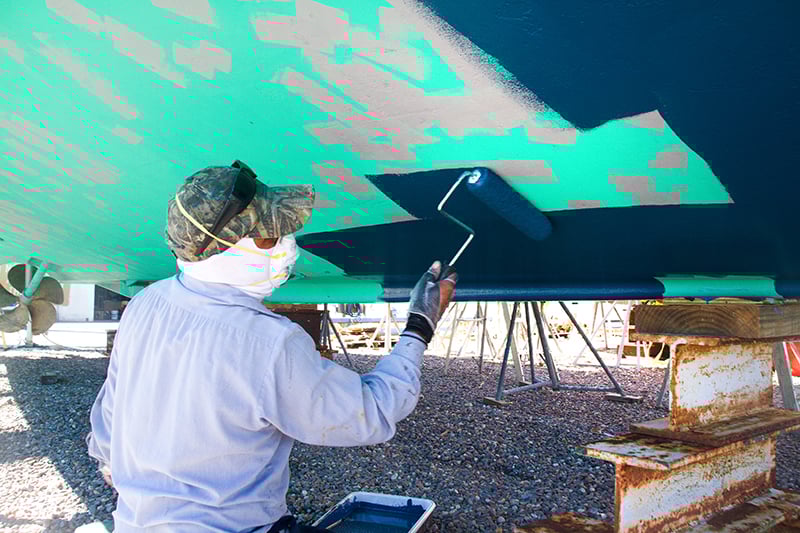
Once you have selected a bottom paint, there are two other main types of methods of application: roll and brush or spray. Each method has its pros and cons, and boaters can also choose between a DIY approach or having the work done by professionals at a boat yard. Here's an overview of these options:
Roll and Brush
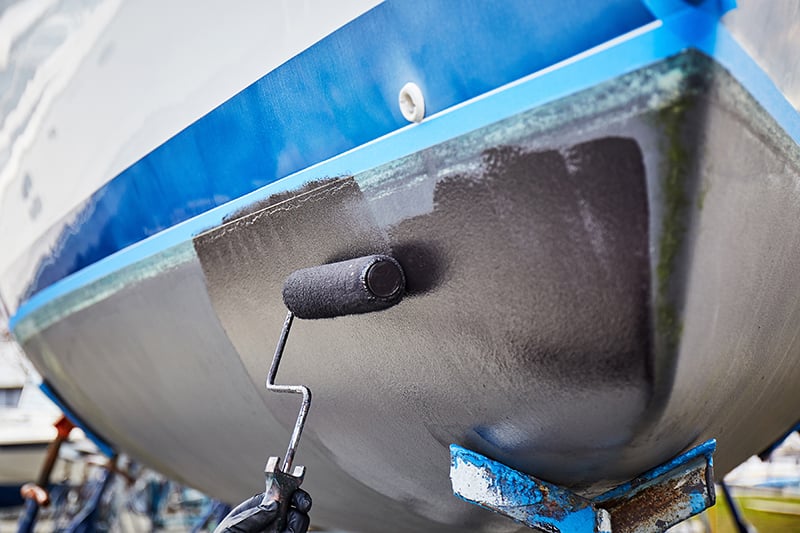
This is the most common method for DIY boaters and smaller jobs.
Pros:
-
Cost-Effective: Requires minimal equipment – typically just rollers, brushes, and painter’s tape.
-
Easier to Control: The slow, methodical approach gives boaters more control, reducing the chance of overspray or missed areas.
-
Less Overspray: This method minimizes wasted paint and mess compared to spraying.
-
Accessible: Suitable for boatyards or spaces that don’t allow spray painting due to environmental regulations.
Cons:
-
Time-Consuming: Rolling and brushing take longer than spraying, especially for large boats.
-
Less Smooth Finish: While the final result can still be professional, rolling may leave behind a more textured surface, which could slightly impact speed and fuel efficiency for racing boats.
Spray
Spray application is ideal for those seeking a smoother, more professional finish.
Pros:
-
Faster: Spraying covers large areas quickly, making it ideal for bigger boats or time-sensitive projects.
-
Smoother Finish: This method creates an ultra-smooth surface, reducing drag and enhancing performance, especially for racing or performance boats.
-
Even Coverage: Ensures more uniform coverage with minimal brush strokes or roller marks.
Cons:
-
More Expensive: Requires specialized equipment, including a spray gun and proper ventilation setup.
-
Higher Skill Level: Spraying can be tricky for beginners and may result in uneven coats or overspray.
-
Environmental Concerns: More paint can be wasted in overspray, and in some locations, spray painting is restricted due to environmental hazards.
Do It Yourself
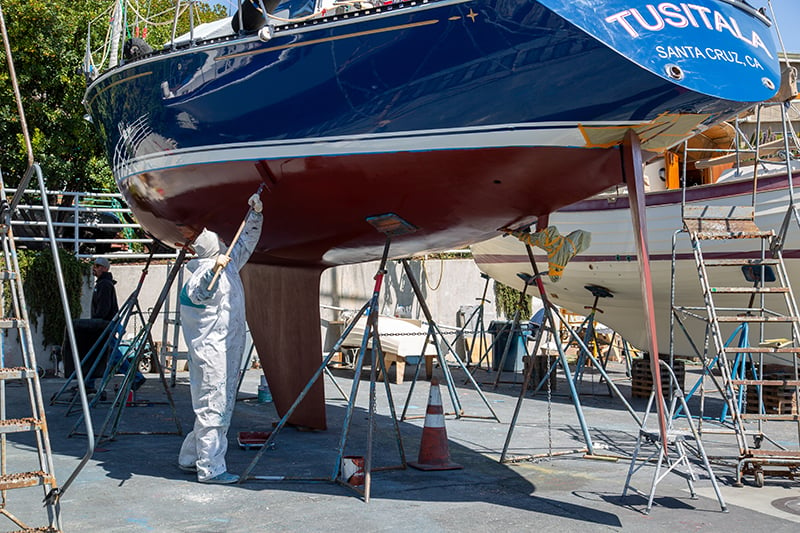
Many boaters opt to paint their own boats, especially for smaller vessels or those with prior experience.
Pros:
-
Cost Savings: The most affordable option, especially if the boater already has the necessary tools.
-
Convenience: DIY allows flexibility in scheduling and the freedom to work at your own pace.
-
Control: The boater has direct control over the quality of the application and can ensure it meets their standards.
Cons:
-
Labor-Intensive: The process can be physically demanding, particularly when preparing the hull and applying multiple coats.
-
Learning Curve: Mistakes in technique or surface preparation can lead to less effective antifouling performance and the need for re-application.
Professional Application
Letting the professionals at your local boatyard do the work is an attractive option for boaters looking for good results without the hassle.
Pros:
-
Expert Results: Professional painters have the experience to apply paint correctly, ensuring optimal antifouling performance.
-
Saves Time: Professionals can complete the job quickly, freeing up the your time for other tasks.
Cons:
-
Higher Cost: Professional painting can be significantly more expensive due to labor costs and the use of specialized equipment.
-
Less Control: Boaters may have less input into the application process and must trust the professional to execute the job properly.
Bottom Paint FAQ
What is bottom paint and why do I need it? Bottom paint, or antifouling paint, is applied to boat hulls to prevent marine growth like barnacles and algae from attaching. It prevents marine growth, improves performance, and enhances a boat's appearance.
How does antifouling paint work? Antifouling paints release biocides which are toxic compounds that prevent marine organisms from adhering to the hull, helping to reduce drag and damage caused by these growths over time.
What types of bottom paint are available? Bottom paint coatings include ablative paints, hard, coatings, modified epoxy paints, water-based paints, and thin-film paints, each with different properties and suited to various boating conditions.
Which biocides are found in copper-free bottom paints? Copper-free paints commonly contain biocides like ECONEA™ or zinc pyrithione, both effective in preventing fouling without the use of toxic heavy metals.
What is ECONEA™ and why is it eco-friendly? ECONEA™ is a non-metallic biocide that offers powerful antifouling protection. It’s biodegradable, safe for aluminum boats, and has less environmental impact than copper and tin-based paints.
How often do I need to apply bottom paint? The frequency of reapplication depends on the type of paint, how often you use your boat, and the waters you navigate. Some paints last a season, while others offer multi-season protection.
Can I apply antifouling paint to an aluminum hull? Yes, but never apply anti fouling paints that contain cuprous oxide as this can cause galvanic corrosion. Instead, use a paint that contains cuprous thiocyanate (white copper) or a copper-free option like an ECONEA™-based paint.
What’s the difference between ablative and hard bottom paints? Ablative paints wear away gradually, exposing fresh biocide, while hard paints release biocide steadily but leave behind an inert layer that requires maintenance over time.
Can I paint my boat myself, or should I hire a professional? Both options are viable. DIY painting is cost-effective but labor-intensive, while professional application ensures expert results but less maintenance and comes at a higher cost.
What’s the best bottom paint for my boat? The best choice depends on your boat’s material, usage, and the water conditions. Consult with other local boaters to find what works best in your area.
Do some bottom paints contain more than one type of biocide? Yes, some bottom paints contain more than one type of biocide to provide broader protection against a variety of marine organisms. For example, a paint might combine copper with zinc pyrithione and ECONEA™ to target both hard growth (like barnacles) and soft growth (like algae and slime). This multi-biocide approach helps enhance the overall effectiveness of the paint, ensuring better performance in different fouling environments.
Conclusion
The choice of bottom paint application method depends on the boater’s budget, the size and type of the boat, and their comfort level with DIY projects. Roll and brush is a great option for those looking to save money and have control, while spray application is ideal for those seeking a flawless finish. DIY can be cost-effective, but a professional application ensures a high-quality result with less effort.
We're Here to Help!
Online and in over 230 West Marine stores, boaters find more of what they need to enjoy great times on the water. Whether you want to bottom paint your boat or pick up a new set of life jackets, we're ready to help with the products and expertise you need. Use our handy store locator to find a West Marine store near you.