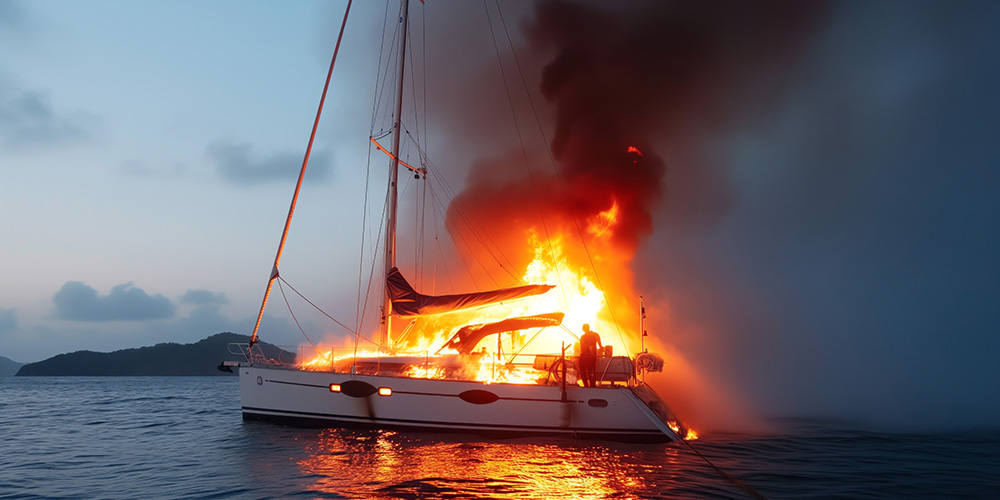
Picture a sunny day on the water, your boat gliding through the waves off Key Biscayne, Florida. Suddenly, a fuel leak sparks a fire in the engine compartment. Within three minutes, flames engulf the 38-foot vessel, forcing everyone to jump overboard. As Local 10 News reported on July 22, 2024, the boat was lost, but thankfully, all aboard survived. This real-life scare shows how fast boat fires can turn a great day into a nightmare. The good news? You can prevent fires and be ready if one starts. Let’s walk through what causes boat fires, how to stop them before they begin, the gear you need, and what to do in an emergency.
- Why Boat Fires Happen
- Keep Fires at Bay
- Fight Fires with Extinguishers
- Stay Safe with Detectors
- Act Fast If Fire Strikes
- Prep Before You Sail
- Know the Rules
- Wrap-Up
- Quick Fire Safety Q&A
- We’re Here for You
- More Resources
Why Boat Fires Happen
Fires on boats often start from everyday oversights, like a frayed wire or a sloppy refueling job. Based on USCG data, most fires come from four culprits. Electrical issues, like corroded wiring or overloaded outlets, spark about 35% of fires—imagine a short circuit igniting vapors in the bilge. Fuel problems cause 40%, with gasoline vapors or diesel leaks catching a spark from a switch or hot engine. Cooking mishaps in the galley, like a leaky propane stove left unattended, account for 15%. The rest? Boater mistakes, like smoking near fuel or skipping maintenance, make up 10%. Knowing these risks helps you stay one step ahead.
Pro Tip: Check your wiring, fuel hoses, and engine systems monthly. Log fixes in a log book to stay organized.
Keep Fires at Bay
Stopping fires starts with smart habits. When refueling, shut off engines, electronics, and flames, wipe spills, and run the bilge/engine compartment blower for four minutes before starting inboard engines to clear vapors. Use USCG- and EPA-approved fuel tanks, primer bulbs, and hoses—keep paints and thinners off the boat (see EPA Fuel Tank Guide). For electrical safety, stick to marine-grade shore power cords and wiring, checking monthly for damage or loose connections (see Electrical Hazards). In the galley, equip propane stoves with solenoid shutoff valves, store tanks in vented lockers, and test for leaks with soapy water—bubbles mean trouble (see Propane Safety). Keep a fire blanket handy for grease fires, and never leave the stove on unattended. Monthly, clear engine vents (vents) and inspect fuel and engine systems for wear.
Pro Tip: Tape a checklist to your dashboard to remind you to run the bilge blower before starting the engine.
Fight Fires with Extinguishers
The right extinguisher can stop a small fire before it spreads. You’ve got two options—portable or fixed-mount—depending on your boat’s size and setup. Let’s break them down.
Portable Extinguishers
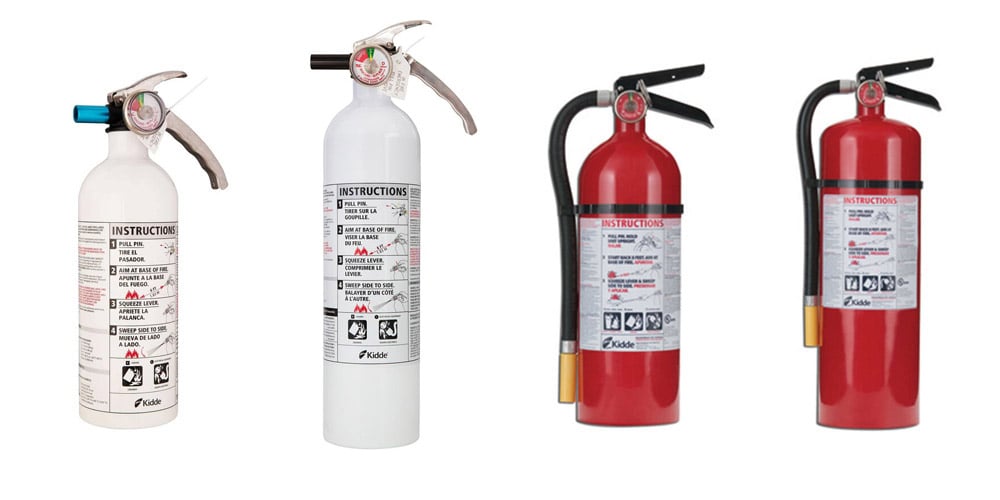 Portable fire extinguisher choices include disposable (single use) extinguishers like Kidde's Mariner 5 and 10 (left) and rechargeable extinguishers like Kidde's PRO-5MP and -10MP models (right).
Handheld portable extinguishers are perfect for tackling small fires, like a galley flare-up. Boats built after 2018 need USCG-approved, UL-rated 5-B or 20-B models—think Kidde Mariner series with corrosion-resistant stainless steel nozzles for fuel and electrical fires. Boats under 26 feet need at least one; bigger vessels require more (see Selecting Extinguishers). Mount them at the helm, near the galley (not above the stove), and in engine areas, and show your crew where they are. To use, follow the PASS method: Pull the pin, Aim at the fire’s base, Squeeze the trigger, Sweep side to side. Check disposable units monthly for green-zone pressure and replace if used or expired. Rechargeable ones need annual pro inspections and refilling after use—find certified technicians at marinas. Shake dry chemical units monthly to keep powder loose.
Fixed-Mount Systems
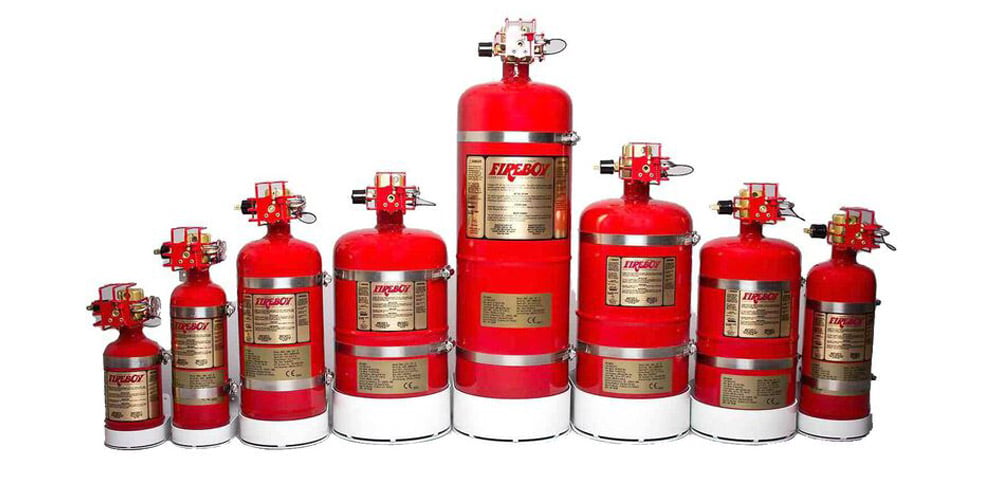 Fixed-Mount, Fireboy-Xintex MA2 Manual/Auto Clean Agent Fire Extinguishers are offered in a range of capacities.
For larger boats, fixed-mount systems are a smart installation, especially in engine compartments. Fireboy-Xintex models release clean agents (like HFC-227ea) automatically when heat spikes or manually via a cable, covering hard-to-reach engine room fires fast (see Selecting Extinguishers). While they cost more ($500–$3,500 vs. $30–$100 for portables) and need professional installation and annual inspections, they’re ideal for many vessels over 26 feet. Pair with portables to meet USCG requirements.
Pro Tip: Run a fire drill with your crew. Practice the PASS method on a pretend small fire to build confidence.
Stay Safe with Detectors
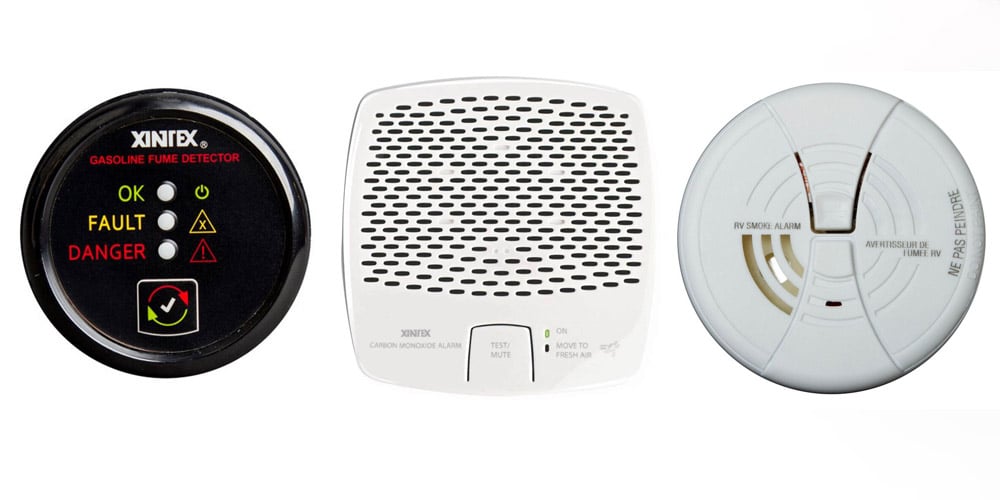 From left to right: Fireboy-Xintex Gasoline Vapor Detector, Carbon Monoxide Detector, and Smoke Detector.
Imagine a faint smoky smell in your cabin or feeling dizzy below deck. Detectors catch fire, flammable gases, or carbon monoxide (CO) early, giving you time to act. Marine-certified smoke alarms, fuel vapor detectors, and CO monitors are your first line of defense. Here’s how to use them.
Catch Fires Early with Smoke Alarms
Smoke alarms spot fires before flames take over. Marine-grade models, like First Alert or Fireboy-Xintex with dual ionization chambers, handle salty air and vibrations. Boats with sleeping quarters need UL 217 Marine-labeled alarms, per USCG rules. Ionization alarms catch fast-flaming fires (like fuel or electrical); combination ionization-photoelectric models also detect smoldering ones. Place them in cabins, galleys, and sleeping areas—away from corners or vents—one per sleeping compartment. Test monthly with the test button, swap batteries yearly, and replace units every 10 years, per NFPA guidelines.
Sniff Out Gas with Vapor Detectors
Vapor detectors alert you to gasoline or propane gases that could spark explosions. The USCG advises them for boats with below-deck fuel tanks or propane systems, using marine-certified models (ABYC A-24 or UL 1484 standards). Fireboy-Xintex detectors trigger bilge blowers to clear gases and sound an 85 dB alarm. Install them low in bilges, engine compartments, or near propane lockers, keeping sensors clear. Test monthly, clean sensors to avoid false alarms, and replace units every 5–7 years.
Guard Against CO with Monitors
CO monitors detect carbon monoxide, a silent killer causing a number of boating deaths yearly from exhaust or heaters. Kidde Marine models, sound an audible alarm at 25 ppm before symptoms like dizziness hit. UL 2034 Marine-labeled units are required for boats with enclosed cabins or gasoline generators. Mount them 5 feet up in sleeping areas and cabins, away from fuel appliances—one per sleeping space. Test monthly, replace batteries annually, and swap units every 5–7 years. They don’t detect smoke or fire, so pair with smoke alarms for full protection.
Pro Tip: Train your crew to know each alarm’s sound. Evacuate for smoke or CO alerts, ventilate for vapor alarms, and reach for portable extinguishers if safe.
Act Fast If Fire Strikes
A fire in a boat’s tight spaces is terrifying, with few escape routes. If one starts, act quickly but calmly. If safe, cut fuel, propane, and electrical power to starve the fire—use manual overrides for fixed-mount systems. For small, contained fires (like a stove flare-up), use a portable extinguisher or activate a fixed-mount system. If flames spread, get everyone into USCG-approved life jackets and move to the bow, stern, or life raft, helping kids or non-swimmers first. Broadcast a mayday on channel 16 via handheld or fixed-mount VHF radio, sharing your location, passenger count, and fire status. Signal with flares or, if offshore, an EPIRB or PLB. If the fire’s uncontrollable, abandon ship, stay together in the water, and wait for rescue. Practice a fire response plan so your crew knows where extinguishers and radios are and how to act.
Prep Before You Sail
Before heading out, file a float plan—a simple document listing your destination, passengers, itinerary, and key details. It helps rescue teams find you in an emergency. For more on float plans, see How to File a Boating Float Plan which includes an editable PDF you can use to create one.
Pro Tip: Share your float plan with a friend or family member onshore—they’ll know where to send help if needed.
Know the Rules
Staying safe means following USCG rules. Your boat needs approved fire extinguishers, ventilation systems, and flame arrestors for gas engines. Inboard boats with enclosed compartments require bilge blowers or fixed suppression systems (see USCG Requirements). Skipping gear like extinguishers can lead to fines ($100–$1,000 per violation), and not following rules might mess with insurance claims—check with your insurer. Keep a waterproof folder with safety records, like extinguisher checks, for USCG inspections.
Wrap-Up
The Key Biscayne fire proves boat fires can strike fast, destroying a vessel in just three minutes. But you can beat the odds. Check your systems, carry USCG-approved extinguishers, install detectors, and drill your crew on a fire plan. With these steps, you’ll hit the water with confidence, ready for safe adventures.
Quick Fire Safety Q&A
Can I use household extinguishers?
No, only USCG-approved marine extinguishers work for boating.
How often do I check extinguishers?
Monthly for rust or low pressure; rechargeable ones need annual pro checks at marinas. Refill after use.
How often do rechargeable extinguishers need refilling?
After any use, even partial, or if inspections show issues. Certified technicians at marinas handle refills.
Will insurance cover fires?
Usually, if you follow USCG rules. Confirm with your insurer.
What about old flares?
Expired flares don’t count for USCG requirements but can be backups. Dispose at marinas or Coast Guard events.
How do I train my crew?
Run drills to practice the PASS method and show where life jackets and radios are.
Pro Tip: Make safety fun—turn crew drills into a game to keep everyone sharp.
We’re Here for You
At West Marine, we’ve got your back for all your boating needs, from USCG-approved safety gear to hardware and apparel. Shop online or visit one of our 220+ stores. Find a location with our store locator.


