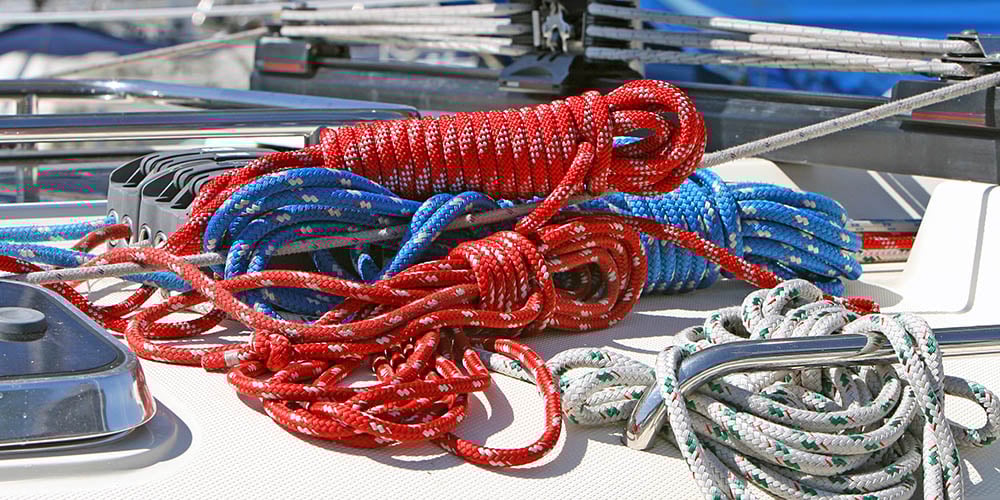
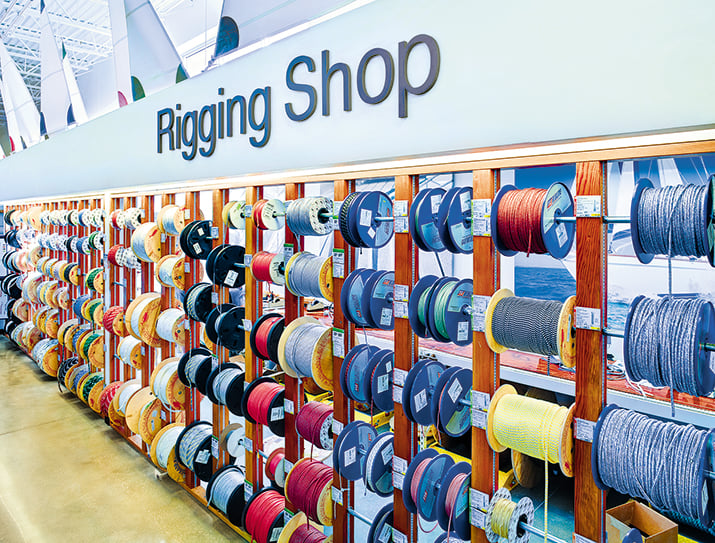
We offer a wide selection of running rigging. This West Advisor will help you understand which line to choose.
Choosing the Right Line for Your Boat
If you feel out of your depth looking at a wall of rigging, Mark Chandler from our rigging shop explains the differences between line materials and construction and what they are best used for.
- Line Construction
- How Strong Does the Line Need to Be?
- Color-Coding Your Line
- Hand and Feel
- How Much Stretch Can You Tolerate?
- Line Fibers and Their Characteristics
- FAQs
Line Selection Guide
Our selection of running rigging line is also covered in this downloadable Line Selection Guide. 
Line Construction
We’ve divided our selection by construction type. Some configurations make better halyards, mainsheets, or vangs. You have three styles to choose from:
- Single braid: Supple, flexible construction that absorbs twist and doesn’t kink. Two styles: performance single braid, made from very low-stretch fibers for extreme loads; and blended/polyester single braid, soft and easy to grip, built for sheets and other hand-adjusted control lines.
- Double braid: A braided core inside a braided cover produces a strong, durable, smooth-running line that’s easy to handle.
- Three strand: Three strands twisted clockwise in a right-hand lay with fibers in each strand twisted left. Favored on traditional boats, and best for anchoring, towlines, and mooring applications because it stretches significantly more than braid.
Below are the line styles grouped by construction and fiber type, with suggested applications:

Performance single braid — Use for cascades and purchase systems, sportboat/performance racing backstays and runners, low-stretch and high-strength applications. See V-12, HTS 75, HTS 90, AmSteel-Blue AS-78.

Performance double braid — Use for headsail halyards controlling low-stretch sails that cannot tolerate creep or stretch. See T-900, V-100.

Dyneema core double braid — Use for low-stretch sheets, halyards, and controls. Excellent durability and much lower stretch than polyester double braid. See Endura Braid, WarpSpeed II, Dinghy Control, Flight Line.

Blended core double braid — Economical upgrades from stretchier polyester for club racers and performance cruisers, with customized fiber blends for low stretch, reduced weight, good handling, and reasonable cost. See VPC, XLS Extra-T, MLX.

Blended and polyester single braid — Use for sheets and hand-adjusted controls. Knobby or fuzzy textures are easy to grip. See Bzzz, Regatta, Regatta Lite, Racing Sheet, Salsa.

Dinghy double braid — Use for small boat halyards and controls. See Dinghy Sheet, Dinghy Light.

Micro-sized high-tech double braid — Use for no-stretch lashings, micro-sized purchase systems, and control lines. See T-100, Mini-V, Spyderline.

Polyester double braid — Use for sheets, control lines, and halyards on cruising boats, handheld control lines on all types of boats, and as durable covers over high-tech cores where they encounter cleats, clutches, or winch drums. See Sta-Set, Pre-stretched 8-Plait Polyester Dinghy Line, Economy Polyester Double Braid.

Micro-sized polyester braid — Use for utility cords, flag halyards, tiedowns, and general lashing. See 1/8” Braided Polyester Cord.

Anti-chafe covers — Use for heat- and abrasion-resistant protection on high-tech cores where they wrap around winches or pass through clutches. See Dyneema Anti-Chafing Sleeve, ARC.

Three-strand line — Use for running rigging on traditional boats. See Classic Filament Three-Strand, Classic Spun Three-Strand, Vintage Three-Strand.
How Strong Does the Line Need to Be?
Greater working loads are achieved by increasing line diameter or by using a line of the same diameter made from stronger fibers. 3mm V-12 single braid has a breaking strength of 2,100 lbs. 3mm HTS-90 single braid has a breaking strength of 3,400 lbs. Same diameter — 62% more strength. Match line diameter and fiber to the application. West Marine Rigging can customize lines — for example, sleeving a line with an abrasion-resistant cover in the rope clutching area to increase effective diameter and grip.
In the video below, Mark Chandler discusses the importance of abrasion- and heat-resistant covers for spinnaker sheets on racing boats and high-load applications like running backstays.
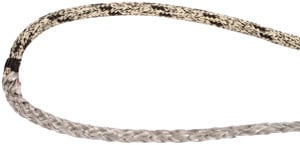
Spinnaker sheet made from WarpSpeed II with color-coded core, made by West Marine Rigging.
Do You Want to Color-Code Your Line?
Many lines include matching color cores and covers, so you can strip the cover to reduce size and weight while still being able to identify which halyard to clip to your headsail. Color-coding is particularly useful on boats with multiple halyards at the mast.
Consider the “Hand” or Feel of the Line
Some lines, like Sta-Set, have a smooth surface that runs easily through a purchase system. Others, like WarpSpeed II or Endura Braid, have a knobby texture that’s grippy and easy to hold under load. Soft, flexible lines such as Salsa use spun fibers, comfortable to hold while trimming a mainsail all day. Sta-Set X is a stiffer line — great for halyards, less suited to frequent hand-trimming.
How Much Stretch Can You Tolerate?
Racing sailors flying low-stretch sails need low-stretch, high-modulus line. The trade-off is cost, lower durability, and less UV resistance. Cruisers and daysailors with Dacron sails don’t need exotic high-tech line and benefit from the durability and UV resistance of polyester.
Acceptable stretch also depends on the application for both racers and cruisers. Genoa sheets and frequently adjusted hand-trimmed lines can tolerate more stretch. A halyard for a roller-furling jib that stays in place all season requires low-stretch line to prevent luff sag as the sail loads up.
Stretch is determined by fiber type and construction. Understanding the fibers is the key to selecting line that meets your needs at the lowest cost.
Line Fibers and Their Characteristics
Nylon: The first synthetic fiber used in line, nylon is almost never used in running rigging but excels for anchoring and docking, where its stretch (up to 15%) absorbs shock loads. Durable, with excellent internal and surface abrasion resistance, high strength-to-weight ratio, and a specific gravity of 1.14. Absorbs water and shrinks, with a 10–15% strength loss when wet.
Polyester: Stretchier than newer fibers but with great abrasion resistance and UV resistance. An excellent cover for double braid lines, protecting low-stretch cores from UV and chafe. Polyester double braid works well for frequently adjusted lines like main and jib sheets, or moderately loaded control lines. Very flexible, easy to handle, and still the preferred choice for most applications on cruisers and club racers. Specific gravity 1.38 — does not float.
Polypropylene: Light, relatively inexpensive, and relatively stretchy. Frequently blended with other fibers like Dyneema to add bulk for easy handling — Samson’s XLS Extra-T uses this combination, stronger and lighter than polyester but less costly than pure Dyneema. Floats and doesn’t absorb water, but has poor UV resistance. Works well for sheets, particularly light-air spinnaker sheets, dinghy sheets, and frequently adjusted control lines. Durability is limited — expect more frequent replacement than polyester.
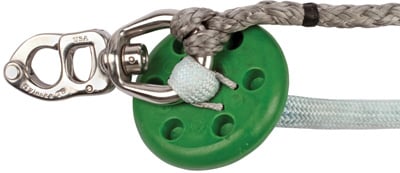
The author’s custom Cal 40 spinnaker sheet and afterguy, made by West Marine Rigging, with WarpSpeed II, a Dyneema Anti-Chafe Sleeve, and a Tylaska shackle. Our Rigging Shop handles high-performance rigging requests like this one.
Dyneema (High-Modulus Polyethylene / HMPE): Highest strength-to-weight ratio, low stretch, and impressive maximum working loads. Very slippery with good hand, but poor knot-holding ability and a low melting point (300°F). Does not absorb water but experiences gradual “creep” or permanent elongation under sustained static load. An excellent core upgrade from polyester double braid, with almost no stretch. Often used uncovered, or with a polyester cover where it contacts cleats or winch drums. Great in multi-part purchase systems, for replacing 7×19 wire in trapeze lines, and wherever light weight and low stretch matter. Floats.
The newest Dyneema variant, SK-90, stretches 10–15% less and is 10–15% stronger than the most common type, SK-75. New England Ropes’ HTS-90 and Dinghy Star (from FSE Robline) are made with SK-90 fiber.
Vectran (Liquid Crystal Polymer): Almost no stretch, no creep, and absorbs little water. Works reliably at a high percentage of breaking strength, making it excellent for highly loaded applications. Among the strongest core materials available. Moderate UV resistance and durability. Often used for upwind sail halyards under static loads like permanently hoisted roller-furling headsails, and for highly loaded purchase systems, travelers, and other no-stretch applications.
Technora (Aramid): Very low stretch and no creep. Like Kevlar, Technora has poor internal abrasion tolerance, fair chafe resistance, and is damaged by UV light. Blending with another fiber — such as Dyneema SK-78 in the core of T-900 — reduces durability problems while preserving strength. Needs protection with a polyester cover or core coating if stripped.
PBO (Zylon): Polybenzoxazole is a rigid isotropic crystal polymer with extraordinary tensile strength — the best strength and stretch characteristics of any available fiber. However, PBO has low internal abrasion resistance, degrades rapidly in UV light, and loses approximately 15% of its strength when exposed to moisture. Requires complete sealing from the elements. Extremely expensive and used only at the highest level of Grand Prix sailing.
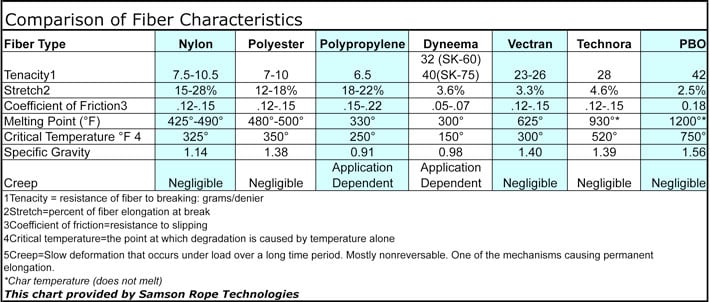
Fiber characteristics comparison: stretch, strength, UV resistance, creep, and recommended applications.
Frequently Asked Questions
What is the difference between single braid, double braid, and three-strand line?
Single braid is supple, twist-absorbing, and doesn’t kink — good for sheets and hand-adjusted controls, and in high-performance versions for extreme-load applications. Double braid (braided core inside a braided cover) is strong, durable, and smooth-running — the most versatile construction for running rigging. Three-strand has the most stretch of the three and the lowest cost — best for anchoring, mooring, and towlines where shock absorption matters, and for traditional-looking rigging on classic boats.
What is “creep” in a rope fiber and why does it matter?
Creep is permanent elongation that occurs under sustained static load over time, even when the load is well below the breaking strength. A halyard that creeps will gradually lengthen while hoisted, causing luff sag in the sail and requiring periodic re-tensioning. Dyneema (SK-75) has moderate creep under sustained load — a concern for permanently hoisted halyards. Vectran and Technora have essentially no creep, making them better choices for permanently hoisted furling headsail halyards. SK-90 Dyneema has significantly less creep than SK-75.
Why does Dyneema need a cover in some applications?
Dyneema (HMPE) is very slippery, which means it does not hold knots reliably and can slip through clutches or run over cleats without gripping. It also has a low melting point (300°F) — the heat generated by a line running fast over a winch drum can damage the fibers. A polyester cover protects the Dyneema core from heat, abrasion, and UV light in these areas while preserving the core’s low stretch and light weight.
What running rigging line is best for a cruising sailor?
For most cruisers, polyester double braid remains the best all-around choice — durable, UV-resistant, flexible, and affordable. Sta-Set is a classic example. For halyards where you want less stretch than polyester, a Dyneema core double braid like Endura Braid or WarpSpeed II provides a meaningful upgrade at moderate cost. Reserve pure Dyneema, Vectran, and Technora for applications where their specific properties (no-stretch, no-creep, light weight) justify the higher cost and reduced durability.
Related Articles
- How to Correctly Coil Rope
- Removing a Halyard from Your Mast
- Maximum Working Load
- Stainless Steel Rigging
- When and How to Replace Your Lifelines
