Understanding 3-Blade Propellers for Your Boat
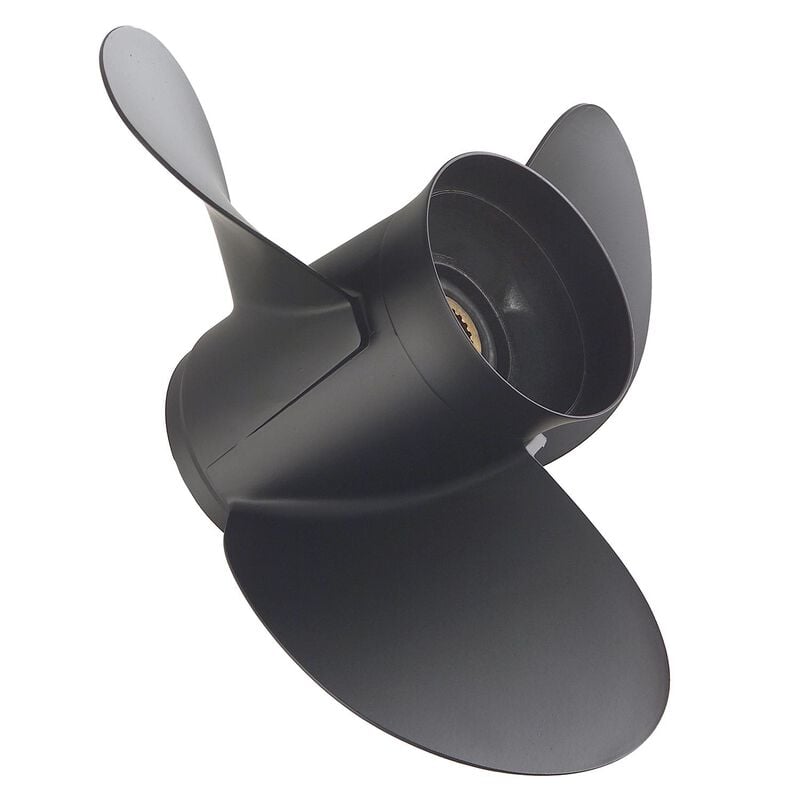
Choosing the right propeller is crucial for getting the best performance, efficiency, and enjoyment from your boat. Among the many options available, the 3-blade propeller stands out as a popular and versatile choice for a wide range of marine applications. At West Marine, we understand that selecting the perfect prop can feel like a big decision, and we're here to help you navigate the waters.
This guide will dive into the world of 3-blade propellers, exploring their unique advantages, comparing them to other blade configurations, and helping you determine if a 3-blade prop is the ideal fit for your boat and engine. Browse our full selection of boat propellers at West Marine to find the right match for your vessel.
What Makes 3-Blade Propellers a Great Choice?
The design of a propeller, including the number of blades, significantly impacts how your boat performs on the water. Three-blade propellers offer a compelling balance of characteristics that make them a go-to option for many boaters.
The Core Advantages of 3-Blade Props
- Excellent All-Around Performance: Three-blade propellers are renowned for their versatility. They provide a great blend of acceleration (hole shot) and top-end speed, making them suitable for general recreational boating, fishing, and cruising.
- Higher Top-End Speed: Compared to propellers with more blades, 3-blade props generally create less drag. This often translates to higher maximum speeds, especially on lighter boats or those designed for speed. If you're looking to maximize your boat's speed potential, a 3-blade prop is often the preferred option.
- Reduced Vibration: With fewer blades than a 4-blade prop, a 3-blade propeller can sometimes offer a smoother ride at higher RPMs, contributing to a more comfortable experience on the water.
- Common and Versatile: Due to their widespread use and balanced performance, 3-blade propellers are readily available in a vast array of sizes, pitches, and materials, making it easier to find the perfect match for your specific boat and engine.
Why Do Boat Propellers Have 3 Blades?
Three blades represent the sweet spot between efficiency, balance, and thrust for most recreational and performance marine applications. Here is why the three-blade configuration became the standard:
- Rotational balance: Three evenly spaced blades create a naturally balanced rotating mass, which minimizes vibration transmitted to the hull and engine. A two-blade prop has opposing forces that create a characteristic pulse with each revolution, while a three-blade arrangement distributes thrust more evenly through the rotation cycle.
- Drag vs. thrust efficiency: Each additional blade increases both thrust and drag. With two blades, there is not enough blade area to efficiently grip the water at mid-range RPMs. With four or more blades, the drag penalty begins to reduce top-end speed. Three blades balances these competing forces for the widest range of applications.
- Manufacturing and availability: The three-blade design has been refined over decades of marine engineering. The resulting availability of three-blade props in virtually every diameter, pitch, material, and hub configuration makes them the practical default choice for most boaters and engine manufacturers.
3-Blade vs. Other Propeller Types
When considering a 3-blade propeller, it's helpful to understand how it stacks up against other common configurations, namely 2-blade and 4-blade props. The "best" number of blades ultimately depends on your boat's specific needs and how you use it.
3-Blade vs. 2-Blade Propellers
Two-blade propellers are less common on modern recreational boats, often found on very small or specialized vessels. While they can offer minimal drag and potentially very high top speeds in ideal conditions, they typically provide less thrust and can lead to more vibration compared to a 3-blade prop. For most boaters seeking a balance of thrust, speed, and smoothness, the 3-blade propeller is a superior all-around choice.
3-Blade vs. 4-Blade Propellers: A Detailed Comparison
This is the most common comparison boaters make, and the answer depends heavily on how and where you use your boat. Here is a detailed breakdown of the real-world differences:
- Top-end speed: 3-blade props win here. Less blade area means less drag at high RPMs, which typically translates to 2–4 mph more top speed compared to a 4-blade prop of equivalent pitch on the same boat.
- Hole shot (acceleration from rest): 4-blade props have the advantage. The additional blade area grips more water per revolution, getting the boat on plane faster. This matters most for loaded boats, heavy hulls, pontoons, and watersports applications where quick starts are important.
- Rough water handling: 4-blade props maintain better grip when the prop starts to breach the surface in choppy conditions. A 3-blade prop is more prone to ventilation (losing its bite on the water) in rough seas or during aggressive turns.
- Fuel efficiency at cruise: 3-blade props are generally more efficient at higher cruise speeds. At moderate speeds, the difference is less pronounced, and some heavier boats will actually cruise more economically with a 4-blade prop due to the improved planing efficiency.
- Vibration and smoothness: 4-blade props typically run smoother at low speeds and at idle. 3-blade props can produce slightly more vibration at low RPMs but often run smoother at wide-open throttle.
- Stern lift and bow rise: 4-blade props push the stern down more effectively, reducing bow rise during acceleration. This is particularly noticeable on larger, heavier boats and pontoons.
Bottom line: Choose a 3-blade prop if top speed and fuel efficiency at cruise are your priorities, and your boat is lighter or performance-oriented. Choose a 4-blade prop if you carry heavy loads, tow frequently, operate in rough water, or need the fastest possible hole shot.
3-Blade vs. 5-Blade Propellers
Five-blade propellers are less common in recreational boating and are primarily used on larger vessels, high-horsepower offshore applications, and situations where cavitation reduction is critical. Five-blade props offer the smoothest operation and best low-speed thrust of any blade count, but sacrifice top-end speed due to their significant drag penalty. For the vast majority of recreational boaters, a 3-blade aluminum or stainless steel prop will outperform a 5-blade option in the speed and fuel-economy categories that matter most.
Switching from a 3-Blade to a 4-Blade Propeller
If you are considering upgrading from a 3-blade to a 4-blade propeller, there is one important specification adjustment to keep in mind: pitch correction. Because a 4-blade prop generates more thrust per revolution due to its increased blade area, it will typically cause your engine to run at lower RPMs than the same pitch in a 3-blade configuration. As a general rule, when switching from a 3-blade to a 4-blade propeller, drop the pitch by 2 inches to maintain approximately the same wide-open-throttle RPM range. For example, if your 3-blade prop is 15 x 19, start with a 4-blade prop at 15 x 17 and test to confirm your engine reaches its recommended WOT RPM with your typical load aboard.
Which Boats and Motors Benefit from a 3-Blade Propeller?
Three-blade propellers are incredibly versatile and are often the standard choice for a wide variety of marine vessels.
- General Purpose Boating: If you own a runabout, bowrider, pontoon boat, or a typical fishing boat and engage in a mix of cruising, watersports, and fishing, a 3-blade propeller is likely an excellent fit. It provides the balanced performance needed for these diverse activities.
- High-Speed Applications: For boaters who prioritize achieving maximum speed, especially with lighter hulls, a 3-blade prop is often the go-to option. Its design minimizes drag, allowing the engine to reach higher RPMs and push the boat faster.
- Lighter Boats: Boats that are lighter in weight often pair well with 3-blade propellers, as they don't require the extra blade area for thrust that heavier boats might.
- Trolling Motors: For trolling motors, a 3-blade prop can be a great choice. It often provides a good balance of thrust for slow speeds and can contribute to smoother, quieter operation compared to some 2-blade designs, which is beneficial for stealthy fishing.
- Engine Compatibility: Three-blade propellers are compatible with a vast range of outboard, sterndrive, and even some inboard engines. The key is to match the propeller's pitch and diameter to your engine's horsepower and the boat's hull design to ensure optimal performance.
3-Blade Trolling Motor Propellers
Trolling motor propellers are a distinct category with different performance priorities than outboard props. The primary goals for a trolling motor prop are maximum thrust at low speeds, quiet operation, and resistance to weeds and debris. Three-blade trolling motor propellers — such as those used on Minn Kota and Motorguide motors — are widely regarded as the optimal configuration for these requirements. Compared to 2-blade designs, a 3-blade trolling motor prop delivers more consistent thrust, less vibration, and better holding power against current, all while maintaining the quiet operation essential for fishing. When replacing a trolling motor propeller, always match the replacement to the motor's thrust rating and shaft diameter to ensure proper fit and performance.
Key Factors When Choosing Your 3-Blade Propeller
Once you've decided a 3-blade propeller is right for you, there are a few critical specifications to consider to ensure you get the best match for your boat.
Understanding Propeller Specifications
- Pitch: This is the theoretical distance a propeller would move forward in one revolution, much like a screw moving through wood. Measured in inches, pitch directly affects your engine's RPM and your boat's speed. A higher pitch generally means more speed but lower RPM, while a lower pitch means more RPM and better acceleration.
- Diameter: The diameter is the total width of the circle swept by the propeller blades as they rotate. Measured in inches, it's crucial to match the diameter to your boat's size and engine's power.
- Material:
- Aluminum: A popular and cost-effective option, aluminum propellers are great for general recreational use. They are lighter and can absorb impact better, often bending before breaking, which can protect your lower unit.
- Stainless Steel: For enhanced durability, performance, and efficiency, stainless steel propellers are an excellent upgrade. They are stronger, resist corrosion, and maintain their shape better under stress, leading to improved thrust and speed.
- Hub: The hub is the central part of the propeller that connects to the engine's propeller shaft. It's essential to ensure the hub system is compatible with your specific engine model.
How to Measure a 3-Blade Propeller
Measuring a 3-blade propeller involves two key dimensions: diameter and pitch.
- Diameter: Measure from the center of the hub to the tip of one blade, then multiply that number by two.
- Pitch: This is more complex to measure accurately without specialized tools. Propeller pitch is usually stamped on the propeller itself (e.g., 13 x 19, where 13 is the diameter and 19 is the pitch). If not, it's best to consult your boat's manual, your engine's specifications, or a West Marine expert.
Popular 3-Blade Aluminum Propellers
Three-blade aluminum propellers are the most widely sold propeller type in recreational boating. They represent the best starting point for most boaters replacing a factory prop or selecting a spare. Well-regarded 3-blade aluminum options available at West Marine include the Quicksilver Black Diamond, the Turning Point Hustler, the Solas Amita 3, and Sierra's range of OEM-equivalent aluminum props for Mercury, Yamaha, Honda, and Suzuki outboards. Each offers reliable performance at an accessible price point with broad engine compatibility.
Popular 3-Blade Stainless Steel Propellers
For boaters looking to upgrade from aluminum to stainless steel in a 3-blade configuration, the benefits are meaningful: stiffer blades translate to better efficiency, higher top speed, and longer service life. Popular 3-blade stainless steel propellers available at West Marine include the Quicksilver Silverado, the Quicksilver Laser II, the Quicksilver Thunderbolt for sterndrive applications, the Turning Point Express Mach3, and the Solas Saturn stainless series. When selecting a stainless upgrade, verify that the diameter and pitch match your current prop's specifications — or adjust pitch as needed to hit your engine's recommended WOT RPM range.
Frequently Asked Questions About 3-Blade Propellers
Why do boat propellers have 3 blades?
Three blades represent the optimal balance between rotational balance, thrust, and drag for most recreational marine applications. Three evenly spaced blades minimize vibration, distribute thrust evenly through each revolution, and provide enough blade area to grip the water efficiently across a wide RPM range — without the drag penalty that comes with four or more blades.
Is a 3-blade or 4-blade propeller better?
It depends on your priorities. A 3-blade propeller typically delivers higher top-end speed and better fuel efficiency at cruise, making it the preferred choice for speed-focused and lighter-hull applications. A 4-blade propeller provides faster hole shot, better rough-water handling, and improved stern lift — making it the better choice for heavy boats, pontoons, towing, and situations where quick planing matters more than top speed.
Is a 3-blade or 4-blade prop better for a pontoon boat?
For most pontoon boats, a 4-blade propeller is the better choice. Pontoons are heavier, wider, and carry larger passenger loads than typical runabouts. A 4-blade prop provides the extra blade area needed for faster planing, better stern lift to reduce bow rise, and improved control in rough water — all characteristics that matter more on a pontoon than top-end speed.
What pitch adjustment do I need when switching from a 3-blade to a 4-blade propeller?
When switching from a 3-blade to a 4-blade propeller, drop the pitch by approximately 2 inches to maintain the same wide-open-throttle RPM range. For example, if your 3-blade prop is 15 x 19, start with a 4-blade prop at 15 x 17 and test your WOT RPM with a normal load aboard before finalizing your selection.
Are 3-blade propellers good for trolling motors?
Yes. Three-blade trolling motor propellers are widely regarded as the best configuration for electric trolling motors. They deliver more consistent thrust at low speeds, less vibration, and better holding power against current compared to 2-blade designs, while maintaining the quiet operation essential for fishing.
What is the difference between a 3-blade and a 5-blade propeller?
A 3-blade propeller delivers higher top-end speed and better fuel efficiency due to lower drag, making it the standard choice for most recreational boats. A 5-blade propeller offers the smoothest operation and best low-speed thrust due to its high blade area, but sacrifices top-end speed significantly. Five-blade props are primarily used on large vessels and high-horsepower offshore applications where cavitation reduction is critical.
How do I measure a 3-blade propeller?
Two dimensions define a propeller: diameter and pitch. To measure diameter, measure from the center of the hub to the tip of one blade and multiply by two. Pitch is usually stamped directly on the propeller hub in a format like 13 x 19, where 13 is the diameter in inches and 19 is the pitch in inches. If the markings are not visible, consult your boat manual or a West Marine expert.
What are the best 3-blade aluminum propellers?
Popular 3-blade aluminum propellers available at West Marine include the Quicksilver Black Diamond, the Turning Point Hustler, the Solas Amita 3, and Sierra's OEM-equivalent aluminum props for Mercury, Yamaha, Honda, and Suzuki outboards. All offer reliable performance, broad engine compatibility, and strong value for recreational boating.
What are the best 3-blade stainless steel propellers?
Well-regarded 3-blade stainless steel propellers include the Quicksilver Silverado, Quicksilver Laser II, Quicksilver Thunderbolt for sterndrive applications, the Turning Point Express Mach3, and the Solas Saturn stainless series. Stainless steel 3-blade props deliver higher top speeds and better long-term efficiency compared to aluminum equivalents.
Finding Your Perfect 3-Blade Propeller at West Marine
Three-blade propellers offer a fantastic blend of speed, efficiency, and versatility, making them an excellent choice for a wide range of boaters. Whether you're cruising, fishing, or enjoying watersports, a properly matched 3-blade prop can significantly enhance your time on the water.
At West Marine, we're passionate about helping you make the most of your boating adventures. Our knowledgeable team can help you analyze your boat's specifications, engine type, and typical use to recommend the ideal 3-blade propeller for your needs. Explore our extensive selection of aluminum and stainless steel 3-blade propellers at West Marine today and get ready to experience improved performance on your next outing!