Navigate Clear Waters: A Guide to Weedless Propellers
There's nothing quite like the freedom of being out on the water, whether you're casting a line, cruising with friends, or exploring a quiet cove. But for many boaters, that serene experience can quickly turn into a frustrating battle with tangled vegetation. Picture this: you're in prime fishing territory, the fish are biting, and suddenly your motor sputters, bogged down by a thick mat of weeds wrapped around your propeller. It's a common scenario, but one that can be largely avoided with the right gear.
Enter the weedless propeller – a game-changer for anyone who navigates shallow, vegetated waters. Designed specifically to shed aquatic plants, these specialized props ensure your boat keeps moving smoothly, efficiently, and without interruption. At West Marine, we understand the unique challenges boaters face, and we're here to guide you through everything you need to know about weedless propellers, from their innovative design to why they might be the perfect upgrade for your vessel. Let's dive in and discover how these clever blades can enhance your time on the water.
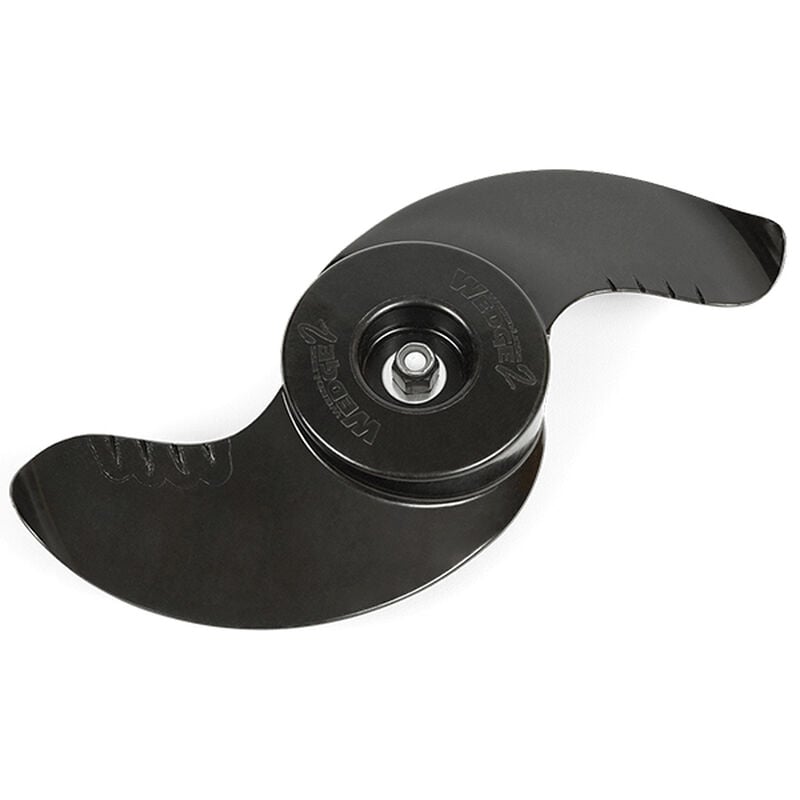
What Makes a Propeller "Weedless"?
The term "weedless" isn't just a marketing buzzword; it refers to a specific design philosophy aimed at preventing vegetation entanglement. Unlike standard propellers, which often have sharper leading edges and more aggressive blade angles that can easily snag and wrap weeds, weedless props are engineered to shed them.
So, what makes a prop weedless? It primarily comes down to a few key design elements:
- Swept-Back Blade Design: The most distinguishing feature of a weedless propeller is its highly swept-back or "raked" blade shape. Instead of a straight or slightly curved blade, these props feature blades that sweep significantly backward from the hub. This unique geometry allows weeds to slide off the blade rather than getting caught and wrapped around the prop shaft or hub. The angle of the blade is less aggressive, reducing the "grabbing" action on vegetation.
- Fewer Blades: Many weedless propeller designs opt for two or three blades instead of the more common four or five. Fewer blades mean less surface area for weeds to cling to, and larger gaps between the blades allow vegetation to pass through more easily.
- Rounded or Blunted Edges: While still providing thrust, the leading and trailing edges of weedless blades are often designed to be smoother or slightly blunted compared to the sharper edges of performance props. This further discourages weeds from catching.
- Optimized Pitch and Diameter: The pitch (the theoretical distance the propeller moves forward in one revolution) and diameter are carefully calibrated to balance thrust with weed-shedding capabilities. The goal is to provide efficient propulsion without creating excessive suction that pulls weeds in.
- Durable Material: While the design is key, the material also plays a role. Many weedless propellers are made from robust composite materials, stainless steel, or bronze, which can withstand the occasional impact with submerged debris or dense vegetation without significant damage.
In essence, a weedless propeller is a specialized blade designed to minimize the interaction between the prop and aquatic vegetation, ensuring a smoother, more reliable boating experience in challenging environments.
The Unbeatable Advantages of Weedless Propellers
Choosing a weedless propeller offers a host of benefits that can significantly improve your boating experience, especially if you frequently navigate waters prone to vegetation. These advantages go beyond just avoiding tangles, impacting your boat's performance, efficiency, and the longevity of your motor.
- Uninterrupted Boating and Fishing: This is the most obvious and perhaps most valuable advantage. Imagine you're trolling along a productive weed line, and instead of constantly stopping to clear your prop, you can focus entirely on fishing. Weedless propellers virtually eliminate the frustrating need to cut or pull weeds from your prop, allowing for continuous, hassle-free operation. This means more time enjoying the water and less time dealing with maintenance.
- Enhanced Efficiency and Fuel Economy: When weeds wrap around a standard propeller, they create significant drag. This drag forces your motor to work harder to maintain speed, leading to increased fuel consumption (or battery drain for electric motors) and reduced overall efficiency. A clean, weed-free propeller operates at its optimal performance, ensuring you get the most out of every drop of fuel or every watt of power. This can result in noticeable savings over time.
- Motor Protection and Longevity: A propeller constantly fighting against a tangle of weeds puts immense strain on your boat's engine or electric motor. This excessive load can lead to overheating, premature wear on internal components, and even costly damage to the lower unit or prop shaft. By effectively shedding weeds, a weedless propeller significantly reduces this strain, protecting your motor and extending its lifespan. It's an investment in the long-term health of your propulsion system.
- Consistent Performance: In weedy conditions, standard props can lose thrust and speed as they become fouled. Weedless propellers maintain consistent thrust and speed because they remain clear of vegetation. This reliable performance is crucial for precise boat control, especially when navigating tight spots or maintaining a specific trolling speed. You can trust that your boat will respond as expected, even in challenging environments.
- Peace of Mind: Perhaps one of the most underrated advantages is the peace of mind a weedless propeller provides. Knowing that you can confidently navigate through lily pads, hydrilla, or thick grass without fear of getting stuck or damaging your equipment allows you to relax and fully immerse yourself in the boating lifestyle. It frees you up to explore new areas and focus on the joy of being on the water.
These advantages collectively make weedless propellers an indispensable component for many boaters, transforming potentially frustrating outings into smooth, enjoyable adventures.
Who Needs a Weedless Propeller? Types of Boats and Boaters
While any boater might occasionally encounter weeds, certain types of boats and specific boating activities make a weedless propeller an almost essential upgrade. If your passion involves navigating through or near aquatic vegetation, a weedless prop is designed for you.
- Anglers and Fishermen: This group arguably benefits the most. Whether you're a bass angler working shallow coves, a crappie fisherman navigating brushy lakes, or a flats fisherman exploring grassy estuaries, weeds are an inevitable part of the environment. Weedless propellers are critical for bass boats, jon boats, and other fishing vessels that frequently operate in areas with dense aquatic growth. They allow anglers to maintain stealth, precise boat positioning, and continuous trolling without interruption, maximizing their time on the fish.
- Kayakers and Small Boat Owners: Many kayaks, canoes, and small tenders are equipped with electric trolling motors for quiet propulsion. These smaller vessels often explore very shallow, tight, and heavily vegetated waterways where larger boats can't go. A weedless propeller is vital for these applications, ensuring the motor can operate efficiently without getting bogged down, allowing for peaceful exploration and access to secluded spots.
- Trolling Motor Users (Electric and Gas): Trolling motors, by their nature, operate at low speeds and are often deployed in areas where fish hide – which often means near structure and vegetation. For both electric and smaller gas trolling motors, a weedless propeller is paramount. It ensures the motor can deliver consistent, quiet thrust without fouling, which is crucial for effective trolling and maintaining battery life for electric models.
- Cruisers and Sailors in Specific Regions: While less common for open-water cruising, sailors and powerboaters who navigate coastal marshes, shallow bays, or lakes known for kelp beds or thick seagrass can also benefit. A weedless prop can prevent frustrating entanglements when entering or exiting anchorages, or when exploring shallower areas.
- Any Boater in Vegetated Waterways: If your local lake, river, or coastal area is known for its lily pads, hydrilla, milfoil, or other aquatic plants, then a weedless propeller is a smart choice, regardless of your primary boating activity. It's about adapting your equipment to your environment for a more enjoyable and reliable experience.
In short, if your boating adventures frequently take you into areas where aquatic vegetation is present, a weedless propeller is not just a convenience; it's a performance and reliability necessity.
Motor Types Compatible with Weedless Propellers
The beauty of weedless propeller technology is its adaptability across various motor types, ensuring that a wide range of boaters can benefit from their design. While they are most commonly associated with certain applications, specialized weedless props are available for several propulsion systems.
- Electric Trolling Motors: This is by far the most common application for weedless propellers. Brands like Minn Kota, MotorGuide, and Torqeedo (especially their Ultralight and Travel series) design specific weedless props for their electric trolling motors. These motors are often used in shallow, vegetated fishing grounds where a standard prop would quickly become fouled. A weedless prop ensures maximum battery efficiency and continuous, quiet operation, which is crucial for stealthy fishing. When selecting, always ensure the prop is compatible with your specific trolling motor model and shaft size.
- Small Outboard Motors: For smaller boats like jon boats, tenders, or small fishing skiffs that use low-horsepower outboard engines (typically 2.5 HP to 25 HP), weedless propeller options are available. These props are designed to handle the higher RPMs and thrust of a gas engine while still effectively shedding weeds. They are particularly useful for navigating narrow channels, shallow rivers, or small lakes where vegetation is prevalent.
- Mud Motors (Surface Drive and Long Tail): While often considered a category of their own, mud motors are specifically designed for extreme shallow water and heavily vegetated or muddy conditions. Their propellers are inherently "weedless" by design, often featuring very aggressive, wide blades with a low pitch, made from extremely durable materials like stainless steel or bronze. These props are engineered to push through thick vegetation and mud, making them the ultimate weed-shedding solution for specialized applications like duck hunting boats or swamp buggies.
- Specialized Inboard/Outboard Drives: While less common, some specialized applications for larger boats, particularly those operating in unique environmental conditions (e.g., research vessels in marshlands, certain commercial fishing boats), may utilize custom-designed weedless propellers for their inboard or sterndrive systems. These are typically bespoke solutions tailored to very specific operational requirements.
When considering a weedless propeller, it's crucial to match the prop to your specific motor's horsepower, shaft size, and intended application. West Marine offers a range of options and expert advice to ensure you find the perfect fit for your engine and boating needs.
Why Choose a Weedless Propeller Over Other Types?
The marine propeller market offers a vast array of options, each designed for specific performance characteristics. So, why would a boater specifically choose a weedless propeller over a standard aluminum prop, a high-performance stainless steel prop, or even a specialized racing prop? The answer lies in prioritizing reliability and uninterrupted operation in challenging environments over other metrics like top speed or acceleration.
- Standard Propellers (Aluminum/Composite): These are the most common and affordable propellers, excellent for general recreational boating in open water. They offer a good balance of performance and durability for typical conditions. However, their blade design, often with more aggressive leading edges and a higher blade count, makes them highly susceptible to snagging and wrapping weeds. In vegetated areas, a standard prop will quickly become fouled, leading to loss of power, increased fuel consumption, and the constant need to stop and clear the prop. For boaters who frequently encounter weeds, the frustration and inefficiency of a standard prop quickly outweigh its lower cost.
- High-Performance Propellers (Stainless Steel): Designed for speed, acceleration, and handling, these props often feature thinner, sharper blades, higher rake, and more aggressive pitch. They excel at getting a boat on plane quickly and maximizing top-end speed. While incredibly efficient in clear water, their very design makes them even more prone to snagging weeds than standard props. The sharp edges and aggressive angles are perfect for biting into water but equally effective at grabbing and holding onto vegetation. Choosing a high-performance prop for weedy conditions would be counterproductive, as its benefits would be negated by constant fouling.
- Mud Props (Specialized Weedless): These are, in essence, an extreme version of a weedless propeller, designed for the most demanding conditions involving heavy vegetation, mud, and even solid debris. They are typically very heavy-duty, often made of thick stainless steel or bronze, with very wide, blunt blades and a low pitch. While incredibly effective at pushing through anything, they are not designed for speed or efficiency in open water. They are a niche choice for specialized mud boats and are overkill for most recreational boaters who simply need to shed weeds.
The core reason boaters choose a weedless propeller is a strategic trade-off. They understand that in weedy conditions, a slight reduction in top-end speed (which is often negligible or irrelevant at trolling speeds) is a small price to pay for the immense benefit of continuous, uninterrupted operation. The primary design goal of a weedless prop is to shed vegetation, ensuring that the motor can deliver consistent thrust without getting bogged down. This focus on reliability and efficiency in challenging environments is what sets weedless propellers apart and makes them the superior choice for specific applications. They are chosen not for raw speed, but for the freedom to navigate where other props fear to tread, ensuring a more enjoyable and productive time on the water.
Choosing the Right Weedless Propeller for Your Boat
Selecting the ideal weedless propeller involves more than just picking one off the shelf. To ensure optimal performance and compatibility, consider these key factors:
- Motor Compatibility: This is paramount. Always check your motor's manufacturer specifications for recommended propeller types, shaft size, and hub design. Whether you have an electric trolling motor (like a Minn Kota, MotorGuide, or Torqeedo), a small outboard, or a specialized mud motor, the propeller must be designed to fit its shaft and handle its power output. Refer to your motor's manual or consult with a West Marine expert.
- Boat Size and Type: The size and weight of your boat, along with its intended use, will influence the ideal propeller. A small kayak with an electric motor will require a different prop than a larger bass boat with a gas outboard. Consider how much thrust you need and the typical speeds you'll be operating at in weedy conditions.
- Water Conditions and Vegetation Density: How dense are the weeds you typically encounter? For light to moderate vegetation, a standard weedless composite prop might suffice. For extremely thick hydrilla, lily pads, or even muddy conditions, you might need a more robust stainless steel weedless prop or even a specialized mud prop.
- Material:
- Composite: Often standard for electric trolling motors, these are lightweight, affordable, and effective for most weed-shedding needs. They are also designed to break away in case of severe impact, protecting your motor.
- Stainless Steel: Offers superior durability, strength, and resistance to damage from impacts. Stainless steel weedless props are excellent for heavier use, more powerful motors, and extremely dense vegetation. They maintain their shape better, leading to more consistent performance.
- Bronze: Primarily found on specialized mud motors, bronze props are incredibly tough and designed for extreme conditions where they might encounter not just weeds but also mud, sand, and submerged debris.
- Blade Count and Pitch: While weedless props generally have fewer blades (2 or 3) and a specific pitch designed for shedding, understanding these factors can help fine-tune your choice. A lower pitch might offer better thrust in very dense weeds, while a slightly higher pitch could provide more speed in moderately weedy areas.
Don't hesitate to leverage the expertise available at West Marine. Our knowledgeable staff can help you navigate the options, ensuring you select a weedless propeller that perfectly matches your motor, boat, and the specific challenges of your favorite waterways.
Installation and Maintenance Tips for Your Weedless Propeller
Once you've chosen the perfect weedless propeller, proper installation and routine maintenance are key to ensuring its longevity and continued performance.
Installation:
- Safety First: Always disconnect your motor's power source (remove battery cables for electric motors, or ensure the engine is off and the kill switch is engaged for gas outboards) before working on the propeller.
- Gather Tools: You'll typically need a wrench or socket set, a prop nut wrench (often included with the motor), and possibly a block of wood to brace the prop.
- Remove Old Prop (if applicable): Carefully remove the prop nut, washer, and the old propeller. Pay attention to the order of components.
- Inspect Prop Shaft: Check the prop shaft for any fishing line, debris, or damage. Clean it thoroughly.
- Install New Prop: Slide the new weedless propeller onto the shaft, ensuring the prop key (if present) aligns with the keyway. Reinstall the washer and prop nut, tightening it securely but without overtightening, which can damage the prop or shaft. Consult your motor's manual for specific torque recommendations.
- Test: Once installed, reconnect power and briefly test the motor in a safe, clear area to ensure the prop spins freely and correctly.
Maintenance:
- Regular Inspection: After each outing, especially if you've been in weedy areas, visually inspect your weedless propeller. Look for any signs of damage, such as nicks, chips, bends, or cracks. Even minor damage can affect performance and lead to vibration.
- Clear Debris: While weedless props are designed to shed, some stubborn strands or other debris might occasionally get caught. Always clear any visible weeds, fishing line, or plastic bags from the prop and prop shaft. Fishing line, in particular, can wrap around the shaft and damage the lower unit's seals, leading to costly repairs.
- Cleanliness: Periodically clean your propeller with fresh water, especially after use in saltwater or brackish environments, to prevent corrosion and buildup.
- Storage: When storing your boat for extended periods, consider removing the propeller for a thorough cleaning and inspection. Store it in a safe place to prevent accidental damage.
- Professional Check-ups: Include your propeller in your regular motor maintenance schedule. Your marine mechanic can check for alignment, balance, and overall condition.
By following these simple installation and maintenance tips, you'll ensure your weedless propeller continues to perform optimally, providing you with countless hours of uninterrupted boating enjoyment.
Your Key to Uninterrupted Boating Adventures
The frustration of a fouled propeller can quickly turn a perfect day on the water into a chore. But with the innovative design and proven performance of a weedless propeller, you can confidently navigate through even the densest aquatic vegetation, keeping your focus where it belongs: on the joy of boating, fishing, or simply exploring.
Weedless propellers are more than just an accessory; they're a strategic investment in your boating experience. They protect your motor, enhance efficiency, and most importantly, provide the peace of mind that comes from knowing your propulsion system won't let you down when you need it most. Whether you're a dedicated angler working the weed lines, a kayaker exploring shallow backwaters, or a boater who simply wants to avoid the hassle of tangled props, there's a weedless propeller designed to meet your needs.
At West Marine, we're passionate about helping you make the most of your time on the water. Explore our comprehensive selection of weedless propellers, designed for various motor types and applications. Our knowledgeable team is always ready to provide expert guidance, ensuring you find the perfect prop to keep your adventures moving smoothly. Don't let weeds hold you back – equip your boat with a weedless propeller and experience the freedom of truly clear waters.
Weedless Boat Propeller FAQ
What makes a prop weedless?
A weedless propeller is specifically designed to minimize the accumulation of weeds, grass, and other debris while maintaining efficient propulsion. Key features include:
- Swept-back blades that help push vegetation away instead of cutting through it.
- Fewer blades (usually two or three) to reduce surface area where weeds can get caught.
- Rounded leading edges that slide past obstructions rather than snag them.
- Optimized pitch and blade geometry to maintain thrust with less drag from fouling.
- These design elements work together to ensure smooth operation in weedy or shallow water conditions.
Are toroidal propellers really better?
Toroidal propellers are a newer, experimental design featuring closed-loop, doughnut-shaped blades. In theory, they reduce noise, cavitation, and increase thrust efficiency. However, in marine applications, they are not yet widely adopted or proven to outperform traditional propellers in practical, real-world boating scenarios. Their unique shape may offer advantages in niche environments, but for most boaters, conventional or weedless props remain more accessible, tested, and reliable.
Why are propeller planes not used anymore?
While not directly related to marine propellers, this is a common question. Propeller-driven airplanes are still used, especially for general aviation, regional flights, and cargo. However, commercial airlines favor jet engines due to their higher speeds, fuel efficiency at altitude, and reduced noise. The decline in propeller plane use for major passenger routes is mainly due to performance demands, not obsolescence.
Does the Sharrow propeller work?
The Sharrow Propeller features a unique looped blade design and has shown promising results in third-party testing, with reported improvements in fuel efficiency, reduced vibration, and enhanced handling. However, it’s a premium product and may not be ideal for every type of vessel or boater. Early adopters have provided positive feedback, but it remains a relatively new option compared to traditional propellers.
What does "weedless lure" mean?
A "weedless lure" is a fishing lure designed to avoid snagging on weeds, grass, or underwater structures. Common features include hidden or recessed hook points, weed guards, and streamlined shapes that allow the lure to glide through vegetation. While similar in purpose to weedless propellers, the term refers specifically to fishing tackle, not propulsion systems.
Q: What is the most efficient type of propeller?
Propeller efficiency depends on the type of boat, motor, and operating conditions. In general:
- 3-blade props offer a balance of speed and fuel efficiency.
- 4-blade props provide better control and faster planing but may slightly reduce top-end speed.
- Cupped or high-rake props increase efficiency at higher speeds and in performance boating.
- Sharrow or toroidal designs may offer cutting-edge gains but are less commonly available.
- For most recreational boats, a well-matched stainless steel 3- or 4-blade propeller optimized for your engine's RPM range is considered the most efficient.
What is weedless rigging?
A: Weedless rigging refers to a method of rigging fishing lures or soft plastics so the hook point is protected or concealed. This setup prevents snagging in weedy or brush-filled waters. Techniques include Texas rigging, using weed guards, or embedded hook points within soft baits. It's popular among anglers targeting bass or fishing in heavy vegetation.
Will a 4-blade prop make my boat faster?
Not typically. A 4-blade propeller can improve hole shot, offer smoother handling, and maintain better grip in rough or heavily loaded conditions—but it generally trades off top-end speed. If your goal is better acceleration and control, especially for watersports or offshore cruising, a 4-blade is a smart choice. For maximum speed, a well-tuned 3-blade is usually faster.