The Power of Five: Unlocking Performance with 5-Blade Propellers
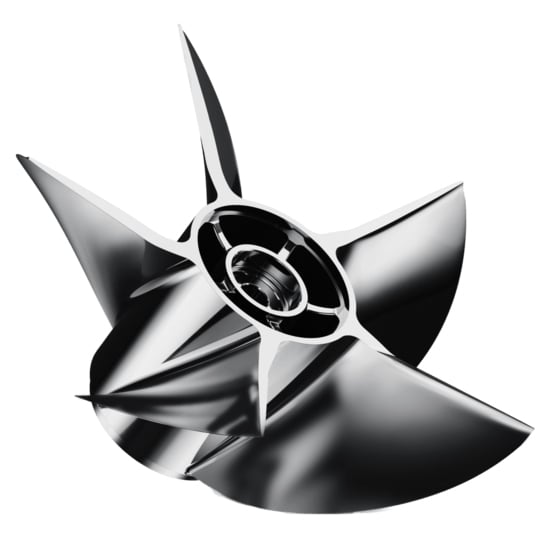
For passionate boaters, anglers, and marine professionals, optimizing your vessel's performance is key to a truly enjoyable and efficient experience on the water. While many boats come equipped with 3-blade or 4-blade propellers, a specialized option gaining significant traction for its unique benefits is the 5-blade propeller. These high-performance props are engineered to deliver a distinct set of advantages, making them an excellent choice for a variety of boats and applications.
At West Marine, we understand that choosing the right propeller is crucial for maximizing your boat's potential. Let's dive into the world of 5-blade propellers, exploring what makes them stand out, their ideal uses, and why they might be the perfect upgrade for your marine adventures.
Understanding the Propeller: More Than Just a "Screw"
Before we delve into the specifics of five blades, let's quickly review the basics. A boat's propeller, often simply called a "prop," is a rotating fan-like structure that converts the rotational power of your engine into thrust, pushing your boat through the water. Key characteristics include:
- Blades: The individual foils that push against the water.
- Hub: The central part that connects the blades to the propeller shaft.
- Diameter: The total distance across the circle swept by the propeller blades.
- Pitch: The theoretical distance the propeller would move forward in one revolution if it were moving through a soft solid, like a screw.
The number of blades, their design, and the propeller's overall Diameter and Pitch all play a critical role in how your boat performs.
The Distinct Advantages of 5-Blade Propellers
So, what is a 5-blade prop good for? The addition of more blades fundamentally changes how the propeller interacts with the water, leading to several compelling benefits that address common boating challenges. Boaters often choose a 5-blade propeller over other types for these specific performance enhancements:
Reduced Vibration and Quieter Operation
One of the most significant advantages of a 5-blade propeller is its ability to dramatically reduce vibration and noise. With more blades sharing the load, each blade experiences less stress and creates smaller pressure pulses in the water. This results in a smoother, quieter ride, which is particularly noticeable at various speeds, especially during cruising. For those long days on the water, whether you're fishing, cruising with family, or simply enjoying the tranquility, a quieter cabin and less hull vibration significantly enhance comfort. This makes them ideal for pleasure boats, cabin cruisers, and any vessel where passenger comfort is a priority.
Enhanced Mid-Range Performance and Acceleration
Five-blade propellers excel at getting your boat on plane quickly and efficiently. They provide superior "hole shot" – the initial burst of acceleration from a standstill. This increased thrust at lower RPMs is invaluable for:
- Watersports: Pulling skiers, wakeboarders, or tubers out of the water with ease and maintaining consistent speeds.
- Heavy Loads: Moving heavily loaded boats, such as large fishing vessels with full livewells and gear, or pontoon boats packed with passengers.
- Rough Water: Maintaining better grip and control in choppy conditions, preventing the prop from losing its bite.
This improved acceleration and mid-range power mean less throttle input is needed to achieve desired speeds, contributing to better overall control and responsiveness.
Superior Grip and Handling
With more blade surface area in the water, a 5-blade propeller offers exceptional grip. This translates to:
- Less Cavitation: Cavitation occurs when the propeller blades create low-pressure bubbles that collapse, leading to a loss of thrust and potential damage. Five-blade props are less prone to cavitation, especially in turns or when operating in aerated water.
- Improved Maneuverability: Better control during docking, tight turns, and low-speed operations.
- Consistent Performance: The propeller maintains a strong bite on the water, even in challenging conditions, providing a more stable and predictable ride.
Optimized Fuel Efficiency at Cruise Speeds
While often associated with high-performance, 5-blade propellers can also contribute to better fuel economy, particularly at typical cruising speeds. By operating more efficiently at lower RPMs and reducing slip, they can help your engine work less to maintain a steady pace. This can lead to noticeable fuel savings over time, a welcome benefit for any boater.
Increased Thrust for Heavy Applications
For larger, heavier boats or those that consistently carry significant loads, the increased thrust provided by a 5-blade propeller is a game-changer. The additional blade surface area allows the propeller to move more water, generating more forward force. This is crucial for vessels that need to push through challenging conditions or maintain speed with substantial weight.
5-Blade Propellers vs. Other Blade Counts: A Comparative Look
Is it better to have more blades on a propeller? The answer isn't a simple yes or no; it depends entirely on your boat, engine, and primary use. There's no single "most efficient" number of propeller blades, as efficiency is relative to the application. Let's compare 5-blade props to their more common counterparts:
3-Blade Propellers
- Pros: Generally offer the highest top speed due to less drag from fewer blades. They are often lighter and more affordable. Good for lighter, faster boats where top-end speed is the priority.
- Cons: More prone to vibration, especially at lower RPMs. Can struggle with acceleration, particularly on heavier boats or when pulling watersports. More susceptible to cavitation and losing grip in rough water or tight turns.
- How much faster is a 3 blade vs 4 blade prop? Typically, a 3-blade prop will yield a slightly higher top speed than a 4-blade prop of similar Diameter and Pitch, assuming the engine can turn it at optimal RPM. However, the 4-blade will usually offer better acceleration and mid-range performance.
4-Blade Propellers
- Pros: A popular all-around choice, offering a good balance between top speed and acceleration. They provide better hole shot and reduced vibration compared to 3-blade props. Good for a wide range of recreational boats.
- Cons: May have a slightly lower top speed than a 3-blade prop. While smoother than a 3-blade, they don't match the vibration reduction of a 5-blade.
5-Blade Propellers (Recap)
- Best For: Unparalleled smoothness, exceptional acceleration, strong mid-range performance, superior grip, and increased thrust for heavy loads. Ideal for boats where comfort, pulling power, and precise handling are paramount.
- Trade-offs: While they excel in many areas, 5-blade propellers might result in a slightly lower top speed compared to a perfectly matched 3-blade prop on certain lighter, high-speed hulls. They can also be more expensive due to their complex design and manufacturing.
Ultimately, the "best" propeller blade count is the one that optimizes your boat's performance for your specific needs and how you use your vessel.
Motor Types Compatible with 5-Blade Propellers
Five-blade propellers are designed to work with a variety of marine motor types, offering performance enhancements across different propulsion systems:
- Outboard Motors: Increasingly popular for high-performance outboard setups, especially on larger center consoles, multi-engine boats, and vessels used for watersports. They help these powerful engines transfer their horsepower efficiently to the water, improving acceleration and mid-range cruise speeds.
- Sterndrive Motors: Many recreational cruisers, sport boats, and larger runabouts equipped with sterndrive engines can greatly benefit from the smooth operation and strong thrust of a 5-blade propeller. They help these boats get on plane faster and maintain efficient cruising.
- Inboard Motors: While less common for smaller recreational inboards, larger inboard-powered yachts, commercial vessels, and some specialized high-performance boats utilize 5-blade propellers. For these applications, the focus is often on maximizing thrust, reducing vibration for passenger comfort, and achieving optimal fuel efficiency at working or cruising RPMs.
Leading propeller manufacturers offer 5-blade options designed for specific engine brands and models, ensuring proper fit and optimal performance.
Types of Boats That Benefit from 5-Blade Propellers
Given their unique performance characteristics, 5-blade propellers are particularly well-suited for certain types of boats and boating activities:
- Cruisers and Cabin Boats: The reduced vibration and quieter operation are a huge plus for these vessels, enhancing the comfort of passengers during long journeys. The strong mid-range performance also helps maintain efficient cruise speeds.
- Houseboats and Pontoon Boats: These often heavy, large-surface-area boats require significant thrust to get moving and maintain speed. A 5-blade prop provides the necessary low-end power and grip, especially when loaded with people and gear.
- Wakeboard and Wakesurf Boats: For serious watersports enthusiasts, the rapid acceleration and ability to hold a consistent speed are critical. Five-blade propellers deliver the powerful hole shot needed to pull riders up quickly and maintain the precise speeds required for wake shaping.
- Heavy Fishing Boats (Offshore/Sportfishing): Large offshore fishing boats, often laden with fuel, ice, gear, and multiple anglers, benefit from the increased thrust and improved handling in rough seas. The enhanced grip helps maintain control when battling big fish or navigating challenging conditions.
- Catamarans and Multi-Hull Vessels: These boats can sometimes experience unique propeller ventilation issues. A 5-blade prop's increased blade surface area and grip can help mitigate these problems, providing smoother and more efficient propulsion.
- Commercial Vessels and Workboats: For applications where consistent thrust, durability, and fuel efficiency at working speeds are paramount, such as charter boats, dive boats, or utility vessels, 5-blade propellers offer a robust and reliable solution.
Key Specifications and Considerations When Choosing a 5-Blade Propeller
Selecting the right 5-blade propeller involves more than just counting blades. You'll need to consider several technical specifications to ensure it's perfectly matched to your boat and engine:
- Diameter: This is the measurement of the circle swept by the propeller blades. It's crucial to match the Diameter to your engine's power and the boat's hull design. An incorrect Diameter can lead to inefficient operation or engine overload.
- Pitch: The Pitch of a propeller determines how far it would theoretically move forward in one revolution. A higher Pitch generally means more top speed but less acceleration, while a lower Pitch provides better acceleration but less top speed. Five-blade propellers often allow for a higher Pitch than 3- or 4-blade props while still maintaining excellent acceleration due to their increased blade surface.
- Material:
- Stainless Steel: The most common choice for performance propellers. Stainless steel props are highly durable, resistant to corrosion, and offer excellent strength, allowing for thinner, more efficient blade designs. They are also more resistant to object damage.
- Aluminum: More affordable and lighter, aluminum props are a good choice for general recreational use. They are also designed to be more "sacrificial" in the event of striking an object, protecting your lower unit.
- Composite/Carbon Fiber: These lightweight, high-performance materials are used in specialized applications, offering unique strength-to-weight ratios and customizability.
- Hub System: Many modern propellers utilize interchangeable hub systems (like West Marine's own offerings or those from leading brands). This allows you to use the same propeller body with different engine makes and models, or to replace just the hub if it's damaged from an impact.
- Right-Hand vs. Left-Hand Rotation: Ensure the propeller's rotation matches your engine's rotation. Most single-engine boats use right-hand rotation. Multi-engine setups often use counter-rotating props for better steering and efficiency.
- Ventilation and Cavitation: While 5-blade props are less prone to these issues, understanding them is important. Ventilation occurs when air from the surface or exhaust gases are drawn into the propeller, causing it to lose grip. Cavitation is the formation of vapor bubbles on the blade surface due to low pressure. A properly selected 5-blade propeller can significantly reduce both.
- Matching to Engine RPM and WOT: It's vital that your propeller allows your engine to reach its recommended Wide Open Throttle (WOT) RPM range. If your RPMs are too low, the prop is "over-pitched"; if too high, it's "under-pitched." Consulting with a West Marine expert can help you find the perfect match.
Installation and Maintenance Tips
Once you've chosen your ideal 5-blade propeller, proper installation and regular maintenance are key to its longevity and performance:
- Installation: Always follow your engine manufacturer's guidelines for propeller installation. Use marine-grade grease on the propeller shaft, ensure the thrust washer, propeller, and castle nut are correctly installed, and torque the nut to the specified setting. Don't forget the cotter pin or locking tab to secure the nut.
- Regular Inspection: Before and after each outing, visually inspect your propeller for any signs of damage, such as bent blades, nicks, or cracks. Even minor damage can lead to vibration, reduced performance, and increased fuel consumption.
- Cleaning: Keep your propeller clean from marine growth. Barnacles and other fouling can significantly impact efficiency.
- Professional Help: If you notice excessive vibration, a drop in performance, or significant damage, it's best to consult with a marine mechanic or propeller specialist. They can assess the damage, recommend repairs, or advise on a replacement.
Optimizing Your On-Water Experience
The 5-blade propeller is a testament to advanced marine engineering, offering a compelling solution for boaters seeking to enhance their vessel's performance, comfort, and efficiency. By providing superior acceleration, reduced vibration, improved grip, and optimized fuel economy at cruise speeds, these propellers unlock a new level of on-water enjoyment.
Whether you're a dedicated angler needing strong thrust for heavy loads, a watersports enthusiast demanding quick planing, or a cruiser prioritizing a smooth, quiet ride, a 5-blade propeller might be the upgrade you've been looking for. Explore the options available and speak with the knowledgeable team at West Marine to find the perfect 5-blade propeller to elevate your boating experience.