The Power and Performance of Cupped Propellers
There's nothing quite like the thrill of being out on the water, whether you're cruising with friends, reeling in a trophy fish, or carving through waves on a wakeboard. Every boater shares a common desire: to get the most out of their vessel. While your engine provides the power, it's your propeller that translates that power into forward motion, making it one of the most critical components for your boat's overall performance.
For many marine enthusiasts, from seasoned captains to weekend adventurers, optimizing their boat's performance often leads to exploring specialized equipment. Among the most impactful upgrades you can make is choosing the right propeller, and for many applications, that means considering a cupped propeller. These innovative props are designed to enhance everything from your boat's speed and efficiency to its handling and ability to carry a load.
At West Marine, we're passionate about helping you make the most of your time on the water. In this comprehensive guide, we'll dive deep into the world of cupped propellers, explaining what they are, how they work their magic, and why they might be the perfect choice to unlock your boat's true potential.
Explaining How Propeller Cup Works
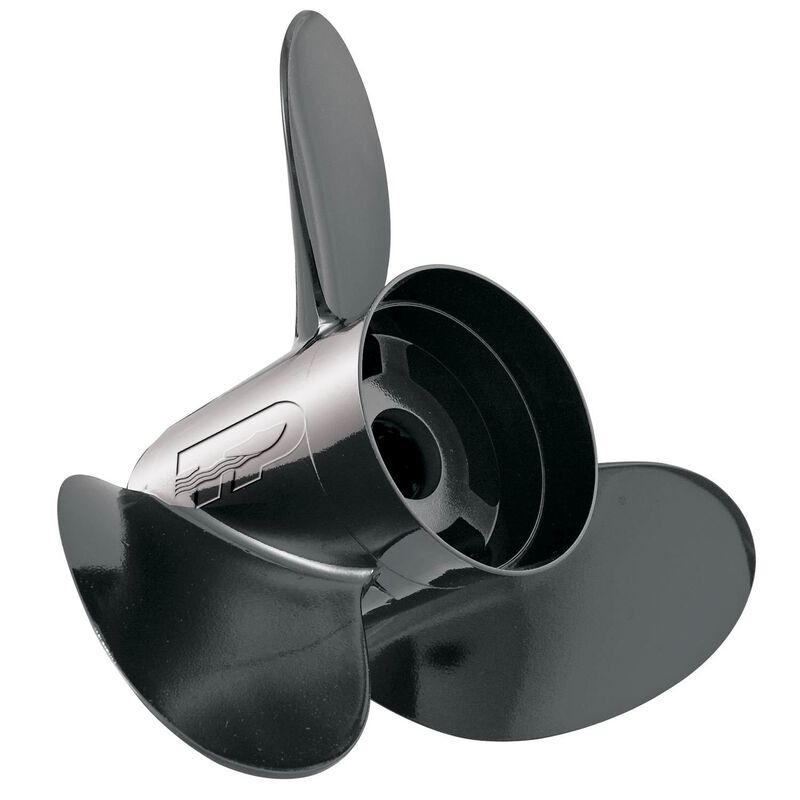
So, what exactly is a "cupped" propeller, and what does "cup" mean on a prop? Imagine looking at the trailing edge of a propeller blade – the edge that pushes water away from the boat. On a standard propeller, this edge is relatively flat. On a cupped propeller, however, you'll notice a subtle, curved lip or curl on this trailing edge, particularly near the blade tip. This small, yet significant, design feature is what we call the "cup."
This seemingly minor modification has a profound impact on how the propeller interacts with the water. The cup essentially creates a small, high-pressure area on the face of the blade, allowing the propeller to "grip" the water more effectively. Think of it like cupping your hand to scoop water – the cup helps you hold onto more water with each motion. This enhanced grip is the fundamental principle behind the many benefits of a cupped prop.
The Science Behind the Cup: How It Works
To truly appreciate the advantages of a cupped propeller, it helps to understand the underlying mechanics. What does cupping on a propeller do at a fundamental level?
The primary function of the cup is to increase the effective pitch of the propeller. Propeller pitch refers to the theoretical distance a propeller would move forward in one revolution if it were moving through a solid medium, like a screw through wood. A cupped propeller, by holding water more efficiently, acts as if it has a slightly higher pitch than its measured or "nominal" pitch. This means that for every revolution, the cupped blade pushes more water, generating greater thrust.
Beyond increasing effective pitch, the cup plays a crucial role in mitigating common propeller issues like cavitation and ventilation:
- Cavitation: This occurs when the pressure on the back side of the propeller blade drops so low that the water boils, forming vapor bubbles. These bubbles then collapse violently, causing noise, vibration, and erosion on the propeller surface. The cup helps maintain higher pressure on the blade's face, reducing the likelihood of these pressure drops and thus minimizing cavitation.
- Ventilation: This happens when air from the surface or exhaust gases are drawn into the propeller blades, causing the prop to lose its grip on the water, similar to a car tire spinning on ice. The cup's design helps the blade maintain a stronger, more consistent bite on the water, even when the propeller is operating close to the surface or in turbulent conditions, significantly reducing ventilation.
By reducing slip (the difference between theoretical and actual forward movement) and preventing cavitation and ventilation, a cupped propeller ensures that more of your engine's power is efficiently converted into forward motion. This translates directly into improved performance across various aspects of your boat's operation.
Propeller Cup Benefits: Why Boaters Choose Them
The advantages of a cupped propeller are numerous and can significantly enhance your boating experience. Boaters choose cupped props for a variety of reasons, all stemming from their superior ability to grip the water.
Improved Grip and Reduced Slip
One of the most immediate benefits you'll notice with a cupped prop is its enhanced grip on the water. This means less propeller slip, especially during acceleration, in turns, or when encountering choppy conditions. With a better bite, your engine's power is more effectively transferred to the water, leading to a more direct and responsive feel. This is particularly beneficial for boats that frequently operate in rough water or need precise handling.
Enhanced Bow Lift
A cupped propeller can help lift the bow of your boat, allowing it to ride higher on the water. This reduces the wetted surface area of the hull, which in turn decreases drag. Less drag means your boat can achieve higher top speeds with the same amount of power. Beyond speed, improved bow lift can also lead to a more comfortable ride in choppy conditions, as the boat rides over waves rather than plowing through them. For performance boats, achieving the optimal running attitude is key, and a cupped prop is a vital tool in that pursuit.
Increased Top Speed (in Certain Applications)
While not a universal guarantee, in many applications, a cupped propeller can lead to a noticeable increase in top speed. This is a direct result of the reduced slip and improved bow lift. By making the propeller more efficient at higher engine RPMs, your boat can often achieve a few extra miles per hour at wide-open throttle, making it a popular choice for those who crave maximum speed.
Better Hole Shot and Acceleration
For boaters who need to get on plane quickly, such as watersports enthusiasts pulling skiers or wakeboarders, or bass fishermen needing rapid acceleration to their next spot, a cupped propeller delivers a significant advantage. The increased thrust and grip from the cup provide a stronger "hole shot," allowing your boat to accelerate faster and plane more rapidly. This means less time struggling to get up to speed and more time enjoying your activity.
Reduced Engine RPM at Cruising Speed
Because a cupped propeller is more efficient at converting engine power into thrust, it can often achieve the same cruising speed at a lower engine RPM compared to a non-cupped prop of the same nominal pitch. This can lead to several benefits:
- Improved Fuel Efficiency: Running your engine at lower RPMs for the same speed can result in noticeable fuel savings over time.
- Reduced Engine Wear: Less stress on the engine can contribute to its longevity.
- Quieter Operation: A lower RPM often means a quieter ride, enhancing comfort for everyone on board.
Versatility and Load Carrying
Cupped propellers are excellent for boats that frequently carry varying or heavy loads. Whether you're loading up with fishing gear, extra passengers, or supplies for a long trip, the cupped prop's ability to maintain its grip and thrust under load ensures consistent performance. It helps prevent the engine from bogging down and allows the boat to stay on plane more easily, even when fully loaded.
When to Apply Cup: Matching Propellers to Your Boat
The decision to use a cupped propeller depends largely on your boat type, motor type, and desired performance characteristics. While beneficial for many, they aren't a one-size-fits-all solution.
Types of Boats That Need a Cupped Propeller
Cupped propellers are particularly beneficial for a wide range of boats, especially those seeking enhanced performance, better load-carrying capabilities, or improved handling:
- Performance Boats: This includes bass boats, sport boats, and offshore racing hulls. These vessels are designed for speed and quick acceleration, and a cupped prop helps them achieve their maximum potential by reducing slip and increasing bow lift.
- Boats with High Trim Angles: If your boat tends to run with its bow high, or if you frequently trim your engine up for speed, a cupped prop can help prevent ventilation and maintain a solid bite on the water.
- Boats Carrying Heavy Loads: Pontoon boats, workboats, and larger fishing boats often carry significant weight. A cupped propeller helps these boats get on plane more easily and maintain speed without bogging down the engine, even with a full livewell or extra gear.
- Watersports Boats: Ski boats and wakeboard boats require excellent hole shot and consistent pull to get riders up quickly and maintain speed. The strong thrust provided by a cupped prop is ideal for these applications.
- Boats with Jack Plates or High Engine Mounting: When an engine is mounted higher on the transom or on a jack plate, the propeller operates closer to the surface, making it more susceptible to ventilation. Cupped props excel in these situations by maintaining grip.
Different Motor Types That Benefit
Cupped propellers are widely used across various motor types, though their prevalence can vary:
- Outboard Motors: This is arguably the most common application for cupped propellers. From small fishing boats to high-horsepower offshore rigs, cupped props are a go-to choice for improving the performance of outboard-powered vessels. They are available for a vast range of horsepower ratings and boat sizes.
- Sterndrive (I/O) Motors: Boats equipped with sterndrive engines also frequently benefit from cupped propellers, especially those used for watersports, cruising, or when seeking better overall efficiency and speed.
- Inboard Motors: While less common than for outboards or sterndrives, cupped propellers can still be beneficial for certain inboard applications. For instance, heavier displacement boats or houseboats might use cupped props to improve low-speed maneuverability, enhance reverse thrust, or reduce cavitation in specific operating conditions. The design might be more subtle or specialized for these applications.
Specific Scenarios for Choosing a Cupped Prop
Consider a cupped propeller if you are:
- Experiencing frequent cavitation or ventilation, especially in turns or when trimming up.
- Looking to improve your boat's hole shot and get on plane faster.
- Seeking to maximize your boat's top speed (after ensuring your current prop is correctly pitched and your engine is reaching its optimal RPM range).
- Running a boat that carries varying or heavy loads and needs consistent performance.
- Engaging in watersports where strong, consistent pull is essential.
Cupped vs. Standard Propellers: Making the Right Choice
When deciding between a cupped and a standard propeller, it's important to consider your specific boating needs and how each type affects performance.
A standard, non-cupped propeller is often sufficient for general cruising, lower horsepower applications, or lighter boats where maximum performance isn't the primary concern. They are typically more affordable and provide reliable, straightforward propulsion.
However, if you're looking to optimize your boat's performance, a cupped propeller often provides a significant upgrade. It's important to note that because a cupped prop effectively increases the pitch, you might need to adjust your propeller's nominal pitch when switching from a non-cupped to a cupped design. A common "rule of thumb" is that a cupped propeller will perform similarly to a non-cupped propeller with 1 inch more pitch. For example, a 19-inch pitch cupped prop might feel like a 20-inch pitch non-cupped prop in terms of engine RPM and load. This is a generalization, and actual performance will vary based on your specific boat, engine, and propeller design.
The key is to ensure your engine reaches its recommended wide-open throttle (WOT) RPM range with the chosen propeller. If your engine is over-revving with a standard prop, a cupped prop (or a higher pitch cupped prop) could bring the RPMs down into the optimal range while improving performance. Conversely, if your engine is struggling to reach its WOT RPM, a cupped prop might further reduce RPMs, indicating you might need to reduce the nominal pitch or consider a different propeller style.
Propeller material also plays a role in how cupping is applied and its effectiveness.
Propeller Materials and Cupping
- Stainless Steel Propellers: These are generally preferred for performance applications and are often the material of choice for cupped props. Stainless steel is much stronger and more durable than aluminum, allowing manufacturers to create more aggressive and precise cup designs. This material's rigidity ensures the cup maintains its shape under load, delivering consistent performance. Stainless steel props are also more resistant to damage from impacts and corrosion, making them a long-term investment for serious boaters.
- Aluminum Propellers: While more affordable and common for general use, aluminum props can also feature cupping. However, due to aluminum's softer nature, the cup might not be as aggressive or as precisely formed as on a stainless steel prop. Aluminum props are a good choice for recreational boaters who want some of the benefits of cupping without the higher cost of stainless steel, or as a spare prop.
Maintaining Your Cupped Propeller
Regardless of whether your propeller is cupped or not, regular inspection and maintenance are crucial for optimal performance and longevity. How do you tell if your propeller is bad? Look for signs of damage such as:
- Dings and Bends: Even minor impacts can deform the blades, affecting balance and performance. Pay close attention to the trailing edge where the cup is located, as damage here can negate its benefits.
- Cracks: Hairline cracks, especially near the hub or blade roots, can indicate structural weakness.
- Erosion: Pitting or rough spots on the blade surface, often caused by cavitation, can reduce efficiency.
- Vibration: If you notice unusual vibration while underway, it could be a sign of a damaged or unbalanced propeller.
If your cupped propeller sustains damage, it's highly recommended to seek professional propeller repair. Repairing a cupped prop requires specialized knowledge and tools to ensure the cup's precise shape and angle are restored, maintaining its performance characteristics. Attempting to "flatten cupped" damage yourself is not advisable, as it can permanently alter the prop's design and negatively impact your boat's performance.
Optimize Your Boating Experience with Cupped Propellers
Cupped propellers represent a significant advancement in marine propulsion, offering a compelling array of benefits that can transform your boating experience. From boosting your boat's top speed and improving fuel efficiency to enhancing hole shot, grip, and overall handling, the subtle curve of the cup delivers tangible results.
Whether you're a dedicated angler needing quick acceleration, a watersports enthusiast demanding strong pull, or a cruiser seeking a smoother, more efficient ride, a cupped propeller might be the upgrade you've been looking for. At West Marine, we're here to help you navigate the options and find the perfect propeller to match your boat, engine, and unique boating lifestyle. Explore our extensive selection and speak with our knowledgeable experts to unlock your boat's full potential on the water.
Can propeller cup be adjusted or modified to improve performance?
Yes, propeller cupping can be professionally adjusted or modified to fine-tune your boat’s performance. Increasing the cup can enhance bow lift, reduce cavitation, and slightly raise the effective pitch—resulting in better top-end speed and improved handling at high RPMs. Decreasing the cup can reduce drag and help lower the engine's RPMs if over-revving is an issue.
However, cup adjustments should always be done by a qualified propeller technician using specialized equipment. Modifying the cup incorrectly can negatively affect performance, increase fuel consumption, or cause vibration and stress on the engine. These changes are often made in small increments based on sea trial results and engine performance data to dial in the optimal setup for your specific hull, load, and running conditions.
Key reasons to adjust propeller cup:
- Improve planing time and acceleration
- Increase or decrease RPMs for optimal powerband
- Reduce prop ventilation or cavitation
- Correct engine over- or under-revving
- Enhance fuel efficiency at cruising speed
Custom cupping is a valuable tool for performance boaters, tournament anglers, and anyone seeking to get the most out of their engine-propeller-hull combination.
Frequently Asked Questions about Propeller Cupping and Performance
Q: What does cupping on a propeller do?
A: Cupping on a propeller improves grip in the water, reduces slippage, and enhances bow lift and acceleration. It also increases the effective pitch of the propeller, which can lead to better top-end performance. Additionally, cupping helps reduce cavitation and ventilation, making the prop more efficient and stable at higher speeds.
Q: What does a cupped prop look like?
A: A cupped propeller has a distinctive curved lip or slight curl along the trailing edge of each blade. This curl is subtle but noticeable, and it’s designed to channel water more effectively. The cupped section can often be seen when viewing the blade from the side or edge-on.
Q: What does "cup" mean on a prop?
A: "Cup" refers to the curved lip or trailing edge on a propeller blade. It’s similar to the shape your hand makes when cupping water. This curvature modifies the blade’s performance characteristics—primarily by increasing pitch and improving grip in the water.
Q: How do you tell if your propeller is bad?
A: Signs that your propeller may be bad include dings, bends, cracks, chipped edges, corrosion, or visible erosion. You might also notice unusual vibrations, reduced performance, difficulty getting on plane, or increased fuel consumption. Regularly inspecting your prop is key to catching these issues early.
Q: How do you flatten cupped damage on a propeller?
A: You should not attempt to flatten cupped areas or repair propeller damage yourself. Cupping is a precision modification, and improper handling can ruin performance or cause further damage. Always take a damaged or cupped propeller to a professional prop shop for inspection and repair.
Q: What is the reason the propeller is twisted?
A: A propeller appears twisted because each blade is designed with a different angle of attack along its length. This variation, known as progressive pitch, ensures that the blade delivers uniform thrust from hub to tip. It maximizes efficiency and reduces stress during rotation in the water.