The Ultimate Guide to Fishing Reels: How to Choose the Right Reel for Every Style
Find the Best Fishing Reel for Your Technique, Target Species, and Water Type
Choosing the right fishing reel is one of the most impactful gear decisions an angler can make. The reel you select directly affects your casting distance, line control, drag performance, and ability to land fish. At West Marine, our team of on-the-water fishing experts has curated a comprehensive selection of fishing reels to match every technique and environment—from the long, smooth casts of spinning reels to the pinpoint accuracy of baitcasting models to the raw offshore muscle of conventional reels. Whether you’re a first-time angler or a seasoned tournament competitor, this guide will help you gear up with confidence.
What This Guide Covers
- In-depth breakdowns of spinning, conventional, and baitcasting reels—how each works and who it’s built for
- Key features, advantages, and ideal uses for each reel type
- West Marine’s expert-recommended reels and standout brands including Shimano, Daiwa, and Penn
- Essential buying factors: drag systems, gear ratios, ball bearings, and corrosion resistance
- Pro tips from West Marine’s fishing specialists to maximize performance and extend gear life
- How to properly pair your reel with the right fishing rod and fishing line
Whatever your skill level, target species, or fishing destination, this guide gives you the information to choose a reel that maximizes your success—and your enjoyment—every time you hit the water.
Understanding the Three Main Types of Fishing Reels
Not all fishing reels are created equal. Spinning, conventional, and baitcasting reels each operate differently and excel in specific situations. Understanding those differences is the first step to building a setup that truly works for you. Explore our full range of fishing reels or read on for a deep dive into each category.
Spinning Reels: Simple, Smooth, and Always Ready
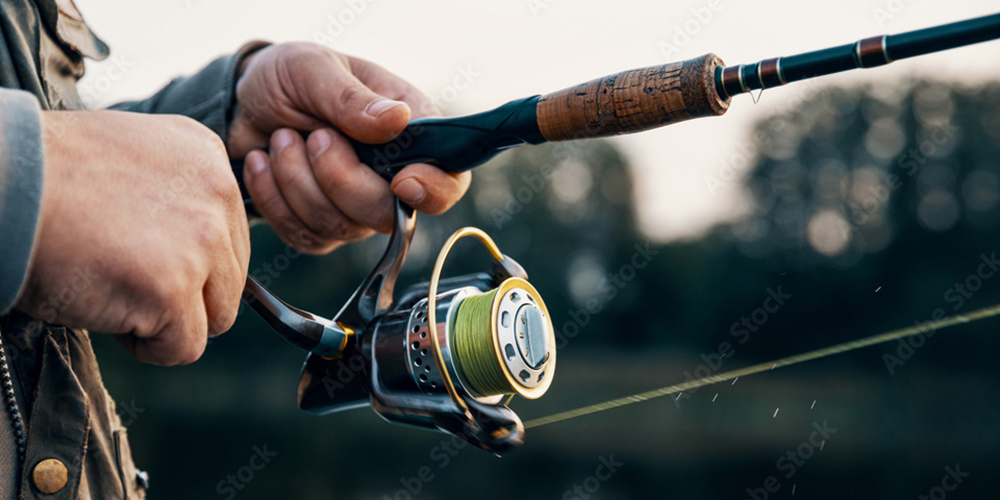
Spinning reels are the most widely used reel type in the world—and for good reason. Their open-faced, fixed-spool design makes casting lightweight lures and live bait exceptionally easy, and their forgiving nature reduces line tangles and backlashes that frustrate beginners. From freshwater bass fishing to inshore saltwater action, a quality spinning reel delivers reliable performance across a massive range of techniques and species.
Spinning Reel Features and Benefits
- Easy to Use: The fixed spool design eliminates the learning curve associated with baitcasting. Spinning reels are forgiving on awkward casts and dramatically less prone to line tangles, making them ideal for anglers at any level.
- Exceptional Versatility: Spinning reels shine across freshwater lakes and rivers chasing bass, crappie, trout, and walleye, as well as inshore saltwater flats targeting redfish, snook, and speckled trout. They also handle light surf and pier fishing with ease.
- Low Maintenance and Long-Lasting Durability: Quality spinning reels are built with corrosion-resistant bearings and hardened gearing designed to withstand years of regular use. A simple freshwater rinse after each saltwater trip goes a long way toward protecting your investment.
- Light Lure Capability: Spinning reels excel with lighter lures and finesse presentations where baitcasters can struggle, making them the go-to choice for finesse fishing techniques.
Ideal Usage and Recommendations for Spinning Reels
- Best For: Light to medium tackle presentations in both freshwater and inshore saltwater environments; small to medium target species
- Target Species: Bass, crappie, trout, walleye, redfish, snook, speckled trout, pompano, and whiting
- Why Anglers Love Them: Most anglers start with a spinning reel—and many never give them up. Their smooth drag, natural feel in hand, and readiness for everything from panfish to surf-zone casting make them one of the most trusted tools in any tackle bag. Pair yours with a quality spinning rod for a perfectly balanced setup.
Conventional Reels: Heavy Line, Heavy Lifting
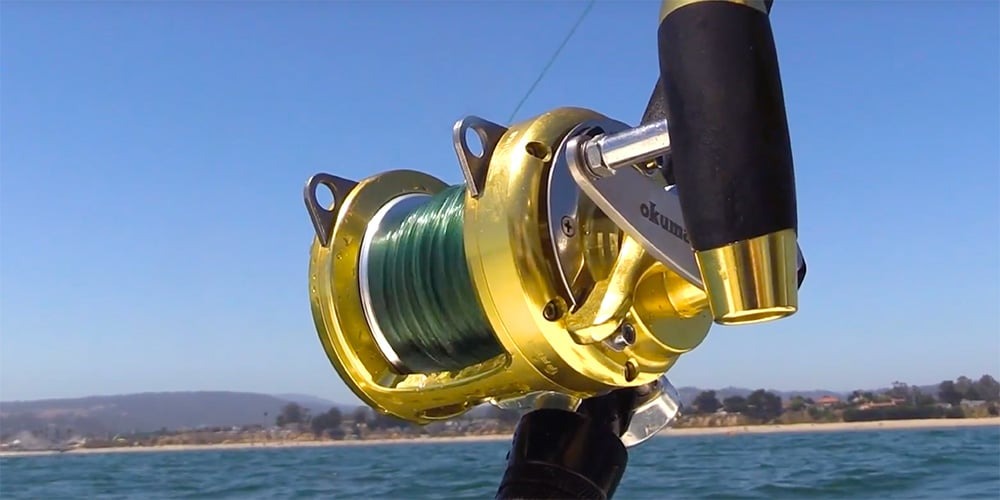
When you’re ready to tangle with the biggest species in the ocean or descend to deep-water bottom structure, conventional reels are built for the challenge. Designed around a rotating spool mounted parallel to the rod, these reels deliver maximum torque, line capacity, and mechanical advantage for the kinds of fights that test both angler and gear. They are the standard choice for serious offshore and big-game fishing worldwide.
Conventional Reel Features
- Powerful, Smooth Drag Systems: Engineered to apply consistent, sustained pressure to large, fast, and aggressive fish without stuttering or overheating during extended battles.
- Stainless Steel Gears and Rugged Frames: Built to thrive in corrosive salt spray, heavy wave action, and the mechanical stress of hauling large fish from depth. Premium conventional reels use full-metal frames for minimal flex under load.
- Extended Line Capacity: Wide-body spools hold hundreds of yards of heavy monofilament or braided line—essential for deep-drop bottom fishing, high-speed trolling, and long runs from pelagic species.
- Two-Speed Options: Many offshore conventional reels feature two-speed gearing, allowing anglers to shift between a fast retrieve ratio and a lower, high-torque gear for grinding up stubborn fish from depth.
Ideal Usage and Recommendations for Conventional Reels
- Best For: Offshore trolling, deep-drop and bottom fishing, live-bait kite fishing, and any application requiring maximum line capacity and drag pressure
- Target Species: Grouper, snapper, amberjack, wahoo, mahi-mahi, yellowfin tuna, swordfish, and blue marlin
- Why Serious Anglers Choose Them: When dropping heavy rigs 200 feet or more, running a multi-rod trolling spread, or fighting a 200-pound fish, conventional reels deliver the winch-like power and system reliability required to land the catch of a lifetime. Pair yours with a matched conventional rod and quality heavy monofilament or braided line for an optimized offshore setup.
Baitcasting Reels: Precision with Personality
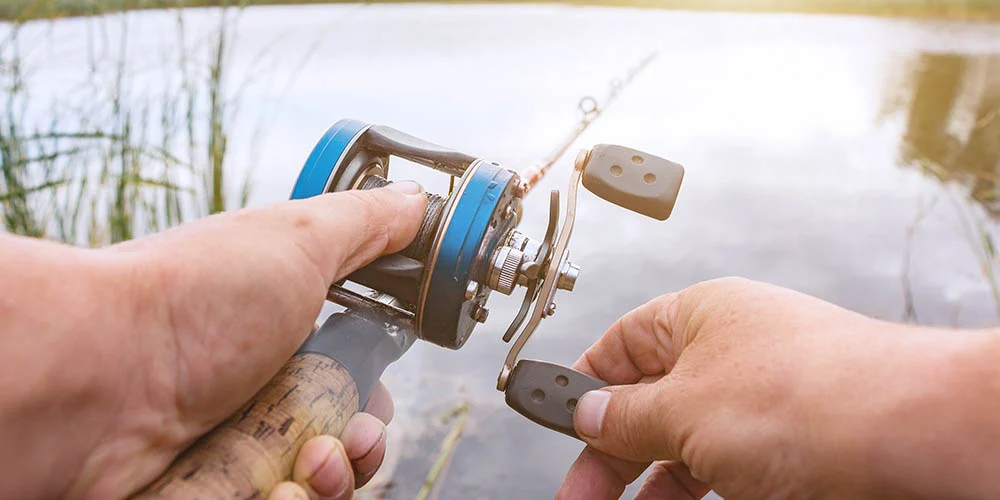
Baitcasting reels are the tool of choice for anglers who demand precise lure placement, superior line management, and the ability to feel every subtle bite through a low-stretch braided connection. Unlike spinning reels, baitcasters mount on top of the rod and use a revolving spool, giving skilled anglers unmatched casting control. While they come with a steeper learning curve, the performance payoff—especially in accuracy-dependent situations like fishing heavy cover, docks, and tight structure—is unmatched.
What Baitcasting Reels Are Known For
- Direct Spool Control: Because the spool rotates with your cast, an experienced angler can feather the line with their thumb to stop the lure precisely where they want it—under docks, into dense vegetation, or tight against structure where fish hold.
- Fast Retrieve and Heightened Sensitivity: Top-mounted design and direct spool contact allow you to feel every vibration, work a lure with total precision, detect subtle strikes, and drive hooks home quickly on the hookset.
- Adjustable Braking Systems: Modern baitcasting reels feature magnetic, centrifugal, or digital braking technology to tune spool behavior for different lure weights and casting styles. Proper brake adjustment is key to eliminating backlashes while maximizing distance and accuracy.
- High Gear Ratios: Many baitcasting reels offer gear ratios of 7:1 and above, allowing rapid lure retrieves for reaction-bite fishing and burning topwater lures across the surface.
Ideal Usage and Recommendations for Baitcasting Reels
- Best For: Medium to heavy freshwater and inshore applications where casting precision and lure control are paramount
- Target Species: Largemouth and smallmouth bass, redfish, snook, striped bass, and any species holding tight to cover or structure
- Why Enthusiasts Swear By Them: Once the learning curve is cleared, baitcasters deliver a level of finesse, leverage, and accuracy that dedicated anglers find indispensable. Everyone has a first-backlash story, but the payoff of precise lure placement in the strike zone makes it well worth the effort. Pair with a quality baitcasting rod sized for your target species for the best results.
Choosing the Right Fishing Reel: A Practical Comparison
Matching your reel to your preferred fishing style, target species, and water type is the foundation of a high-performing setup. Use the chart below as a starting point:
|
Fishing Style |
Water Type |
Target Fish Size |
Recommended Reel Type |
|
Light tackle, versatile presentations, finesse |
Freshwater / Inshore Saltwater |
Small–Medium |
|
|
Offshore trolling, deep-drop, bottom fishing |
Offshore Saltwater |
Large–Very Large |
|
|
Precision casting, heavy cover, structure fishing |
Freshwater / Inshore Saltwater |
Medium–Large |
West Marine Pro Tips: Chasing trout in a mountain stream? Reach for a lightweight spinner in the 1000–2500 size range with 6–8 lb monofilament. Heading offshore for tuna or mahi? Load up a heavy conventional reel with 50–80 lb braid. Fishing bass under a dock or around laydowns? Your baitcaster—and your educated thumb—will earn their keep.
In-Depth Look at West Marine Fishing Reels
West Marine has been equipping anglers for decades. When sourcing fishing reels, our buying team prioritizes real-world strength, precision engineering, and long-term durability. We carry the industry’s most trusted brands—Shimano, Daiwa, and Penn—across all reel categories, giving every angler access to the same performance gear used by tournament professionals and seasoned offshore captains.
Spinning Reels at West Marine
Our spinning reel lineup features proven performers from Daiwa and Shimano—two brands synonymous with buttery-smooth drag, precise gearing, and corrosion-resistant construction for both freshwater and saltwater applications. Whether you’re picking up your first reel or upgrading a well-worn workhorse, you’ll find the right option here.
Featured Spinning Reel Models
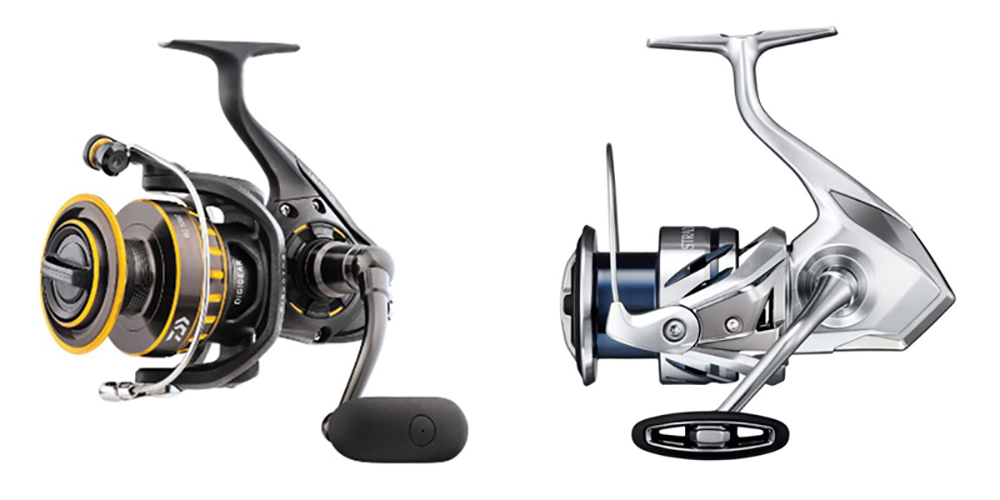
Daiwa BG Series (left) and Shimano Stradic (right) — two of West Marine’s top-rated spinning reels.
-
Daiwa BG Spinning Reel: A versatile inshore favorite engineered with a rigid aluminum body, oversized drive gear, and Daiwa’s signature ATD (Automatic Tournament Drag) system for smooth, consistent pressure under load. Excellent for redfish, snook, and larger trout.
- Shimano Stradic: Built around Shimano’s HAGANE cold-forged gear technology and MGL Rotor for reduced oscillation and silky-smooth retrieves. A trusted choice for anglers who demand both refined performance and long-term reliability.
Conventional Reels: West Marine’s Offshore Muscle
When battling big fish at the surface or grinding up heavyweights from deep-water structure, West Marine’s conventional reels offer the strength, line capacity, and corrosion resistance to go the distance—trip after trip, year after year.
Featured Conventional Reel Models
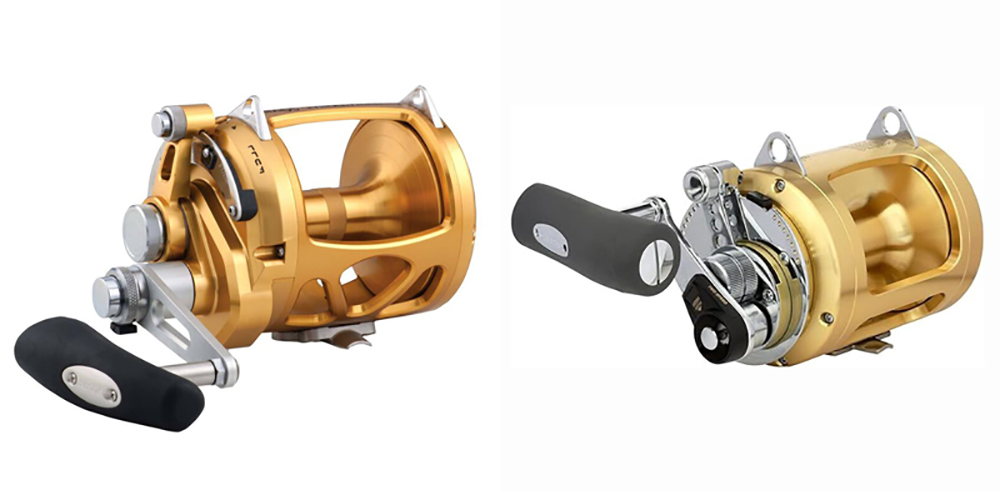
Penn International VI (left) and Shimano Tiagra (right) — West Marine’s premier conventional reels for offshore big-game fishing.
-
Penn International VI: An iconic big-game reel built around a full-metal frame, stainless steel main shaft, and Penn’s legendary HT-100 drag system. Trusted by offshore captains worldwide for battling marlin, tuna, and swordfish.
- Shimano Tiagra: Legendary among offshore enthusiasts for its Shimano-engineered drag system, robust aluminum frame, and precise two-speed gearing. Built to endure years of demanding offshore use with minimal maintenance.
Baitcasting Reels at West Marine
For anglers who want complete control over every cast, West Marine’s baitcasting reel selection delivers precision engineering, responsive braking, and the kind of sensitivity that elevates your fishing. From entry-level models ideal for learning the platform to tournament-grade reels used by pros, we have the right baitcaster for where you are in your angling journey.
Featured Baitcasting Reel Models
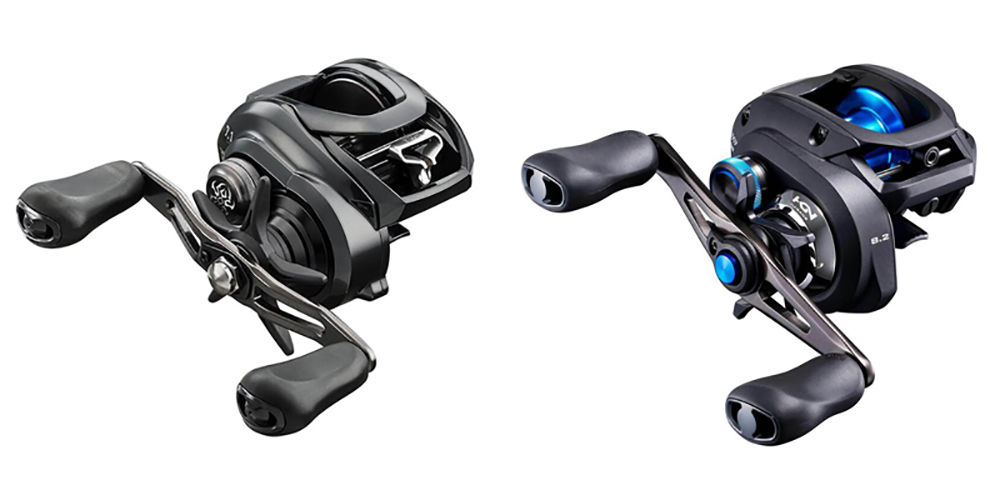
Daiwa Tatula (left) and Shimano SLX DC (right) — precision baitcasting reels for anglers who demand accuracy.
-
Daiwa Tatula: Engineered with a lightweight magnesium frame, T-Wing System for reduced line friction, and Daiwa’s MAGFORCE-Z cast control for virtually backlash-free performance—even when pushing the limits of cast distance.
- Shimano SLX DC: Powered by Shimano’s proprietary Digital Control (DC) braking system, the SLX DC automatically adjusts spool brake force thousands of times per cast—making precision casting more accessible and consistent than ever before.
Key Factors to Consider When Buying a Fishing Reel
Beyond reel type, several technical factors significantly affect real-world performance. Understanding these specs helps you choose a reel that will work optimally for your specific application—and last for seasons to come.
- Drag System: The drag controls how much resistance a fish feels when it pulls against your line. Look for smooth, consistent drag with a wide range of adjustment to match your target species and the line strength you’re using. Carbon fiber and felt drag systems are both reliable choices in quality reels.
- Gear Ratio: Expressed as rotations per handle turn (e.g., 6.2:1), gear ratio determines how fast line is retrieved. Higher ratios (7:1 and above) favor fast-moving lures and quick hooksets, while lower ratios (4:1–5:1) produce more torque for grinding in large, stubborn fish.
- Corrosion Resistance: Especially critical for saltwater applications. Look for reels with stainless steel or shielded bearings, anodized aluminum bodies, and sealed drag systems. Proper rinsing and occasional lubrication extend reel life dramatically.
- Ball Bearings: More high-quality bearings generally translate to smoother performance. Look for corrosion-resistant stainless or HPCR bearings, and prioritize bearing quality over sheer count—a reel with 5 quality bearings often outperforms one with 10 cheaper ones.
- Line Capacity and Compatibility: Match your reel’s spool capacity to the fishing line and application you plan to use. Deep-drop bottom fishing requires far more line than inshore casting, and braided line’s thinner diameter significantly increases effective capacity.
- Weight and Balance: A reel that feels balanced on your rod reduces fatigue during long sessions. Lighter graphite or magnesium frames suit finesse and all-day casting situations, while heavier full-metal frames are preferred for offshore applications where rigidity and heat dissipation matter more than weight.
Pro Tips from West Marine Fishing Experts
-
Maintain for Longevity: Always rinse your reel thoroughly with fresh water after exposure to salt, sand, or heavy use. Periodically apply manufacturer-recommended reel oil to bearings and grease to gears to prevent corrosion and keep the mechanism smooth.
- Match Your Complete Setup: A reel performs best as part of a balanced system. Pair your reel with an appropriately powered fishing rod and matched line and leader for optimal casting distance, sensitivity, and fish-fighting performance. Browse our rod and reel combos for pre-matched options curated by our experts.
- Practice Baitcaster Tuning: Before your first trip, spend time adjusting the spool tension knob and brake system on a baitcaster. Dial it in for the weight of lure you’re throwing. A well-tuned baitcaster casts farther, more accurately, and with dramatically fewer backlashes than one left on factory settings.
- Size Your Reel to Your Rod: Spinning reels are sized numerically (1000, 2500, 4000, etc.)—match the size to your rod’s recommended reel size for best balance and performance. Conventional reels are sized by line capacity; match the spool to the line weight your rod is rated for.
Choose the Right Fishing Reel — Fish with Confidence
The right fishing reel does far more than hold line—it defines how smoothly you cast, how confidently you fight fish, and how much you enjoy every moment on the water. When your reel is properly matched to your fishing style, target species, and conditions, your entire setup works in harmony and every trip becomes more productive.
West Marine’s selection of spinning, conventional, and baitcasting reels is built around real-world performance, proven durability, and trusted brands that serious anglers depend on. Backed by decades of on-the-water experience, our expert guidance helps anglers of every level choose reels that deliver consistent results trip after trip. Complete your setup by exploring our full selection of fishing rods, rod and reel combos, and fishing line and leaders—or browse the entire West Marine fishing department for everything you need to hit the water ready.