Fishing Line, Leaders, and Terminal Tackle: The Details That Land More Fish
Rods and reels get most of the attention, but ask any experienced angler what actually determines whether a fish is landed or lost and the answer is almost always the same: the small stuff. Your fishing line is the only physical connection between you and the fish. Your leader is what stands between that connection and a bite-off, a break-off on structure, or a refusal from a line-shy species. Your terminal tackle—hooks, swivels, snaps, sinkers—is what makes the entire presentation work. Get any of these components wrong and even the finest rod and reel on the market won’t save you. Get them right, and you create a system where everything from the cast to the catch is working in your favor.
West Marine carries a complete selection of fishing line, leaders, and terminal tackle matched to every fishing environment, target species, and technique. This guide explains how to choose the right components, how they work together as a system, and how to maintain them so they perform at the highest level every time you go out.
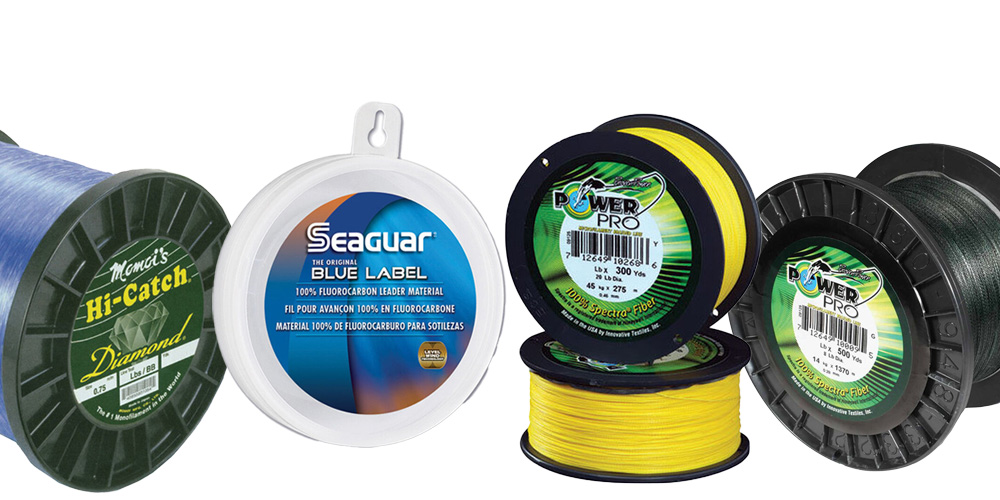
Choosing the Right Fishing Line
The three main fishing line types—monofilament, braided, and fluorocarbon—each have distinct physical properties that make them better suited to specific techniques, environments, and target species. Understanding those differences is the foundation of building a setup that actually performs. Most experienced anglers use all three at different times, often combining them on the same outfit: braid as the mainline for its strength-to-diameter ratio and sensitivity, with a fluorocarbon or monofilament leader for stealth and abrasion resistance at the business end.
What to Look for in Fishing Line
- Match line type to your technique and environment: Braided line for sensitivity and strength in heavy cover or deep water; monofilament for stretch and forgiveness with topwater lures or live bait; fluorocarbon for stealth and abrasion resistance in clear water or around structure.
- Consider water clarity and fishing pressure: In clear or heavily fished water, low-visibility line prevents line-shy fish from detecting your presentation before they strike.
- Select line strength appropriate to your target and structure: Heavier line handles larger fish and rougher structure; lighter line improves casting distance and lure action but reduces break strength margin. Balance both against the realistic demands of your fishing.
- Account for stretch and sensitivity: Low-stretch lines transmit vibration and strike detection more efficiently—critical when fishing jigs or working bottom structure where the difference between a strike and a snag is subtle.
- Factor in abrasion resistance: Fishing around rocks, shell beds, oyster bars, dock pilings, or in the surf zone subjects line to constant wear. Choose accordingly—or use a heavier abrasion-resistant leader to protect your mainline.
- Replace line regularly: UV exposure, saltwater immersion, and repeated tension cycles degrade line strength over time—often invisibly. Fresh line at the start of each season, or more frequently with heavy use, is insurance that costs very little compared to losing a trophy fish.
- Spool reels correctly: Apply proper tension when spooling, fill to the correct capacity for your reel, and match line diameter to the reel’s rated capacity to maximize casting distance and minimize wind knots or backlash.
Monofilament Fishing Line
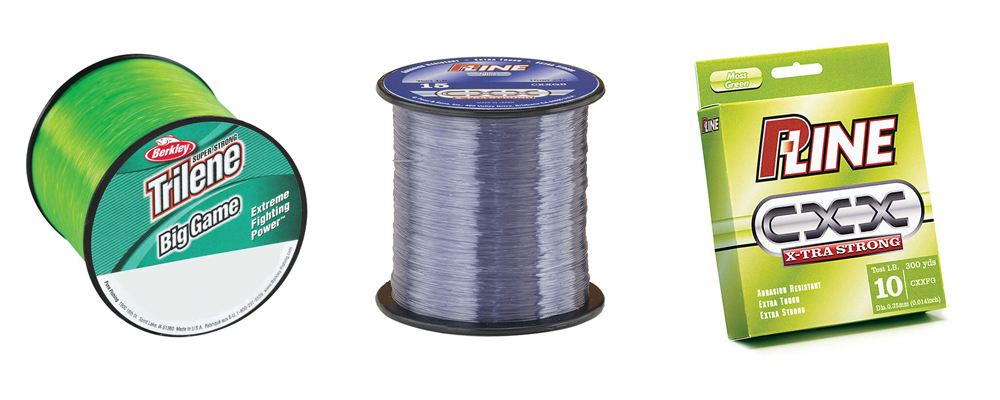
Monofilament is a single-strand extruded nylon line and remains one of the most widely used line types in fishing worldwide. Its natural stretch—typically 15–30% elongation before break—acts as a shock absorber during hard strikes and sudden directional changes, making it genuinely forgiving in ways that zero-stretch braided lines are not. It floats, knots easily with standard fishing knots, and is available in a wide range of pound-test ratings at accessible price points.
- Pros: Stretchy and forgiving during hard runs; floats naturally for topwater applications; easy to knot reliably; affordable and widely available
- Cons: More visible to fish than fluorocarbon; degrades faster under UV exposure; loses memory and becomes stiff in cold water; reduced sensitivity compared to braid
- Best For: Topwater lure fishing where the line’s buoyancy helps keep lures on the surface; live and cut bait presentations; general-purpose freshwater setups; offshore monofilament top-shots over braided backing in conventional reels
West Marine stocks monofilament from ultralight 4 lb test for freshwater finesse applications to 100+ lb heavy monofilament used as offshore leader material and top-shots for large conventional reels targeting tarpon, tuna, and billfish.
Braided Fishing Line
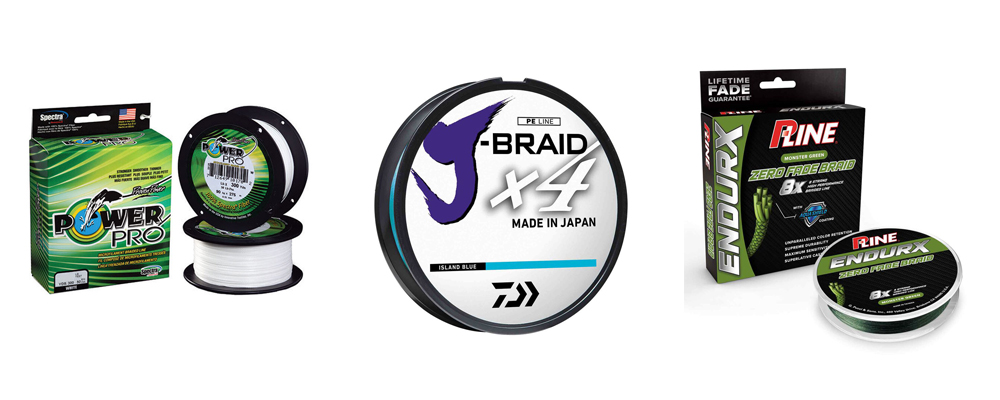
Braided line is constructed from multiple woven strands of ultra-high-molecular-weight polyethylene (UHMWPE) fibers—materials so strong that an 8-strand 30 lb braid has roughly the same diameter as 8 lb monofilament. That thin-for-its-strength ratio is what makes braided line transformative: it enables more line capacity on a given spool, longer casting distances with the same lure weight, and direct transmission of strikes and bottom composition to the rod tip. The zero-stretch construction means there is no lag between a fish taking the bait and the angler feeling it.
- Pros: Exceptional strength-to-diameter ratio; near-zero stretch for instant sensitivity and hooksets; virtually no line memory; outstanding durability that outlasts mono significantly
- Cons: Zero stretch means less forgiveness on hard runs—a shock leader or drag setting adjustment is critical; more visible in clear water; requires specific knots (Palomar, braid-specific FG knot); can cut into rod guides if guides aren’t braid-rated
- Best For: Deep water fishing where sensitivity at depth is critical; pulling fish out of heavy vegetation or dense structure; jigging with vertical jigs; any application where maximizing line capacity on a spool is important
West Marine stocks braided line from ultra-thin 6 lb test for finesse freshwater presentations to 200 lb heavy offshore braid used as backing in large-capacity conventional reels for billfish and giant tuna. Always pair braid with a fluorocarbon or monofilament leader to reduce visibility and add abrasion resistance at the terminal end.
Fluorocarbon Fishing Line
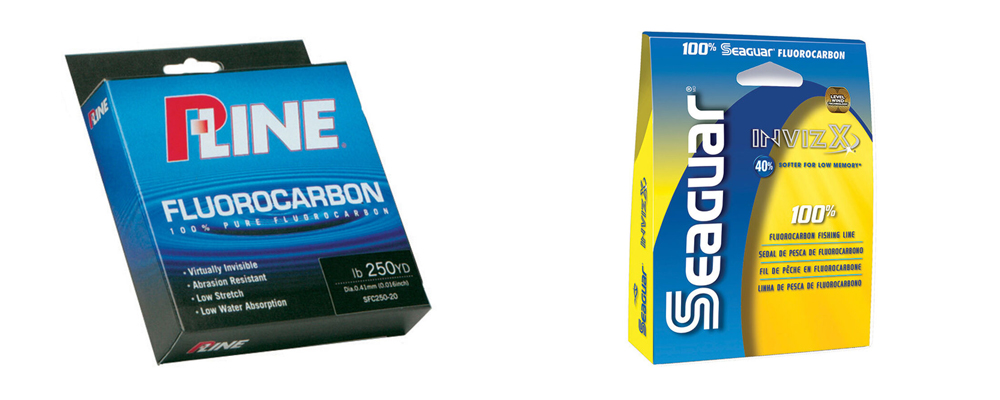
Fluorocarbon’s defining characteristic is its refractive index—nearly identical to water—which makes it effectively invisible once submerged. Unlike monofilament, it does not absorb water and maintains consistent strength and stiffness regardless of how long it’s been in the water. Its density causes it to sink faster than mono, pulling lures and baits down more naturally and keeping them in the strike zone longer. These properties have made fluorocarbon the dominant leader material across virtually every style of fishing where line visibility is a factor.
- Pros: Near-invisible underwater due to low light refraction; superior abrasion resistance around rocks, coral, and structure; sinks naturally; does not absorb water or lose strength when wet; resists UV degradation better than mono
- Cons: Stiffer than mono, which can reduce casting distance on some setups; requires careful knot tying as some knots slip on fluorocarbon’s smooth surface; higher cost than monofilament
- Best For: Leader material in virtually all inshore and freshwater applications; mainline in clear-water finesse situations; heavy leaders for sharp-toothed offshore species like wahoo and king mackerel where wire isn’t required
West Marine’s fluorocarbon selection spans from light 6 lb leader material for trout and bass in clear lakes to 200+ lb heavy fluorocarbon shock leaders used in offshore and surf fishing applications.
The Importance of Fishing Leaders
A fishing leader is a length of line—typically fluorocarbon or monofilament—connected between your mainline and your hook or lure. Its purpose is to provide properties at the terminal end of your rig that your mainline cannot. In most inshore and freshwater setups, this means a short fluorocarbon leader (12–36 inches) to reduce visibility near the bait. In offshore applications, this means a heavier shock leader to absorb the initial strike from a large fish, and in toothy species situations, a wire or ultra-heavy fluorocarbon bite leader that resists being severed.
Why You Need Fishing Leaders
- Reduce visibility near the bait or lure: In clear water or pressured fisheries, high-visibility braided mainline near the hook is often enough to trigger refusals. A clear fluorocarbon leader bridges the gap between the braid's strength and the stealth required to get bites.
- Increase abrasion resistance: When fishing rocky reefs, shell beds, oyster bars, dock pilings, or jetties, a heavier leader absorbs the wear that would otherwise cut through standard mainline in a single session.
- Protect against sharp teeth and rough mouths: Bluefish, king mackerel, wahoo, barracuda, and pike can sever monofilament or fluorocarbon instantly with their teeth. Heavy fluorocarbon (80–100 lb) or single-strand wire leaders are essential when targeting these species.
- Absorb shock during hard strikes: Offshore species like tarpon, tuna, and large snook hit baits with explosive force. A heavier shock leader isolates the initial impact, protecting both the mainline and the connection to the hook against failure at the moment of greatest stress.
- Enable quick adaptation to conditions: Changing from a 20 lb fluorocarbon leader to a 40 lb monofilament as conditions change takes seconds with a quality swivel and snap—far faster than re-spooling a reel.
- Provide a controlled break point at snags: A properly sized leader acts as the weakest link in a controlled way—snapping at the leader rather than the mainline when hopelessly snagged, saving expensive lures and the bulk of your line.
- Improve bait presentation: Lighter, thinner leaders allow baits and soft plastic lures to move more naturally in the current, improving the realism of the presentation and triggering strikes from fish that would otherwise follow and refuse.
Selecting the Right Leader
Leader selection should be deliberate, not an afterthought. West Marine stocks both raw leader material for building custom leaders and pre-tied leaders for anglers who want a reliable ready-made option.
- Fluorocarbon leaders: The standard choice for inshore and freshwater applications. Use 15–30 lb for redfish, speckled trout, and bass; 40–60 lb for snook and tarpon where gill plates and structure are factors; 80–100 lb for toothy inshore species and light offshore applications.
- Monofilament leaders: Preferred as offshore shock leaders where some stretch helps absorb the initial violence of a large fish’s strike. Heavy mono (80–200 lb) is the standard top-shot and leader material for tuna, marlin, and large pelagic species on conventional tackle.
- Leader length: Shorter leaders (12–18 inches) for finesse freshwater applications; medium leaders (24–48 inches) for most inshore use; long leaders (6–15 feet) for offshore applications where IGFA regulations define leader specifications, or wherever fish visibility of the mainline connection is a concern.
Experienced anglers often swap leaders multiple times in a single session—lighter in glassy conditions when fish are spooky, heavier when the current picks up and fish are feeding aggressively near structure. Having multiple pre-tied leaders ready to go in different weights is one of the simplest ways to stay adaptable and stay fishing.
Essential Terminal Tackle Components
Terminal tackle encompasses everything attached to the end of your leader—the components that directly interact with fish, water, and substrate on every cast. Quality hooks, swivels and snaps, sinkers and weights, and floats and bobbers each play a specific mechanical role in keeping your presentation working and your connections strong. Skimping on terminal tackle is one of the most common and costly mistakes anglers make—these components fail at the worst possible moments.
Fishing Hooks
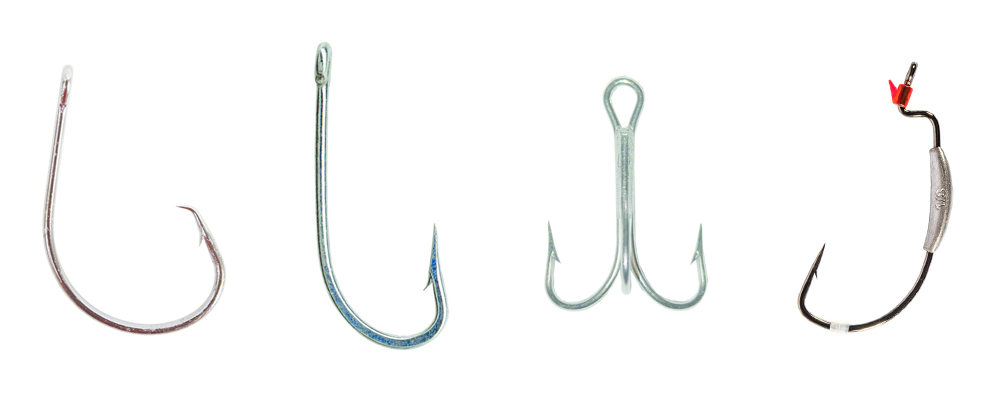
The hook is the single most critical piece of terminal tackle—it is literally the only component that makes contact with the fish. Hook style, size, wire gauge, and sharpness all directly affect hookup rate and the likelihood of landing the fish once hooked. Fishing hooks come in a wide range of designs, each purpose-built for specific bait types, fish species, and rigging styles.
Hook Types and Their Applications
- Circle Hooks: The in-turned point is designed to roll into the corner of the mouth as the fish swims away, dramatically reducing gut-hooking and improving catch-and-release survival rates. Required by law in some fisheries; strongly recommended for live and cut bait fishing across all saltwater species. Do not set the hook on a circle—simply reel until the rod loads.
- J-Hooks: The traditional hook style for most bait fishing applications. Set the hook immediately and firmly on the strike. Available in sizes from #20 for panfish to 10/0 for offshore big-game rigging.
- Treble Hooks: Three-point hooks standard on most hard bait lures, crankbaits, and topwater plugs. Maximize hookup opportunities on fish that strike and miss but stay near the lure. Replace factory trebles with sharp, corrosion-resistant aftermarket trebles to significantly improve lure performance.
- Offset (EWG) Hooks: Wide-gap hooks with an offset point, designed primarily for rigging soft plastic lures weedlessly. The offset point allows the hook to ride point-up and buried in the bait until a fish strikes, then penetrate on the hookset.
Hook Buying Considerations
- Match hook size to the fish’s mouth and your bait: A hook too large prevents bait from moving naturally; one too small fails to achieve sufficient penetration. Use hook-size charts as a starting point and adjust based on field experience with your specific target.
- Prioritize sharpness and corrosion resistance: A chemically sharpened, corrosion-resistant hook penetrates on light pressure and resists failure in saltwater. Test hook sharpness by dragging the point across your thumbnail—it should catch immediately without pressure. Replace hooks that drag or skip.
- Choose wire gauge appropriate to your target’s strength: Light wire hooks penetrate easily on small, soft-mouthed species; heavy wire hooks hold under the sustained pulling power of large, strong fish.
Swivels and Snaps
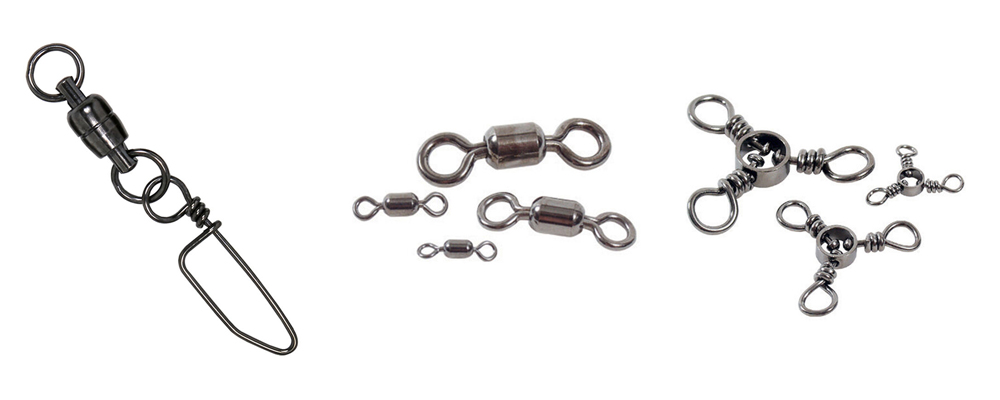
Swivels and snaps are small components with a significant effect on fishing efficiency and line performance. A swivel’s rotating mechanism prevents the twist that spinning lures, live bait, and trolling presentations impart to line—twist that accumulates over time, tangles, weakens line, and ruins presentation. Snaps allow fast lure or rig changes without cutting and retying, which keeps you fishing more and rigging less.
Types of Swivels and Snaps
- Barrel Swivels: The standard swivel for most fishing applications—a simple two-eye rotating mechanism that prevents line twist effectively in most scenarios. Match the rated strength to or above your mainline strength.
- Ball-Bearing Swivels: Use precision internal ball bearings to rotate smoothly under high load and speed—essential for trolling applications where a standard swivel would bind under resistance. Required for high-speed trolling spreads for wahoo, tuna, and kingfish.
- Snap Swivels: Combine a rotating barrel with a spring-loaded snap for fast attachment and lure changes. Popular for bottom fishing rigs, trolling skirts, and any application where quick rig swaps are valuable.
- Coast-Lock and McMahon Snaps: Heavy-duty closure mechanisms for offshore trolling, live-bait bridle rigs, and any application where a snap must hold under sustained heavy load without risk of opening.
Always choose swivels and snaps rated at or above your line’s breaking strength. A swivel that fails under pressure is just as costly as a line break. West Marine’s selection includes corrosion-resistant options rated for both freshwater and saltwater environments.
Sinkers and Weights
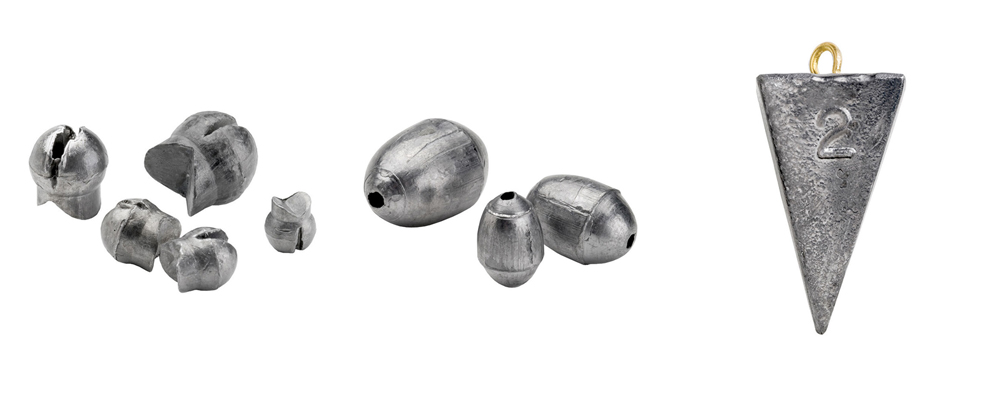
The right sinker or weight controls where your bait sits in the water column and how it moves through current or structure. Choosing the wrong sinker style or weight for the conditions results in lost bait, poor presentation, and missed fish. Heavier isn’t always better—the goal is to use the minimum weight required to keep your bait in the strike zone without impeding natural movement.
Sinker and Weight Types
- Split Shot: Small, clamp-on weights added directly to the line for subtle presentations. Perfect for finesse freshwater rigs, adjusting the sink rate of soft plastic lures, and adding minimal weight to live bait rigs without restricting movement.
- Egg Sinkers: Smooth, oval-shaped slip sinkers that thread directly onto the line. The slip design allows fish to pick up bait and move without immediately feeling resistance—ideal for bottom fishing with live or cut bait for grouper, snapper, and redfish.
- Pyramid Sinkers: Four-sided, pointed sinkers designed to dig into sandy or muddy bottom and hold position against current—essential for surf fishing, pier fishing, and any application where maintaining bait position in moving water is the priority.
- Bank and Coin Sinkers: Flat-profile weights that resist snagging on rocky or coral bottom. Used in bottom rigs for structure-oriented species where a rounded sinker would roll into crevices and hang up.
- Bullet/Cone Weights: Streamlined weights that slide through weeds and grass with minimal resistance. The standard weight for Texas-rigged soft plastics in freshwater bass fishing.
Floats and Bobbers
Floats and bobbers suspend bait at a precise, adjustable depth and serve as a highly visible strike indicator. Beyond their basic function, modern floats are engineered for specific applications: popping corks used in inshore fishing create noise and surface disturbance that mimics feeding fish and actively attracts predators to the bait; slip floats allow the line to run freely through the float until the fish is hooked; inline floats provide minimal resistance on the take for skittish species.
- Popping Corks: The standard inshore saltwater float for speckled trout and redfish. The concave face creates a distinctive popping noise when jerked, attracting fish to the suspended bait below.
- Slip Floats: The line passes through the float and is stopped at the desired depth by a bobber stop. Allows longer casts without the float impeding the cast, and provides minimal resistance when a fish takes the bait.
- Fixed Bobbers: Classic clip-on floats for freshwater applications. Simple, effective, and easy to adjust. Best for still water and slow-moving freshwater where casting distance is not a primary concern.
Building the Perfect Line and Tackle Setup
The most effective fishing setups treat line, leader, and terminal tackle as an integrated system rather than individual components. Each element should be chosen with the others in mind, creating a seamless chain from the spool to the hook where no single component is dramatically stronger or weaker than the rest.
Assembling Your Setup
- Select the right line: Evaluate your target species, local structure, water clarity, and technique before choosing between mono, braid, or fluorocarbon. For most inshore and freshwater setups, braid as mainline with a fluorocarbon leader is the highest-performance configuration.
- Match your leader to conditions: Adjust leader material, pound-test, and length based on species, structure, and water clarity. Have multiple pre-tied leaders in different weights ready before you launch—the ability to swap leaders quickly without retying is a significant competitive advantage.
- Choose terminal tackle for your specific rig: Match hook style and size to your bait and target species; use swivels and snaps rated above your line strength; select sinkers appropriate to bottom type and current; add floats when depth control or strike visibility is valuable.
West Marine offers both individual rigging components for custom setups and pre-made rigs for anglers who want a reliable ready-to-fish option. Pair your line and tackle with a matched rod and reel combo or browse our full selection of fishing rods and fishing reels to complete your setup.
Pro Tips: Knot Tying, Gear Maintenance, and Adaptability
The best line, leader, and terminal tackle in the world underperforms if connections are poorly tied, gear goes unmaintained, or an angler fails to adapt to changing conditions. These fundamentals are what separate consistently productive anglers from those who catch fish only when conditions cooperate.
Build Strong Connections with Proper Knot Tying
- Master a core set of knots matched to specific applications: the Palomar knot for braid-to-swivel connections; the improved clinch for mono-to-hook; the FG knot for braid-to-fluorocarbon leader; the Bimini Twist for creating a doubled line offshore. One knot mastered is worth ten known poorly.
- Practice tying in adverse conditions—low light, wet hands, wind, and boat movement are the norm, not the exception. Practice at home before those conditions arise on the water.
- Test every knot before fishing by pulling firmly and steadily. A properly seated knot shows no slippage and tightens uniformly—one that slips under testing will fail under a fish.
- Retie knots after every significant event: landing a fish, breaking free from a snag, dragging across hard bottom, or detecting any roughness in the line near the connection point.
- Moisten knots before cinching to reduce friction heat that weakens line during the tightening process—especially important with fluorocarbon and thicker monofilament.
Protect Performance with Consistent Gear Maintenance
- Rinse all gear with low-pressure freshwater after every saltwater trip, including hooks, swivels, snaps, and sinkers. Salt crystals left on terminal tackle accelerate corrosion between trips.
- Back off reel drags before rinsing to allow water to flush salt from internal drag systems without forcing it deeper under pressure.
- Inspect hooks after every trip for rust, dulled points, or bent shanks. A hook that fails a thumbnail sharpness test should be replaced, not reused.
- Check line near connections and knots for abrasion, nicks, or discoloration after each session. Run fingers along the last several feet of mainline and leader to detect wear that isn’t visually obvious.
- Store gear dry in a cool location out of direct sunlight between trips. UV exposure is one of the primary causes of premature line and monofilament leader degradation.
Stay Flexible and Adapt to Changing Conditions
- Adjust leader weight and length as water clarity, current speed, and fish behavior change through the day. The setup that produces in murky, moving water at dawn often needs to be scaled back significantly when the same area becomes glassy and clear at midday.
- Change sinker weight and style as current strength and bottom composition change. Carrying a range of sinker sizes—from 1/2 oz split shot to 4 oz pyramid weights—ensures you can match conditions without over- or under-weighting your presentation.
- Vary retrieve speed, lure action, and presentation angle systematically when fish are following without striking. Small changes in how a lure or bait moves are often enough to trigger a bite that persistence with a single retrieve style cannot.
- Carry a complete selection of terminal tackle on every trip. A tackle box stocked with multiple hook styles and sizes, swivels in various strengths, several sinker types, and extra leaders means no opportunity is missed because you don’t have what the conditions require.
From Cast to Catch: Confidence in Every Connection
Whether you’re chasing bass in a freshwater lake or battling pelagics 60 miles offshore, your fishing line, leaders, and terminal tackle are the foundation on which every other piece of gear depends. West Marine’s selection is built on knowledge gathered by anglers for anglers—corrosion-resistant hardware, specialized leader material, premium braided and monofilament lines, and a full range of terminal components that hold up from the first cast to the last fish of the day. Browse our complete fishing line and leaders collection, shop all terminal tackle, and complete your setup with quality lures and baits—or explore the full West Marine fishing department for everything you need on the water.