Fishing Species Guides: How to Catch Saltwater and Freshwater Fish by Region
Every fish species has its own personality. Some are aggressive and hit hard and fast on almost anything you throw. Others are selective, pressured, and will only bite under a very specific set of circumstances. Part of what keeps anglers hooked on fishing is learning those differences—understanding how each species behaves, where it lives, what it eats, and exactly how to trigger a strike when the moment is right. West Marine’s Fishing Species Hub was built for that purpose. Whether you’re a beginner targeting your first redfish or an experienced offshore angler dialing in a swordfish drop, these guides break down the how, when, and why behind each target species—so you can stop guessing and start catching.
For every species in this guide, you’ll find detailed information on feeding behavior, habitat, preferred baits and lures, rod and reel recommendations, suggested line strengths, and the best times of year to target them in your region. Each individual species page links directly to the gear West Marine’s fishing experts recommend—from fishing rods and reels to lures and baits, line and leaders, and terminal tackle—built around what actually works, not just what’s new on the shelf. Learning your target species is the first step to fishing smarter. These guides are your starting point.
Inshore and Coastal Fish Species: Exciting Fights and Even Better Eats
Inshore fishing is where most saltwater anglers begin—and where many stay, because the fisheries are that good. Sheltered bays, tidal creeks, grass flats, mangrove shorelines, and nearshore structure hold some of the most sought-after species in the sport. Light tackle magnifies every run and head shake, making inshore fights disproportionately exciting relative to fish size. These environments also reward observation and adaptability: inshore species are highly sensitive to tidal stage, water clarity, water temperature, and forage availability. Anglers who learn to read those conditions and adjust accordingly consistently out-fish those who don’t.
Most inshore setups center on a quality spinning rod paired with a matched spinning reel, light braided line, and a fluorocarbon leader. Browse our rod and reel combos for expert-matched inshore setups ready to fish.
Snook — The Shadow Hunter of the Mangroves
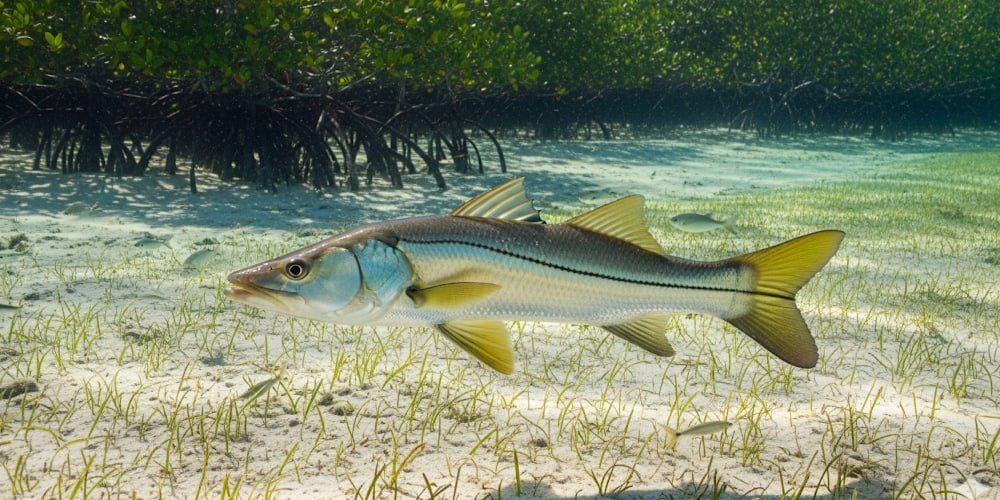
Snook are ambush predators built for structure. They position themselves where moving water funnels bait past mangrove edges, dock pilings, bridge abutments, and seawalls—then explode on anything that passes through their strike zone. The key to consistent snook success is timing. Moving tides, particularly the first two hours of an outgoing tide on a full or new moon, concentrate bait at predictable choke points and trigger aggressive feeding. Warm water is non-negotiable: snook become lethargic below 60°F and stop feeding below 55°F, making them almost exclusively a warm-season target in northern portions of their range.
Live bait—pilchards, pinfish, and mullet—fished on a free-line or with minimal weight along current seams is the most effective approach. Artificial presentations with soft plastic lures worked slowly through shadows and current breaks also produce consistently. Heavy fluorocarbon leaders (30–50 lb) are essential to protect against the snook’s abrasive gill plates.
Redfish — The Shallow-Water Brawler
Redfish are one of the most popular inshore targets in the southeastern United States, prized for their accessibility, aggressive feeding behavior, and powerful bull runs on light tackle. They can be found tailing in inches of water on shallow grass flats, cruising oyster bar edges on rising tides, holding in cuts and channels during low water, and schooling in open bays throughout the fall. Their adaptability makes them catchable across a wide range of conditions, but subtle adjustments in lure weight, retrieve speed, and presentation angle significantly increase hookup rates in pressured fisheries.
Gold spoons, weedless soft plastics, and live shrimp are consistently effective. For sight-casting to tailing reds in shallow water, a long, accurate cast ahead of the fish—not on top of it—is critical. Redfish are caught and released in most regions; consult your local regulations for slot size requirements before keeping any fish.
Tarpon — The Silver King Takes the Crown
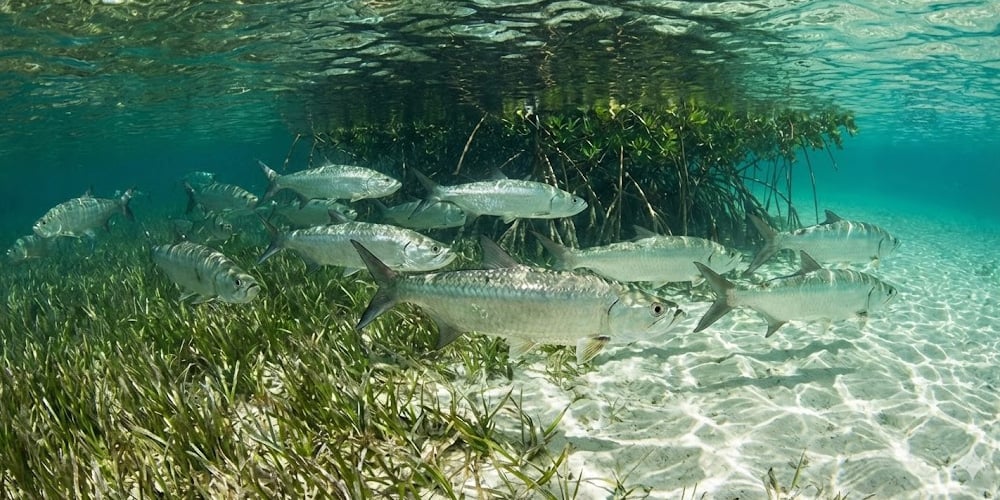
Tarpon are the pinnacle of inshore sport fishing—large, incredibly powerful, spectacularly acrobatic, and maddeningly selective. A hundred-pound tarpon that has seen thousands of lures in clear water requires a very different approach than one found rolling in a murky pass at night. These fish regularly inspect baits before committing, which means a drag that ticks quietly, a leader that disappears, and a bait that moves naturally can make the difference between a bite and a refusal.
Hookset technique is critical with tarpon: because of their bony, hard mouth, anglers must allow the fish to fully turn and load against the weight of the line before driving the hook home—known as “bowing to the king” on the initial jumps to prevent a thrown hook. Maintaining steady tension during aerial battles while giving line on violent jumps is the defining skill of successful tarpon fishing.
Speckled Trout — Light Tackle, Big Smiles
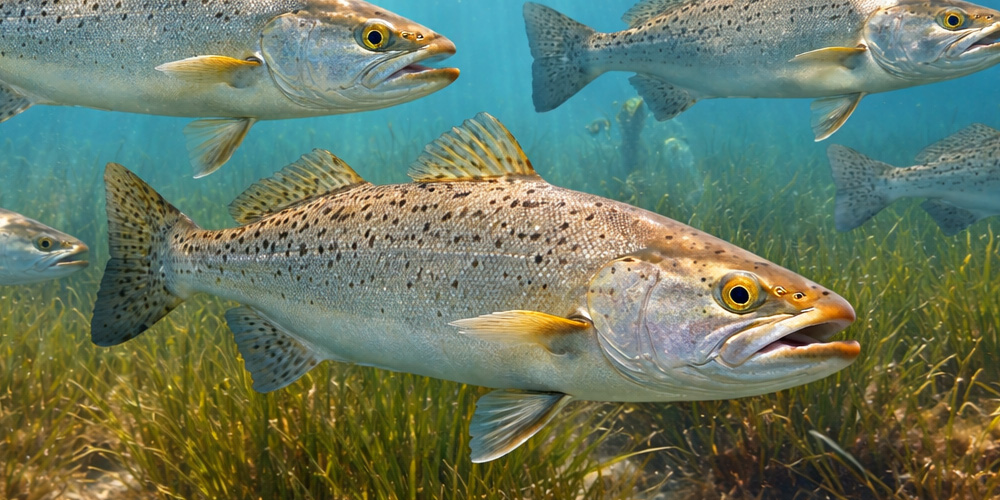
Speckled trout are among the most angler-friendly inshore species on the Gulf and South Atlantic coasts—cooperative, widespread, and willing to eat a wide range of presentations. They are highly temperature-sensitive and shift depth and location throughout the day and season. Early morning surface activity on topwater lures gives way to deeper grass lines and channel edges as sunlight increases water visibility and pushes fish lower. In winter, schools concentrate in deep holes and warm-water discharge areas.
Matching lure size and color to prevailing forage is one of the most effective ways to improve consistency on speckled trout. Light-colored soft plastics on jig heads in 1/4 to 1/2 oz produce reliably across most conditions. Topwater lures like walk-the-dog plugs are one of the most exciting ways to fish for trout at first and last light.
Sheepshead — The Dockside Thief
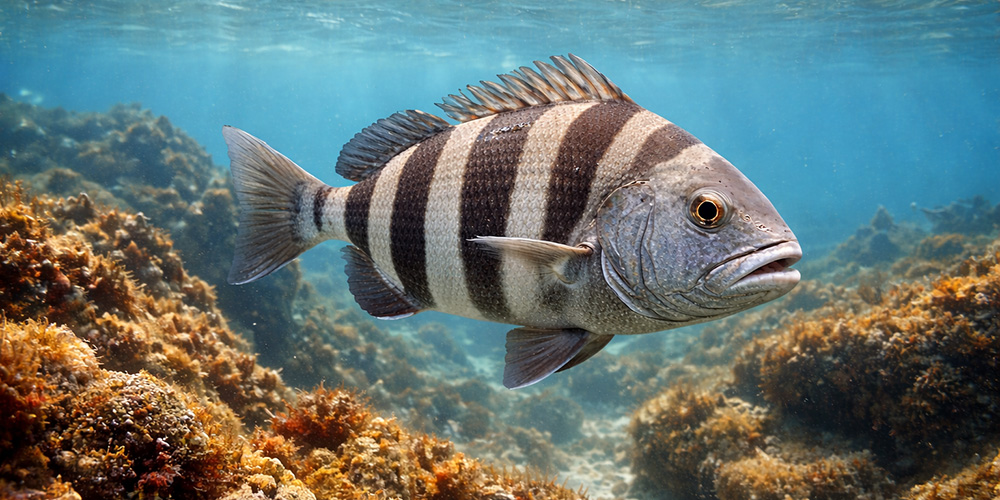
Sheepshead are notorious for their ability to strip bait off a hook without ever registering a definitive strike—earning them the nickname “convict fish” among frustrated dock anglers. Their strong, molariform teeth are designed to crush barnacles, oysters, crabs, and shrimp, which means bait needs to be small and rigged directly on the hook with minimal excess. Fiddler crabs, sand fleas, and live shrimp fished vertically on sharp, small-gap hooks are the most productive presentations.
Success with sheepshead demands attention. Light bites, barely perceptible line movement, and subtle rod tip pulses are all the warning you get before the bait is gone. Many successful sheepshead anglers describe the hookset timing as “set the hook before you feel the bite.” These are among the best-eating fish in inshore saltwater—well worth the extra concentration required.
Bluefish — The Bruiser with a Bite
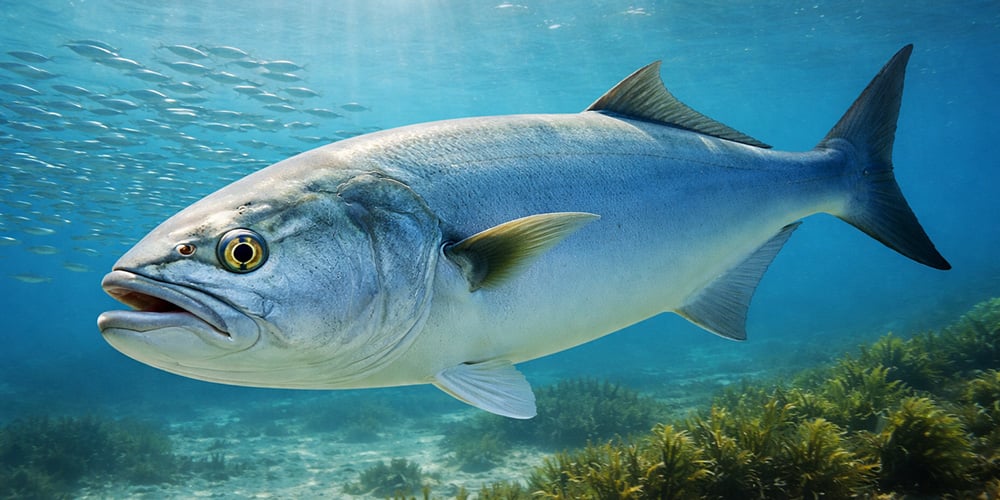
Few inshore species match the raw aggression of bluefish. When a school finds bait, the surface erupts into a violent feeding blitz that can last for minutes or hours—and once you’re into them, the action is relentless. Bluefish travel in large schools along the Atlantic coast, appearing in nearshore waters, inlets, and surf zones from spring through fall, following baitfish migrations with predatory efficiency.
Their razor-sharp teeth demand wire or heavy fluorocarbon leaders—anything lighter will be severed on impact. Metal spoons, cut bait, and fast-retrieved hard lures all produce. Keep extra terminal tackle on hand; bluefish are hard on gear. Handle carefully—those teeth bite anglers as readily as they bite lures.
Inshore Species Wrap-Up
Each inshore species featured here has its own dedicated guide with recommended gear, lure selections, bait types, and regional seasonal patterns—so you can plan your next trip down to the tide cycle. Because inshore conditions change rapidly, the anglers who consistently succeed are those who adapt to tide stages, adjust leader lengths and weights throughout the day, and learn to read environmental signals that others overlook. Mastery of inshore fishing builds instincts and observation skills that carry directly into offshore and freshwater pursuits.
Freshwater Classics: Tricky to Catch, Timeless to Eat
Freshwater fishing offers exceptional variety and accessibility—world-class bass fishing exists within driving distance of most of the U.S. population, and trout rivers, walleye lakes, and striper reservoirs are available in virtually every region of the country. Freshwater fisheries are governed heavily by seasonal cycles and water temperature. Fish movements follow predictable patterns tied to spawning periods, baitfish migrations, thermocline formation, and available oxygen levels. Anglers who learn these seasonal rhythms can target productive zones with consistency rather than covering water randomly.
Most freshwater applications are well served by a medium or medium-heavy spinning rod or baitcasting rod, matched with appropriate line and leader for your target species. Browse the full range of fishing rods and fishing reels at West Marine to build the right freshwater setup.
Largemouth Bass — The Backyard Heavyweight
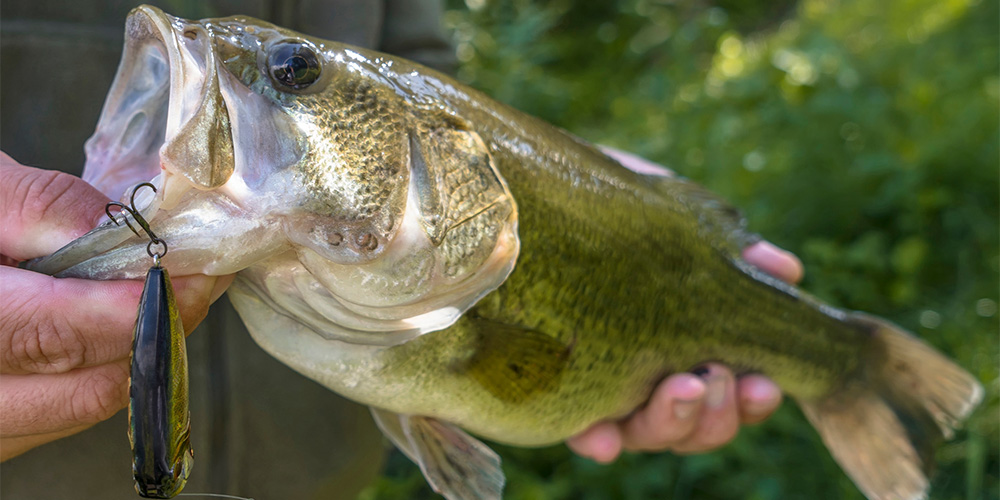
Largemouth bass are the most pursued freshwater game fish in the United States—and for good reason. They’re found in nearly every state, they bite aggressively on a wide range of presentations, and they grow large enough to provide a truly memorable fight on almost any tackle. Bass behavior shifts dramatically with the seasons: spring spawning periods bring fish shallow and onto beds where finesse presentations produce best; summer heat pushes fish toward deeper structure, shaded docks, and offshore humps where drop-shots and deep-diving crankbaits shine; fall triggers aggressive feeding binges as fish chase shad in open water; and winter consolidates them in the deepest, warmest water available.
The breadth of effective bass tactics is part of what makes bass fishing so endlessly engaging. From flipping heavy soft plastic jigs into heavy timber to throwing topwater frogs over lily pad fields to finesse-fishing drop-shots in 30 feet of clear water, there is always a technique matched to current conditions. A baitcasting rod paired with a high-speed reel and braided line is the preferred platform for most power bass techniques.
Striped Bass — The Coastal King
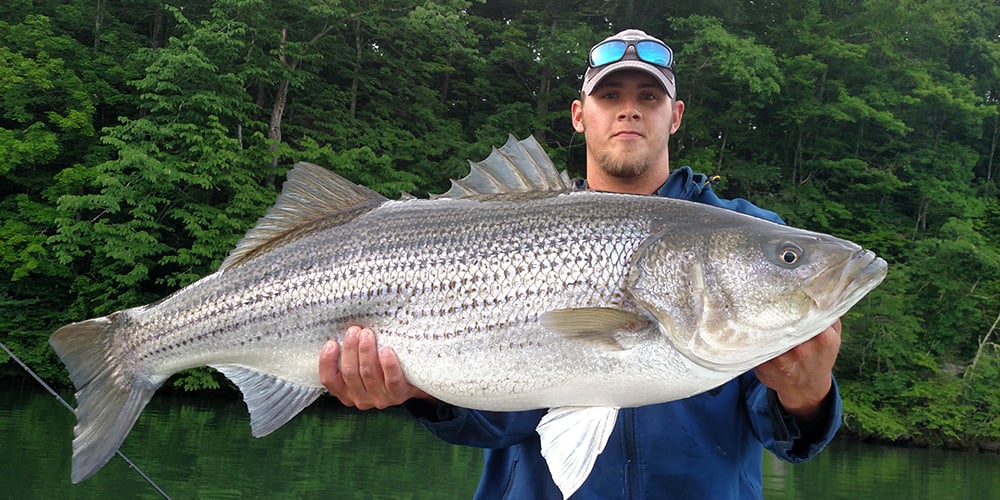
Striped bass occupy a unique position in American fishing—they are simultaneously one of the most important freshwater trophy species in landlocked reservoirs and one of the premier coastal game fish along the Atlantic seaboard. Their annual migrations connect major river systems to coastal waters, creating extraordinary crossover fisheries where anglers can intercept enormous fish during predictable movement windows. Understanding dam releases, baitfish migrations, and current flow patterns is the foundation of consistent striper fishing success.
Stripers are powerful, endurance-testing fish that reward preparation and persistence. Large swimbaits, live eels, chunk bait, and trolled umbrella rigs are among the most productive approaches depending on the season and location. Heavy-duty spinning reels or conventional reels loaded with quality braided line handle the demands of striper fishing across both freshwater and coastal environments.
Freshwater fishing can be easy to learn but genuinely hard to master. Every species on this list will test your abilities as an angler—whether you’re a beginner or a veteran. Our individual species guides break down feeding behavior, water temperature preferences, bait and lure recommendations, and seasonal movement patterns to help you land more fish on every trip. Freshwater fishing builds discipline and pattern recognition that transfers seamlessly into saltwater environments.
Offshore Giants: Big Targets, Big Rewards
Offshore fishing is another world entirely. Bigger water, bigger boats, bigger fish, and a level of complexity and preparation that separates it from any inshore or freshwater experience. When you’re running 30, 60, or 100 miles offshore, every decision matters: weather windows, fuel planning, equipment reliability, crew coordination, and the ability to adapt when conditions don’t cooperate. The reward for that commitment is access to some of the most powerful and spectacular fish on the planet.
Offshore setups are built around heavy-duty conventional rods and conventional reels with significant line capacity and drag power. Explore West Marine’s full selection of offshore fishing rods and fishing reels to find gear rated for the species you’re targeting.
Bluefin Tuna — The Ocean’s Freight Train
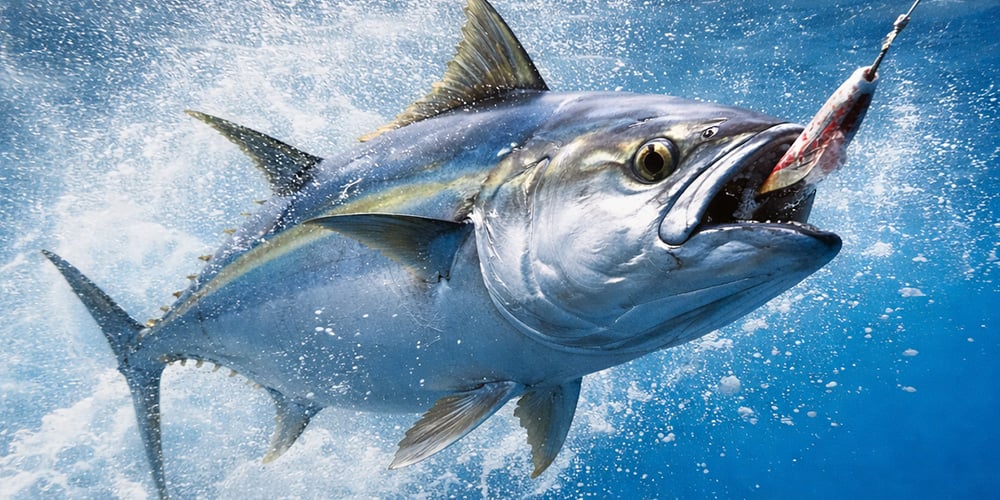
Bluefin tuna are the largest tuna species and among the most powerful fish in the ocean. Giant bluefin can exceed 1,000 pounds and will test both physical endurance and equipment limits on gear many anglers have never pushed to its breaking point. Proper drag calibration before the trip, not during the fight, is critical: most lost bluefin are the result of over-tightened drags that overload lines and connections during the initial run. The key is applying maximum pressure while staying within 30% of your line’s breaking strength under load.
Live bait, chunked Atlantic mackerel or bunker, and high-speed trolling lures are the primary presentations. Locating bluefin requires reading temperature breaks, tide rips, and baitfish concentrations on the surface or via sonar. These fish are subject to strict federal regulations—know your size limits, bag limits, and permit requirements before fishing for Atlantic bluefin tuna.
Yellowfin Tuna — The Golden Rocket
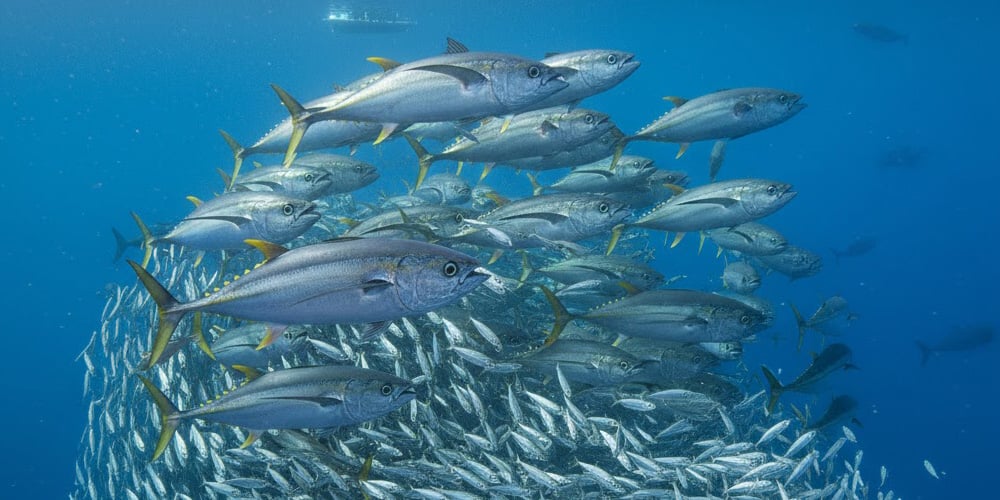
Yellowfin tuna are among the most prized offshore species for both their exceptional table quality and their remarkable fighting ability. They feed aggressively near oceanic temperature breaks, floating debris lines, oil platforms, and concentrations of flying fish, squid, and smaller baitfish. Birds working over the surface—especially frigate birds and shearwaters—are reliable indicators of active yellowfin below. Current edges and color changes in the water are equally productive areas to prospect.
Fast trolling spreads with skirted lures, live bait on kite rigs, and high-speed chunking while drifting on an active school are the most effective tactics. Yellowfin are powerful, fast, and relentless—a 100-pound fish on 50 lb class tackle is a genuine full-body workout. Matched conventional reels with smooth, calibrated drag systems make the critical difference in longer fights.
Mahi-Mahi — The Electric Dancer
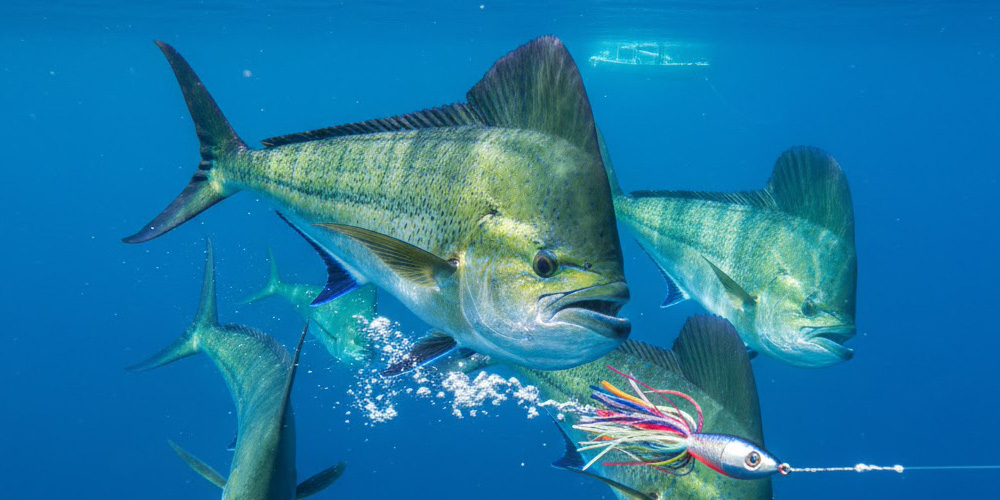
Mahi-mahi combine accessibility, abundance, spectacular visual appeal, and elite table quality into one of the most beloved offshore species in the world. They are highly visual, aggressive feeders that respond readily to brightly colored lures, live bait, and surface presentations. One of the most effective mahi tactics is keeping a hooked fish in the water alongside the boat rather than gaffing immediately—the school will follow, allowing rapid re-deployments before the school disperses.
Mahi are weed-line and debris-oriented, congregating around any floating object that concentrates bait: sargassum lines, floating wood, buoys, and even sea turtles. Running trolling spreads along weed lines and stopping to pitch live bait or artificial lures at every floating object is a highly productive strategy in productive blue water.
Wahoo — The Speed Demon
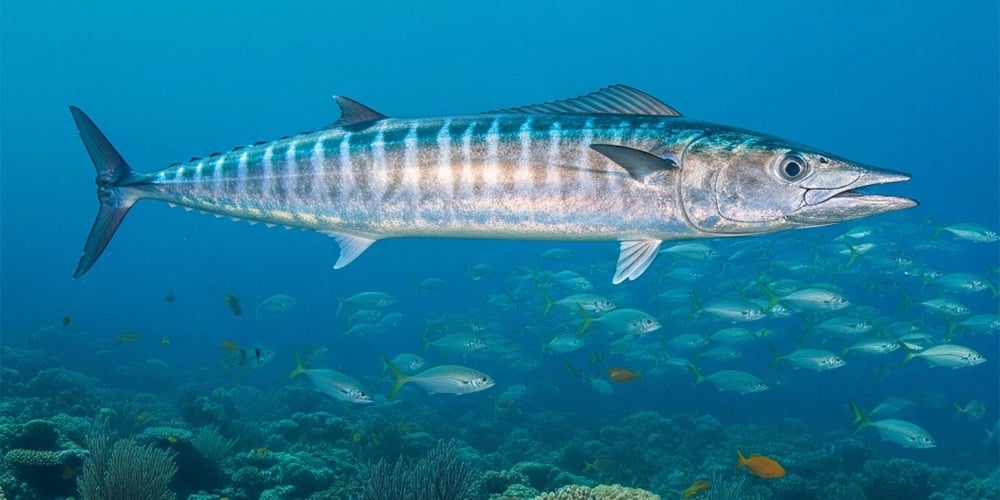
Wahoo are among the fastest fish in the ocean, capable of sustained speeds exceeding 60 mph, and they strike with a violence that instantly separates quality tackle from inferior gear. High-speed trolling at 12–18 knots is the most productive wahoo technique, using skirted lures, stainless-steel wire or fluorocarbon leaders heavy enough to survive their razor-sharp teeth, and extremely sharp hooks that penetrate on impact. The strike is instantaneous—from full speed to hooked fish in under a second.
Wahoo are also targeted by deep-dropping lipped plugs and slow-pitch jigging along current edges and structure. Their meat is among the finest eating of any offshore species—dense, white, and mild—making the effort to target them specifically very worthwhile. Wire leaders and quality terminal connections are non-negotiable when wahoo are the target.
Swordfish — The Deepwater Gladiator
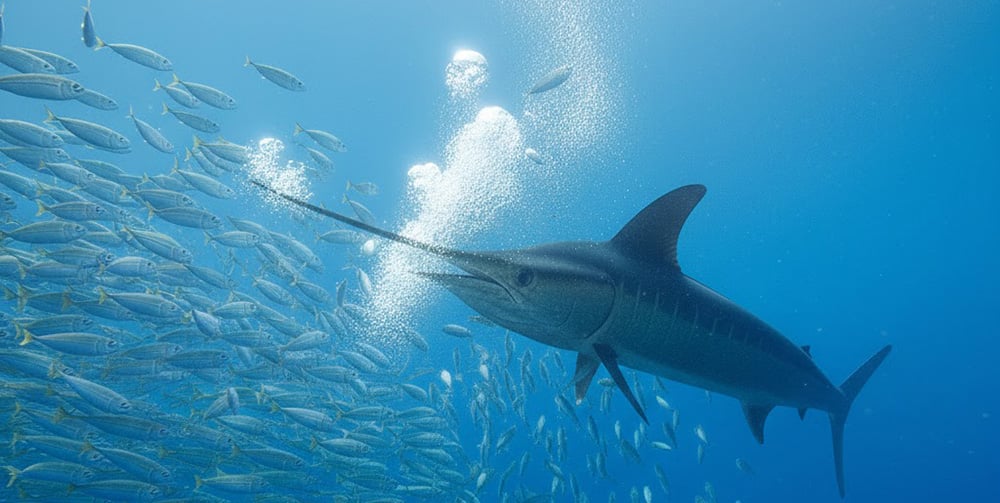
Daytime deep-drop swordfishing has transformed a once-inaccessible fishery into a legitimate pursuit for well-equipped offshore boats. The technique involves deploying rigged squid or whole baitfish on heavy electric reels down to depths of 1,200–1,800 feet along current edges, submarine canyons, and temperature-break areas. Precise depth control, careful current management, and an understanding of swordfish feeding behavior—which peaks during crepuscular periods—are the pillars of consistent daytime sword success.
Night swordfishing—drifting with illuminated squid rigs at intermediate depths—remains the most traditional approach and is accessible with lighter equipment. Swords are unpredictable, powerful, and capable of long, aerial battles far from the boat. The combination of technical rigging, deep-water navigation skills, and physical endurance required to successfully target swordfish makes them the ultimate offshore challenge for experienced anglers.
Offshore Species Wrap-Up
While offshore fishing is generally recommended for anglers with prior experience, proper preparation and the right equipment make these fisheries accessible to dedicated newcomers with experienced crew. Each offshore species guide includes recommended rod strength and class, reel type and drag settings, trolling and rigging setups, and regional timing by season. Offshore species push every aspect of your fishing—from rigging to teamwork to situational decision-making. For many anglers, these fisheries become lifelong pursuits because of the combination of challenge, reward, and unforgettable encounters.
Cold-Water and Pacific Targets: Patience, Pressure, and Payoff
From the Pacific Northwest to the Northern Atlantic, cold-water fisheries demand a different approach. Colder temperatures slow fish metabolism and feeding windows, making presentation precision and environmental reading more critical than in warmer-water environments. Cold-water species thrive around structure—rocky reefs, kelp beds, underwater ledges, and sandy bottom transitions—where temperature stability and bait concentration intersect. Success depends on reading contour maps and sonar data, understanding seasonal current patterns, and committing to slower, more methodical presentations.
Halibut — The Flat-Out Heavyweight
Pacific halibut are among the largest flatfish in the world, capable of exceeding 400 pounds, and are among the most prized Pacific Coast sport fish for both their size and extraordinary table quality. They are ambush predators that rely on camouflage and patience, lying motionless on sandy or gravel transitions near rocky structure, waiting for prey to pass within striking range. Controlled bait movement along bottom transitions is far more effective than anchored, static presentations.
Circle fishing hooks have become the standard for halibut as they significantly improve hookup-to-landing ratios and reduce gut-hooking. Heavy conventional tackle matched to the depths being fished is required—halibut are not a light-tackle target in most situations. Drifting with the current over productive bottom, maintaining contact without dragging, and lifting the bait periodically to trigger reactionary strikes are the fundamentals of productive halibut technique.
Lingcod — The Reef Monster
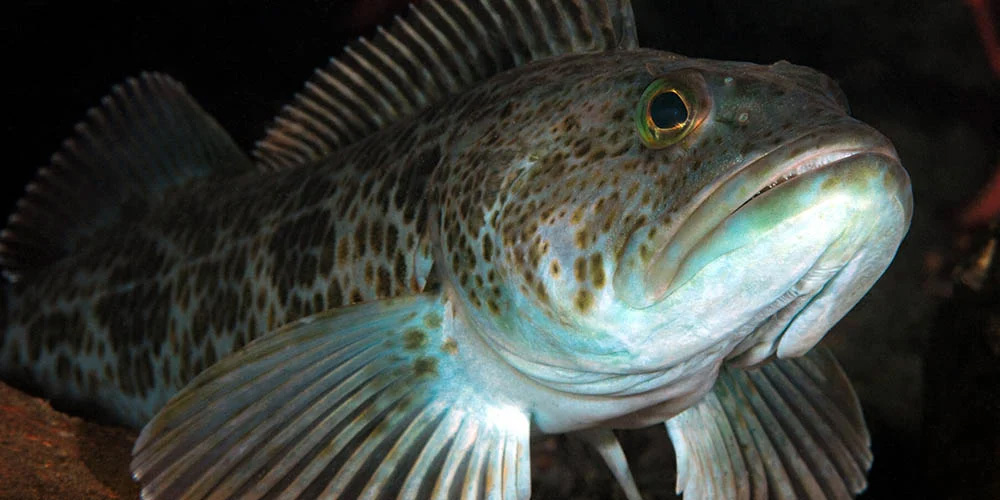
Lingcod are aggressive, territorial ambush predators that inhabit rocky Pacific Coast reefs from Baja California to Alaska. They are one of the most exciting West Coast bottom species to target on vertical jigs because of the violence and immediacy of the strike—a lure that invades a lingcod’s territory rarely gets a second look before being eaten. Their cavernous mouths and muscular bodies make them capable of engulfing large presentations, and they will often attempt to retreat into rock crevices immediately after the hookset.
Heavy tackle and immediate, aggressive pressure after the hookset are critical—a lingcod allowed to reach its hole is almost impossible to extract. Large metal jigs, swimbaits, and live greenling or rockfish are the primary presentations. Lingcod are also unique in that they will frequently grab a smaller fish already on your line—a phenomenon Pacific Coast anglers use deliberately by stopping a hooked rockfish short of the boat and waiting for a ling to latch on.
Calico Bass — The Kelp King
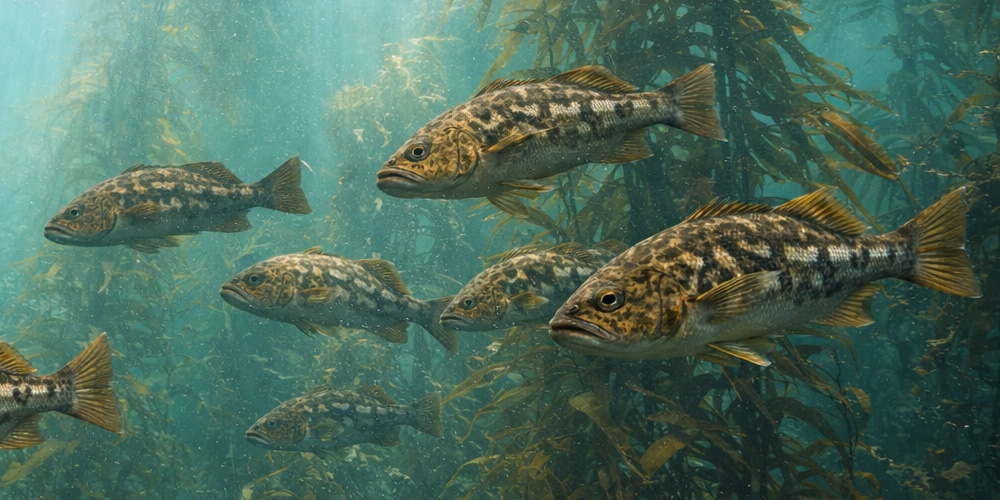
Calico bass—also called kelp bass—are the premier light-tackle sport fish of Southern California. They inhabit dense kelp beds and rocky structure from Point Conception to Baja, and their affinity for heavy cover demands accurate casting and the ability to turn a hooked fish before it wraps the line in kelp. Braided line paired with a heavy fluorocarbon leader provides the abrasion resistance necessary to navigate kelp canopies while maintaining the sensitivity needed to detect bites in structure.
Swimbaits, surface iron, and live anchovies or sardines are the primary calico bass presentations. Surface iron—heavy chrome or painted metal casting lures—is a distinctly West Coast technique that produces calico bass in sizes that surprise anglers accustomed to East Coast inshore fishing. The bite is most consistent during warmer water periods, typically May through October along most of the California coast.
Fluke (Summer Flounder) — The Northeast Surprise
Summer flounder, known as fluke along the Northeast coast, are one of the most popular bottom species from the Carolinas through Maine. They are ambush predators that lie partially buried on sandy bottom, waiting for baitfish to pass within striking range—but unlike most flatfish, fluke are highly mobile and actively chase prey. Maintaining contact with the bottom while maintaining forward momentum through a controlled drift is the key technique: a bait or bucktail jig bouncing naturally just off the bottom is almost irresistible to an active fluke.
Fluke are subtle biters that often simply stop the drift rather than delivering a sharp take—attentiveness and a responsive rod tip are essential to detecting the strike and converting it to a hookup. Bucktail jigs tipped with Gulp! or strip bait, spun with a teaser dropper above, produce consistently. Fluke are outstanding table fare and are catch-regulated across most Northeast states—check your local minimum size and bag limits before keeping fish.
Cold-Water Species Wrap-Up
Each cold-water species here demands its own kind of patience and technique—slower presentations, natural baits, deliberate reading of bottom structure, and a willingness to invest time learning how fish move with tides and seasons. These guides break down the specifics for each species so you can walk onto any Pacific or northern fishery with a clear plan. Once you dial in the patterns, there are few fishing experiences as deeply satisfying as pulling a true northern heavyweight from cold water.
Choosing the Right Fishing Setup for Your Target Species
Every species guide in this hub links directly to the gear that performs best for that target—rods, reels, lures and baits, and line and leaders—based on what actually works in the field, not just what’s new on the market. Whether you’re fishing a local pier or running offshore to chase pelagics, these recommendations are grounded in real-world performance across the fisheries West Marine’s team knows best.
Beyond gear, each species guide equips you with real-world handling tips to safely release fish, basic cleaning and filleting techniques for those you keep, and information on safe, proper use of a fillet and bait table to process your catch on the water. We want to help you enjoy every part of the fishing experience—from the hookset to the dinner plate.
Fish Smarter with West Marine
West Marine has been helping anglers gear up for over 50 years. With expert staff, trusted brands, and locations along every major coastline, we are your go-to resource for fishing gear and knowledge—from local inshore trips to blue-water offshore adventures. Whether you’re building your first setup or upgrading a rod-and-reel that’s seen better days, visit us online or stop by your local West Marine store for trusted guidance from anglers who fish the same waters you do.