Fishing Lures and Bait Guide: How to Choose the Right Presentation for Every Situation
Choosing the right fishing lure or bait is one of the most consequential decisions an angler makes before every cast. Your presentation is the single variable that directly determines whether a fish strikes or ignores your offering—and getting it right requires understanding how each lure type works, which conditions it excels in, and what it is actually imitating in the water. Whether you’re a freshwater angler working structure for bass, an inshore saltwater fisherman targeting redfish and snook on the flats, or an offshore enthusiast chasing pelagics in blue water, this guide covers the full spectrum of artificial lures, natural baits, and specialty presentations available at West Marine—along with the expert knowledge to use them effectively.
Understanding Fishing Lures: How Artificial Baits Work
Fishing lures are artificial constructions designed to trigger a predatory response from fish by mimicking prey in appearance, movement, sound, or vibration. The best anglers don’t just pick a lure they like the look of—they select based on what their target species is feeding on in that specific location and season, the depth they need to fish, current and visibility conditions, and the retrieve they plan to use. A lure that produces consistently in one scenario can be nearly useless in another. Understanding why each lure type works is what allows you to make the right choice when conditions change.
Types of Fishing Lures
1. Soft Plastic Lures
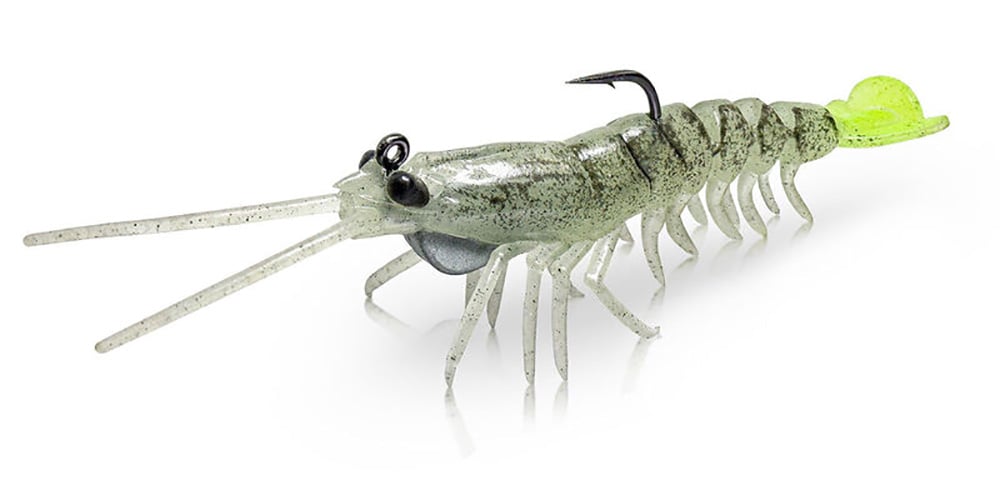
Soft plastic lures are among the most productive and widely used artificial baits across both freshwater and saltwater fishing. Made from flexible, salt-impregnated plastic that mimics the texture and movement of real baitfish, shrimp, worms, crabs, and crawfish, soft plastics produce bites even from fish that have seen everything—because they feel real in a fish’s mouth long enough to complete the hookset. Many soft plastics also accept additional scent attractants that further enhance their effectiveness in murky water or with finicky fish.
- Paddle Tail Swimbaits: The most versatile soft plastic for both freshwater and inshore saltwater. The kicking tail generates vibration and lifelike movement on any retrieve speed. Rig on a jig head and work at any depth.
- Shrimp Imitations: Essential for inshore saltwater fishing. Redfish, speckled trout, snook, and flounder all feed heavily on shrimp, making realistic soft plastic shrimp some of the most productive lures in coastal environments. Fish under a popping cork for an aggressive surface presentation or on a jig head near bottom.
- Plastic Worms: The quintessential freshwater bass lure, available in dozens of profiles from finesse worms to bulky ribbon tails. Texas-rigged with a bullet weight or Carolina-rigged for covering bottom, worms remain among the most consistent bass producers year-round.
- Craw and Creature Baits: Imitating crawfish and bottom-dwelling prey, craw baits produce well when flipped and pitched into heavy cover for largemouth bass and fished on football jigs over hard bottom for smallmouth.
- Flukes and Jerkbaits: Soft plastic jerkbaits with a darting, dying-baitfish action produce aggressive strikes from bass and inshore species. Fish on a weightless hook for a surface-to-subsurface presentation that drives fish crazy.
Pair soft plastics with appropriate hooks—EWG offset hooks for Texas-rigged applications, straight-shank hooks for dropshots, and round-bend jig heads for open-water presentations. Browse West Marine’s full soft bait selection for options matched to your target species and technique.
2. Hard Baits: Crankbaits, Plugs, and Jerkbaits
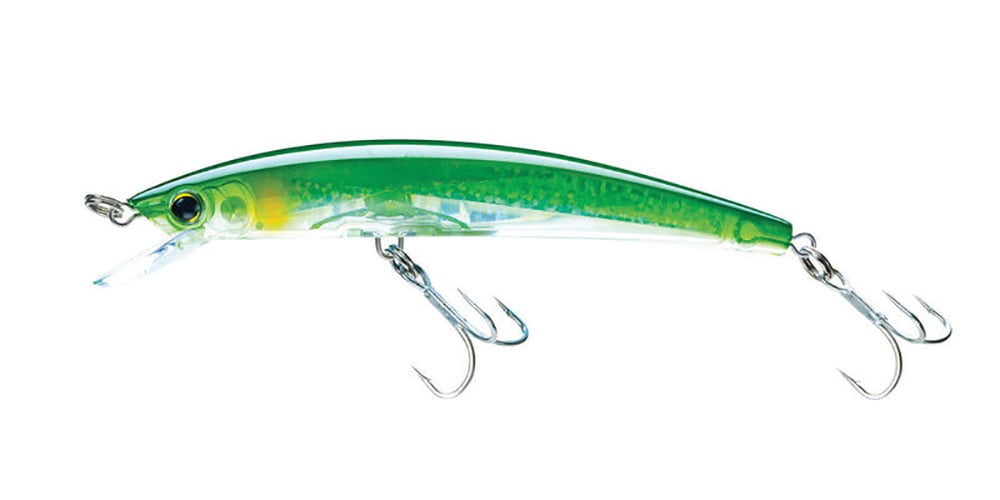
Hard baits are rigid-body lures constructed from wood, hard plastic, or composite materials, built to dive to specific depths, produce a programmed action on a straight retrieve, and withstand repeated strikes from aggressive species. Their main advantages over soft plastics are their ability to cover water quickly on a consistent retrieve, their built-in action that works even for beginners, and their durability over thousands of casts. Hard baits are the dominant choice when fish are actively chasing bait over large areas.
- Crankbaits: Rounded-body lures with a molded diving lip that determines running depth. Shallow divers run 2–5 feet; medium runners 6–12 feet; deep divers 15+ feet. Their wobbling action displaces water and produces a vibration that fish detect on their lateral line, making them effective even in stained or murky water. Replace factory treble hooks with quality aftermarket hooks to improve hookup rates.
- Jerkbaits: Thin, minnow-profile hard baits designed to dart laterally with each rod twitch, imitating a wounded or disoriented baitfish. Most productive in clear, cold water when fish are less aggressive and need a more subtle, intermittent presentation. Suspending jerkbaits that hold position during pauses are particularly effective in winter and early spring.
- Swimbaits: Large-bodied hard and segmented lures designed to imitate mature baitfish—shad, mullet, and herring profiles. The standard big-bass lure in trophy-focused fisheries; also highly effective for large inshore species like striped bass and snook that key on large baitfish during fall feeding patterns.
- Lipless Crankbaits: Sinking, rattle-filled hard baits with no diving lip that fall on a controlled sink rate and vibrate intensely on any retrieve speed. Exceptional for covering deep grass flats for bass and speckled trout, and for burning across points and humps when fish are chasing fast-moving bait.
3. Topwater Lures
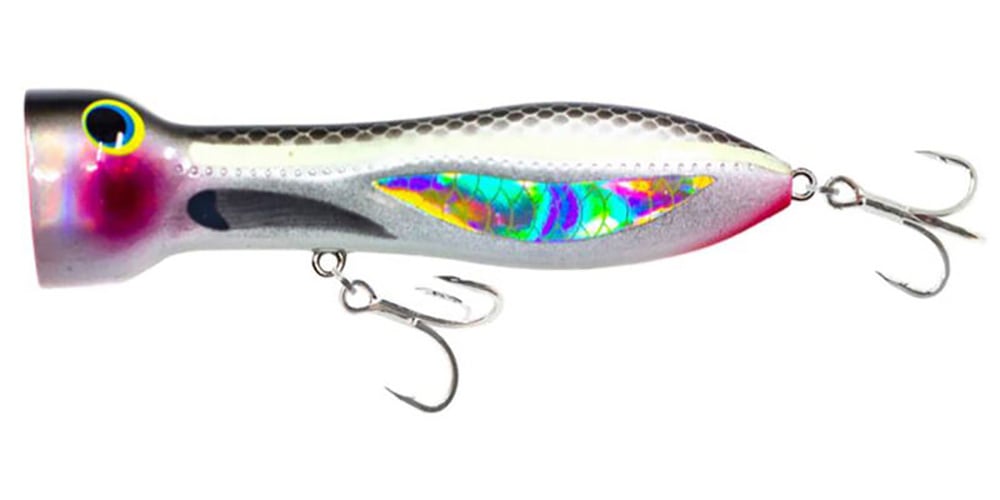
Topwater lures produce some of the most exciting bites in fishing. The explosion of a large redfish, snook, or bass on a surface lure at first light is an experience that keeps anglers coming back to topwater presentations even when subsurface options might produce more fish. These lures work by creating surface disturbance—sound, splash, and visual cues—that trigger predatory fish into striking out of aggression or feeding instinct. Topwater lures are almost always most effective during low-light periods: dawn, dusk, overcast days, and calm water conditions when fish are most active near the surface.
- Poppers: A concave face that creates a distinctive popping and spitting noise on each rod twitch. Effective for bass, bluefish, speckled trout, and any species that feeds aggressively near the surface. Work with a twitch-pause rhythm, allowing the lure to sit still between pops.
- Walk-the-Dog Lures: Pencil-shaped lures that glide side-to-side on a steady rod-tip-down twitch retrieve. The most widely used topwater style for redfish, snook, and bass. Mastering the rhythm—twitch, slack, twitch, slack—produces the side-to-side “walk” that triggers explosive surface strikes.
- Prop Baits: Propeller-equipped surface lures that buzz, churn, and spit water on retrieve. Exceptional in low-visibility or choppy water conditions where fish locate the lure by sound before they can see it.
- Topwater Frogs: Weedless soft-body lures designed to walk across lily pads, hydrilla mats, and floating vegetation. The standard approach for targeting largemouth bass in heavy surface cover where every other lure would snag immediately.
4. Jigs and Spoons
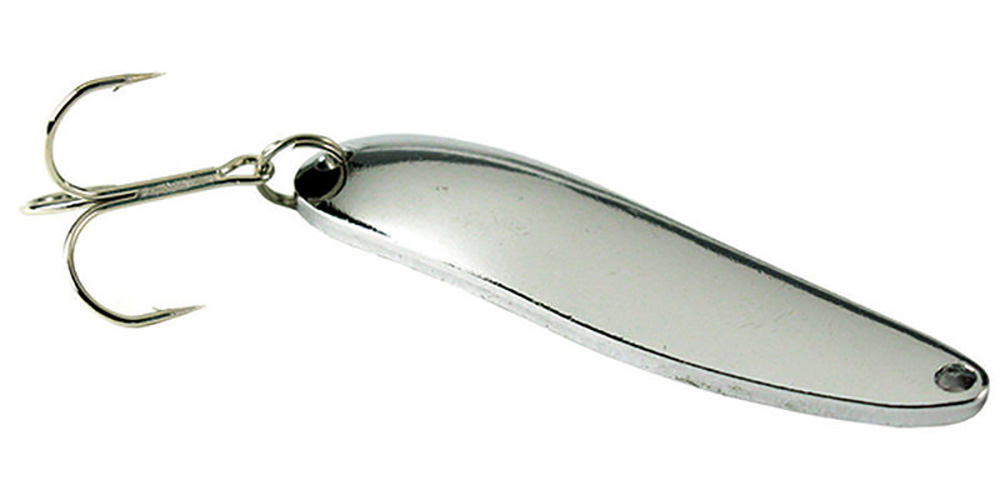
Jigs are the most versatile lures in fishing. A jig is simply a hook with a weighted head molded onto it, typically paired with a soft plastic or hair skirt. They can be fished at any depth, on any bottom type, with an infinite variety of actions. The angler controls everything—the sink rate, the bounce height, the pause duration—making jigs both the most demanding and most rewarding lure type to master. Spoons are stamped or cast metal lures that flash and wobble on retrieve, imitating the erratic movement of fleeing baitfish. They are fast to fish, easy to use, and highly effective when fish are actively feeding.
- Ball/Round Head Jigs: The universal jig for pairing with soft plastics at any depth. Size the head weight to match current strength and target depth—lighter for shallow and slow presentations, heavier for depth and faster water.
- Bucktail Jigs: Natural hair skirt jigs with an incredibly lifelike, pulsing action in the water. The standard jig for fluke, striped bass, and most Northeast inshore species. Tip with a strip of bait or soft plastic to add scent and enhanced movement.
- Vertical/Speed Jigs: Heavy metal jigs designed for deep-water jigging over reefs and wrecks for grouper, amberjack, and tuna. Dropped to depth and worked with sharp upward rips followed by a fluttering fall. Available in weights from 1 oz to 16+ oz for deep offshore applications.
- Gold and Silver Spoons: Simple, time-tested saltwater lures. The gold spoon is arguably the single most effective lure for redfish in shallow water. Weedless versions can be worked over grass, through mangrove edges, and across oyster bars without snagging.
- Surface Iron: Heavy chrome and painted casting lures specific to West Coast fishing for calico bass, yellowtail, and other Pacific coastal species. Cast long distances and worked near the surface with a fast, swimming retrieve.
Tips for Using Lures Effectively
- Match the Hatch: Observe what baitfish and prey are present in the water you’re fishing and select a lure that matches size, profile, and color. Watching birds work, seeing baitfish scatter on the surface, or noticing what species populate the area all provide valuable intelligence before you tie on a lure.
- Vary Your Retrieve Systematically: When fish are following but not striking, a change in retrieve speed or cadence is almost always the solution. Experiment with stop-and-go, long pauses, erratic jerks, and slow-rolls until you find what triggers commitment. Once you find what works, repeat it exactly.
- Adjust Color and Profile to Conditions: Bright, chartreuse, and white lures stand out in murky or stained water; natural, translucent, and darker patterns are more effective in clear conditions where fish get a long look at the presentation. Downsize profile in cold or slow conditions; upsize when fish are feeding aggressively on large bait.
- Check Your Hooks: Sharp hooks are the most overlooked component of lure fishing. A dull hook on a crankbait or jig significantly reduces hookup rates even when fish are biting. Check hooks before every session and replace any that fail the thumbnail sharpness test.
- Match Your Setup: The lure is only as effective as the setup it’s fished on. Use the right rod and reel for the lure’s weight range, the right line and leader for the technique, and the right hooks for the target species.
Natural Bait: When Nothing Beats the Real Thing
Artificial lures produce reliably across most situations—but there are times when nothing outperforms natural bait. When fish are inactive, water temperatures are extreme, or fishing pressure is heavy, the scent, texture, and natural movement of real bait often triggers strikes that artificials cannot. Whether to fish artificial or natural is not a rigid choice: many experienced anglers carry both and make the decision based on what the conditions and the fish are telling them. If you’re fishing a new spot for the first time, find out what the local guides and charter captains are running before committing to one approach.
Popular Natural Baits
- Shrimp: Universally effective across virtually every inshore saltwater species on both coasts. Live shrimp under a popping cork or free-lined near structure is one of the most consistent presentations in coastal fishing. Dead or frozen shrimp produces well on bottom rigs for sheepshead, flounder, and drum.
- Mullet and Menhaden: Essential offshore and nearshore baits for large sportfish. Live or freshly cut mullet on a circle hook near structure produces redfish, tarpon, snook, and cobia inshore. As trolling or kite baits offshore, rigged menhaden and mullet trigger sailfish, kingfish, and mahi-mahi. Keep live baits healthy and active in a quality bait tank for maximum effectiveness.
- Squid: One of the most versatile saltwater baits, effective from inshore waters to deep offshore drops. Squid strips produce consistently for bottom species including snapper, grouper, and sea bass. Whole rigged squid are standard kite and trolling baits for sailfish. Squid holds well on the hook and maintains scent even after repeated strikes.
- Live Pilchards and Greenbacks: The premier live bait for inshore and nearshore saltwater fishing throughout the Southeast and Gulf Coast. A livewell full of frisky pilchards gives anglers the ability to free-line, bottom fish, kite fish, and chum all from the same live bait supply. Catching and maintaining fresh live pilchards is considered a core skill for serious Florida and Gulf Coast anglers.
- Worms and Minnows: The foundational freshwater baits. Nightcrawlers produce for virtually every freshwater species from panfish to large catfish. Fathead and golden shiners are among the most productive live baits for bass, walleye, and crappie across most freshwater fisheries.
- Sand Fleas and Fiddler Crabs: The most effective surf fishing baits for pompano and redfish in the Southeast. Sand fleas (mole crabs) are caught directly in the surf zone and presented on a weighted rig just behind the breaking waves. Fiddler crabs are the top bait for sheepshead around dock pilings and structure.
Advantages of Natural Bait
- Scent and Taste: Fish detect natural bait through their olfactory system before they visually identify it. In turbid water, at night, or in slow conditions, the scent trail from cut or live bait draws fish from distances that no artificial can match.
- Natural Texture and Feel: Fish that bite and hold live or cut bait give the angler more time to achieve a solid hookset. The longer hold time with natural bait is a meaningful advantage, especially for species with hard mouths or when using circle hooks that require the fish to load against the weight of the rig.
- Versatility Across Techniques: A single live bait can be fished on a free-line, under a float, on a bottom rig, or on a kite—adapting to whatever technique conditions demand without changing the bait itself.
Kite Fishing: The Offshore Live Bait Advantage
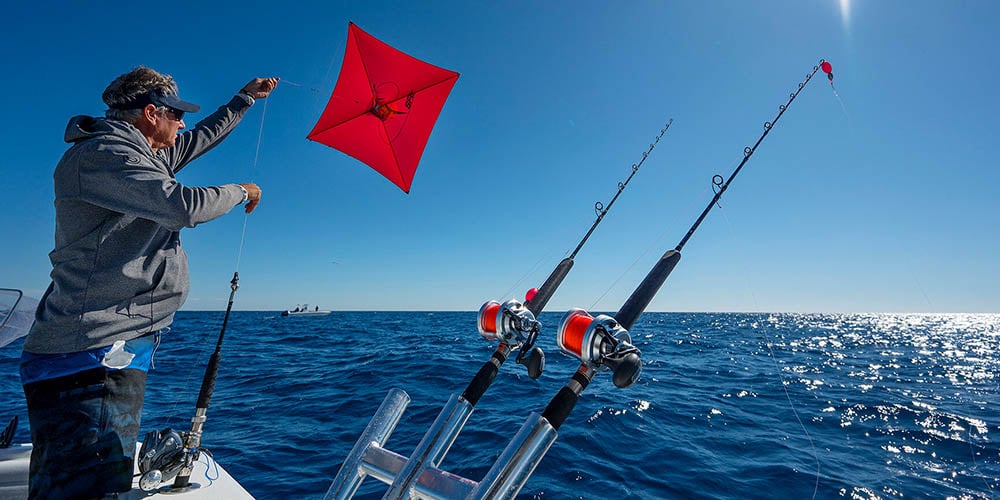
Kite fishing is one of the most sophisticated and effective live bait presentations available to offshore anglers. By suspending live baitfish at or just below the surface using a purpose-built fishing kite, this technique keeps the bait in the most visible strike zone for surface-oriented species—sailfish, marlin, kingfish, and large mahi-mahi—while keeping the leader and mainline completely out of the water and invisible to the target fish. The live bait’s natural, struggling surface commotion does the attracting; the invisible leader means nothing is there to spook the fish before it commits.
Kite Fishing Essentials
- Fishing Kites: Designed specifically for offshore use in varying wind conditions, with different kite sizes for light, medium, and heavy air. Quality kites maintain stable flight and precise bait placement regardless of boat speed or sea state.
- Release Clips: These clips attach your fishing line to the kite line at a set tension—holding the bait in position until a fish strikes and pulls the line free, triggering an unimpeded fight with no kite interference.
- Helium Balloons: When wind is insufficient to keep the kite airborne, helium balloons attached to the kite line maintain height and bait position—a critical tool on calm bluewater days when sailfish and marlin are still actively feeding at the surface.
- Kite Rods and Reels: Dedicated kite rods and spinning reels are used to fly and position the kite line separately from the fishing rods presenting the baits. Multiple release clips allow 2–3 baits to be fished from a single kite, covering a large strike zone simultaneously.
Benefits of Kite Fishing
- Maximum Bait Visibility: Live baits struggling at the surface create visual and acoustic commotion that draws pelagic predators from a distance. This is the most natural surface presentation possible—a live fish trying to escape, with nothing attached that would alert a predator to danger.
- Invisible Leader: Because the leader hangs vertically from the surface bait rather than extending horizontally through the water, billfish and other leader-shy species approach and strike without ever detecting the connection to the fishing line.
- Multiple Simultaneous Baits: A single kite with two or three release clips presents multiple live baits over a broad area, dramatically increasing the probability of an encounter with feeding fish compared to a single rod presentation.
Matching Presentation to Conditions: The Complete System
Lure and bait selection does not happen in isolation. The most productive anglers think about their presentation as a complete system—the lure or bait, the line and leader it’s fished on, the hook it’s rigged on, the weight controlling its depth, and the rod and reel delivering it. Tides, currents, wind, and weather change the behavior of both bait and fish rapidly. An angler committed to a single presentation as conditions shift is an angler who stops catching fish when the conditions that made that presentation effective no longer exist.
The most important habit a productive angler develops is systematic adaptation. When you’re not getting bites, change one variable at a time—lure color, lure size, retrieve speed, depth, location—until you find what triggers fish. Document what works so you can replicate it. Over time, this methodical approach builds the pattern recognition that separates consistently successful anglers from those who rely on luck.
West Marine carries the full range of fishing lures and baits needed to cover every scenario: soft plastics for finesse and inshore work, hard baits for covering water and triggering aggressive fish, jigs and spoons for depth and versatility, and complete kite fishing systems for the offshore angler. Pair your lures with quality terminal tackle—hooks, swivels, weights, and floats—to build a complete, optimized rig. Keep your live baits fresh and active in a bait tank and process your catch on the water with a quality fillet and bait table. Browse the complete West Marine fishing department to gear up for your next trip with everything you need in one place.