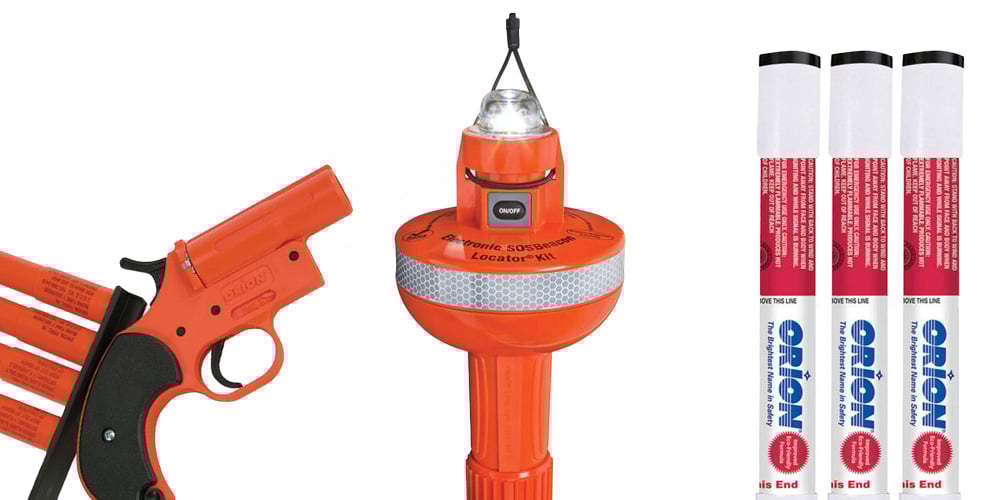
All vessels used on coastal waters or the Great Lakes on any body of water with a passageway to the sea at least two miles wide are required to carry Coast Guard Approved visual distress signals. These can be either pyrotechnic devices like marine flares and flare guns or non-pyrotechnic devices like distress flags or signal lights. If you use pyrotechnics, then you’ll need at least three Coast Guard approved daytime signals and three that are approved for night use for a total of six, or three flares that are approved for both day and night signaling.
Types of Flares
Flare Guns
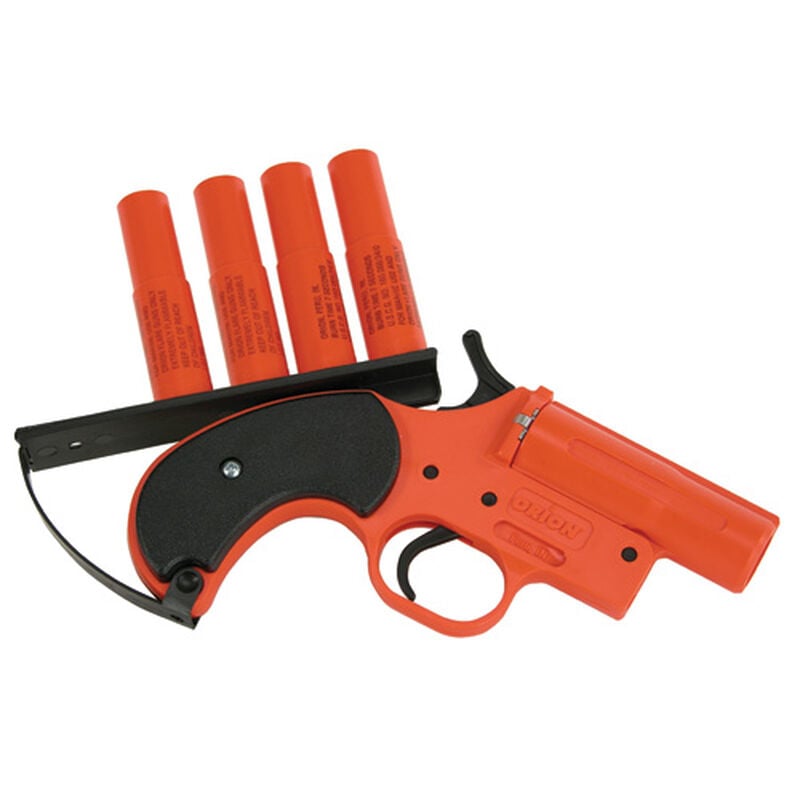
This flare gun kit includes a launcher and four aerial flares.
Flare guns draw attention to your boat in emergency. Meteor flares are propelled from a flare gun launcher and reach an altitude of 375' to 500' and burn for 7-8 seconds. You should fire aerial flares after you have sighted or heard a potential rescue vessel. To attract their attention to your distress situation, the U.S. Coast Guard recommends that you fire two aerial flares - one immediately after the other - so rescuers can confirm the sighting and the direction of the signal.
Handheld Flares and Signals
Handheld boat flares and locate signals, are intended as homing signals to pinpoint your position for rescue services once they are in visual range. Orange smoke flares are for daytime use only but are a great way to signal your location to rescuers in a Coast Guard helicopter. Most handheld marine flares are approved for day and nightuse, allowing you to meet both requirements with the same flare. In either case, we recommend that you carry double the USCG required amount. You’ll be thankful you have more if you ever need to use them.
Non-pyrotechnic Devices
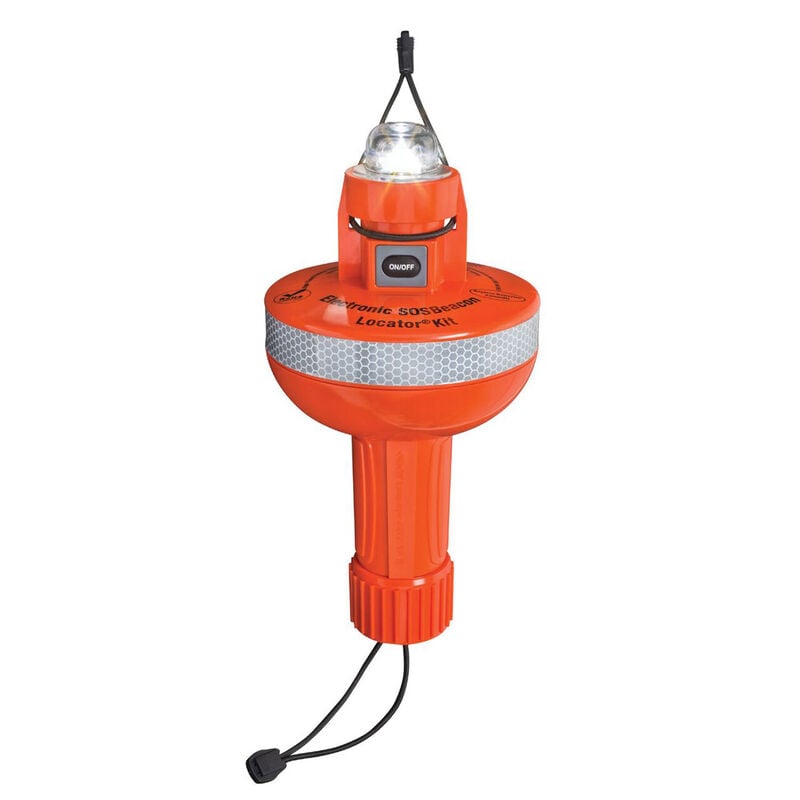
This electronic distress beacon flashes a bright SOS distress signal in Morse Code and runs two times longer than the US Coast Guard continuous run-time requirement.
An orange distress flag is approved for daytime use only and while it is not limited by a short burning time, it’s generally less effective at catching attention than a comparable flare or smoke signal. We also carry electric distress signals that are approved for nighttime use to replace traditional pyrotechnic flares. Electric distress signals must carry the marking: “Night Visual Distress Signal for Boats Complies with U. S. Coast Guard Requirements in 46 CFR 161.013. For Emergency Use Only.” and should be checked regularly to make sure it is functioning properly
Do Boat Flares Expire?
Yes they do and only flares that are within their expiration date will count towards the number of flares required by the U.S. Coast Guard. Check your flares often and replace them if they’re out of date.
When to Use Marine Flares
Boat flares are only effective if there is someone in position to see them. Only launch or light a flare when you see or hear a rescue boat or airplane or if you are reasonably sure that someone on the shore will see your distress signal.
Popular Flare Gun Brands
Orion is our most popular marine flare and flare gun brand and they manufacture both USCG and SOLAS compliant flares. They also make an electronics distress kit that meets USCG regulations.
Proper Flare Storage and Disposal
Boat flares should be stored in a waterproof container in a designated area. Make sure that passengers on your boat know where the flares are and how to use them in case of an emergency. Never throw away expired flares and do not ignite them to dispose of them as it can cause false distress reports. Contact your police, fire or public works departments to see what disposal options are available in your area.
Need More Help?
We have plenty more safety gear West Advisors that cover everything you need to stay safe on the water.
Related: